Home Decor & Table Settings
Write a wind chime word-chain poem with linked end words
Carry a line's last word into the next opening, then decide how its meaning should turn. This original writing activity needs no chime performance or purchase.
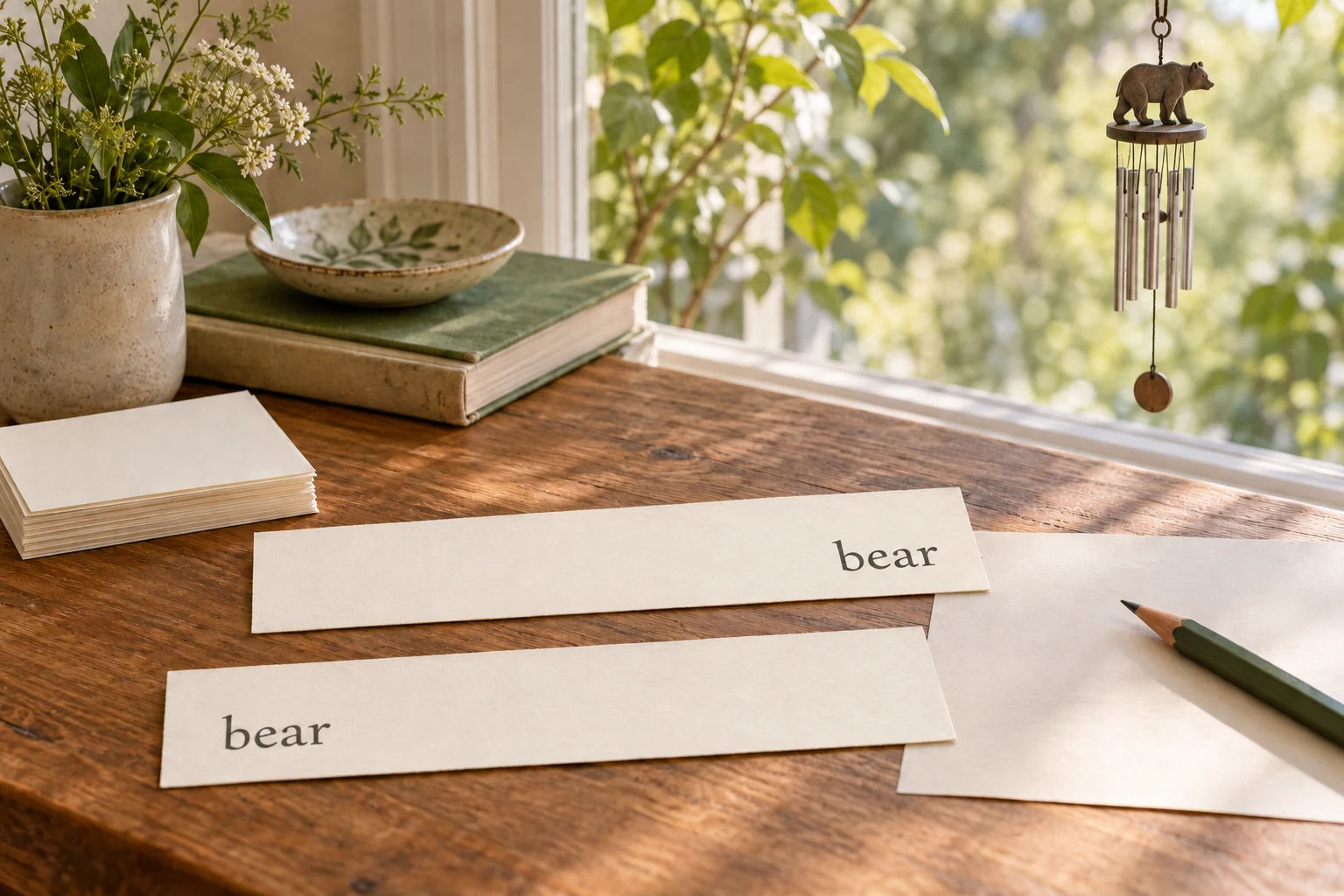
A wind chime word-chain poem can start with one word you want to carry across a line ending. For this original exercise, the last word of one line becomes the first word of the next. You write new material after that opening, then pass another word onward.
The bear and elephant motifs below offer optional starting words. The writing does not require a sounding chime, an outdoor visit or a new purchase. You can work from a word already in mind. The complete poem in this guide is invented; its animal, visitor, light and paper road are elements of a fictional page.
Define the handoff you want to keep
Use a simple condition for this page: retain the spelling of the last word when it opens the next line. Ignore the capital letter needed at a new opening, and leave a period or comma outside the word comparison. Choose ordinary words whose boundaries are clear to you. These are the working rules of this exercise, without a claim that every linked poem follows them.
Count the deliberate lines you wrote, not incidental screen wraps. A line that is too wide for a display may appear on more than one visible row. Keep your chosen endings identifiable while drafting. You can use a sheet of paper or a suitable writing application already available; neither selected chime supplies a writing method or required software.
Let the first line end somewhere that gives you a possible next beginning. You might like an object word, an action or a word with more than one familiar use. The condition does not require a pun at every link. A plain continuation can give the poem room between more noticeable changes of meaning.
Take a word from an observed motif
The Sierra Vista 991090 bear chime listing names a bear design and silver tube. Its whole gallery shows a bear-and-trees upper ornament, hanging tubes and a lower bear ornament. Those visible forms can offer the word bear as a writing prompt; no sound was played or tested here.
The Sierra Vista 991080 elephant chime listing names an elephant design. Its gallery shows an elephant-and-tree upper form and a lower elephant-face ornament. Closeups give different views of components, rather than establishing two complete chimes. This supplies another optional visual prompt without an acoustic, origin or performance finding.
Choose a starting word because it interests you today. A word borrowed from a pictured motif does not oblige you to reproduce the object or tell a story about owning it. You can also abandon the animal word and begin with an entirely invented doorway, shoe or cloud. Keep that change open as an authorial choice.
Read one complete fictional chain
At the edge of my page waits a bear.
Bear with me while I borrow the light.
Light the margin with an imaginary dawn.
Dawn is the name I give the open space.
Space the small words as if they were footsteps.
Footsteps arrive at a door made of paper.
Paper keeps the road when the visitor leaves.
Leaves turn in a season I have not named.
This is the complete selected example. It uses eight authored lines, with a word passed across each adjacent boundary. The final line has no following line to supply. Its unreturned last word is therefore outside the handoff check, rather than an unfinished link you must repair.
The bear belongs to the invented page. It is not a reported animal encounter or a claim that either actual ornament depicts the rest of the poem. An imaginary dawn lights a margin, and footsteps reach a paper door. Those are chosen fictional images, without a real journey, weather observation or account of how a chime behaves.
Read the repeated word in its new context
At the first boundary, bear names the animal on the page and then begins the request Bear with me. The spelling stays available to the eye while the phrase gives it a different job. That turn is part of this poem's writing. You can prefer a gentler continuation in your own version without losing the last-to-first condition.
The word light first names what the speaker borrows, then opens an instruction inside the imagined poem. Space first names an opening and then begins Space the small words. The final handoff turns from the visitor leaves to Leaves turn. These are particular choices in the actual lines, rather than a rule that every repeated word must change grammatical role.
Dawn and footsteps continue more directly. Their appearances still link neighboring lines even though the turn is less conspicuous. Read the complete chain with those quieter links included. A page made entirely from verbal tricks would be another possible project, but this version lets some words carry an image forward without demanding a new meaning each time.
Check the adjacent boundaries on the actual page
Read the end of the first line beside the opening of the second. Then move to the next pair. For this example the links are bear, light, dawn, space, footsteps, paper and leaves. Keep the lines beside the list so that you can see the actual spelling on both sides of every boundary.
A successful link check establishes only the condition you defined. It does not prove that a line is interesting, that a reader understands the images or that the poem needs to keep its current length. After checking the words, read the whole version for what you want it to say. You can retain a technically valid link and still decide to rewrite the surrounding line.
If an opening word was accidentally omitted while copying, compare the selected version with your draft before inventing a repair. An omitted Paper at the seventh opening would break that particular handoff. Restoring it can recover the version you intended. A deliberate replacement is a different choice, which needs the neighboring line checked again.
Let a changed ending affect its next line
Suppose you replace the fifth line with Space the small words as if they were stones. The earlier space handoff remains, but the next opening Footsteps no longer repeats the new ending stones. This proposed edit changes a boundary you can identify exactly. It does not make the new image unusable in every poem.
One available continuation is Stones arrive at a door made of paper. That restores the chosen spelling link while changing the imagined arrival. Read those two revised lines within the whole poem before choosing them. You have now changed an image and repaired its following handoff, rather than merely correcting a copying error.
For the selected version, keep footsteps. This writer prefers the movement it gives the imagined visitor before that visitor leaves. The stones alternative can remain a separate complete pair. Keeping it available records a real option without quietly mixing its first line with the incompatible opening from the earlier version.
Give the last line a deliberate stopping point
The example stops after the unnamed season. You could continue by starting a new line with named, but there is no obligation to keep extending the chain. Choose whether the present ending belongs to the poem you want. A writing condition can help you begin without determining how many lines the finished piece must contain.
If you add a line, write it before judging the enlarged version. A note saying continue the seasonal idea does not yet provide the next opening or its new ending. Keep an expanded draft separate from the eight-line selection until you decide which whole page to retain. This lets you compare actual versions instead of imagined improvements.
Keep the nearby poetry choices distinct
The short-poem refrain exercise repeats a complete sentence across changing stanzas and compares possible final returns. Here only one boundary word is carried into a newly written next line. The example does not return an entire refrain or test whether its final repetition should change.
The same-words line-break exercise keeps a sentence's wording and punctuation fixed while changing its printed groups. A word-chain draft instead includes the repeated opening and new material that follows it. It is a different composition task from rearranging one unchanged sentence.
You can explore those activities on separate pages. For this one, keep the selected last-to-first condition visible while composing. It gives you a specific reason to inspect neighboring lines, without requiring a fixed initial-letter sequence, a rhyme scheme or a claim that the poem records real chime sounds.
Keep any Republeq crypto purchase separate from the writing
A chime purchase is optional for this writing activity, and choosing a payment method does not decide which words belong in your poem. If an order on republeq.com currently presents crypto payment and a USDT choice, use the instructions attached to that actual checkout. Establish which asset and route the merchant requests before choosing a matching payment option. Read any stated network selection and the order reference instead of supplying those details from memory. You can leave the order pending while a required detail remains unclear. Review the displayed transaction amount and any charges your chosen payment service shows, then retain the information you used to make the decision. An item listing, an artistic idea and a final checkout each answer different questions; a word exercise supplies no evidence of a discount or lower purchase outlay. Check whatever delivery, cancellation and return terms the merchant presents for the actual order, and ask through its stated support route if those terms need clarification. Do not assume that a familiar asset name establishes eligibility for every order or that a previous checkout's instructions apply to a later one. After any authorized purchase, keep the actual order record with the exact model you intended to buy. This paragraph does not confirm current USDT availability, prescribe a particular wallet or promise a conversion result or refund. Its purpose is to keep a possible transaction tied to current instructions and your own verified order details. The poem can remain a complete paper activity while the purchase remains undecided, and a different payment choice does not change whether its neighboring words satisfy the writing condition.
Retain the version you actually chose
Copy the complete selection with its deliberate line endings. Check each last and first word once more, then keep any alternative pair separately. You can date the page or add a short note about the link you most wanted to retain. Neither is required for the poem to remain your own chosen writing.
The selected example keeps its bear, paper road and unnamed season. Its adjacent words connect literally while several acquire a different role. Your own page can follow that defined condition with entirely different images, or you can deliberately choose another project. Keep the words of the version you mean to preserve.