Home & Living
What wind chime parts do when a metal-tube chime moves
Identify the hook, upper plate, cords, tubes, striker and windcatcher on a hanging metal-tube chime before installing it.
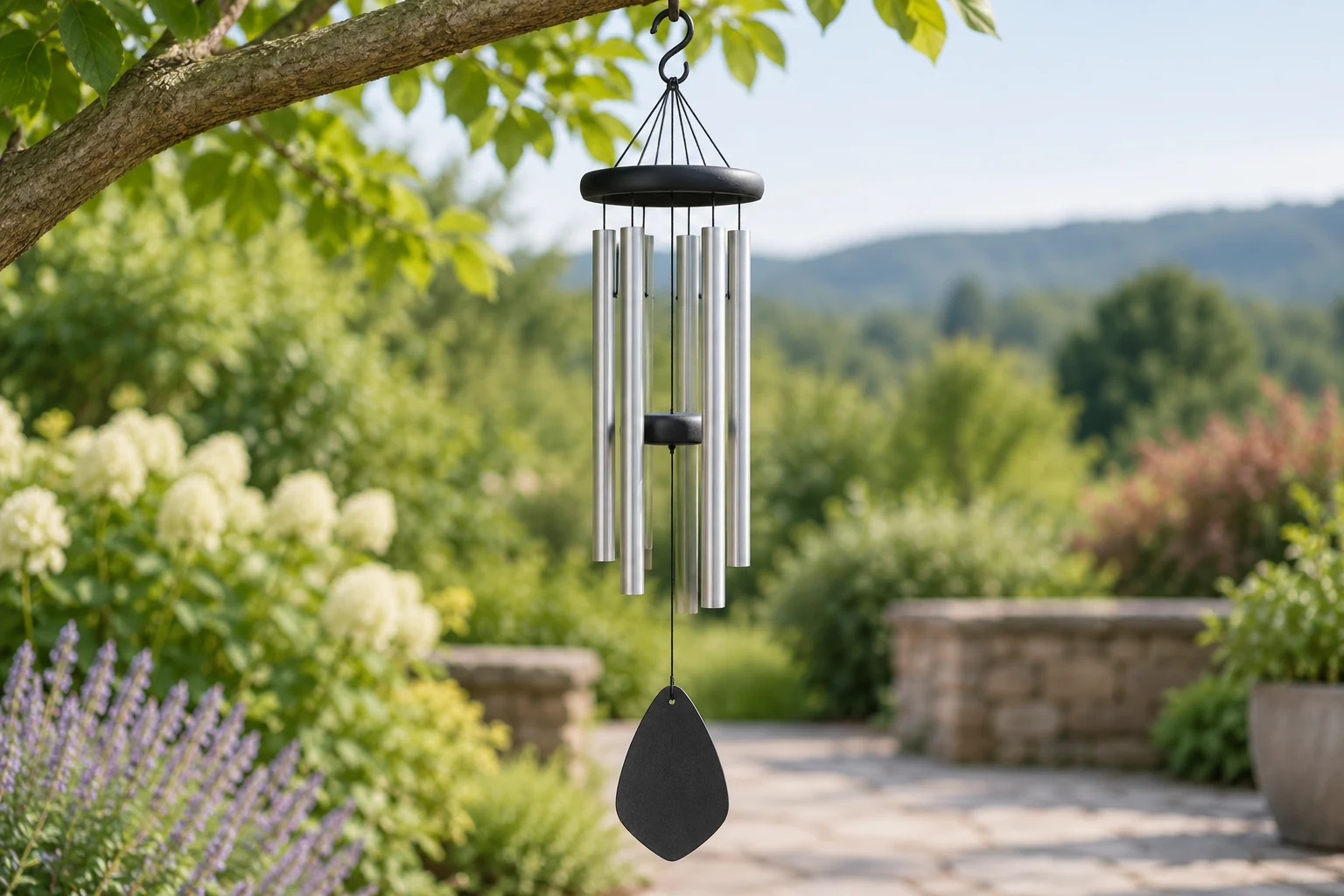
The visible wind chime parts tell you more about a hanging chime than a promise of a “deep tone” in its product title. A hook supports the assembly, cords hold the tubes, a striker hangs among them, and a lower windcatcher responds to moving air. When those pieces have room to move, the striker can contact the tubes. The shape and sound you hear still depend on the actual item, the hanging position, and the day’s wind. This guide explains the parts you can identify on two complete metal-tube examples. It does not rate their sound or predict what either will sound like at your home.
Start by looking at a full photograph of the chime rather than only the tube close-up. Trace one line from the hanging hook down through the top plate and into the cords. Then find the object suspended near the middle of the tubes and the piece hanging below. These positions explain the motion more clearly than a decorative label. Both catalog examples are black tubular chimes, but their wood parts and upper forms differ. The gallery images show physical arrangements; they cannot demonstrate pitch, loudness, durability, or the strength of a particular hook.
The hook and top plate hold the assembly together
The hook is the first visible connection to a porch beam, bracket, or another approved support. The hook must hang from a support suitable for the delivered chime and the site. A product image may show an S-shaped hook, but it does not show the strength or condition of the surface where you plan to hang it. Check the maker’s instructions and the support’s rating before installation. Do not hang a chime from a loose plant branch or a fixture whose load limit is unknown merely because the photograph makes it look convenient.
The unbranded black wind chime has a hook above a round wooden top in its native gallery. The listing describes a 36-inch overall hanging length, five metal tubes, a hardwood striker, and a lower windcatcher with a tree design. Those are seller descriptions for this exact item. The images show the hook and the hanging assembly, while the dimensions and materials should be checked on the delivered product. The top is a carrier for the suspended pieces; it is not a separate wall mount or a substitute for a suitable overhead support.
The NOBRAND 30-inch wind chime shows a contrasting upper form. Its four gallery images show a black hook and a light, angular wooden top from which black tubes hang. A central round striker and a lower, angular windcatcher are also visible. The listing calls the tubes coated aluminum and describes a pentatonic tuning. The pictures support the visible form, but a still image cannot confirm a tuning claim. Treat the seller’s exact measurements and sound descriptions as information to verify for the item you receive, not as an acoustic test carried out by this article.
Before choosing a location, compare the full hanging length with the usable space. The hook and upper cords count, as do the tubes and the lower windcatcher. A chime that looks short when only its tubes are shown may reach much farther down once fully suspended. Leave room for the entire assembly to swing without striking a window, railing, sign, or a person. That is a placement check you can perform with the delivered item; do not infer it from a cropped product photograph.
Cords position the tubes and allow movement
Each tube hangs from a cord or line attached to the upper plate. The lines keep the tubes in a particular pattern around the center. Look for the path of each cord and whether it has become twisted with its neighbor. A long photograph can conceal tangles behind the tubes. When unpacking a chime, let the pieces hang freely and look from several sides before trying to straighten them. Follow the maker’s setup directions if a cord seems incorrectly threaded. Pulling on an unknown knot can change the alignment or damage a connection.
Both examples show multiple dark tubes suspended around a central striker. One gallery includes a close view of nylon cord and a separate view of the wooden top. The second shows an angular wooden carrier with cords descending to the tubes. These views explain how the parts relate spatially without proving how the chime will move in wind. In use, the movement must occur without the cords wrapping around the hook or dragging against nearby objects. If a tube sits against another before any air moves, inspect the delivered assembly rather than assuming the sound description will somehow correct the layout.
Look at the upper connection after the chime is hung. The top should rest in its intended orientation, and the cords should have a clear path downward. A chime hung too close to a wall may be unable to swing as shown in an open-space product photo. That may also cause a tube or windcatcher to strike the wall. Move the hanging position within the maker’s allowed setup rather than bending the cords or cutting them to fit a tight corner. Cord length and fastening are part of the product design, and arbitrary changes can alter how the pieces meet.
The tubes and striker make the contact
Metal tubes are the most recognizable part of these examples. The central striker is a separate piece hanging where it can meet the tubes as the assembly moves. If the striker never reaches the tubes, the chime may remain quiet despite moving air; if it is pressed tightly against them, the motion will differ from a freely suspended arrangement. That is a simple physical relationship, not a diagnosis of any particular product. Check the delivered assembly and its instructions before adjusting a striker or making a claim that a seller supplied the wrong part.
The 36-inch example’s listing says its five tuned tubes are intended to produce deep tones. Its gallery shows a round wooden striker among dark tubes. The 30-inch example’s native page describes coated aluminum tubes and a deep tone, while its gallery shows a round central striker against a different tube arrangement. These seller words do not establish a measured pitch, a decibel level, or the exact interval between notes. What you can verify at home is whether the tubes are present, hang freely, and can be contacted by the striker when the chime moves normally.
Tube length is visible in the galleries, but do not use a photograph to compare two products’ absolute dimensions. Images may have different crops and no shared scale. Read the specified measurements for the exact SKU, then measure the delivered item if the size matters at your intended position. A larger overall chime can also have a long stretch of hanging cord or a large windcatcher, so the headline height alone does not tell you tube length. When evaluating a sound sample, remember that recording equipment, volume setting, and wind conditions can change what a listener hears.
The published wind chime not ringing guide begins when an installed chime does not sound as expected. It asks the reader to observe movement and seek the maker’s directions where needed. This article has a different job: identify the parts before installation and understand why the striker needs a path to the tubes. If your chime is already hung and silent, use the troubleshooting guide for that specific problem. Do not treat a general parts description as permission to retie, shorten, or replace the cords.
The windcatcher helps move the center line
The piece below the tubes is often called a windcatcher or sail. It hangs from the central line beneath the striker, presenting a surface that moving air can push. The pictured 36-inch example has a round wooden piece with a tree motif; the 30-inch example has an angular light wooden piece. Those shapes are visually distinct, but the listings and still images do not prove that one responds to a gentler breeze than the other. A test in the actual location would be needed to observe movement under local conditions.
When you inspect the delivered chime, confirm that the lower piece hangs without touching a wall, pot, railing, or ground. It should have space to move without bringing the whole assembly into a collision. A chime hung beside a door may also swing into the door’s travel or against a person walking past. Use the full moving envelope when selecting a position. A neat straight-down view in a product gallery is only one pose; the windcatcher and tubes will not remain in that exact vertical alignment while they move.
Some listings describe adjustable striker positions. The 36-inch example mentions adjustable cord lengths, and its gallery depicts a small adjustment piece on the central line. That does not mean every chime is built for adjustment, or that moving a part will produce a particular note. If the delivered product includes an adjustment mechanism, use the maker’s directions and record the original position before changing it. If it does not, leave the knots and cords intact. A reader should never need to improvise a repair just to understand what the visible components do.
Read sound and weather claims with their limits
“Deep,” “relaxing,” and “resonant” are descriptions of an intended listening experience. They do not specify a measured frequency or guarantee that a neighboring home will hear the same thing. The shape, tube construction, striker, placement, and wind all contribute to what happens. The native listings offer product descriptions; this guide has no independent acoustic recording of either exact item. If sound is your deciding factor, listen to a trustworthy demonstration of the same SKU at a realistic playback level, and keep the recording conditions in mind.
Outdoor placement also requires more than the word “outdoor” in a title. The hook, cords, wood, finish, and support each face weather differently. The 36-inch listing mentions coated metal tubes and weather-resistant cord; the 30-inch listing describes coated aluminum. Neither gallery proves how those materials will age at your site. Read care directions, inspect exposed connections over time, and take the chime down when the maker or local conditions call for it. Do not promise rust-free life or storm resistance from a still product image.
The published porch wind chime guide helps choose a corner, a subject, and a sound that feels appropriate for a familiar place. Its decision is aesthetic and situational. This explainer stays with the physical assembly: hook, plate, cords, tubes, striker, and lower windcatcher. Use the porch guide when comparing the atmosphere of possible positions. Use the parts check here when a product page gives you a close-up of one feature but leaves you unsure how the full chime hangs together.
Inspect the complete item before hanging it
Lay out the delivered components against the maker’s contents list. Check that the hook, upper plate, tubes, central striker, and lower windcatcher are present and attached as described. Look for damage to cords, sharp tube edges, or a loose connection. Keep small packing pieces away from children and pets during setup. If anything appears missing or damaged, stop and contact the seller rather than assembling a substitute part. A catalog image can help identify a shape, but the delivered item and its instructions control the actual setup.
Hold the chime from its intended hook over a clear area before choosing a permanent location. Let the lines untwist naturally. Observe whether the tubes hang separately, whether the striker is among them, and whether the lower windcatcher clears the floor. Do not make a loudness judgment from one hand movement; the point is to see the assembly. Compare that complete hanging outline with the space you measured. A 30-inch and a 36-inch listing describe different overall sizes, yet the useful decision still comes from the real item and its clearance in the planned position.
Once it is hung on a suitable support, look at it from a normal walking route. The hook should remain secure, the cords should be free, and the moving parts should not strike a door, window, or person. Check after the first windy day as well as on installation day, because a calm initial inspection may not show the full swing. Keep the maker’s care information with the product. Understanding the visible wind chime parts makes those later checks easier: each part has a position and a role you can inspect without relying on an unverified sound promise.