Crypto Commerce
Whynter keg fridge vs Joreek beverage cooler: storage format
A keg already chosen for your drinks setup gives this comparison a clear starting point. The Whynter keg fridge description explicitly names space for a 1/6 barrel or one Cornelius keg, as alternatives to its can arrangement. Joreek describes a 190-can interior without establishing keg compatibility. If you want packaged drinks, both deserve consideration. If you want to keep a named keg format cold, Whynter provides the more relevant storage claim, although the equipment needed to dispense from that keg remains a separate question.
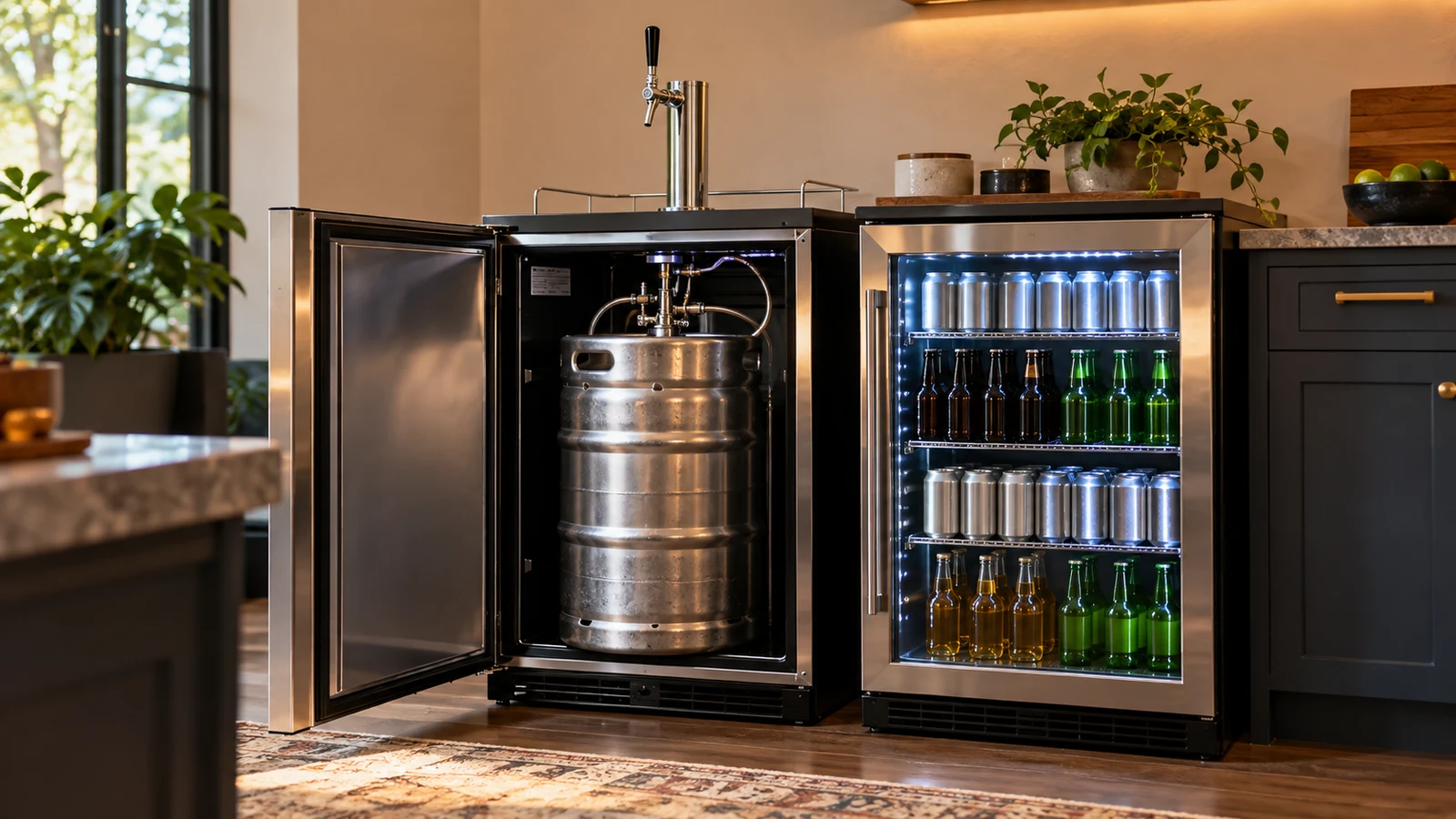
A keg already chosen for your drinks setup gives this comparison a clear starting point. The Whynter keg fridge description explicitly names space for a 1/6 barrel or one Cornelius keg, as alternatives to its can arrangement. Joreek describes a 190-can interior without establishing keg compatibility. If you want packaged drinks, both deserve consideration. If you want to keep a named keg format cold, Whynter provides the more relevant storage claim, although the equipment needed to dispense from that keg remains a separate question.
That distinction should guide the purchase before cabinet size or a lower temperature setting attracts your attention. Decide whether you are buying somewhere to keep a keg, a complete draft-serving setup, or shelves for individually packaged drinks. These are different purchase requirements. The descriptions support a comparison of storage formats, but they do not establish that either purchase includes a working tap system. Keep that unknown visible while deciding which product to investigate.
Compare Refrigerator Compartment Capacity Beyond The Total: Keg Or Cans?
Whynter lists a total volume of 2.9 cubic feet and capacity for up to 115 standard 12-ounce beverage cans, or a 1/6 barrel, or one Cornelius keg. Read those as alternative configurations. The description does not promise the full can capacity alongside a keg, or two kegs together. A buyer who wants canned drinks beside a keg needs a separate answer about that combined arrangement before treating it as a supported use.
The Whynter keg fridge is therefore worth examining with the identity of your intended keg in hand. Give the seller its format and actual dimensions, including any fittings that must remain attached during storage. Ask which interior arrangement supports it. The published format claim is useful, but it leaves questions about the exact container and the space needed above it when connected.
Joreek lists 5.29 cubic feet, capacity for 190 cans and three adjustable shelves. Its supplied description does not identify the can size used for that capacity claim. Whynter specifies standard 12-ounce cans, so the two headline counts are not a fully defined like-for-like comparison. Ask Joreek's seller which containers and shelf positions produce its stated count, particularly if your usual purchases include tall cans or a mixture of package shapes.
For a can-only purchase, write down the drinks you actually intend to load. A shelf of one standard can size presents a different question from a collection of tall cans and bottles that you want to keep upright. Neither description establishes every possible combination. Use your own container dimensions to ask for a realistic arrangement, and decide whether reaching individual drinks matters more to you than achieving the maximum advertised count.
The guide Compare refrigerator compartment capacity beyond the total offers a related capacity question to explore. For this purchase, keep the inquiry specific: can the refrigerator accommodate the container you have chosen in the arrangement you need? A larger published volume does not, by itself, establish support for a particular keg or for connected dispensing equipment. Joreek's volume should not become an inferred keg specification.
Compare Refrigerator Compartment Capacity Beyond The Total: Storage And Serving
A buyer planning to store an unopened keg can focus the compatibility inquiry on the container, its orientation and the approved interior setup. Someone planning to serve drinks directly from it has more to resolve. Ask whether the exact refrigerator supports the intended dispensing arrangement and which components are supplied. Neither product description identifies an included faucet, keg coupler, regulator, gas cylinder or beverage lines. Their inclusion should remain an open question.
For Whynter, request confirmation of the connected keg's required overhead space and any approved route for lines. Do not assume that the named keg format establishes room for every fitting. If a proposed setup requires modifying the cabinet, obtain model-specific manufacturer guidance before proceeding. The supplied description establishes keg storage capacity; it does not establish permission to drill the appliance or add a particular dispensing assembly.
Consider a buyer who already owns a Cornelius keg and wants to keep serving through existing equipment. The useful question is whether that exact assembled arrangement works inside this refrigerator. A reply that merely repeats “fits a Cornelius keg” would leave the connection question unanswered. Ask for confirmation covering the keg with its fittings attached, the equipment that remains outside, and the manufacturer's supported configuration. This keeps the purchase tied to the intended use.
Whynter also lists three slide-out wire shelves. That provides a documented shelving feature for evaluating can storage, but the description does not explain which shelves remain in place with each keg format. If you expect to alternate between cans and a keg, ask how the interior is reconfigured and where unused shelves should be kept. Avoid planning on spare can storage around a keg until that particular arrangement has been confirmed.
Joreek Refrigerator Alternative: When Packaged Drinks Lead The Choice
The Joreek refrigerator alternative deserves attention when your shopping plan is built around individually packaged drinks. Its description gives you a can-capacity claim and adjustable shelving to investigate. It also names auto-defrosting. Those details are relevant to a shelf-based drinks setup, while the absence of a keg claim leaves keg use unresolved. Choose it for supported requirements rather than an assumed ability to replace a dedicated keg arrangement.
For example, suppose each person in a household prefers a different canned drink and you want those choices available separately. Ask how your usual containers would occupy Joreek's shelves and whether the desired arrangement leaves each selection accessible. Whynter remains a candidate for that same can-only use because its description explicitly includes cans. The decision then concerns your actual assortment and the documented arrangements, with no need to treat draft-serving equipment as part of the purchase.
Temperature is another difference in the descriptions. Whynter lists a range of 23°F to 65°F and Fahrenheit and Celsius indicators. Joreek lists digital temperature control from 37°F to 65°F. These are published ranges, not results from a comparative test. They do not establish how quickly either appliance chills a newly loaded keg or how the temperature of every drink compares with the selected setting.
Whynter's description also says it is designed to store beer just above the freezing point. That wording should not be treated as an explanation of every setting within the listed range. Choose a target appropriate to the beverage and follow the appliance instructions; do not assume the coldest available setting is suitable for everything you load. If your purchase depends on a specific serving temperature, ask for guidance covering that beverage and configuration.
Outdoor placement introduces a separate limit to this storage decision. Joreek's description names outdoor-grade 304 stainless steel, IPX4 weather resistance and a foam-insulated door. Whynter's supplied description does not establish an outdoor weather rating. Those facts make Joreek relevant to an outdoor drinks plan, but they do not establish unrestricted exposure or acceptable operation in every climate. Confirm the intended location against the exact model's instructions before allowing outdoor use to settle the choice.
Keep that placement check proportional to the storage question. If your plan calls for cans outdoors, Joreek has relevant stated features to investigate. If it calls for a keg outdoors, neither a Whynter keg-capacity statement nor Joreek's weather-resistance statement completes the answer alone. You need the same exact product to support both the container arrangement and the proposed environment. Combining capabilities from the two descriptions would create a product neither description establishes.
Compare Refrigerator Compartment Capacity Beyond The Total: Confirm The Selected Configuration
Once you have chosen the storage format, tie every remaining question to the exact item being sold. Request the model identifier and matching instructions, then check that the seller's answers concern that configuration. A brand name or a similar-looking cabinet is insufficient when the decision depends on a keg fitting with its connections attached. Keep any confirmation of package contents separate from confirmation of storage fit so that one answer cannot be mistaken for the other.
Whynter explicitly offers built-in or freestanding installation, with clearance required around the unit. Its description gives dimensions of 34 inches high, 15 inches wide and 23.7 inches deep, with an additional 2 inches when the handle is installed. Use those stated dimensions as a starting point, then obtain the required clearances and door-opening allowance. They are appliance dimensions, not a complete set of installation instructions or a promise that a particular opening will work.
For Joreek, the supplied description does not provide a complete dimension drawing or installation-clearance requirements. Obtain those details for the exact model if the can-storage plan depends on a particular location. You also need to know whether the proposed placement permits convenient loading of your chosen packages. Keep this check focused on access to the intended contents rather than assuming an installation configuration from the product name alone.
A useful seller inquiry can be short and concrete. State the exact keg and connected fittings you intend to use, or describe the cans you want to arrange on the shelves. Ask for the supported interior configuration and an itemized account of included equipment. Then identify the proposed location and request the corresponding installation requirements. Written answers that address your actual setup are more useful than a general assurance that the refrigerator is suitable for beer.
Before purchasing, check the current price and availability of the selected variant. If keg service requires separately purchased equipment, identify those costs before comparing purchase totals. For either product, read the displayed delivery terms and any return conditions relevant to an appliance that cannot accommodate your intended contents. Do not assume that an unanswered compatibility question will be resolved through a return. This comparison does not establish eligibility, charges or refund timing.
If you choose a cryptocurrency payment option, use the currency and network instructions actually displayed for the order. Confirm the requested amount and any stated fees, and read what any payment deadline requires. Payment details do not resolve appliance compatibility, so settle the storage and package questions first. There is no need to broaden this product decision into assumptions about available networks or merchant policies that have not been established here.
Choose the Whynter keg fridge for further consideration when the central requirement is its explicitly named 1/6-barrel or Cornelius-keg storage, subject to confirming your exact setup. For a can-led plan, compare the two documented shelf arrangements and investigate Joreek's outdoor claims if your location makes them relevant. Open the product that matches your intended drinks format and request the remaining configuration details before ordering, especially any equipment required to turn cold keg storage into a usable serving setup.