Crypto Commerce
Whynter CUF-210SSG upright freezer or CUF-110B for freezer overflow
Compare Whynter CUF-210SSG upright freezer by actual interior space, cabinet footprint, door access, temperature controls, defrost, and a lock.
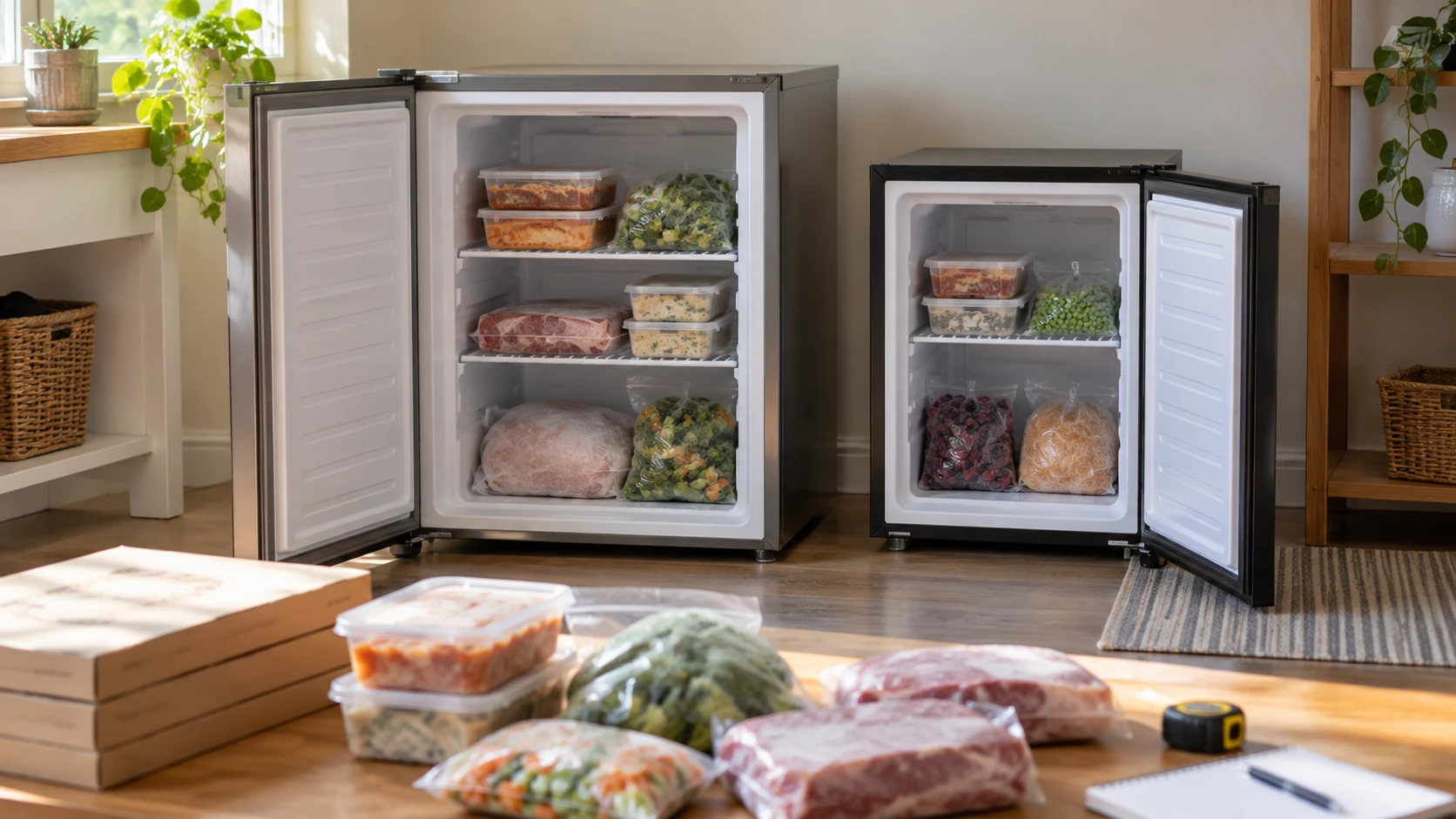
The Whynter CUF-210SSG upright freezer lists 2.1 cubic feet, two removable shelves, a reversible door, and a cylinder lock. A published guide on small freezer usable-capacity checks compares different models but raises the same question about how much of the stated volume you can use. The Whynter CUF-110B upright freezer is a smaller 1.1-cubic-foot black cabinet with one removable shelf and a lock. Both add upright frozen storage, but the size of your food packages and proposed corner will decide what is practical.
List the frozen items actually overflowing the main freezer. A few meal containers and bags of vegetables may need only one compact shelf. Bulk meat, wide pizza boxes, or several weeks of prepared food can need more space than a total-volume figure suggests. Measure the width and height of the two most awkward packages and compare them with shelf clearance. A cubic-foot number alone cannot show whether a box can pass through the door and lie flat. The product rows give different levels of interior detail, so confirm any missing dimensions before ordering.
Measure the outside and the path inside — Whynter CUF-110B upright freezer
The CUF-210SSG gives exterior dimensions of 27 inches high, 17.25 inches wide, and 20 inches deep. It is described as freestanding and needs clearance around its cabinet. Mark that footprint on the floor, then allow for the open door and a person kneeling to reach the lower shelf. The listing says the door is reversible, which may help beside a wall, but the current manual should confirm the hinge-change procedure and clearance needed to pull the shelves out. A recessed handle avoids one protrusion without eliminating the need to open the door fully.
The CUF-110B lists exterior dimensions of 19.5 inches high, 18.5 inches wide, and 17.25 inches deep. Its shorter cabinet may suit a low alcove, although its listed width is greater than the CUF-210SSG's. Measure the exact space, including trim, skirting board, and door swing. Both models are described as freestanding and need clearance around the unit. Ask for the current installation diagrams before placing either in a cupboard. A cabinet fitting through the opening is only one part of safe placement; airflow, access to the power outlet, and room for cleaning also matter.
Trace the delivery route too. The taller CUF-210SSG may fit its final alcove yet be awkward to turn through a doorway in its carton. The CUF-110B is shorter, but its width and packaging still need checking. Neither saved row gives complete packaged dimensions or safe orientation for transport. Ask about laying the appliance down and the required wait before plugging it in after delivery. Plan how the floor will be protected from spills during defrost and from scratches when either cabinet is moved for cleaning.
Look past total volume — small freezer usable-capacity checks
The CUF-210SSG gives interior dimensions of 12 inches wide, 21 and three-eighths inches high, and 14 and seven-eighths inches deep. Its listing also describes a compressor step measuring 11 and five-eighths inches wide, 7 and five-eighths inches high, and 5 and three-quarters inches deep. That raised step interrupts the lower space. Measure a large container against the shelf where it would actually sit, not the rectangle formed by the cabinet's overall interior dimensions. Two removable flat wire shelves can change the arrangement, but removing one trades organization for height.
The CUF-110B lists an interior 13.5 inches wide, 13 and five-eighths inches high, and 12 and seven-eighths inches deep, with one removable flat slide-out wire shelf. Compare those measurements with the widest package you expect to store. The CUF-210SSG is taller inside and has two shelves, but its stated interior width is narrower. A 1.1-cubic-foot freezer may still be enough for portioned foods if each category has a place. It may be frustrating for wide frozen pizzas or an irregular package that occupies most of one shelf. Ask for an interior photograph or model-specific manual to see any compressor step and the shelf positions before deciding.
Sketch where everyday stock would go. Reserve one area for food used every week and another for less frequent bulk items. Put dates on packages so the oldest food stays visible. An upright freezer makes the front of each shelf easy to inspect, but items at the back can still disappear. Both Whynter cabinets have locks according to their saved rows. A lock may limit casual access; it will not organize the contents. Decide where the key belongs before putting either freezer in a shared space.
If a freezer will sit in a shared office or common room, decide who is responsible for the key, inventory, and defrost schedule. Both Whynter rows say the cylinder lock comes with two keys. Verify the keys are present for the exact delivered model and keep a backup in a known place. A lock can help prevent casual access but should not make a spill or a full compartment impossible to address. If a child might reach the appliance, review the maker's safety instructions for that location; do not treat a small cabinet or lock as a substitute for supervision and safe installation.
Check cabinet temperature — Whynter CUF-110B upright freezer
The CUF-210SSG lists a mechanical-control range from minus 10 to 2 degrees Fahrenheit. That is a Republeq's product specification, not a measurement of the delivered freezer under load. Put an independent freezer thermometer inside, follow the maker's setup period, and check the reading after a typical batch of food is added. A mechanical dial may not display the compartment's exact temperature. Note which setting holds the needed condition in the room where the freezer will run, then check again after a seasonal temperature change or a move.
The CUF-110B's saved row gives a mechanical-control range from minus 11 to 10.4 degrees Fahrenheit. The CUF-210SSG's stated range is minus 10 to 2 degrees. These are Republeq's product specifications, not a comparison of achieved temperature under a typical food load. Ask how each control dial is marked and use an independent freezer thermometer after setup. For either unit, follow current food-safety guidance for frozen storage and verify the actual interior condition. A freezing label is useful only if the food remains at the intended temperature through ordinary door openings and new loads.
Plan for power interruptions. A locked door or compact cabinet does not establish how long food will remain frozen after electricity fails. The saved rows do not give a matched holdover test, alarm function, or temperature history. Keep the doors closed during an outage, follow relevant food-safety advice, and check the food and thermometer when power returns. If the freezer sits in a detached room or secondary building, decide how someone will notice a tripped circuit or unplugged cord. Neither listing establishes a remote alert system.
Include defrost and cleaning in the routine — Whynter CUF-110B upright freezer
Both Whynter rows describe manual defrost. That means planning time to move food to safe temporary storage, let ice melt according to instructions, collect water, dry the interior, and restart the freezer. Ask where the drain or collection point is and how much clearance you need to reach it. Never attack ice with a sharp tool that could damage the cabinet. The smaller model does not remove this maintenance step; it only changes the volume of food you may need to move. Keep the manual accessible so the person assigned to defrost can follow the model-specific procedure.
Wire shelves can separate packages, but small items can tip or fall through the gaps. Use containers suitable for freezer conditions if the layout needs bins, while leaving the airflow space specified by the manufacturer. Check how easily each shelf lifts out for cleaning and whether replacement shelves are available. Inspect the door seal periodically, especially after moving the appliance or reversing a hinge. A misaligned seal can change how often frost builds up.
The CUF-210SSG listing mentions a compressor noise figure below 45 dB, R600a refrigerant, Energy Star rating, and a one-year limited warranty. The CUF-110B row reports noise below 42 dB, the same named refrigerant and certification, and a one-year limited warranty. Treat those figures as listing claims to confirm for the exact models and current offers. Noise measurements may not share a method, and a lower listed figure alone does not guarantee a quieter installation. Use comparable current energy figures and your local electricity price to estimate operating cost.
Think about the outlet and household circuit. Both units need continuous power, but the saved rows do not provide comparable cord lengths or electrical-load details. Avoid a location that requires a cord stretched across a walking path or an extension arrangement the manufacturer does not approve. Leave enough room to unplug the freezer safely for service without dragging a full cabinet across the floor. If other appliances share the proposed circuit, have a qualified person confirm that the arrangement meets the equipment instructions and local requirements before committing to that location.
Decide how much overflow is real — Whynter CUF-110B upright freezer
The CUF-210SSG's two shelves, larger stated volume, reversible door, and lock may suit a household that needs organized overflow and has room for a 27-inch-high cabinet. The CUF-110B's shorter cabinet may fit a low location if its wider body and actual interior dimensions hold the foods you want to move. Both demand room for airflow and manual defrost. Measure the corner, door path, and packages before deciding. Then inspect the delivered model label, shelf, seal, control, and manual. Let it reach a verified temperature before filling it. A freezer that fits the room and food is more useful than a larger capacity number in isolation.