Skills & Planning
Whiteboard face count and magnet use: read each feature
Separate stated writing faces, magnetic use and panel adjustment without transferring an unspecified property to another surface or offer.
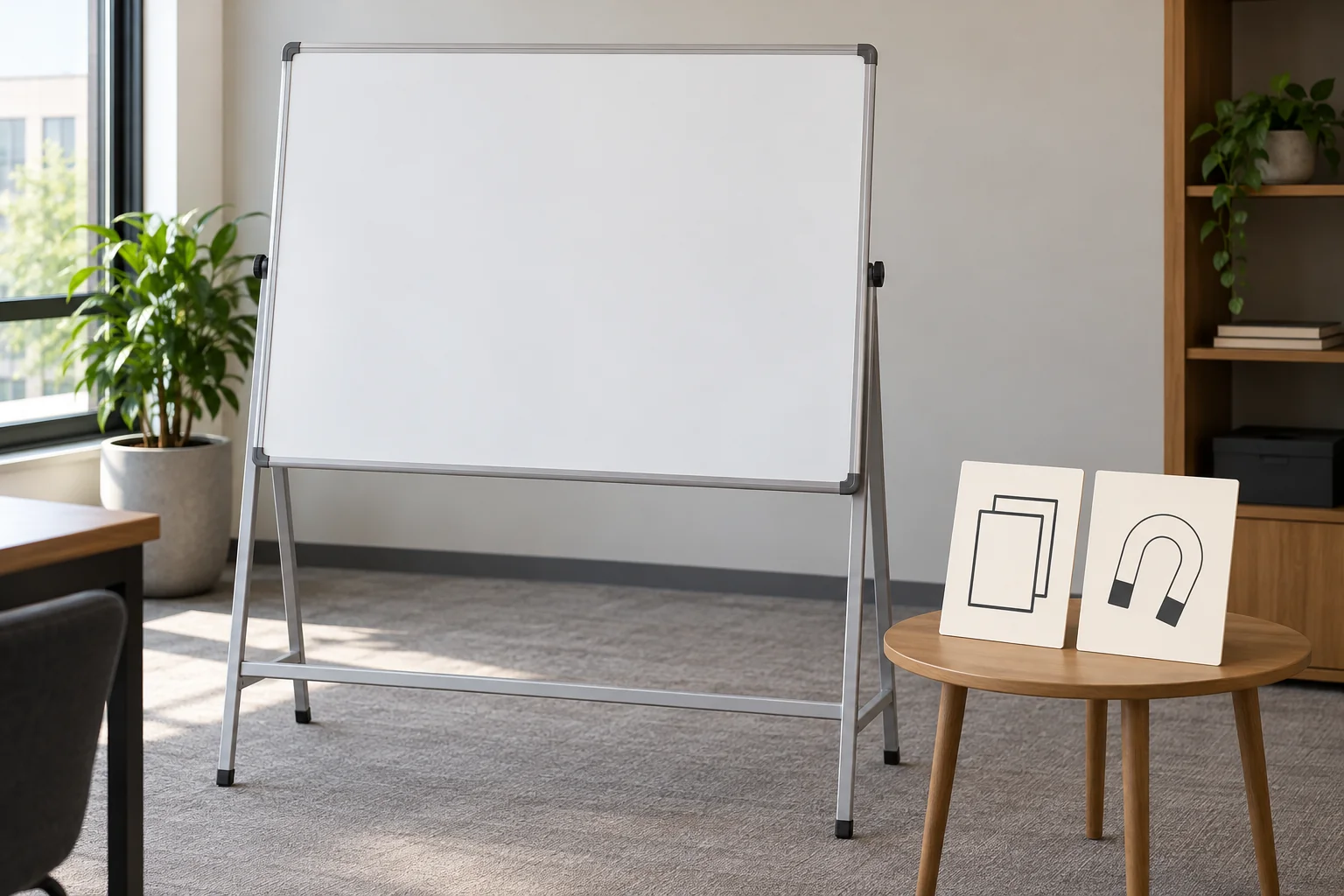
Give each surface feature its own question
Whiteboard face count and magnet use describe different features. One statement concerns how many writing faces an offer names; another concerns a magnetic capability stated for a surface. Do not let either answer stand in for the other. A board described as magnetic has not thereby acquired a second writing face, and a double-sided title does not establish that either face has a particular magnetic property. Keep the actual wording attached to the actual offer, especially when the gallery shows only one side.
This explanation uses two current whole-whiteboard offers to make that reading distinction. It reports no physical inspection, magnet-holding trial, rear-face observation or cleaning test. A description can establish what a seller states while leaving the corresponding delivered item and its instructions to be checked. The goal is an understandable feature record, with unsupported fields left open. It is not a recommendation to rotate a panel, attach an accessory or write on a surface whose applicable use has not been established.
Start by naming the feature you want answered. If the question concerns a second writing face, retain that wording rather than asking only whether the board has many features. If the question concerns using a particular magnetic accessory, identify that separate requirement. A seller can then answer one question without being assumed to have answered both. A broad reply saying that the product is versatile may repeat the offer's tone while leaving the surface-specific questions unresolved.
Read the AGCAN magnetic wording within its offer
The AGCAN easel whiteboard listing identifies a magnetic dry-erase board on an integrated stand and describes flip-chart use. Its sole gallery shows the complete whiteboard easel from the front, including magnetic and dry-erase labeling and clips at the top. This supplies the illustrated product form and the stated front-facing features. It does not show the rear or establish another writing face, rear magnetic capability, clip capacity, a paper-fit range or supplied markers and magnets. No physical performance result is adopted here.
Keep the stated feature with the place the evidence actually identifies. If the available image shows a front view, describe it as that view. Do not write that both faces were inspected. Likewise, a statement about the offered board should not be copied to a different board merely because the two have pale writing panels and metal-looking frames. Identify the selected product whenever a feature matters to the comparison. Shared appearance is not a complete account of a surface's supported use.
A gallery can include promotional labels that have different evidential roles. It can help identify the whole object while leaving a performance claim untested. This article adopts no scratch-resistance, ghosting, environmental or stability result from the image. Those statements would need their own appropriate support if they controlled a purchase requirement. Keeping them out of the feature record prevents an illustration of the board from becoming a collection of results that nobody here actually observed or measured.
Read the Miumaeov face statement separately
The Miumaeov whiteboard listing title describes a double-sided writing board on a stand. Its description names adjustable height and panel angle. The sole gallery shows a complete framed board with side pivot knobs, while displaying only one face. Retain the title's double-sided wording as an attributed statement, without claiming this article inspected the reverse. The account does not supply a magnetic capability to transfer from the AGCAN offer. No adjustment procedure, locking-force result, child-development benefit or durability test is adopted.
The face-count statement and the adjustment statement answer separate questions. A description of panel movement is not, by itself, a complete description of the reverse surface. Conversely, a stated second writing face does not explain how an actual product should be adjusted or secured. Obtain its applicable instructions before attempting any movement. This article provides no knob sequence, permitted direction, hand position or support arrangement. The distinction can be explained without turning a catalog photograph into an operating demonstration.
An unanswered magnetic question should remain unanswered. Do not rewrite an absent magnetic statement as a definite finding that the surface is nonmagnetic. The offer may simply leave the property unspecified in the evidence reviewed here. Ask the seller or maker about the exact surface and the intended accessory if that information matters. A clear comparison can contain a stated feature in one field and an unresolved question in another without forcing the two products to have matching entries.
Build a feature record without merging the columns
Give the record a place for the exact product reference, the stated writing faces and any stated magnetic use. Add the source of each statement. If the wording identifies a particular face, preserve that qualification. If it does not, leave the scope of the wording visible rather than silently assigning it to every surface. The record should show what has actually been stated, not what would make a neat comparison table or a more convenient purchasing conclusion.
A face-count entry can say that the title names two writing sides while noting that the gallery shows only one. Those are compatible statements about different evidence: an attributed claim and a view actually available. There is no need to pretend the photograph has independently verified the title. Nor does a single photograph disprove the title merely because it does not show everything. Keep the limits attached to the evidence instead of demanding that one kind of evidence do another kind's job.
A magnetic-use entry needs the same care. Retain whether the source names the board generally or a specific face, and record the intended accessory question separately. This guide supplies no holding force, supported accessory weight or universal magnet compatibility. A statement identifying a magnetic feature is not a measurement of what a particular object will remain attached to under actual conditions. Ask for the relevant product guidance when that practical requirement remains open, without inventing a test or an attachment method here.
Use invented entries to see why one feature cannot answer both
Imagine a comparison record for three fictional products. The first description explicitly names one writing face and a magnetic feature on that face. The second names two writing faces but says nothing about magnetic use. The third names two writing faces and explicitly describes magnetic use on each. These are invented statements for the explanation, not descriptions of additional retail items or independent certifications of the two selected boards. Each entry contains only the facts supplied in its fictional definition.
The first fictional entry answers a magnetic question for its named face while identifying only one writing face. The second answers the stated face-count question while leaving magnetic use open. The third explicitly answers both within its invented definition. The differences show why the words cannot be substituted for one another. Having an answer in one field does not fill the other field automatically. That conclusion follows from how the examples were defined, rather than from handling any actual surface.
Now suppose someone adds “panel angle adjustable” to the second fictional description. Its magnetic field remains unanswered. The new statement also supplies no operating procedure, because the example did not define one. It adds information about another feature without resolving every earlier uncertainty. This is a useful habit when reading dense product titles: preserve each supported statement with its subject instead of treating an additional feature name as proof that all the other desired features must be present too.
A second face needs its own scope of use
When an actual product is described as having a second writing face, ask which applicable information identifies its supported use. Do not infer a care method, marker type or cleaning substance from the appearance of the front. Those practical details belong with the actual product instructions. If a source answers only the face-count question, retain that answer and name the remaining use question. An explanation can be complete about what a phrase means while remaining honestly incomplete about an unestablished product requirement.
Keep writing use separate from accessory storage as well. A person may want to write notes on a surface, place a paper document near it or store a tool on it. State the intended job instead of asking whether everything will work with the board. The selected accounts do not establish every proposed combination. A response about an ordinary writing function should not be shortened into approval of an unrelated attachment, and a named attachment feature does not establish which writing materials should be used.
The frame, ledge and any paper-holding components also need their own applicable information. This guide makes no load, clamp or included-accessory claim for them. A visible ledge does not tell you how many objects it can carry, and a photograph of clips does not establish the thickness of a proposed paper pad. If one of those questions matters to your task, ask about it separately. Keeping the questions distinct avoids expanding the explanation of writing faces into an unsupported equipment setup plan.
Make an exact seller enquiry
Identify the actual offer before requesting clarification. Quote the face or magnetic wording that prompted the question, and explain what remains unclear. You might need to know whether a statement covers a particular surface or whether the seller can supply the matching product instructions. Keep the request specific enough that the reply can identify its subject. A response concerning another model or variant cannot silently settle the selected offer's missing information unless the responder explains why it applies.
Save the answer with its qualifications. If the seller identifies a magnetic property on one named face, do not drop the face qualification when updating the comparison. If the response confirms a stated writing face but leaves accessory use open, retain both parts of that outcome. A qualified answer is useful evidence when it remains intact. Shortening it to “all confirmed” would hide which question was actually answered and could mislead the person who later prepares or orders the equipment.
If a listing changes while the enquiry is underway, keep the selected version identifiable. Compare the reply with the actual item being offered at the point of purchase. Do not move an answer from one variant to another merely because a title looks similar. The source of the clarification should make that relationship explicit where it matters. This article promises no particular reply, replacement, return or refund; it supplies a way to preserve the question and the answer without manufacturing a product finding.
Keep the display-message decision separate
The holiday counter-message guide develops a shop's confirmed temporary opening information, the intended viewing directions and responsibility for changing or removing notices. Those decisions concern what the shop wants to communicate. They do not establish magnetic properties or a writing-face count for these whole whiteboards. A clear message still needs equipment whose actual applicable features are understood, while a feature-rich object cannot decide the message or its audience on the shop's behalf.
The graph-paper specification guide distinguishes outside sheet extent from printed cell spacing using openly invented geometric models. Its arithmetic supplies no surface specification for a whiteboard. The connection is a reading habit: retain the subject of each statement and leave the other question open when it has not been answered. Here the relevant physical features concern faces and magnetic use, without calculating grid cells, certifying printed accuracy or transferring a paper measurement into a board property.
Keep any purchase and payment details identifiable
If you decide to order a board and want to ask about USDT, first identify the exact product variant and any surface clarification on which the decision depends. Neither native whiteboard page reviewed here establishes that a particular checkout accepts the token or any crypto payment method. Ask the seller what payment methods are available for the actual order through the seller's confirmed channel. If a crypto option is offered, establish the named asset, network, recipient details, full amount, fees and order reference from the current checkout instructions before authorizing a transfer. A token name alone does not identify those details. Keep the instructions with the selected goods so a later enquiry can be connected to the order that was actually placed. Obtain the applicable delivery, cancellation, return and refund terms, including how the seller would handle a refund for the chosen payment method. This article has not inspected a live checkout, transferred funds, verified settlement, compared exchange rates or established any tax treatment. A payment confirmation would not establish delivery, the actual surface features of an item or the suitability of a proposed accessory. Those later questions need their own evidence. Keep a missing product answer visible even if a payment option is available, and keep a missing transaction detail visible even if the product question has been answered. Do not send funds to an address copied from an unrelated message or treat a remembered network as current checkout instructions. If a transaction detail remains uncertain, leave payment pending while resolving it through the confirmed seller channel. An event date does not supply missing recipient information or make an unsupported surface claim suitable for the purchase.
Retain both answers without inventing either
Whiteboard face count and magnet use belong in separate parts of an understandable feature record. Preserve the actual title and description, say which face the gallery really shows and keep any magnetic claim within its stated scope. Treat panel adjustment and practical use instructions as further questions with their own evidence. An offer can answer one feature question while leaving another open. That is a useful, honest explanation of the available information, without an invented rear-face inspection, holding-force test or operating demonstration.