Crypto Commerce
WeiLaiKeQi automatic nut milk maker vs Mylk Machine for a weekly plant-milk routine
Compare WeiLaiKeQi automatic nut milk maker by batch planning, timed starts, heating and blending claims, controls, cleaning, and missing manual details.
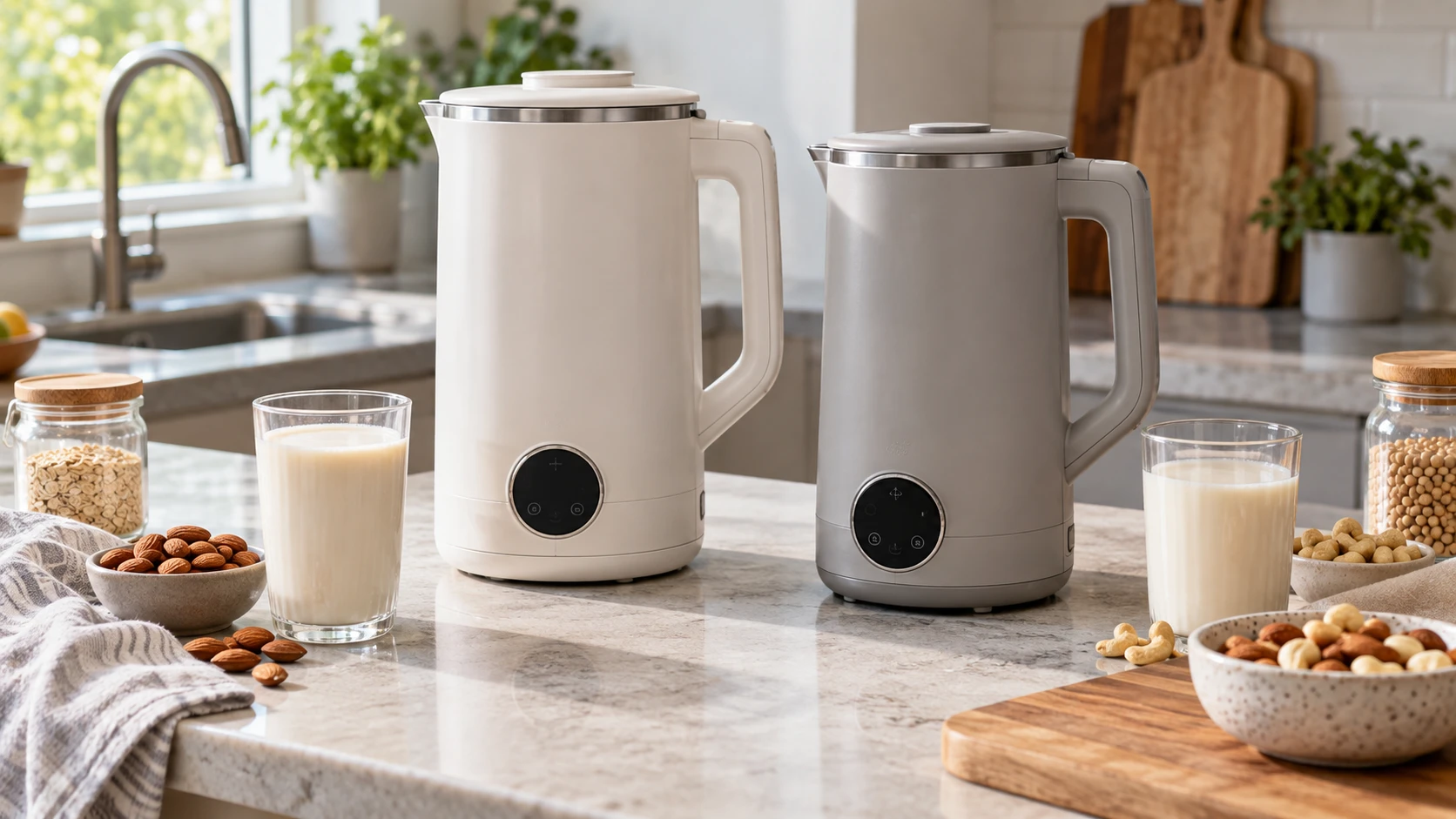
The WeiLaiKeQi automatic nut milk maker lists a 1,200mL vessel, a start timer that can be set up to 24 hours ahead, and a high-temperature wash button. Mylk Machine lists a 1,000mL capacity and eight automatic functions. Both descriptions promise plant milk without a separate filtering step, but they give unequal detail about the cycle and cleanup. Plan the amount you drink before choosing between them, then check the exact manual for hot-fill limits, recipe timing, and whether the finished drink needs straining for the texture you like.
The published guide on blender pitcher and serving cup capacity concerns a different blender setup, but its batch-planning question applies here: how much liquid fits the vessel you actually use, and how much do your cups hold? A 200mL difference between these two advertised capacities may be meaningful for a household filling several bottles. It may disappear once a hot recipe's safe fill line, foam, ingredients, and pouring losses are considered. Neither listing states the volume of finished almond or soy drink from a measured recipe, so do not treat vessel capacity as guaranteed yield.
The Mylk Machine 1000mL nut milk maker is described as an eight-in-one automatic maker for nut and bean drinks. Its source says the machine handles soaking, grinding, and stirring as part of the process. WeiLaiKeQi also advertises eight functions, but adds details about delayed start, insulation, and an integrated switch that stops operation when the lid opens. The number of functions alone tells little about the recipe you will make most often. Ask for the function names, temperatures, run times, and minimum ingredient amounts for both models.
Start with the batch that gets consumed — Mylk Machine 1000mL nut milk maker
A 1,200mL maximum sounds larger than a 1,000mL maximum, and WeiLaiKeQi does list the larger number. The saved description does not separate a cold blending limit from a hot cooking limit. Mylk Machine gives one 1,000mL figure without a hot-fill mark. Heated mixtures can rise and foam, so the usable limit may be lower than the printed vessel capacity. Check markings on the actual container and a recipe in the manual. A person making one glass may also need a minimum-fill mark; neither listing provides one.
Work backward from a normal day. If two people each take a cup at breakfast and fill a bottle for later, measure those containers rather than assuming a nominal liter is enough. Ingredients and residual liquid in the machine can reduce what reaches the cups. Make one recipe according to the manufacturer's directions and measure the poured result. That trial gives a practical yield for your preferred almonds, oats, or beans. It also shows whether you like the texture without straining, which both Republeq's product descriptions describe but neither independently demonstrates.
Mylk Machine says it makes a variety of nut and bean milks, including almond and soy. It describes an automatic sequence of soaking, grinding, and stirring, yet the pinned text does not say whether that sequence is part of every menu or only some programs. WeiLaiKeQi says dry beans can be blended without pre-soaking or filtering. These claims cannot be merged into one recipe instruction. Check each Republeq catalog entry for the exact soy program and preparation steps. Follow that manual for cooking and food handling rather than substituting a shortcut from the other product's advertisement.
If you regularly make a thick mixture, ingredient order and water level may matter more than the extra 200mL. Neither saved excerpt gives a maximum dry-bean weight or a tested ratio for almonds. Do not pack the chamber to the rim or add ingredients while blades are moving unless the manual expressly permits it. WeiLaiKeQi's lid-within-a-lid design is advertised for adding ingredients, but the same listing also mentions a pressure-release valve and high-temperature operation. Verify when the smaller lid may safely be opened and how pressure is released before trying to change a hot batch midway.
Check the timer and the heat cycle — Mylk Machine 1000mL nut milk maker
WeiLaiKeQi lists an appointment setting up to 24 hours ahead. That could help if a finished drink is wanted at a predictable time, provided the ingredients and program can safely wait. The description does not state whether the timer delays the start or chooses a completion time, nor does it give food-safety instructions for perishable ingredients sitting in the vessel. Ask for the manual's timer example and the allowed ingredients. Do not leave a prepared mixture at room temperature overnight solely because the machine has a 24-hour setting.
The WeiLaiKeQi excerpt describes three-layer insulation that maintains warmth. It also names a pressure-release valve and high-temperature wash, implying hot operation but not specifying the temperature of each drink program or a keep-warm duration. Mylk Machine's description calls the process automatic without providing a temperature chart. If hot soy milk is the goal, check both Republeq catalog entries whether the chosen program cooks it and how long it holds the temperature. If a cool almond drink is the goal, check whether either maker has a genuinely unheated setting. Do not infer those answers from the shared eight-in-one label.
WeiLaiKeQi states an 800W motor and separately lists 180W mixing power. The description does not explain the relationship between those ratings or give measured energy use per batch. Mylk Machine says it has an electric drive system but supplies no wattage in the pinned excerpt. These numbers are unsuitable for a performance ranking. The practical questions are whether each machine completes your recipe without stopping, how long it takes, and whether the result has the texture you prefer. A demonstration or clear manual table is better evidence than assuming the larger printed wattage makes smoother milk.
The WeiLaiKeQi specifications list 110V and 60Hz with a US plug and a detachable power cord in the package. Check the electrical rating on the delivered label against the kitchen outlet. Mylk Machine's saved text gives no voltage, plug, or cord details, so request them before ordering, especially if the product will be used outside the listed market. Place either unit on a stable counter with enough clearance to lift the lid and pour. WeiLaiKeQi states dimensions of about 19.5 by 13.6 by 30 centimeters; confirm their orientation and allow extra room for the cord and your hands.
Decide how much cleanup you will do — Mylk Machine 1000mL nut milk maker
WeiLaiKeQi advertises one-touch high-temperature washing and includes a cleaning sponge. A wash program can loosen residue, but its listing does not say that the blade area, lid seal, and pouring lip never need manual attention. Ask whether the high-temperature wash uses plain water, detergent, or a special cleaning cycle and whether the vessel can be submerged. The 304 stainless-steel inner chamber may be straightforward to wipe, but the pressure valve and lid insert create additional places to inspect. Follow the maker's cleaning instructions for those parts.
Mylk Machine describes a no-straining process but says little about cleaning. No straining means there may be no separate filter bag to wash; it does not mean pulp cannot collect in the vessel or on a seal. Request a photo of the interior and a page from the manual showing removable parts. If the family makes plant milk every morning, count the minutes from pouring the drink to leaving the counter clean. A small capacity difference may be less important than a difficult lid or an awkward way to reach the blade base after each batch.
WeiLaiKeQi mentions four noise-reduction features, including sealing rings and a noise-reducing shell, but provides no decibel measurement or matched test with Mylk Machine. Mylk Machine makes no comparable noise claim in its saved description. A person making breakfast while others sleep should ask for an operating demonstration or return terms that allow a real kitchen trial. Listen through the whole cycle, including any heating or final blending stage. A product described as "low noise" may still be loud for a few minutes on a hard counter.
Both listings use broad convenience language around eight functions. Ask for the exact menu names instead of counting them as eight distinct plant milks. One function could clean, warm, blend, or cook, and the available excerpt does not assign every button to a recipe. Check whether the selected cycle remembers settings and whether a stopped cycle can be restarted safely. WeiLaiKeQi's lid-open stop is a concrete feature to verify on the actual unit. Mylk Machine's pinned description does not mention a matching lid interlock, so do not assume it has one or infer that it lacks one from silence.
Decide from one recipe and one cleanup — blender pitcher and serving cup capacity
WeiLaiKeQi gives more information for someone who wants a larger stated vessel, delayed start, a stainless-steel chamber, and a named wash mode. Mylk Machine gives a smaller stated capacity and an automatic plant-milk process, but fewer details about temperature, controls, and cleanup. The second listing may still suit a household that needs only a liter at a time, once its menu and safety instructions are confirmed. The pinned descriptions do not establish a taste or texture winner for almond or soy milk.
Choose a recipe you will repeat, measure its ingredients and expected serving containers, and check both Republeq catalog entries for the manual pages that cover that recipe. Check usable hot and cold capacity, timer behavior, lid access, voltage, and wash steps. If possible, run the same recipe in each exact unit and measure the poured yield, texture, cycle time, and cleanup time. A machine becomes convenient when it can complete the drink you actually make and be ready for the next batch without a complicated cleanup.