Crypto Commerce
WANAI vs EastVita mini fridges: resolve compartment capacity
The WANAI product title says 4.5 cubic feet, while its description lists a 1.2-cubic-foot freezer and a 2.3-cubic-foot refrigerator compartment. Those compartment figures total 3.5 cubic feet. Before comparing this appliance with the EastVita 3.2-cubic-foot model, ask which capacity figures belong to the exact model being sold. Neither the larger title figure nor the compartment total should become your confirmed purchase specification until that discrepancy is explained.
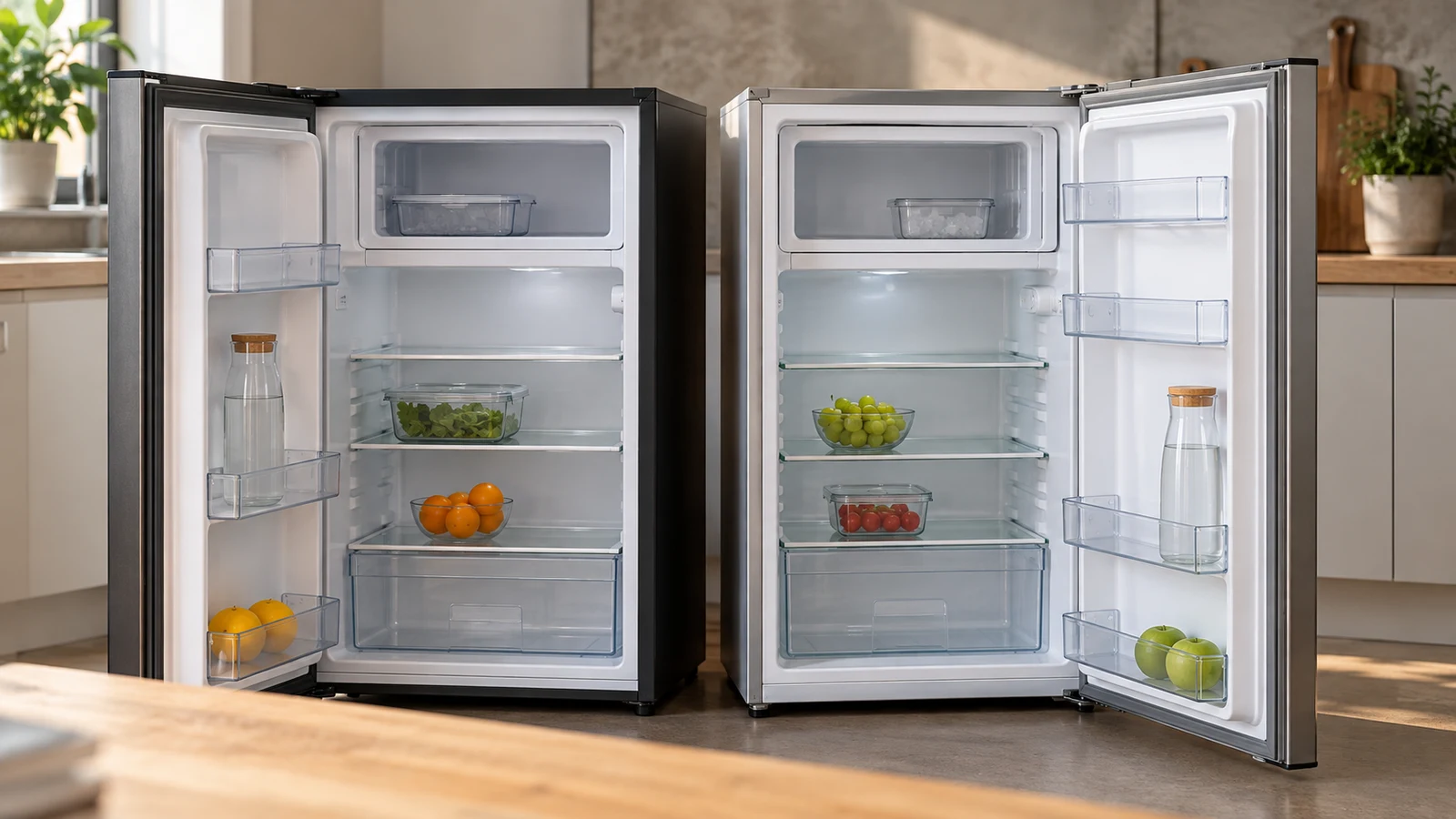
The WANAI product title says 4.5 cubic feet, while its description lists a 1.2-cubic-foot freezer and a 2.3-cubic-foot refrigerator compartment. Those compartment figures total 3.5 cubic feet. Before comparing this appliance with the EastVita 3.2-cubic-foot model, ask which capacity figures belong to the exact model being sold. Neither the larger title figure nor the compartment total should become your confirmed purchase specification until that discrepancy is explained.
EastVita's description presents a consistent capacity breakdown: 2.9 cubic feet for fresh food and 0.3 cubic feet for the freezer, alongside a stated 3.2-cubic-foot total. That consistency makes its listing easier to interpret, but it does not independently verify the appliance's measurements. The useful next step is to establish an agreed capacity breakdown for each exact model, then compare the compartment you expect to use most.
This is a narrow buying question with a practical consequence. A shopper reading only the two titles could assume the advertised larger appliance provides more room for every kind of food. The descriptions do not support that conclusion. They describe different allocations between fresh and frozen storage, and one listing contains an unresolved total. Keep those two issues separate while deciding what deserves further consideration.
Compare Refrigerator Compartment Capacity Beyond The Total: Identify The Conflicting Figures
Open the WANAI product page and read the capacity wording in both the title and description. The title advertises 4.5 cubic feet. The description assigns 1.2 cubic feet to the freezer and 2.3 cubic feet to the refrigerator. It also describes a two-door design. These are separate statements in the listing; the door arrangement does not explain the conflicting volume figures.
A useful comparison note should preserve what each statement actually says. Record the title capacity as advertised, the two compartment capacities as described, and the overall capacity as unresolved. Replacing the title figure with the compartment sum would make the note look tidy, but it would also turn your interpretation into an unsupported product specification.
The discrepancy could have an explanation, but the description does not establish one. Do not assume the title contains a typo, that the compartment numbers come from another model, or that an omitted storage area accounts for the difference. Those are possible questions for the seller. None is a fact you can use to complete the comparison yourself.
Likewise, the product's descriptive name does not supply a manufacturer model number. A title can identify the page you are reading without giving you the exact identifier needed to match a manual or specification sheet. Ask for the model designation attached to the appliance offered through that listing and selected option. Keep it with the capacity response so the answer remains tied to the item you would order.
The broader guide, Compare refrigerator compartment capacity beyond the total, is a useful follow-up when you are ready to evaluate storage allocation. For this pair, first settle which figures describe the advertised appliance. General capacity advice cannot resolve a contradiction within a particular product listing.
Compare Refrigerator Compartment Capacity Beyond The Total: Ask For A Reconciled Answer
A precise question gives the seller something concrete to resolve. You can write: "The title states 4.5 cubic feet, while the description lists a 1.2-cubic-foot freezer and a 2.3-cubic-foot refrigerator compartment. What are the total, fresh-food and freezer capacities of the exact model supplied with this option, and which listing figure needs correction?" Include the product page so the reply concerns the same item.
Ask for the manufacturer model number and a matching capacity specification if one is available. A specification sheet or manual is useful only when its model identity matches the appliance under discussion. If the document covers several models, request the particular row or section that applies. A document for a similar-looking refrigerator leaves the original question open.
Read the response for reconciliation. A reply that repeats "4.5 cubic feet" without addressing the compartment figures confirms what the title says, but it does not explain the mismatch. A reply that provides revised compartment values should also identify the total and model to which they belong. You need one coherent set of numbers, with any correction made explicit.
There are several possible outcomes. The seller may confirm the title and correct the breakdown, confirm the breakdown and correct the title, or identify a different configuration. If the answer changes the configuration you thought you were considering, reassess that item on its own details. If no explanation arrives, leave total capacity unresolved and avoid choosing it on the strength of the larger advertised number.
Eastvita Refrigerator Alternative: Keep The Comparison Provisional
The Eastvita refrigerator alternative gives a clearer written breakdown for this comparison. Its description lists 2.9 cubic feet of fresh storage and a 0.3-cubic-foot freezer section, with 3.2 cubic feet overall. It describes a reversible single-door design. Attribute those details to the listing while checking that the current product option still corresponds to that description.
At the description level, the fresh-food and freezer allocations point in different directions. EastVita lists more fresh-food volume than the 2.3 cubic feet stated in the other description. The other description lists more freezer volume than EastVita's 0.3 cubic feet. That is enough to explain why the headline total cannot settle your choice, even before the inconsistent capacity claim is resolved.
Suppose your main reason for buying a small refrigerator is to hold chilled ingredients between shopping trips. In that case, the fresh-food figure deserves attention once it has been matched to the exact model. A larger advertised overall total would not automatically satisfy that need better. Conversely, if you need space primarily for frozen packages, the freezer allocation is the relevant part of the comparison.
These are conditional buying priorities, not conclusions about which appliance will hold your groceries. The WANAI description's freezer figure remains part of a listing with inconsistent capacity information. You can use it to formulate a question, but should not turn it into a confirmed advantage. Ask whether both compartment figures are correct when requesting clarification of the overall volume.
EastVita's internally consistent numbers also have limits. They do not tell you how many of your containers will fit or establish cooling performance. Its description names a crisper drawer, two adjustable shelves and a can rack. Those are listed storage features, but they do not provide the internal measurements needed to promise that a particular dish or package will fit.
Delay value comparisons that depend on a precise capacity figure. A price-per-cubic-foot calculation would give a misleading impression of accuracy while one model's volume is unresolved. Even after clarification, consider which compartment contributes the space you actually need. Paying for additional freezer volume has a different practical meaning from obtaining more fresh-food room.
Compare Refrigerator Compartment Capacity Beyond The Total: Match The Clarification To Your Purchase
Once you receive an explanation, return to the exact listing and selected option. Compare the model identifier in the answer with any identifier shown there. If the reply refers to a different appliance or a different capacity option, ask which one the order would supply. The goal is to prevent a correct specification for one model from being applied to another.
Keep a short record of the resolved details: the model identity, overall capacity and compartment breakdown. Include the seller's explanation of the conflicting wording. This gives you a usable reference if the title and description still disagree when you revisit the page. A saved response documents what you were told; it does not establish a return entitlement or any other merchant policy.
Then check whether the clarified appliance suits its intended location. EastVita's description gives dimensions of 17.52 by 19.29 by 32.72 inches, but the supplied wording does not label each axis. Confirm which measurement is width, depth and height before using them in a space plan. The supplied description for the other appliance does not establish its exterior dimensions, so request those separately.
Do not derive exterior measurements from cubic-foot capacity or treat outside dimensions as usable interior space. Ask for the manufacturer's placement instructions for the confirmed model without assuming ventilation clearances or electrical requirements. This keeps the location check tied to the appliance you may buy, while leaving the capacity discrepancy as its own question.
For a container that determines your purchase, request the relevant interior dimensions or a model-specific layout drawing. For example, a rigid dish needs a usable space that accommodates its shape; an overall volume figure cannot answer that fit question. Limit this check to the item that matters to your decision instead of trying to predict a complete grocery load from listing text.
Adjustable shelves appear in both descriptions, and the first listing also describes a crisper drawer. These features may be relevant when considering a layout, but neither description establishes every shelf position or opening dimension. Avoid filling those gaps with assumptions based on product photographs. Ask about the particular arrangement you need after confirming the model and capacity.
Eastvita Refrigerator Alternative: Decide What Must Be Settled Before Ordering
Your next action depends on why the discrepancy matters to you. If total capacity is a firm purchase criterion, wait for a coherent specification before ranking the two models by size. If one particular compartment matters most, obtain confirmation of that compartment and the model identity. If the explanation remains unclear, you can continue considering the other product without declaring the unresolved appliance unsuitable in every respect.
Before ordering either model, check the current listing details, selected option and availability. Read the checkout total and applicable purchase terms before committing. If an unresolved capacity question would affect whether you keep the appliance, examine the relevant cancellation and return terms in advance. Do not assume that a mismatch guarantees a particular remedy, deadline or refund arrangement.
The immediate step for WANAI is specific: ask the seller to reconcile the 4.5-cubic-foot title with the listed compartment capacities and identify the exact model supplied. Use that answer to reopen the comparison with EastVita's stated fresh-food and freezer allocation. Choose only after the capacity you are relying on belongs to the product you intend to order.