Home Decor & Table Settings
Wall clock not ticking? Check the displayed hands
An original household example checks displayed hand positions when no tick is heard, leaving controls and repairs with the actual clock instructions.
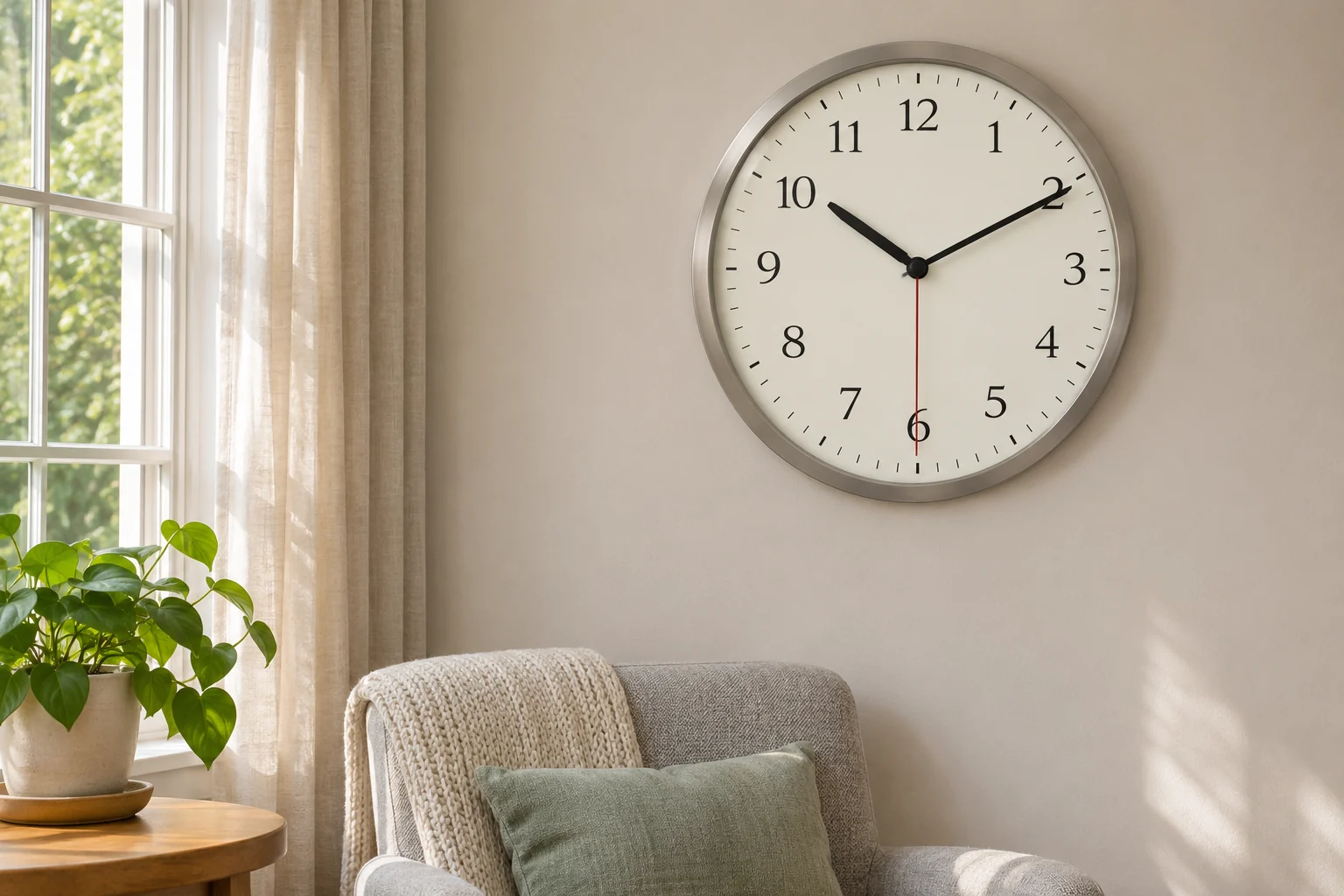
Wall clock not ticking describes what you have not heard. Before calling an existing clock stopped, look at what its displayed hands actually do. Keep the clock in its ordinary, unchanged setup and compare the indication on separate occasions. A changed indication can answer the immediate question about advancement while leaving the clock's accuracy and sound level untested.
This guide concerns an observation before deciding whether a repair question exists. It supplies no battery, control, mounting or case-opening procedure. Do not touch the hands or alter a clock to make the observation fit an expectation. If the display remains unchanged or unclear, keep that result specific and use the applicable instructions for the actual item before considering any intervention.
Describe the symptom you actually noticed
Begin with the event that prompted concern. Perhaps you entered a quiet room and expected to hear a tick, or somebody said that the clock had become unusually quiet. Say which observation is yours. “I could not hear ticking from the chair” gives a different starting point from “the displayed hands have stayed in the same positions on separate occasions.”
Keep a remembered sound attached to the clock you remember. A familiar clock elsewhere in the house does not establish what this one should sound like. You may have moved into another room, received a different model or simply noticed the current clock for the first time. Those possibilities can remain questions without becoming explanations for a failure you have not established.
Also identify the particular unit being discussed. Two similar clocks can have different histories, even when they came from one order. Pointing to the kitchen clock is clearer than saying that “the clocks” have stopped. A useful check begins with the same visible object and continues with that object, so nobody silently substitutes a second unit while comparing observations.
Read silent wording as a claim about the offer
The Designice round-clock offer says Silent Quartz in its title and lists two clocks. Its gallery shows conventional round faces. Neither wording nor photographs provide an observed sound or timekeeping result.
The butterfly wall-clock offer says Non Ticking. Its gallery includes a pendulum form and a rear mechanism view. These references supply no operating instructions or proof that a delivered unit advances.
A silent clock claim can explain why sound is a question worth separating from the display. It cannot report what happened in your room. Read the exact selected offer when identifying the clock, then return to the unit in front of you. A catalogue phrase should not become either a diagnosis of failure or a certificate that the clock is working.
Look at a display you can actually identify
Choose an ordinary safe viewing position from which you can recognize the displayed hands. If you cannot make them out, say so. There is no reason to reach for a clock on a high wall or change its mounting merely to complete this check. An unreadable observation remains unreadable; it does not establish that the indication has stayed still.
Keep the view attached to the same dial. A reflection, a product photograph on a phone or a second clock in the room is a different reference. If someone helps, point out the actual clock and the visible indication you mean. They can then describe what they see without having to infer which object or part prompted the question.
The task does not require a drawing of the internal mechanism or an interpretation of every decorative feature. Use the display you normally consult for the time. If you are unsure which feature provides that indication on an unfamiliar clock, obtain the item's applicable information. A decorative element should not be assigned a function just because it appears near the dial.
Compare displayed hand positions on separate occasions
Notice the displayed hand positions, then return to the same clock on another occasion while leaving its setup unchanged. You can use a clear photograph as your own earlier reference if that is practical. The comparison concerns what this display shows. It is not an instruction to run a calibrated test, count ticks or calculate an error.
Do not turn several immediate glances into a claim about a longer period. If you do not have a distinct earlier observation, leave that part open. You can look again later without inventing a result in the meantime. The useful comparison is between observations you actually made, rather than between the present view and an assumption about what must have happened.
If somebody sets the clock between observations, acknowledge that change. A different hand position after an adjustment cannot establish what the clock did on its own. Keep that comparison separate and follow the actual instructions for any later check. There is no need to undo the adjustment or improvise another setting procedure to rescue the earlier comparison.
A changed indication supports a limited report: you observed the display advance between those occasions. It does not establish that the indicated time is correct, that the clock will continue running or that its sound meets anyone's preference. Keep those additional questions separate if they matter. An initial troubleshooting check can finish without settling every feature of the clock.
Follow an invented no-tick concern through the check
Imagine Ari noticing a clock in a room shared with Bea. Ari cannot hear a tick and says it may have stopped. Bea asks whether Ari has compared the display, rather than suggesting an adjustment. Ari, Bea, their room and their clock are invented. No acoustic test, inspection, repair or operation of either linked retail product is reported here.
Ari looks at the displayed hands from the usual chair and keeps a clear personal reference. Later, after an ordinary household task, Ari looks at the same clock again. In this imagined case the indication has advanced, and neither person has adjusted it. Ari revises the original concern: the clock was not heard from the chair, while a change in the display was observed.
Bea does not announce that the clock is accurate or that everyone will find it silent. Those claims would go beyond their invented observation. Ari also drops the proposed search for a replacement movement. The immediate reason for considering a repair was an inference from sound alone; the comparison has given Ari a more specific account of the clock in this scene.
Keep an unchanged or uncertain display unresolved
Consider a different fictional result. Ari returns but cannot confidently compare the current view with the earlier reference. Perhaps the first photograph did not show the hands clearly. Ari can say that the comparison was inconclusive. Calling it a stopped clock would conceal the missing observation and send Bea toward a repair question that has not yet been described accurately.
If Ari does clearly observe the same indication on separate occasions, that is useful information to keep. It still does not identify an internal cause or supply permission to open the case. Ari can consult the actual clock instructions or seek item-specific assistance with the observed symptom. A battery or mechanism from another model is not established as the answer by this comparison.
Keep unrelated changes out of the result. If someone moved the clock, operated a control or changed its power arrangement, describe what actually happened rather than presenting the outcome as the original unchanged-setup check. This does not require a large log. A short account of the relevant change is enough to avoid attributing an adjusted display to unexplained advancement.
Leave decoration and retail photographs in their own roles
The butterfly reference includes a hanging decorative form below its dial. Its static gallery cannot report whether that part swings, whether the hands advance or what sound the clock makes. This article provides no test linking a pendulum's appearance or motion to timekeeping. Return to the indicated display instead of using an attractive moving feature as a substitute answer.
Likewise, different hand positions across catalogue photographs do not form a running test of one unit. The pictures are product references, not your sequence of observations. Use them to identify the offer being discussed while leaving their timing and staging unspecified. An actual household check should not claim a result assembled from unrelated retail images.
The quartz clock dial guide separates mechanism labels and display details. The wall clock sightline guide concerns where a face can be seen. Here the question starts with an unheard tick and follows the actual indication before considering a repair.
Conceptual clock observation; no exact retail unit, elapsed-time test, measured silence or repair result is shown.
Keep a purchase separate from the observation
Ari may still prefer another clock for its appearance or an independently resolved feature. That is a separate household choice. Neither an unheard tick nor an attractive product picture establishes that another clock is needed. Finish the observation in its actual terms before making a replacement purchase carry an explanation it cannot provide.
If you decide to consider a clock or another item on republeq.com, review the exact current offer and checkout for that order. A preference for cryptocurrency does not establish that a replacement clock is needed or that a particular payment method is available. If you prefer USDT, first confirm that the actual transaction offers it. Obtain the applicable asset, network, amount and receiving destination from the responsible service for that specific order. Do not copy instructions from another purchase, a product image or an unrelated message. Check the seller, selected item, variant, supplied package, delivery details, displayed total and terms. Leave any unclear field unresolved while you seek clarification. Review an applicable fee or conversion term from the current transaction instead of inserting an estimate. Keep the real order reference and the instructions that were confirmed. If an acknowledgement arrives, retain what it actually confirms instead of treating it as proof that a clock will meet a household preference. If payment status becomes uncertain, reconcile that status before considering another transfer; uncertainty does not establish that nothing happened. This article supplies no wallet address, transfer guarantee or recovery procedure. A completed payment cannot diagnose a clock, authenticate silence or establish timekeeping accuracy. You can leave an order unplaced while a relevant product question is answered. If somebody orders on your behalf, provide the exact selected reference and any remaining limitation, so an unresolved assumption is not carried silently into the transaction. Retain the confirmed transaction information with the actual order, and keep a later product enquiry attached to the clock that was selected.
Describe the result you have: an observed change in the display, a clearly unchanged indication or a comparison that remains uncertain. Keep the absence of an audible tick as its own observation. That gives the next conversation a concrete starting point without claiming a sound measurement, inventing a fault or choosing an unsupported repair.