Troubleshooting & Repairs
Vacuum bag loosens after sealing: inspect the seam
Distinguish a bag that loosens after sealing from one that never evacuated. Use NESCO VS-C1 seam and puncture checks with the exact model instructions.
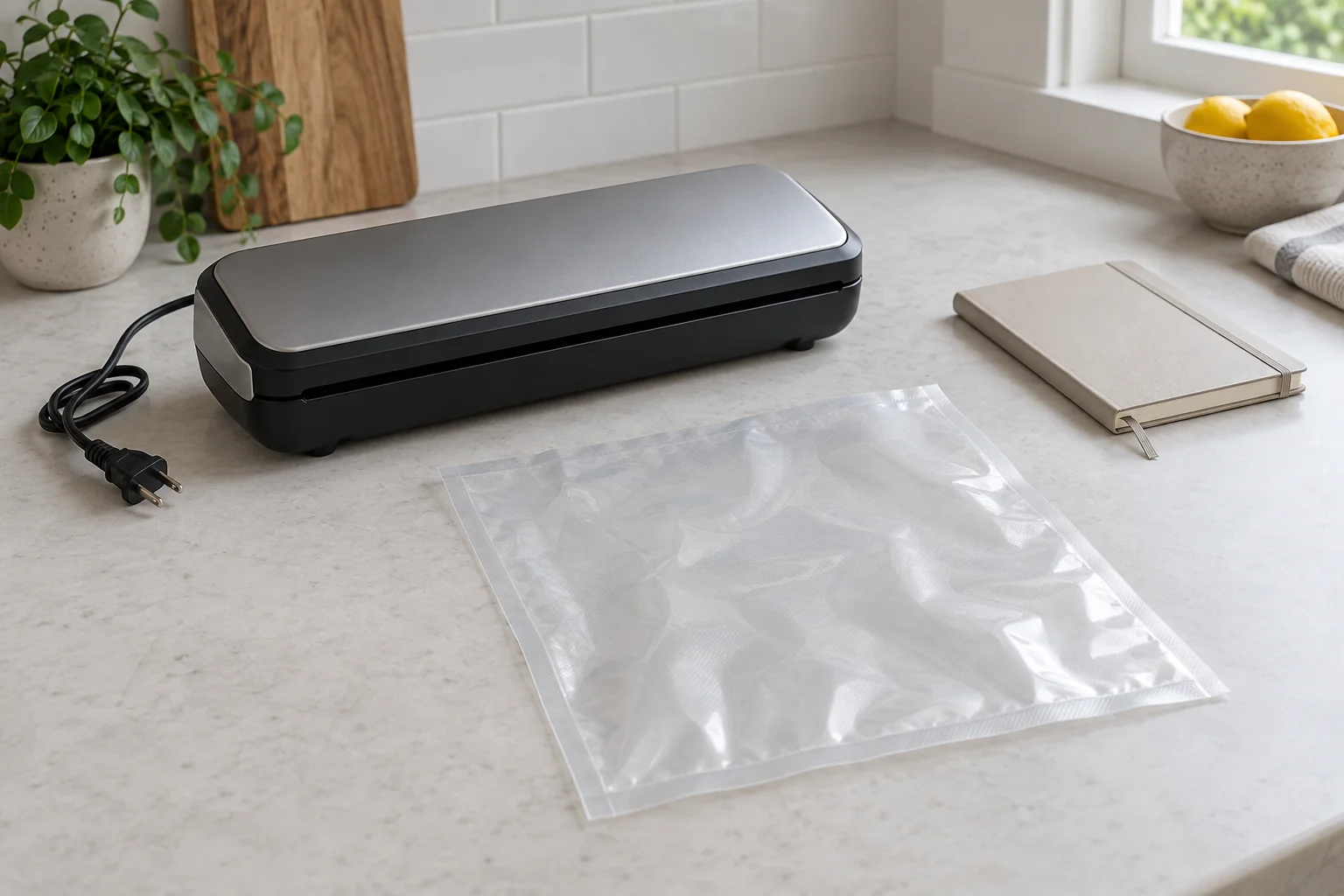
If a vacuum bag loosens after sealing, begin with the order of events. Did you actually see the bag draw inward before it later became loose? Or did it remain loose throughout? Keep those accounts separate. This guide addresses the first account using the NESCO VS-C1's after-sealing troubleshooting guidance. A bag that never evacuated belongs to another troubleshooting question. Stop before putting more packages through the same uncertain arrangement, and keep the affected package available for inspection without treating its appearance as an assurance about its contents.
The NESCO VS-C1 value pack identifies one VS-C1 device with twenty-five quart bags and twenty-five gallon bags. Its description names Vacuum and Seal, Seal Only, Pulse and Cancel functions. Those supplied bag quantities are useful when checking the purchase, but they do not establish that any particular finished bag is sound. Keep the observed result of the bag in front of you separate from the offer's contents and advertised operating features.
A vacuum sealer seam check has a specific scope
For a VS-C1 vacuum sealer seam check, NESCO lists wrinkles, crumbs, grease and liquids as possible causes of leakage along the seal. Its remedy is to reopen the bag, wipe the inside top and smooth it along the sealing strip before resealing. It separately calls for checking the bag for a puncture or hole. These checks concern different possible leakage locations; neither should be assumed from the final loose appearance alone.
The VS-C1 guide requires unplugging before cleaning, prohibits immersing the machine, and calls for thorough drying. It also specifies two minutes of rest after a sealing or vacuum-sealing operation. Follow its complete instructions for the actual machine before carrying out a response. This article supplies no internal repair, electrical repair or cleaning procedure for another model.
NESCO's sealing tips also say to keep the bag's open end dry, clean and straight, with no wrinkles or creases in the open area. A wet open end can be difficult to melt and seal tightly, according to the same sealing tips. Leave sufficient space for positioning it in the chamber rather than overfilling the bag. These are VS-C1 instructions to consult before the next operation.
Once the package can be handled under the applicable instructions, look at the seam area and the rest of the bag as separate areas of interest. Describe a visible clue precisely enough that someone else could find it: a fold crossing the seam near one corner, for example, is more useful than “the seal looks wrong.” Keep the distinction between a clue and an established cause. Finding a fold gives you something specific to address under the instructions; it does not prove that there is no hole elsewhere.
Separate what changed from what you assumed
Consider a fictional person who finishes a cycle, sees the bag pulled closely around its contents, and puts it aside. When they return, the bag is loose. They initially describe this as a pump failure. Yet their own observation includes a period when the bag was drawn inward. Retaining that earlier observation changes the support question: the reported problem concerns the result afterward. It leaves the exact reason unresolved, but avoids discarding the part of the event that distinguishes this problem from a bag that never evacuated.
Now change the fictional account slightly. A second person only sees the loose bag later; someone else operated the machine. They cannot supply the missing earlier observation simply because a finished seam is visible. Ask the operator what they actually saw before deciding which account applies. If nobody knows, keep that uncertainty in the question. The purpose is to select an appropriate troubleshooting entry, not to make the story sound more complete than the evidence allows.
The FM2435 bag-not-vacuuming guide develops the pump-running, bag-not-evacuating problem for its own FoodSaver model and manual. It helps distinguish the observation, while its channel placement and controls stay with that appliance. For the VS-C1 here, use NESCO's applicable after-sealing guidance when the observed sequence actually matches it.
A vacuum bag puncture is a separate possibility
A vacuum bag puncture question concerns the bag itself, beyond the seam being inspected. Keep any visible damaged area in view when explaining the problem. For a fictional comparison, imagine one package with an obvious mark halfway down a side and another with material caught across the newly made seam. The two observations point to different places to investigate. They do not establish that every bag with a side mark leaks or that every untidy seam has failed.
In that comparison, replacing the bag and changing the seam preparation at the same time would leave two explanations for a later difference. If the next result were better, you would know the overall arrangement had changed, while the contribution of either change would remain unresolved. That may be enough to decide how to proceed under the manufacturer's directions, but it would be weak evidence for a precise diagnosis. Be especially careful before describing the machine itself as repaired on the strength of a different bag.
You can explain this uncertainty without running an elaborate home experiment. Tell support which visible condition was present, what permitted response you carried out, and what result followed. If two things changed, say so. Avoid inventing a percentage failure rate or declaring a bag brand incompatible from a few uncontrolled events. A useful question can remain narrow: you found a specific condition and need to know whether the manufacturer's next step applies to your actual unit.
Use a small example before committing a batch
Imagine a second fictional work session with three packages, called A, B and C solely for this example. A is the package that loosened after an initially drawn-in appearance. B has not yet been processed. C was made earlier and has a different history. Keeping those roles separate prevents a later explanation from quietly using C as though it were a controlled comparison with A. A bag made on another occasion may differ in ways nobody documented.
Before continuing with B, the operator consults the actual VS-C1 instructions and addresses the condition found on A using the permitted method. The next result is then described as the result of that response, with any other change acknowledged. This is an illustration of clear reasoning, not a report of a test conducted for this article. No package here was measured for leakage, seal strength or storage performance, and no success rate is assigned to the NESCO offer.
If the same uncertainty remains, adding more packages does not resolve the missing explanation. Pause the batch and obtain the model-specific assistance needed for the next decision. This also keeps a doubtful package from being mixed into a group that someone else assumes is finished. The unresolved package and the unfinished work need different treatment in the work area, even when the bags look similar from a distance.
Keep the Seal-a-Meal offer's controls separate
The Seal-a-Meal SAP_2115070 offer describes a white appliance with hands-free vacuuming and sealing, and includes four quart bags and a manual. Its stated start arrangement involves pressing the lid until its Hands-Free Indicator Light appears. That is the offer's description of its own appliance. It is not the VS-C1 control sequence, and the NESCO seam remedy above is not presented as Seal-a-Meal's approved procedure. Use the instructions supplied for the actual Seal-a-Meal unit when investigating its result.
The Seal-a-Meal description names eight-inch and eleven-inch bags and rolls, along with quart and gallon formats from Seal-a-Meal and FoodSaver. If packaging is part of your support question, identify the actual material used instead of answering only that it was a vacuum bag. Keep its packaging or product reference available so the correct supplier can assess it. The compatibility statement belongs to this Seal-a-Meal offer. It gives no permission to transfer every named material to the NESCO unit. A shared bag-size description also does not establish that two pieces have the same history or condition.
Shared labels such as vacuum and seal can make two appliances sound more alike than their actual controls are. If a person describes using “the vacuum button,” clarify which machine was used before explaining what the action accomplished. A reply about another device can be interesting without answering the present support question. Keep the supplied manual available when discussing a named control, particularly if another household member is recalling an action from a different machine.
Leave the food-handling question with its own guidance
The vacuum-sealing freezer storage plan covers preparation, labels and food-handling considerations around a packing session. It keeps those questions separate from equipment operation. Consult the appropriate food-handling guidance for the actual contents while a machine or package question is being resolved. A later equipment result does not supply missing information about what happened to the food before it was packed.
For example, a label saying when a bag was sealed records that event. It does not describe every earlier handling event, identify an unlabelled ingredient or answer an unresolved storage question. Keep the original relevant information available to the person deciding what to do with the contents. This guide assigns no storage duration and provides no assurance that a particular loosened or resealed package is safe to keep.
Finish with the unresolved decision clearly stated
A concise support request can begin with the actual sequence: the VS-C1 completed an operation, the bag was observed drawn inward, and it later appeared loose. Add the visible seam or bag condition you found and the response carried out under the matching instructions. If a period of the sequence was unwitnessed, leave it unwitnessed. You need not construct a fault code or name an internal component to explain an external observation accurately.
Ask for the next applicable check or service step if the cause remains unclear. Review the answer against the unit and symptom before acting. If it concerns a bag that never evacuated, clarify that your observed result changed after sealing. If it concerns another model's controls, clarify the actual appliance. These are concrete ways to keep a support exchange directed at the problem that remains, without repeating operations simply to obtain a more reassuring-looking bag.
Before another person takes over the session, show them which package is unresolved and which work has not been started. Keep the applicable instructions with the machine and explain the next decision still needed. This handover prevents an unfinished investigation from being mistaken for completed packing. Resume the equipment task only when the manufacturer's applicable directions or support response provide a clear path for the actual observed condition.