Gift Wrap & Party Supplies
An unintended spoken cue before the visit begins
A complete original story about a host whose private reminder becomes the first thing her visitor hears, before their actual conversation finds its own course.
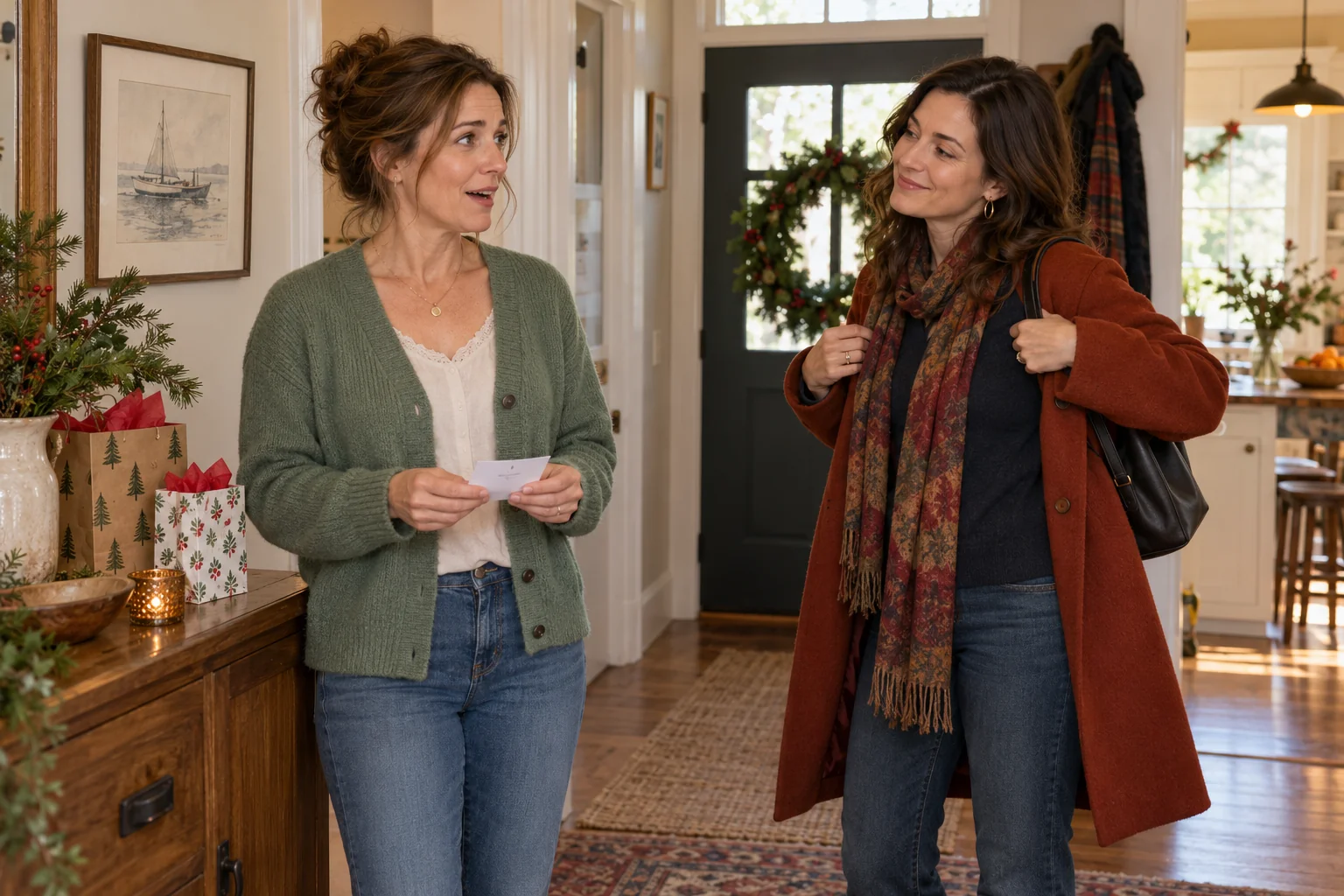
The reminder came out as a greeting
An unintended spoken cue is the first thing Sal hears when Merel opens the door. “Ask about the boat,” Merel says, reading the small card in her hand. She meant to look at it silently before her friend arrived. Instead, she has said the reminder aloud while Sal is still standing on the step with her coat buttoned and one glove tucked beneath her arm.
Merel, Sal, the reminder and the visit are invented for this complete original story. No actual conversation is observed and no general rule about preparation, friendship or embarrassment is being proposed. The two actual gift-bag offers discussed separately below are not the bags in the fictional house. Their descriptions provide no evidence for what either character thinks or says.
Sal looks at the card, then at Merel. “Which boat?” she asks. Merel has not reached the greeting she intended to use. She says hello now, a little late, and moves aside. Sal comes in without repeating her question. The glove slips from beneath her arm. They both bend for it, stop when they see the other moving and let Merel pick it up.
The card is still in Merel’s other hand. She had taken it from the sideboard when the bell rang, intending to leave it there after one last glance. There are two short reminders on it. The first concerns the boat. The other concerns a photograph Sal mentioned in an earlier message. Merel has left enough space between them for the list to look more important than she intended. Two unused festive gift bags stand behind its place on the sideboard, waiting for another occasion.
A card that had not been meant for the visitor
She puts the glove on the chair and the card beside it. Sal takes off her coat. There is no way to return the opening to the version Merel imagined, with the reminder left privately on the sideboard and a question appearing at the right moment over tea. What Sal has actually heard is an instruction addressed by Merel to herself. Merel says that it was a note so she would remember to ask.
“I gathered,” Sal says. She hangs her coat on the hook, misses once and gets it on the second try. Merel waits with both hands free, unsure whether to offer help that is no longer needed. Then Sal turns back and says the boat is still in the drawing. Merel had remembered there being a boat, but not whether Sal was drawing it, repairing a model or planning to get rid of one.
In this fiction, the boat belongs to an unfinished picture Sal has been working on. It is an invented subject in an invented drawing, without a real vessel, a making method or a claim about an actual artist. Sal has brought a folded sketch of the picture in her bag. She had meant to show it at some point during the visit. She asks whether Merel would like to see it now.
Merel says yes and clears the middle of the table. The little reminder card remains on the chair beside the glove. She notices it while moving a cup and decides against putting it away in a hurry. Sal has already seen it. The short line at the top can remain ordinary writing on an ordinary card while something else happens in the room.
Two actual gift-bag accounts stay outside the fiction
The actual BMKB holiday gift-bag offer has a title naming Christmas gift sacks and tags. Its sole native gallery image shows complete gathered-top festive sacks with ties and decorative holiday motifs. No maker/model label is visible. The description contains garbled colour and clothing-measurement boilerplate, which supplies no accepted gift-bag size or material specification here. No delivered count, closing mechanism, carrying strength or repeated-use result is verified. The pictured seasonal greetings are decoration, without an authenticated maker identity.
The actual zhengchengjian square gift-bag offer shows complete handled bags and tags across four gallery images, including red, black, white and blue range examples. Its title and description disagree about package quantity and dimensions. Those discrepancies remain unresolved; no quantity, measurement or delivered colour is adopted here. Printed Thank You wording is not a maker/model label. Metallic, material, recyclability and carrying claims have not been independently established. This account does not identify any bag used by Merel or Sal.
The boat in the unfinished picture
Sal opens the folded sketch on the table. It shows a narrow stretch of water, a short landing and the boat Merel has remembered. Merel expected the boat to occupy more of the page. In the drawing, it sits to one side of a broad blank area. She asks whether the blank part is still waiting to be drawn. Sal says she has not decided what, if anything, belongs there.
Merel looks at the sketch again. In her first imagined question, the boat had been the whole subject. She had pictured asking whether it was finished, hearing an answer and moving on to the next reminder. Now the blank part takes up more of her attention than the boat does. She points near it without touching the paper and asks whether Sal wants to keep that much space.
Sal says she sometimes wants to put a building there, and sometimes wants to leave the landing alone. She has made other versions, but has not brought them. Merel cannot compare pages she has not seen. She asks about this one. Sal moves the folded edge away from a drop left by a cup, then describes the low building she tried in another sketch.
The building in Sal’s account has no story attached to it yet. She had put it there because she wanted something beside the landing. Merel begins to supply a purpose for it, then stops before deciding that the picture contains her own invention. She tells Sal what she had started imagining. Sal says that could be another picture, but it is not what she was drawing when she made this one.
They let the proposed building remain unwritten in their conversation. Sal asks what Merel had thought the boat was doing when she first mentioned it weeks ago. Merel admits she had remembered the word more clearly than the message around it. She knew she wanted to ask about it. That was why the card contained such a short instruction and why the instruction had not been enough to supply a whole question.
The second reminder stays on the chair
Merel brings the card back from the chair and sets it beside the sketch. She does not read the other line aloud. Sal sees the word photograph and asks which photograph she means. Merel tells her about the image mentioned in the earlier message. Sal says that belonged to a different afternoon and a different unfinished idea. She had forgotten she had written about it.
Merel could ask for that story now, but Sal is still looking at the drawing. Merel leaves the photograph for later in the visit, or another visit, without writing either possibility as a new appointment. There is no required tour through everything on the card. The private note has already entered the room in a way she did not plan, and it is still only a note.
Sal asks whether Merel has always made lists like this. Merel thinks of the other cards she has kept and says sometimes. She does not offer a theory about herself. One earlier card had a name on it and no explanation of why she needed to remember it. Another had the title of a book she never found. She can remember writing both more clearly than using them.
Sal turns the current card over. The back is blank apart from a mark where Merel tested a pen. She says she once wrote a reminder on the reverse of a shopping receipt and kept the receipt long after the reminder stopped making sense. Neither of them tries to turn this into a matching account of how they think. The two scraps belonged to different days.
Their conversation has no prepared ending
For a while they talk about the missing book instead of the boat or the photograph. Merel can recall its cover, but not enough of the title to make an exact claim. Sal suggests one book, then withdraws the suggestion when Merel says the remembered cover had a different image. They leave it unidentified. The story does not produce the book before the visit ends.
The drawing stays between them through this detour. When Sal returns to it, she asks whether Merel would put the building in the blank space. Merel says she would like to see Sal’s other version before answering. That leaves the question open on the table. Sal folds the sketch again, keeping the blank part inside, and says she may bring the other page another time.
Merel had been afraid the opening would have to be explained for the rest of the visit. By the time she remembers that fear, they have been talking about something else for a while. This is what happens to these invented people in this story. Their conversation offers no evidence that reading a private reminder aloud will be welcome in another setting or with another person.
Related writing examples ask different questions
The actual thought-presentation comparison keeps one invented private decision fixed while changing the sentences that realize it. Its person does not speak the thought to someone else. Merel’s story instead contains an actual unintended utterance inside the fiction. No quoted, reported and narrated alternatives are being ranked here, and that guide’s frame references do not identify these gift bags.
The actual contradictory-postscript example compares complete revisions of an authored letter with incompatible visit plans. It chooses a version that explicitly marks a changed plan. Merel’s cue contains no conflicting dates or revised promise. The visitor is already present, and the private reminder has become part of their spoken encounter. That letter exercise supplies no dialogue or outcome for this story.
Sal takes her drawing home
At the door, Sal checks the pocket where she put the folded sketch. Merel hands her the glove that has stayed on the chair. For a moment Merel expects to add a final remark about the boat, then finds she has no particular question left to ask that evening. She says she was glad Sal brought the page. Sal says she had been wondering whether to bring it and is glad it has been out of her bag.
After Sal leaves, Merel notices the card beside the place where the sketch lay. She does not cross off the two reminders or write a report beneath them. She slides it under the book she has been reading, where its blank reverse makes a narrow pale border against the cover. The words remain as she wrote them before the bell rang. Their unexpected use belongs to the visit that has just ended.
Merel puts away the unused cup and leaves the other on the counter for a moment. She can hear Sal’s steps on the path, then the gate. There is no new rehearsal to perform before the house becomes quiet. The next conversation has not been arranged. The card stays under the book, and the unfinished boat drawing has gone home with the person making it.
Keep an optional bag order with its own checkout
If either actual festive bag offer interests you through republeq.com and you prefer crypto such as USDT, keep the purchase separate from this invented Christmas evening. The story establishes no delivery date, available variant, measured fit or recipient preference. Check the exact selected offer and the contents stated for that order before deciding whether to buy. Read the payment methods presented for the particular checkout. A general cryptocurrency reference for this transaction does not establish that a specific asset, network or transfer route will be available. This article provides no receiving address or payment procedure. Follow the instructions shown for the method you actually choose, and leave the order undecided while a necessary detail remains unclear. Review the delivery and return information attached to that same purchase. A Christmas handover in a fictional story is not an arrival promise, and the preferred payment method creates no additional refund or replacement right. Keep any supplier answer with the product and question it actually addresses. A response about one bag size does not settle another size or a different material. If you proceed, retain the order confirmation and exact product reference so that you can compare the stated purchase with what arrives. The record can identify the transaction without proving an untested carrying, concealment or repeated-use claim. You can also choose an appropriate bag already available, give the present in another form or make no purchase. None of those decisions needs to reproduce Merel and Sal’s fictional visit. Their unplanned conversation remains an original story, rather than evidence that a particular checkout will produce the same response.