Home & Living
An unfinished scarf and a decision to stop
In an original fictional afternoon, Mae declines a friend’s offer to finish her personal scarf, retires that project and keeps her own yarn without a replacement promise.
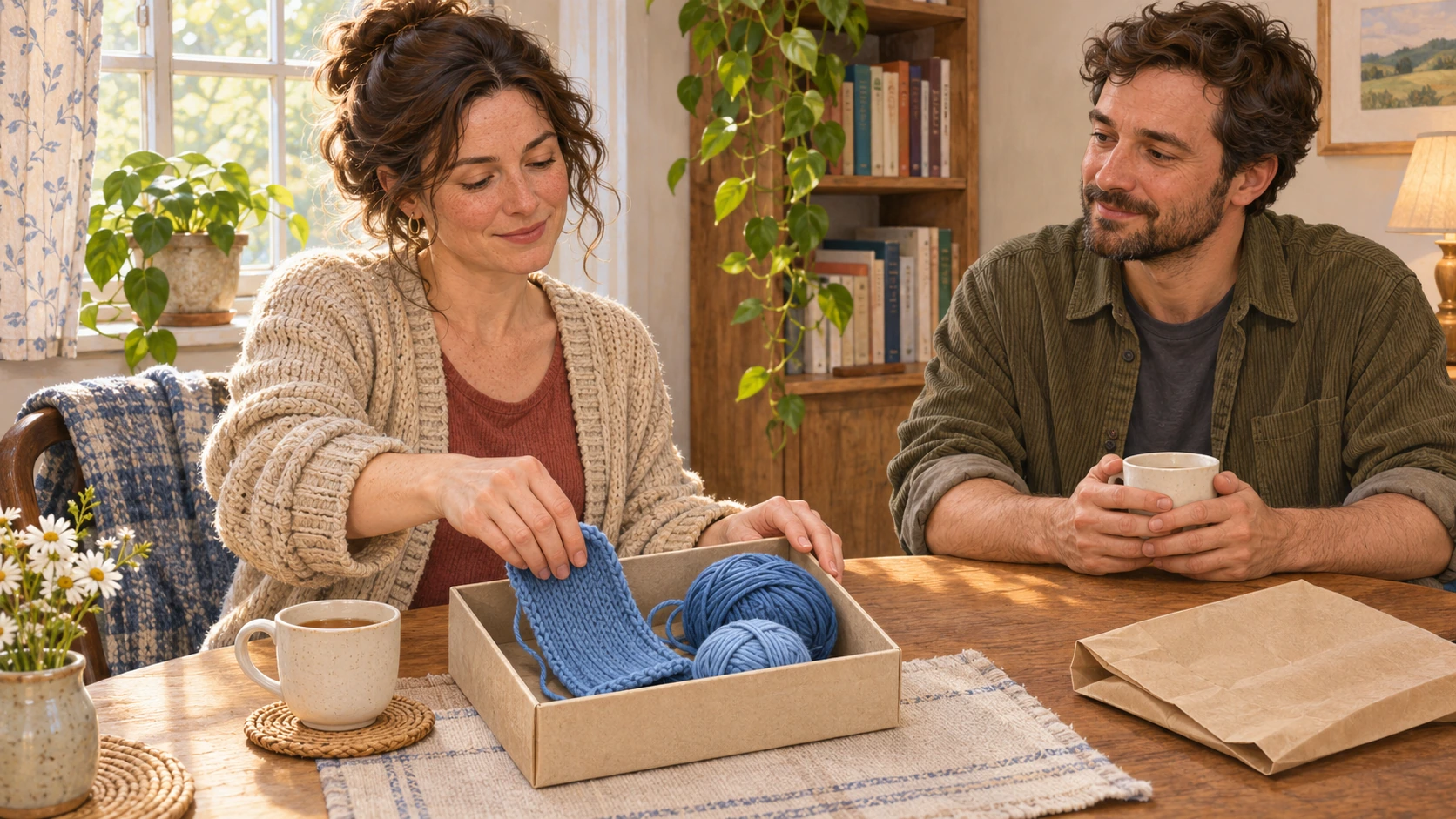
Mae had moved the unfinished scarf from chair to cupboard and back often enough to recognize the little paper bag without looking inside. That afternoon it occupied the chair Callum usually took when he came for tea. She lifted it onto her lap, sat down opposite him and found herself holding the handles as though she were about to leave.
This is an original fictional household story. Mae, Callum, the scarf and their afternoon are invented. The scarf is Mae’s unpromised personal project. No one has accepted it as a gift, paid for it or asked her to finish it. The retail tableware references later in the article are separate from the ordinary generic cups in the scene.
The bag on the spare chair
“I thought you’d finished that,” Callum said. He had seen the first blue piece when it was barely more than a band. Mae remembered holding it up for him beside the window. At the time she had enjoyed imagining the long scarf it would become. She liked the blue, which looked darker against her coat than it did on the table.
She put her hand into the project bag and brought out the knitting. There was more of it than Callum remembered. It lay across her knees in an uneven fold, with a length of yarn disappearing into the bag. She showed him the part she had worked on during their last conversation about it. Then she folded that part under again.
“I haven’t forgotten it,” she said. Callum looked towards the chair as if forgetting had been his only explanation. He had another possible answer ready: she had been busy. Mae had been busy, but the bag had also accompanied several quiet evenings. She could remember taking it out beside the radio and putting it away before the programme ended.
She reached for her cup and left the knitting on her lap. The cup was close enough that she did not have to gather everything up to drink. Callum asked whether she wanted him to move the bag onto the floor. She said to leave it where it was for a moment. She had brought it out, and she wanted to look at it.
A useful offer with the wrong destination
Callum said his sister might know someone who would finish it. He offered the possibility carefully, without reaching for the work. Mae could see the friendliness in it. He was trying to remove a difficulty from her afternoon. She pictured the bag leaving with him, then returning with a neatly folded scarf inside.
The imagined finished scarf did not make her want to accept. She had not realized how plainly she could answer that part until Callum supplied it. She did not want someone else to make the scarf for her. She no longer particularly wanted this scarf at all. The blue still pleased her when she held it against her coat, but the finished object had become someone else’s suggestion.
“Thank you,” she said. “I don’t want it finished for me.” Callum waited. Mae added that she did not want him to take it away and solve it. He nodded and put his cup down. The offer could end there. He had not contacted his sister, arranged a collection or promised anyone a piece of work.
He asked what she wanted to do with it. Mae almost said she would finish it herself when she had more time. She knew the sentence well. It had accompanied the bag through several changes of cupboard. Saying it now would send the same scarf back to the spare chair, ready to explain itself at another visit.
Remembering what she had liked
Instead, Mae told Callum about the afternoon she bought the yarn. She had gone out for an ordinary errand and stopped to look at a display near the shop window. The blue had made her think of a coat she already owned. She had wanted to make something she could wear with it, and for a while that had been an enjoyable idea.
Callum remembered the coat. He had helped her look for a button once, though they had ended up finding it in a pocket. Mae laughed at that. She could remember enjoying the early work on the scarf too. Her enjoyment at the beginning belonged in the story too.
She spread the blue piece across the table between the cups. Callum moved his cup back to make space. Mae could see where her work had begun and where she had stopped. She touched an earlier section that had made her pleased enough to show him. It still belonged to an afternoon she remembered happily, even while she was deciding against the long scarf.
“I liked doing that part,” she said. Callum said he remembered her showing it to him. He did not ask whether she might enjoy the next part if she tried again. Mae was grateful that she could leave the sentence where it was. She left the blue piece on the table while they finished their tea.
A different ending stays with the owner
Mae said she wanted a different ending for this particular project. She would stop trying to turn it into a scarf. She wanted to keep her yarn, and she wanted to keep the small worked piece because she liked seeing what she had done. She had no new garment or pattern to name for the remaining yarn.
Callum asked whether she meant she was putting it away until winter. Mae shook her head. She was not choosing a later start. She was ending this scarf project. That distinction made her own words sound a little formal, so she repeated them more plainly: “I’m not going to finish this one.” Callum accepted the answer without suggesting a date.
She had no plan to give Callum the bag or ask him to find another recipient. The materials stayed hers. He did not have to decide whether he wanted a partly worked scarf, whether he could use the yarn or whether he knew someone who could. His offer to help had been heard and declined before it became a handover.
Mae brought her own shallow storage box from the cupboard. She set it on the spare chair and looked through what was already there. This is an invented action with generic household belongings, with no instructions for dismantling knitting, treating yarn or choosing a storage method for actual materials. She made no technical change to the worked piece in the scene.
The empty paper bag
She placed the worked piece with the yarn she was keeping, then put the old paper bag beside the box. A little note she had written when she began was still at the bottom. It described the scarf she had pictured. She read it before putting it away with the other things. It could remain a record of the idea she had once had.
Callum asked whether she wanted him to take the empty bag out with him. Mae said she would keep it for another ordinary use. Then she smiled at the speed with which another task had appeared for it. She put it on the side table and returned to her tea. For now, the bag could stay on the side table.
The chair was available again. Callum moved from the edge of his seat and settled back. They talked about a street he had walked along that morning, where a shop window was being changed. Mae asked what had been in it before. He could remember a large green bowl and nothing else with certainty, and she let the rest remain missing.
When he left, the blue piece was still unfinished. It was no longer waiting in the paper bag as the scarf Mae intended to complete. She had kept her work and materials, declined a finishing service and ended her own unpromised plan. No new project, gift or later completed scarf follows them beyond this invented afternoon.
Two nearby decisions with different commitments
The unfinished gift note guide concerns an accepted handmade gift that its maker still intends to finish. Mae has promised no scarf to anyone and chooses to stop her personal project. Her afternoon supplies no wording for delaying an existing gift commitment.
The partial kit handover guide concerns offering partly used supplies to another person without requiring completion of the original picture. Mae transfers nothing to Callum. Keeping her materials after ending her own plan is a different decision from someone else accepting them.
Two tableware references
The hammer-shaped mug listing uses Dining & Entertaining. Its twelve native gallery images show a hollow rectangular hammerhead form and long shaft-like handle, including gold and silver alternatives. The selected gold wording does not establish that every pictured colour is supplied. Staged drinks, people and household objects are not authenticated contents of an order.
The lidded stein listing also uses Dining & Entertaining. Its six gallery images show a relief-patterned stein with a hinged lid and egg-like finial, plus packaging. The box shows model SDTHBO20751 and SD Toys wording. That observation preserves the printed label without certifying factory authenticity or licensing.
Both tableware accounts leave delivered quantity, material, measured capacity, heating and care performance unauthenticated here. These optional retail references do not depict Mae’s cups, establish food-contact safety or report a product trial. The fictional project decision requires no purchase, and the story supplies no instructions for using either vessel.
Keep a possible order separate
If you separately consider buying tableware through republeq.com, read the information for your actual selected order before choosing a payment method. The fictional afternoon supplies no evidence about current checkout availability or a merchant’s transaction instructions. If that checkout offers cryptocurrency such as USDT, check the requested asset and network, recipient details, order reference and any stated amount or fees there. Do not treat a familiar token name as permission to use a different network, and do not copy a destination from an earlier unrelated purchase. If the instructions are incomplete or conflicting, leave the payment unresolved while obtaining clarification through the responsible service’s current help route. Read the applicable delivery, cancellation, return and refund terms as part of the purchase decision, including anything you need to understand about a possible refund. A product photograph cannot establish those terms or prove which colour or quantity will arrive. Keep private keys and wallet recovery phrases out of shared notes and support messages. If you proceed, retain the actual order identity and any resulting confirmation so a payment can be reconciled with the intended goods. An opened wallet or prepared basket remains an unfinished action. An uncertain transfer needs reconciliation before another attempt. A payment acknowledgement does not by itself prove that an order was accepted, dispatched or delivered, and it cannot authenticate a mug’s factory identity or physical suitability. Examine each later outcome using its actual evidence. This paragraph reports no wallet connection, payment, purchase or delivery. Mae’s decision concerns her own invented project, and neither a future order nor a payment choice changes what she promised or chose during the story. You can leave a possible tableware order undecided while keeping that separate distinction clear.