Cost & Savings Articles
TV antenna savings: use the bill after the change
Estimate TV antenna savings from the household bill after a service change. Include retained plans, setup spending and the timing of actual payments.
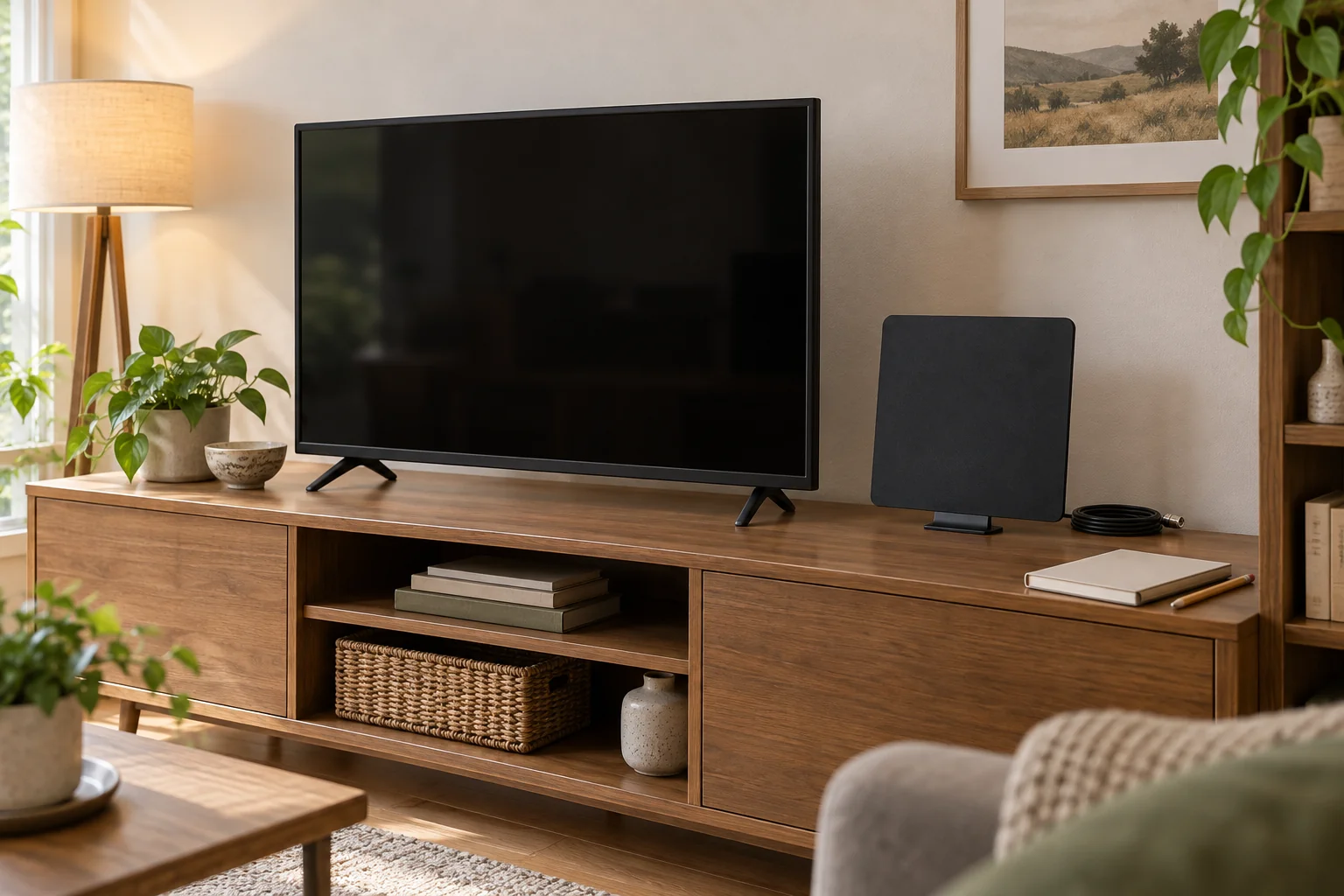
Start a TV antenna savings estimate with the bill you expect to pay after changing your television arrangement. Copy the current household service total, then obtain the proposed total for everything you intend to keep. Compare those two amounts over the same billing period. A television charge disappearing from one line is useful evidence, but the remaining internet plan, retained subscriptions and any changed bundle terms determine the reduction available to help pay for an antenna. Keep the proposed arrangement undecided until those amounts and the household's viewing needs are clear.
The practical question is which payments would actually stop. Someone keeping a television package while adding an antenna has purchased another viewing option without removing that package's bill. Someone cancelling a package but adding several paid services has a different calculation. Write down the intended changes before assigning a saving to either plan. This makes it easier to discuss the choice with everyone who uses the television and avoids discovering after the purchase that an important service was meant to remain.
TV package cancellation savings need a replacement bill
For TV package cancellation savings, use the provider's proposed total for the remaining services. If television and internet are currently bundled, ask what internet would cost under the exact change you are considering. Include any other retained service that appears on that account. A headline television amount on an itemized bill may not equal the difference between the old and new household totals. Keep the provider's answer with its applicable date and terms, especially if the present arrangement includes a temporary discount.
Separate ordinary recurring charges from a bill containing an unusual credit or past adjustment. You want to know what a comparable period costs under each arrangement. A refund posted this month can lower the amount due without representing a reduction that repeats next month. Conversely, a one-time charge on the proposed change can make its first bill higher than its later bills. Keep both facts in the plan rather than choosing whichever invoice makes the purchase look more attractive.
The guide to cable and cellular home internet treats the service connection separately from the equipment used with it. That distinction matters here when internet remains part of the household's plan. Confirm its continuing price and requirements in the proposed service arrangement. Buying an antenna does not itself cancel that account or explain the terms of a different internet plan.
Decide what the household still wants to watch
List the programmes or services people consider necessary before deciding what to cancel. Ask which can be removed, which would remain paid, and which are still unresolved. Keep unresolved choices outside a promised savings total. You can prepare a provisional estimate while someone checks an important requirement. There is little value in declaring the full television charge avoidable if another household member intends to retain it for a specific reason.
The Philips and LG television setup guide separates free-content features from paid services and asks readers to check their intended viewing arrangements. Use that separation in the budget. A platform name or a free-content reference does not settle access to every programme you want. Keep the services you plan to retain in the proposed household total, even if the antenna is expected to cover another part of your viewing.
Antenna setup spending includes the chosen arrangement
The RCA extra-large amplified indoor antenna advertises over-the-air viewing with no monthly subscription fee. Its stated package includes a detachable sixteen-foot coaxial cable, removable two-sided mounting tape, four push pins and a USB-powered amplifier. Those are useful contents to consider when requesting a complete setup estimate. The advertised viewing and range claims are not a reception test at your address, and this article assigns no verified channel count or programme availability to the offer.
The RCA amplified outdoor or attic antenna describes another installation arrangement. Its description lists a VHF Performance Kit, a sixteen-foot coaxial cable and “mast/mounting bracket hardware” among the supplied items. Decide whether you would need a separately quoted installation service or other confirmed component before treating the product's basket total as the whole project cost. This guide gives no outdoor installation procedure. Obtain the exact unit's instructions and a suitable assessment of the intended arrangement before committing to that work.
Keep antenna setup spending separate from the recurring bill reduction. Record the actual selected offer, delivered purchase total and any separately agreed setup expense once. Mark a possible expense as provisional until you know whether it is needed. Included hardware should not also appear as a separate purchase for the same purpose. Equally, an unconfirmed accessory or service should not quietly become free simply because its amount is missing from the first estimate.
Use net recurring reduction for the payback calculation
Subtract the proposed ongoing household total from the comparable current total. The difference is the planned recurring reduction for that period. Include retained paid viewing services in the proposed total, whether they are billed by the former television provider or separately. A new account still uses household money. If the difference is zero, there is no recurring reduction in this calculation to recover the antenna's upfront spending. A positive figure remains a plan until the service changes and bills confirm it.
Consider an entirely fictional household whose comparable current monthly total is one hundred currency units. Its proposed remaining services and retained subscriptions total seventy units, giving a planned reduction of thirty units per month. Suppose the complete one-time antenna project would require ninety units. Dividing ninety by thirty produces three months of equivalent planned reductions. These invented amounts explain the arithmetic; they quote no antenna price, provider plan or attainable result for either RCA offer.
The example depends on that reduction continuing. If a temporary discount ends or another subscription is added, revise the proposed monthly total from the period when the change applies. Keep the earlier result as an estimate made under its original assumptions. You do not need elaborate forecasting to make this useful: identify which amount repeats, when it changes, and whether the new amount is confirmed. Avoid expressing the result as a fixed payback promise when part of the replacement bill is still unknown.
An annual prepaid service needs a calendar entry as well as a monthly comparison. If its terms provide no refund for the unused period, stopping renewal may avoid a future payment without returning money to the household today. Mark the renewal date and the payment that would be avoided under the confirmed terms. You can spread an annual amount across twelve months to compare plans, but label that as a budgeting allocation. It is different from twelve monthly payments disappearing from the account. For a purchase funded from current cash, keep the actual timing of the expected reduction beside the antenna spending.
Allow for the transition between arrangements
Check the effective date and final-bill terms before counting a payment as removed. There may be a period when the old arrangement remains active while the new one is being evaluated. Include an actual overlap expense if it occurs. Ask about any cancellation charge, equipment-return requirement or outstanding credit that applies to your own account. This article does not assume those conditions exist or assign amounts to them. Their treatment depends on the service terms you actually accept.
Keep return evidence for rented equipment if your provider requires it. A promised future adjustment belongs beside the transition notes until the account records show what happened. It should not reduce the antenna project's upfront spending as though the money has already returned. Once a final charge or credit is confirmed, record it once in the relevant period. This keeps a later billing correction from being mistaken for a recurring reduction in the service itself.
Compare expected savings with the first settled bills
After an authorized service change, compare a complete ordinary billing period with the proposed replacement total. Check that removed services have actually stopped being charged and that retained services match the arrangement you intended. Investigate a discrepancy before extending the estimate across a year. A lower amount due could reflect the planned change, a temporary credit or a shorter covered period. The bill's dates and itemization help distinguish those causes.
Keep purchase receipts and setup invoices alongside that comparison. If you bought an additional component after the original estimate, add its actual cost to the project total. If the arrangement remained unchanged, retain the original calculation rather than manufacturing a new saving from the purchase alone. An antenna may still be worthwhile for the viewing option you wanted, but its financial result should describe the money the household actually spent and the payments it actually removed.
For a shared household, agree who will check the next bill and where the confirmation is kept. That small handover matters when one person orders the hardware and another manages subscriptions. The person checking the account should be able to see the intended retained services and the dates of any agreed changes. A clear replacement bill makes the estimate useful after the purchase, when memory of the original plan is less reliable.
Confirm the selected antenna order before paying with USDT
If USDT is your intended payment method at republeq.com, finish identifying the antenna order before authorizing a transfer. Keep the indoor RCA offer distinct from the outdoor or attic offer, including the selected configuration and the contents actually supplied. Ask the merchant through its published support route about an unresolved package or identification question while the order remains under consideration. Preserve any answer with the product reference and the final basket details. Review the payment options presented for that particular transaction. A catalog statement that cryptocurrency is accepted does not supply a receiving address, establish a supported network or confirm every token arrangement. Verify the actual checkout instructions for USDT before approving a payment and keep the resulting transaction reference with the order confirmation. Read the merchant's current delivery information for your destination and its cryptocurrency purchase terms. The published policy makes cryptocurrency purchases non-refundable through returns; exchanges depend on the stated eligibility rules and available products. A manufacturer's separate warranty does not replace those merchant conditions. Once the shipment arrives, compare its identifying details and included parts with the saved order before beginning the intended setup. Follow the merchant's relevant process if the goods differ. Payment records document the hardware purchase, while your service account records establish any later billing change. Paying with USDT does not cancel a television package, confirm reception in a particular room or make a proposed recurring reduction occur. Keep those separate decisions attached to the evidence that can answer them, and revise the household estimate when the confirmed setup spending or settled replacement bill differs from the original plan.