Crypto Commerce
Triple Tree G6 robot vacuum vs Vestiray robots for vacuuming and mopping
Compare Triple Tree G6 robot vacuum by suction claims, vacuum and mop functions, runtime, app controls, dock behavior, dimensions, and maintenance.
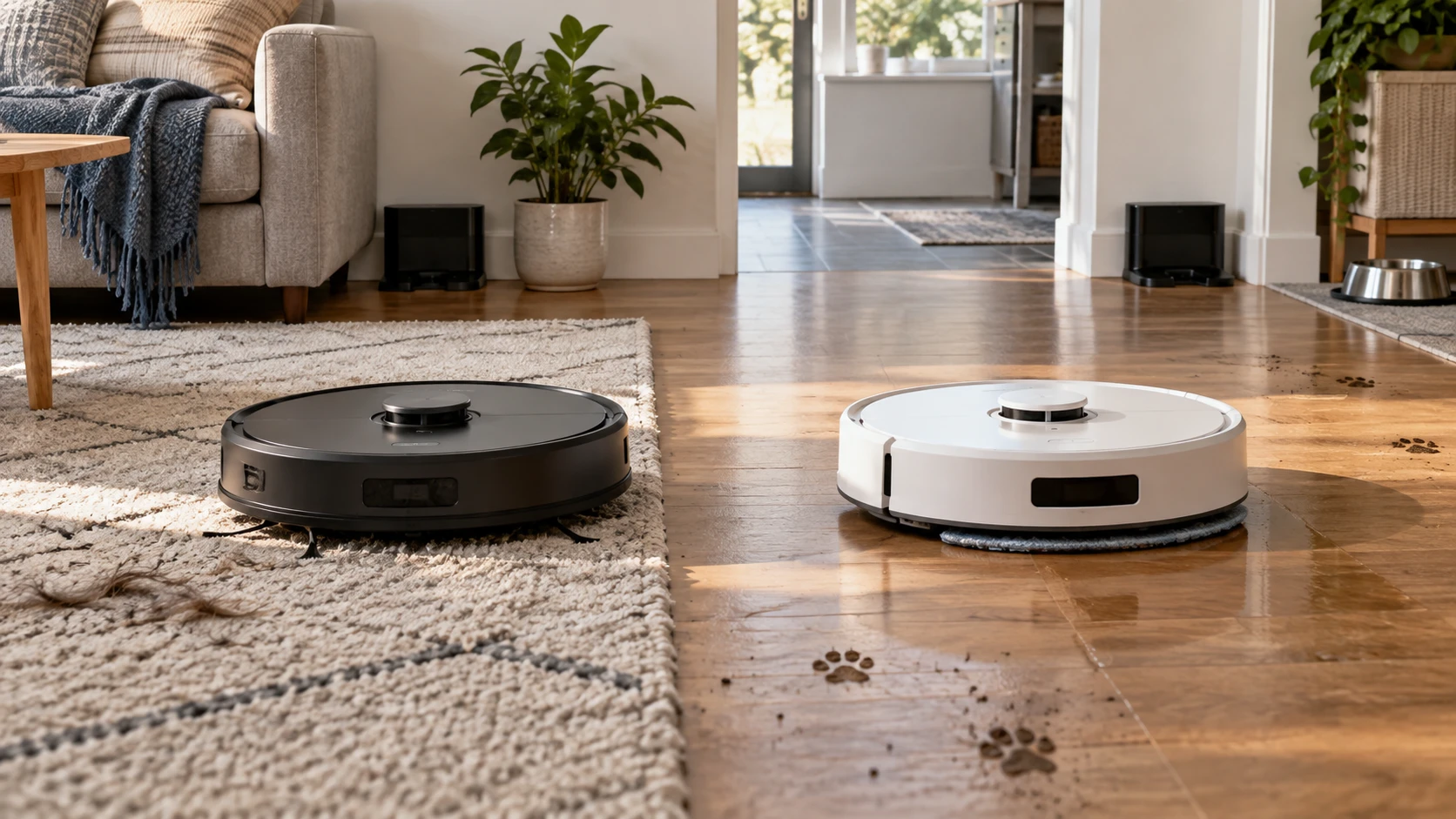
The Triple Tree G6 robot vacuum is described with adjustable suction, Wi-Fi app controls, sensors, a low body, and automatic return to its charging dock. Vestiray's saved description adds a mop function, several control methods, and a return-recharge-resume routine. Both target hard floors, pet hair, and low-pile carpet in their listings. The practical question is whether you need dry debris pickup alone or also want the machine to wipe hard floors. A mop changes the cleaning routine and the parts you maintain. Before choosing, walk through your rooms and note rugs, thresholds, loose cords, and the space available around an outlet for the dock.
The published guide on vacuum suction claims explains why a Pa number does not settle a purchase. Its examples are general, not pickup tests of these two robots. Triple Tree lists adjustable suction up to 1800 Pa, while Vestiray lists 3000 Pa. That difference is worth noting, but the saved descriptions do not give a common test method, brush design, or measured debris pickup on the same floor. Ask what each number represents and look for tests using the dirt you actually have. A robot that reaches the crumbs under a table may help more than one with a higher printed maximum that misses the area.
Start with the floors and debris — vacuum suction claims
Triple Tree describes cleaning food scraps, pet hair, and other debris from hard floors and low-pile carpet. The excerpt does not describe mopping. That makes it sensible to assess as a vacuuming candidate unless the current model documentation adds another function. Vestiray explicitly combines sweeping and mopping, using a shared dustbin and water tank. If the kitchen floor needs frequent wiping, that feature may be appealing. Ask whether the mop pad must be removed before carpet runs and how water flow is controlled. The short Vestiray source does not explain those details, so avoid assuming it can manage rugs and wet cleaning automatically without preparation.
Build a small test route: a hard-floor kitchen, the edge of a rug, and the narrow space under a sofa. Note the debris type in each. Fine dust, crumbs, and hair can behave differently when a robot changes suction modes or crosses a threshold. Triple Tree's source names adjustable suction but does not give a complete mode table. Vestiray says the app can choose modes without listing the exact suction steps. A real floor test or model-specific review would help. The two Pa claims are not enough to tell you which brush will pull hair from the rug or which machine will leave fewer crumbs along a baseboard.
Mopping also adds a floor-care question. Check the finish of your hard floors and the cleaner permitted in Vestiray's manual. A damp pass may help with light residue but should not be treated as a replacement for every kind of scrubbing without evidence. The listing describes a shared dustbin and water tank, yet gives no capacity, pad-washing method, or water-flow specification. Plan where you will fill and empty the unit, and where a damp pad can dry. If the mop will be used only occasionally, compare the added setup time with a simple manual wipe. The right choice depends on your routine, not the mere presence of a water tank.
See how each robot navigates — Vestiray robot vacuum and mop
Triple Tree says collision and drop sensors help it avoid furniture and stairs. Those features are important in a home with table legs or an open stairway, but the short excerpt does not provide an obstacle-detection test or a map of where the robot has been. Its 2.85-inch height is a useful number for low furniture. Measure the actual clearance under the bed or sofa, allowing for rugs and uneven flooring. Its listed length is 12.60 inches, which may affect whether it can turn in a narrow space. A robot that passes under a cabinet still needs room to emerge without wedging against a leg.
Vestiray is described as compact and able to clean under furniture and in tight areas, but the saved text gives no body height or width. Ask for the exact dimensions before counting on it to reach a specific gap. It does not name a mapping method or virtual walls in the short source. The app may offer more controls than listed, but that requires confirmation. If a rug or pet bowl must be excluded, find out whether you can define a zone or will need a physical barrier. Neither listing proves it can identify a cord lying on the floor. Pick up loose wires and small objects before an unattended run.
The room layout matters as much as sensors. A dining area changes shape when chairs are pulled out, and a bedroom floor may be clear one day and cluttered the next. Check whether each robot can return to the dock when a route is interrupted. Triple Tree says it returns when cleaning is complete or the battery is low. Vestiray says it returns when low, recharges, and resumes where it stopped. The saved sources do not establish how accurately either machine returns to a missed patch after being moved by hand. Try a full route under ordinary conditions before relying on a scheduled run while nobody is home.
Compare runtime with the complete route — Vestiray robot vacuum and mop
Triple Tree lists 100 minutes of runtime on a charge. Vestiray lists up to 120 minutes. Neither short source says which suction mode, floor type, or mop setting was used for the quoted time. A larger home may need more than one charge, particularly when furniture interrupts the route. Vestiray's described resume function could help it finish after charging. Triple Tree's excerpt confirms docking but not a resume-after-charge feature. Ask for that behavior in its current manual. The difference between 100 and 120 minutes matters less if one robot can complete your actual rooms in a single efficient pass.
Estimate the route instead of comparing minutes alone. Walk the floor and identify areas the robot must enter and areas it should skip. If you plan to run it while cooking or during a work call, look for operating-noise information from the exact models; neither saved description gives a sound figure. Check charging time and whether the dock needs a clear approach area. A robot that finishes a job slowly may still fit an overnight routine, while one that has to cross a busy hallway to recharge may be inconvenient during the day. The listing runtimes do not describe those everyday interruptions.
Battery care and dock access also affect long-term use. Keep the contacts clean as the manual directs and place the dock where the robot can find it consistently. The short sources do not provide battery capacity, replacement cost, or a full charging schedule. If the robot will serve two floors, ask whether it can resume a job on a floor without its dock. Vestiray's resume claim may depend on the dock and the device's saved position; the source does not explain the conditions. Triple Tree's automatic return is useful only when the dock remains accessible after furniture is moved or a door is closed.
Check the controls people will actually use — Vestiray robot vacuum and mop
Triple Tree names the Geek Smart app for schedules, cleaning modes, suction modes, and direction control over Wi-Fi. The description does not state which operating systems the app currently supports, whether manual steering is available without the internet, or how a schedule behaves after a connection drops. Test setup with the phone and network you will use. If several household members need to start a run, check whether the account can be shared safely or whether a physical control is available. The short source does not spell out a complete button layout.
Vestiray lists app, voice, and remote control. Its app is said to schedule cleaning, choose modes, and give updates, while Alexa and Google Assistant are named for voice control. Those paths may be useful when the phone is elsewhere or a guest needs to start a simple run. Confirm what each one can actually do: starting and stopping may be supported while changing a mop setting may still require the app. Keep the remote in a known place and check whether it uses replaceable batteries. Neither listing provides a complete offline-control contract, so ask what happens during a Wi-Fi outage.
A schedule is only helpful when the floor is ready. Moving shoes and cords out of the route can be more important than choosing an exact start minute. For Vestiray, prepare the water tank and pad if the scheduled run includes mopping. For Triple Tree, empty the bin and clear the low spaces it is meant to reach. The sources do not provide dustbin capacities or a hands-off emptying claim for either model. Find the filter and brush maintenance instructions, including replacement availability. Pet hair can wrap around a brush even when the listing says a robot is intended for pets.
Make the maintenance decision explicit — Vestiray robot vacuum and mop
The Vestiray robot vacuum and mop adds a water tank, mop care, multiple control paths, and a stated recharge-resume behavior. Triple Tree offers a named low-body measurement, collision and drop sensors, app direction control, and an advertised 100-minute run for dry cleaning. Verify exact floor compatibility, dimensions, parts, and runtime conditions before ordering. If mopping is a recurring need and you can maintain the pad, Vestiray deserves a closer look. If dry pickup under low furniture is the main job, Triple Tree's stated height is a useful place to start measuring.