Crypto Commerce
TREBLAB Z2 workout headphones vs Yamaha TW-E7B: over-ear or in-ear for exercise
Compare TREBLAB Z2 workout headphones by fit, IPX rating, ANC, ambient mode, battery units, and wired fallback.
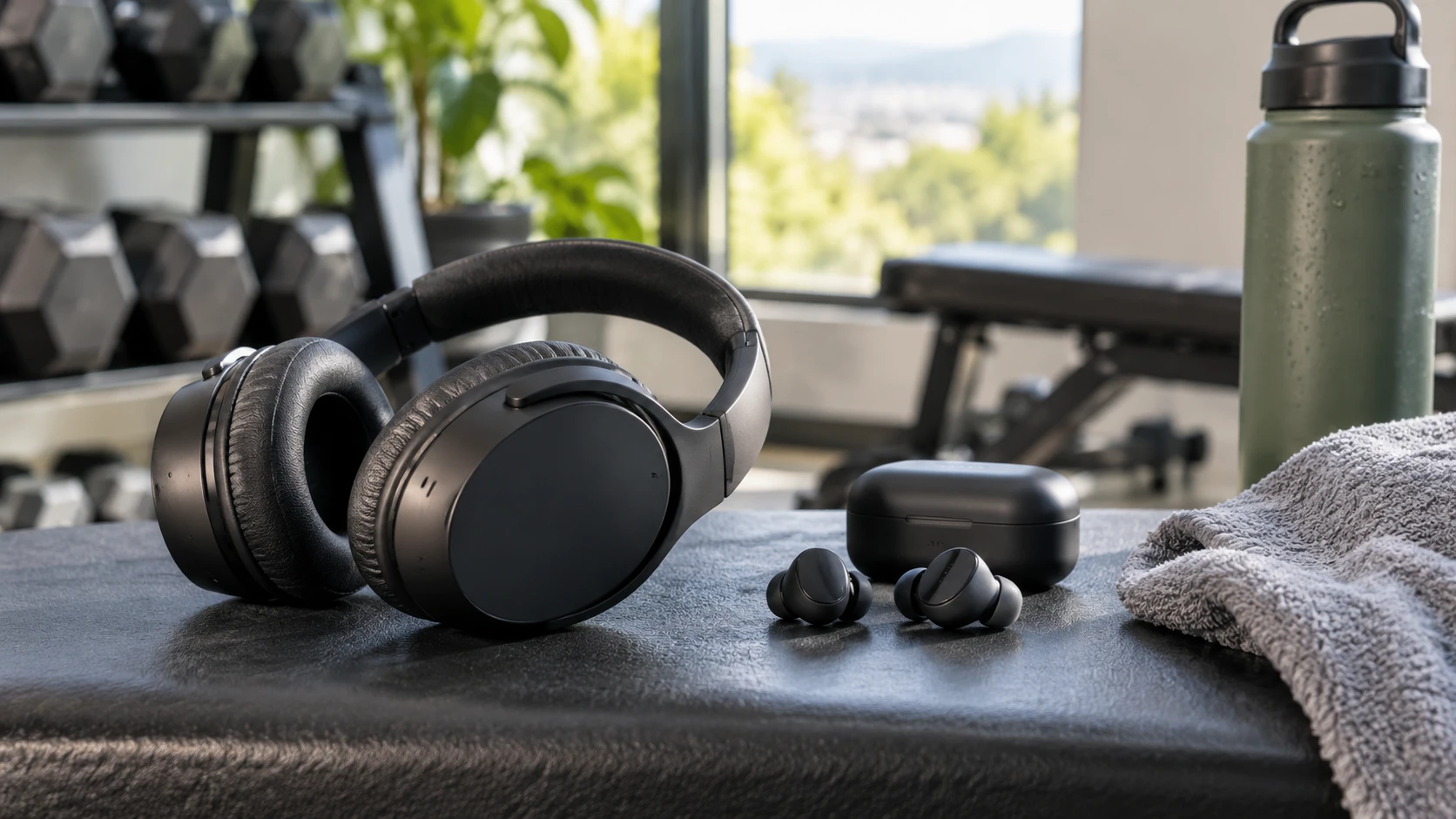
The TREBLAB Z2 and Yamaha TW-E7B listings both name active noise cancellation and resistance to sweat or water. The larger choice is how they stay on your body. TREBLAB is an over-ear Bluetooth headphone with a wired connection available, an IPX4 rating, and up to 35 hours of stated playback per charge. Yamaha is a pair of true-wireless earbuds with an IPX5 rating, an Ambient Sound mode, and up to six hours from the buds plus 16 more from the case. These battery figures use different units. Try the form factors during the exercise you actually do before treating either headline as the answer.
The TREBLAB Z2 workout headphones listing describes over-ear cups with active noise cancellation, Bluetooth 5.0 and aptX audio. It also names a built-in microphone for calls and a wired listening option. The saved row says up to 35 hours of playback and mentions a three-hour quick charge. It does not specify the cable or charging accessories included, and it does not give a separate runtime with ANC switched on. Confirm those details in the current manual if long trips or back-to-back workouts matter.
Fit changes when you move — headphone fit during exercise
Over-ear headphones spread contact around the head and ears. That may feel secure during weight training or a steady treadmill session, but the fit can change while running, jumping, or bending over. The Z2 description presents it for runs, treadmill work, lifting and basketball. That is a statement of intended use, not a guarantee that it will stay comfortable on every head through those movements. Try a few motions in a safe place, notice whether the headband shifts, and check if the cups trap heat. Glasses and earrings can change the seal and pressure.
Earbuds have a different problem: they need a comfortable, stable fit in each ear. Yamaha's saved description does not list included tip sizes or a stabilizing wing, so inspect the current package and try the available tips. A poor seal can weaken bass and make ANC seem ineffective, while a tip that is too tight may become uncomfortable. Test the earbuds with the motions that caused other pairs to loosen. A true-wireless bud is small enough to misplace between sets, so use the case consistently and check whether the selected pocket or bag keeps it secure.
The published headphone fit during exercise guide discusses another earbud and headphone pairing. Its main value here is the reminder to test fit beyond a brief try-on. Wear the candidate during a full ordinary session, then note hot spots, slipping, sweat buildup, and whether you still hear the outside world when needed. The other guide's dimensions and accessories are not specifications for the Z2 or TW-E7B.
Neither saved row provides a measured clamp force, earbud retention test, or weight for these exact products. That makes personal fit evidence especially important. If you buy remotely, check the Republeq's catalog return conditions for opened audio products before relying on a short in-store impression. Keep the ear tips or cushions in their original condition while testing, so you can compare a different size or material if the manufacturer provides one.
Water ratings have limits — Yamaha TW-E7B wireless earbuds
TREBLAB lists IPX4 and calls the Z2 sweatproof. Yamaha lists IPX5 sweat and water resistance. Those codes are useful when exercise involves perspiration or light rain, but they do not make either product a swimming headset. The ratings also do not tell you how every opening, charging contact, or carrying case should be handled when wet. Read the manufacturer care instructions, let the device dry as directed, and avoid charging it with wet contacts. The Yamaha row does not say the case has the same IPX5 rating as the earbuds.
A higher digit on one water test is one piece of evidence, not a complete durability ranking. Over-ear cushions can hold moisture differently from silicone ear tips. After a workout, inspect the places where sweat sits: the underside of the headband for TREBLAB, or the earbud contacts and tips for Yamaha. Follow the cleaning instructions for the exact model. A gym bag that stays closed for hours may keep moisture around either product. The listings do not state a cleaning chemical or wash procedure, so avoid improvising one from another brand's manual.
For an outdoor route, consider the full environment. Wind, traffic, rain intensity, and how you carry the device all matter. A rating under a controlled test cannot promise performance under every weather condition. If the headphones will be used in conditions beyond ordinary sweat and light splashes, confirm the manufacturer's stated limits before the trip. Keep the case or wired cable protected separately; the product rating applies only to the components identified in the official specification.
ANC, ambient sound, and awareness — Yamaha TW-E7B wireless earbuds
Both listings name active noise cancellation. ANC can reduce some background noise, but its effect depends on fit and the sound around you. A treadmill motor, people speaking nearby, and outdoor traffic differ in frequency and direction. Compare each product with ANC on and off at a comfortable listening level. Do not judge solely by a button press in a quiet room. The Yamaha row also names an Ambient Sound mode, which may help when you need to hear a nearby conversation or announcement. Test its actual behavior, and do not rely on it for road safety.
Yamaha describes an adjustable Listening Optimizer and Advanced Listening Care for lower-volume playback. The saved row does not provide the exact settings or measurement method. Explore those features on the paired device, and check whether they remain enabled after switching phones. TREBLAB's saved description does not name an ambient mode or matching listening-care feature. That is a catalog gap, not proof that every version lacks such a setting. Verify current controls if awareness is essential during a particular activity.
When traffic or other hazards are present, keep situational awareness ahead of sound isolation. Pause audio or remove a bud or cup when the surroundings demand full attention. An ambient feature processes microphone input and can be affected by wind or fit. Neither listing certifies safe use while crossing roads or cycling. In a supervised gym space, awareness may matter for instructions and shared equipment. Test whether you can hear a person addressing you at a normal volume without turning music up to compete with the room.
Battery life counts differently — Yamaha TW-E7B wireless earbuds
TREBLAB's up-to-35-hour figure refers to the over-ear headphone charge in its listing. Yamaha's up-to-22-hour total combines six hours from the earbuds and 16 additional hours stored in the case. If you need an uninterrupted session longer than the buds' own six-hour claim, case capacity does not let you listen continuously while the earbuds recharge. For a routine with several shorter workouts and time between them, the case may be convenient. Compare each number with your actual pattern of listening and charging.
The two rows do not state the playback volume, ANC state, call time, or wireless settings used for those battery estimates. Treat them as maxima under unspecified conditions. TREBLAB's three-hour quick-charge wording does not say how many minutes of playback a short top-up gives, so do not equate it with a particular fast-charge promise. Yamaha's saved row does not provide a case recharge time. Put those questions to the current manuals if charging windows are short. A battery meter during a real week of use gives a more practical estimate for your routine.
TREBLAB's wired connection can be a fallback when a compatible source and cable are available. Check whether the headset must retain battery power for wired playback or ANC, and confirm the connector type; the saved row only says a wired connection is available. Yamaha's true-wireless listing does not name a wired listening mode. That difference may matter for a flight, game console, or older exercise machine with an audio jack. A separate adapter should be planned only after checking the exact input and headset requirements.
Wireless feature names need their own compatibility check. TREBLAB lists aptX, which matters only when the source device and the active connection support it. Yamaha names Qualcomm cVc for calls and TrueWireless Mirroring, but its saved row does not name an aptX playback codec. Do not transfer a codec claim from one product to the other because both mention Qualcomm technologies. Pair each candidate with the phone or music player you will use, confirm the active audio mode if the device exposes it, and listen for dropouts where you normally exercise.
Calls and daily handling — Yamaha TW-E7B wireless earbuds
TREBLAB includes a built-in microphone for hands-free calls. Yamaha describes microphone design using Qualcomm cVc and TrueWireless Mirroring for the wireless connection. These are technology descriptions, not a comparison of how a caller will hear you in a windy street or noisy gym. Make the same short call on both products at a normal voice level, then ask the other person about clarity and background noise. Also test how quickly you can answer, mute, or switch the call back to the phone.
The Yamaha TW-E7B wireless earbuds are the candidate when you want a small in-ear setup, Ambient Sound, and the case's reserve power between sessions. TREBLAB is the candidate when an over-ear fit, aptX support on a compatible source, long stated single-charge playback, or a wired fallback fits the routine. Neither description can tell you which shape stays comfortable during your workout. Test fit, controls, water care, and the complete charging cycle on the exact model before choosing.