Home & Living
Trash can liner code compatibility
Match a bag code or retaining-part reference to the exact trash-can model before transferring instructions.
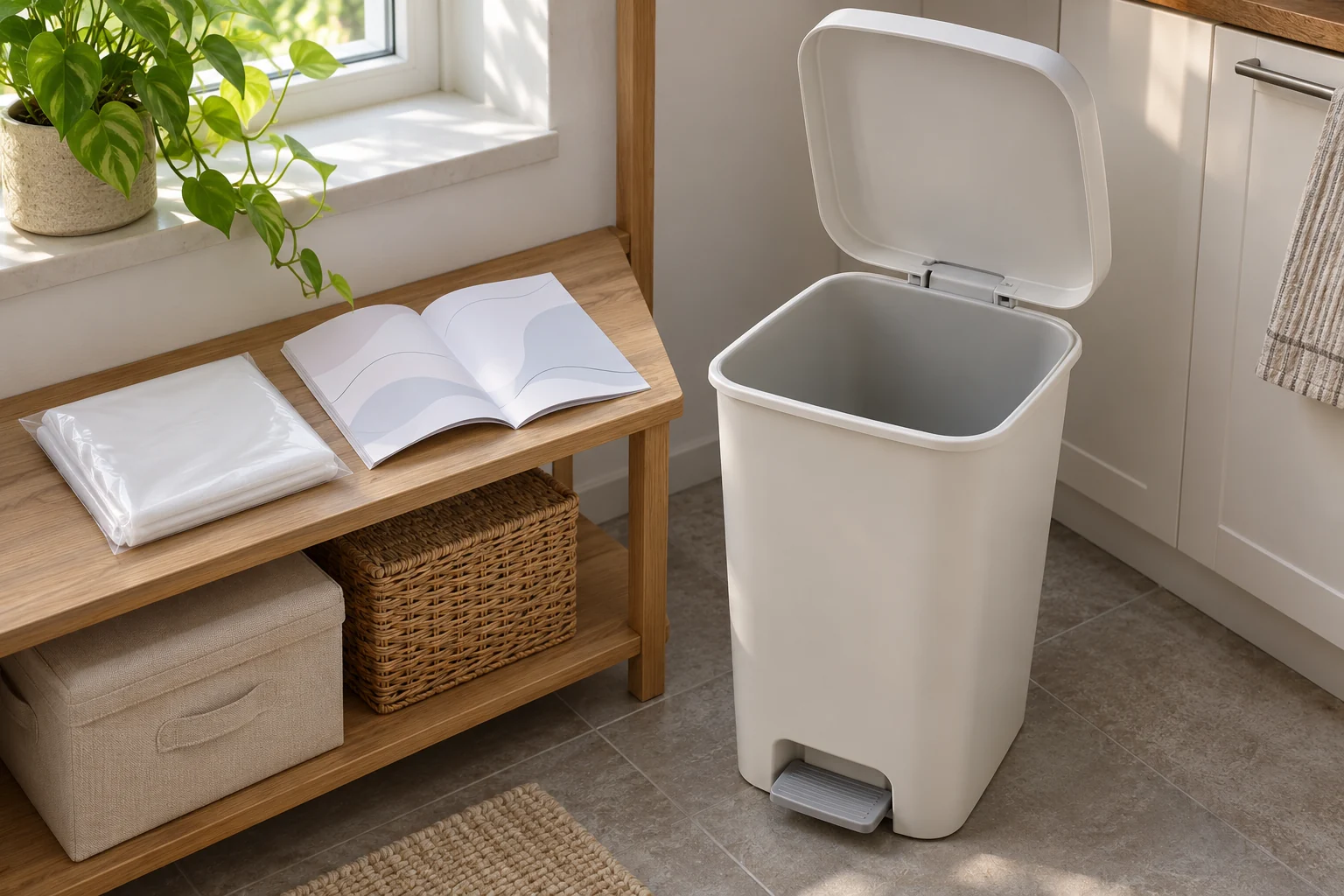
trash can liner code lookup
A letter on a bag packet is useful only when you know which bin it describes. Start Trash can liner code compatibility with the exact can model and the company issuing the reference. Simplehuman's Irish FAQ tells owners to identify their model or look underneath the lid for a liner-code sticker. That gives a trash can liner code lookup a specific starting point.
Keep the model identity beside the code you find. If a sticker is absent or unreadable, retain that gap and ask for an answer tied to the actual can. A remembered letter from another bin leaves the relationship unresolved. The same applies when a bag packet has been moved away from its original container.
The FAQ treats a bin from another brand differently, explaining that capacity alone cannot establish fit. Its dimensional route is a separate inquiry. A simplehuman code discovered online should therefore stay with the model or compatibility answer that supports it. This regional FAQ establishes no current sample, shipping or ordering entitlement for your location.
Keep municipal-bag alternatives within the answer given
Brabantia's answer about municipal bin liners says their dimensions vary, so it cannot provide completely reliable fit advice for all of them. It directs readers to the recommended liner's dimensions and to the bin's product information. A municipal collection bag and a maker's recommended liner can belong to different reference systems.
Record which system each reference comes from. A municipal bag's name may identify a collection arrangement, while a bin manufacturer's recommendation identifies an accessory relationship. Neither label alone supplies the missing relationship between the two. Keep any proposed alternative attached to the actual bag and bin references supplied in the answer.
If support points you to a different liner, retain the wording and its limits. A recommended alternative can still leave a question about your exact municipal bag. Ask that question explicitly instead of shortening the reply to a claim that all bags of the same nominal capacity work. This guide leaves the physical measurement and sample-fit process to the separate bathroom-bin guide below. The present task is to establish which account actually supports the reference you intend to use.
Keep an EKO bag code with its corresponding can
EKO's Code F-1 Slim bag page tells shoppers to match the bag code to the EKO code listed for the trash can. Its selected product identifies SKU EK33706 and an eight-gallon category. The code-to-can relationship is the part relevant to a compatibility inquiry.
Save the code exactly as written, including the F-1 form, and the can reference it is meant to match. If a seller supplies only a volume, ask which code the actual can specifies. Do not complete a missing code by borrowing one from a similar-looking EKO product or from another maker's system.
The captured page also contains general questions about multiple sizes and pack arrangements. Those general passages do not replace the identity of the selected bag. Keep the specific product reference and the general selection advice separately in your notes. This article makes no bag-count, scent, stock or strength claim from that mixed account. The useful result is a traceable code relationship, with an unanswered model question still visible if the can has not been identified.
trash can retaining ring compatibility
Ninestars' support page asks for the can's model number when helping identify an accessory. It identifies places to look, including the manual and battery compartment. A trash can retaining ring compatibility question should name the can and the requested part, so the reply can address a particular relationship.
Distinguish a retaining ring from a disposable liner. One is a component associated with the can; the other is the bag placed inside it. An answer naming a bag size cannot identify a replacement ring on its own. Likewise, a ring reference leaves a bag's separate requirements to be checked.
The same support page gives a bag recommendation specifically for its twenty-one-gallon units. Preserve that limitation when recording the answer. It does not extend to every Ninestars model or to either retail can discussed below. The page links a liner-ring video, which was not watched for this guide. Its link supplies no installation sequence here. Obtain the applicable instructions after the exact model and part have been identified, and retain that document with the reference. A general support route can remain useful while a specific compatibility answer is still pending.
Read a standard-bag permission with its model number
KOHLER's REC31318 specification sheet identifies a twelve-gallon curved step can and says it is designed for any brand of thirteen-gallon trash bag. That is a named-model statement. Keep REC31318 with the bag recommendation when recording what the document says.
The different can and bag capacity labels also show why copying one number into another field can misrepresent the instruction. The document supplies its own relationship for this model. This guide provides no conversion rule for other cans and no calculation that would derive a suitable liner from a vessel's nominal capacity.
If your can carries a different model reference, the REC31318 sheet leaves its bag question unanswered. Look for applicable information naming that item or ask for clarification. A familiar maker name or broadly similar curved body does not establish that the same permission applies. Keep the complete document available with its model reference, so a later reader can check what the recommendation covers. Neither current retail example below receives KOHLER's permission from this sheet.
Separate a component instruction from a bag code
The iTouchless IT13HX manual lists a trash-bag retainer ring among the can's supplied components. Its diagrams show the bag's top wrapped over the ring and the ring seated on the can's edge. That is a component relationship within the named model's instructions.
The manual identifies a thirteen-to-eighteen-gallon bag range for that model. Keep both the model and the stated range with the instruction. The ring's pictured shape cannot establish a replacement fit on a different can, and the range cannot be transferred to an unidentified bin. An applicable manual answers a narrower question than a photograph of several similar rings.
Custom-fit premium bags appear as optional items outside the supplied package. That distinction helps separate an included reusable component from a possible consumable purchase. The manual also treats the retainer ring separately in its warranty terms, so this article promises no free replacement. If a part is missing, request an exact-model answer and read the terms that apply to the actual order. The manual supplies no procedure for installing a ring in either of the retail examples below.
The retail accounts leave their liner references open
The Takywep fifteen-liter slim step-can listing describes a removable inner bucket. Its seven gallery views show a long narrow body, a pedal at the short front edge and a hinged lid. Marketing panels include claims about odors and pets, without independent tests here. The captured account gives no assigned liner code.
The IdealHouse fifty-liter white step-can listing has a wider front and a hinge along the long rear edge. Its six views include the inner bucket's bag-fixing hole and a rear handle. These visible details differ from the first can's side-handle arrangement. They do not establish which separately offered bag or retaining part fits.
Preserve each catalog name and reference when asking for applicable information. Both accounts describe complete bins. Neither supplies a simplehuman or EKO code, a KOHLER bag permission or an iTouchless ring instruction. A seller's answer should identify the actual can and requested accessory relationship before you carry any of those references into an order.
Leave physical fit and pack quantity in their own guides
The small bathroom trash-can liner-fit guide examines the actual inner opening and depth, followed by a sample bag, lid movement and removal. That guide owns the physical fit trial. The present inquiry concerns the model and issuer behind a code or component reference. An identified reference can be retained without claiming that an actual household trial has occurred.
The bulk trash-bag count and cost guide establishes what a complete bag offer supplies before comparing outlay. It addresses package quantity and spending. A code match cannot establish a bundle count, just as a confirmed bag count cannot identify a retaining ring.
Finish this reference check by saving the exact can identity, the issuing company's code or part reference and the applicable answer or document. Mark an absent code, uncertain model or unsupported alternative as unresolved. You can then use the relevant fit or purchase guide when its separate question arises. If a later order changes the can model or accessory reference, return to the matching evidence before treating the earlier answer as applicable. Keep the original answer available for comparison.
Keep the payment record with the selected order
If you consider an order on republeq.com and prefer crypto such as USDT, inspect the payment methods actually offered for that order. This guide does not verify that a particular token, network or payment route will be available. Read the displayed amount, currency, recipient and network before authorizing any transfer, and compare those details with the order you intend to fund. Resolve an unclear instruction through the merchant's applicable support route while the order is still undecided. A familiar token name does not establish that two network choices are interchangeable. Keep the selected item reference with the order acknowledgement and any payment confirmation you actually receive. That record can help you relate a later transaction question to the purchase you made. It does not independently establish that a bag or retaining part fits your can. Do not copy a transfer destination from an unrelated message or assume that instructions from a previous order apply to this one. Read any applicable fees, conversion terms and refund conditions in the actual transaction information. This article supplies no wallet address, exchange-rate quote, delivery commitment or refund promise. If the can identity or accessory reference changes before purchase, revisit both the product evidence and the actual payment instructions presented for the revised order. You can leave the purchase pending while a compatibility question remains unanswered. Retain the unanswered inquiry with the order notes so a later reader can distinguish a requested clarification from a confirmed result. Choose a payment method only after reading its applicable instructions and deciding whether you understand the transaction you are authorizing. The same model and accessory questions remain relevant regardless of the payment method the checkout presents. Keep a dated copy of the instructions you followed with the corresponding order reference. This can preserve the transaction context if displayed details change before a later inquiry. An acknowledgement of payment should stay separate from any later evidence of delivery or an actual fit check.