Home & Living
trash bag roll access problem: choose a dispenser location
Find where a bag roll becomes hard to reach, then compare stackable and wall or counter holder placement with the actual roll.
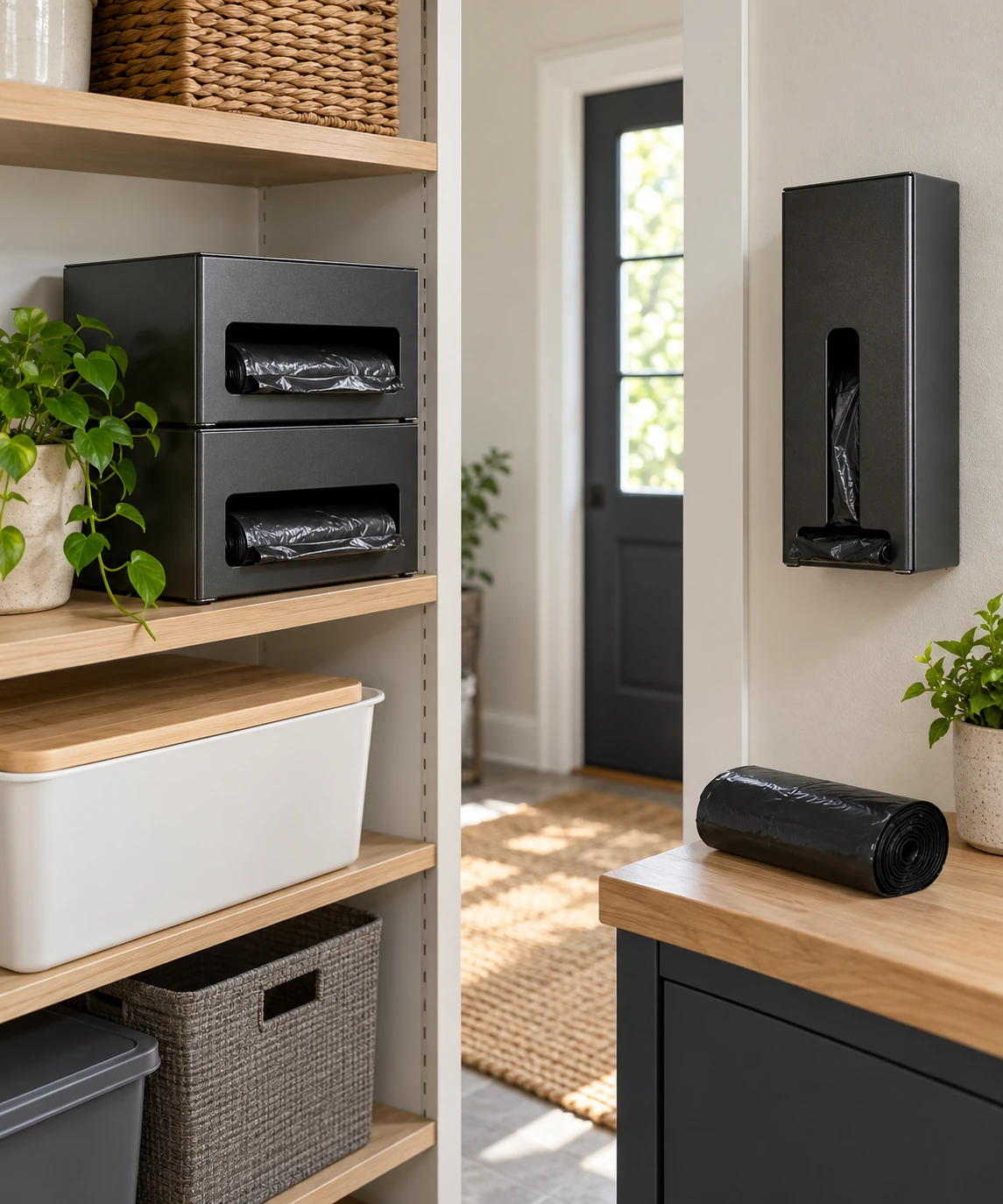
A trash bag roll access problem usually shows up at the moment someone needs one bag: the roll has slid behind cleaning supplies, a cardboard box has collapsed, or the next bag will not come through the opening. A dispenser can give the roll a home, but its location matters as much as its shape. Check the place where you reach for bags before choosing a holder.
The Highcool two-pack stackable trash-bag holders have front openings and lids that permit stacking, according to the listing. The Hyjoy extra-large metal dispenser is described for wall mounting or freestanding use, with a narrow front opening and side cutouts. These are different placement ideas. Neither page proves that a particular bag roll will dispense smoothly in your chosen location.
Find the point where access fails
Watch one ordinary bag change. Where is the roll stored, and which hand reaches it? If bags live under a sink, note whether the cabinet door, pipes, cleaning bottles, or another bin sits in the way. If bags live in a pantry, check whether a shelf above prevents you from lifting a holder to refill it. The problem might be the roll's location, not the absence of a container.
Remove the existing roll and measure it while it is still full. Measure the roll's width and outside diameter, then compare both with the exact holder's usable opening. The product names alone cannot establish fit for every brand, bag count, or way of winding. A roll that fits the outer box could still catch at the dispensing slot. If a specification does not include the internal usable dimensions, ask the seller or test the actual unit before relying on it.
Look at the route of a single bag after it leaves the dispenser. A front opening pressed against a cabinet wall is not useful. A wall-mounted unit placed behind a hanging towel may be technically installed yet awkward to reach. Try a temporary paper outline in the intended spot and rehearse pulling a bag from that position. Do not drill holes or move plumbing merely to test an idea; the outline is enough to identify a poor reach.
Check whether the person changing the bag has to bend, kneel, or open two doors to get to the roll. Sometimes moving the existing box to a reachable shelf solves the immediate problem without adding another object. If it keeps falling over or the box tears, a holder may still be useful. Separate those two observations. A problem with reach calls for a better location; a problem with loose rolls calls for containment. A dispenser can address both only when its chosen position is accessible.
Compare stackable and wall placement
The Highcool description lists two different size combinations. One pairs a Large holder, listed at 10.5 by 6.1 by 7.1 inches, with an Extra Large at 11.2 by 6.7 by 7.1 inches. Another pairs Small and Large holders with slightly different stated sizes. Confirm the combination actually selected before measuring shelf clearance. The listed numbers belong to those particular components, not to every possible two-pack arrangement.
Stacking can use vertical space when the shelf height allows it. Measure from the support surface to the next shelf, pipe, or cabinet hinge. Include room to load the upper holder and reach both front openings. A tidy stack that must be unstacked every time the bottom roll runs out may still be workable, but that extra step should be deliberate. The listing says each Highcool unit can also be used on its own, so test a single-unit arrangement if the stacked route crowds the space.
Trace the nearby objects with a simple floor or shelf drawing. Mark bottles that must remain upright, a valve that must stay accessible, and any tray that slides forward. A pair of holders may use less horizontal area than two loose rolls, but the stack also takes height. Leave enough space for the normal movement of the cabinet door and your hand. If the top unit has to sit under a fixed pipe, confirm there is a safe and practical way to load it before calling that corner available storage.
The Hyjoy listing describes two placement modes: wall mounting with included anchors and screws, or freestanding use with supplied small rubber feet. A side cutout is described for picking up the unit. Wall placement could free shelf area, but the captured product page does not establish that its supplied hardware suits every wall or mounting surface. Follow the actual instructions and the wall's requirements. If you cannot establish a suitable mounting location, try the freestanding route on a stable surface instead.
The Hyjoy captured description does not give a reliable overall width, depth, or height. Ask for the exact dimensions and usable roll opening before planning a tight location. Do not copy a Highcool holder's measurements onto it. A front slot that looks narrow in a photograph may be fine or troublesome with your own roll; a picture cannot settle that. The decision should remain open until the actual roll and access point can be compared.
Test loading and one-bag withdrawal
When the holder is in hand, load the same bag roll you normally use according to its instructions. Pull one bag while the unit sits in its intended place. Watch for two problems: the roll shifting inside and more than one bag coming out when you only need one. Change the placement or loading direction only as the unit's instructions allow. Do not promise one-handed dispensing from an advertising phrase.
The Highcool listing says its front opening allows bag loading and removal. Its lids provide a surface when stacked. Check whether the top holder has to be removed to reload the lower one in your exact arrangement. If a cleaning bottle or sink pipe blocks that movement, a side-by-side layout may be easier. Keep enough room in front to grasp the bag without pinching it against a cabinet door.
The Hyjoy listing describes a narrow front opening, side cutouts, and use on a wall or counter. Test whichever use you plan. On a counter, check whether pulling a bag slides the dispenser. On a wall, check that the mounted position remains reachable without leaning across a sink or appliance. The current listing's convenience language is a seller description; only a check with your roll and installation can answer how it works in your home.
Think about refilling as part of the same test. A roll holder that solves the first bag change but takes several awkward motions to reload may move the problem to another day. Store replacement rolls where the person using the dispenser can find them. If a child or guest sometimes changes the bag, show where the next roll belongs and how to pull without yanking the entire holder. Those are household routines, not performance claims about either product.
Try the test with the roll nearly empty as well as full. A smaller remaining roll may shift differently, and the loose end can disappear into the container. Check whether you can find and feed the next bag without dismantling the whole storage area. If the roll catches, stop and inspect its orientation and the manufacturer's loading directions. Switching to a different roll size merely to make an organizer work could undermine the liner choice you already made for the trash can.
Keep bag fit and bulk buying separate
A dispenser organizes a roll; it does not determine whether the bag fits a particular trash can. The small bathroom liner-fit guide handles that can-to-liner decision. Settle the bag size you actually use before testing a holder. If a roll dispenses cleanly but the liners are too small for the can, the access problem is only part of the household's work.
The bulk trash-bag count and cost guide addresses quantity and price when buying bags. This article asks where an existing or chosen roll should live so one bag can be reached. A storage holder does not create a savings amount, improve a bag's quality, or make a bulk pack a good deal by itself.
Imagine a narrow under-sink cabinet where loose rolls slip behind bottles. A resident measures the full roll and the cabinet's clear shelf height. They sketch a two-holder stack but notice the lower front opening would face a pipe. They try a single-holder position instead, leaving the second unit for another location. The example is a planning exercise, not a test of the Highcool product.
In a different room, a resident wants the roll near a utility counter. They mark a possible Hyjoy wall position, then check the wall material and instructions before considering hardware. A freestanding position may be simpler if it keeps the front slot clear. They still need exact product dimensions and a real pull test. No photograph tells them that the bag roll will fit or that the dispenser will stay put during use.
Choose the location that fixes the reach
Write down the failing step and the proposed fix in ordinary words: “The roll falls behind bottles; a front-opening holder would keep it near the cabinet door.” Then verify the shelf, opening, roll and loading route. If the proposed holder blocks access to a valve or appliance panel, choose another position. Giving a bag roll an assigned place should not make more important household access harder.
Keep the Highcool size combinations distinct and seek Hyjoy's missing overall dimensions before treating either as a guaranteed fit. Use the actual unit's instructions for loading, standing or mounting it. If a paper outline shows no reachable spot, leave the roll in a simpler container while you rethink the layout. The useful result is a bag you can retrieve when the bin is full, with the rest of the space still working.
Revisit the arrangement after several ordinary bag changes. A new holder may seem tidy on the first day but become less convenient when bottles return to their normal places or the refill roll is larger. If you find yourself moving the dispenser each time, adjust its location or return to a simpler storage method. The goal is an everyday route that works without clearing a shelf first. Keep the decision tied to the actual roll, cabinet and person using them.
One last check is whether another person can find the bags without an explanation. A holder hidden behind unrelated supplies may look orderly to the person who installed it but fail the household's basic access test. Place one spare roll where its purpose is obvious, then ask the next user to change a bag normally. Their route may reveal a blocked opening or awkward reach you missed.