Lifestyle & Inspiration
A toy train storytelling afternoon: give the journey a reason
Imagine a small railway journey with a destination and a change. Read the actual BRIO farm and Melissa & Doug railway inventories as optional story prompts.
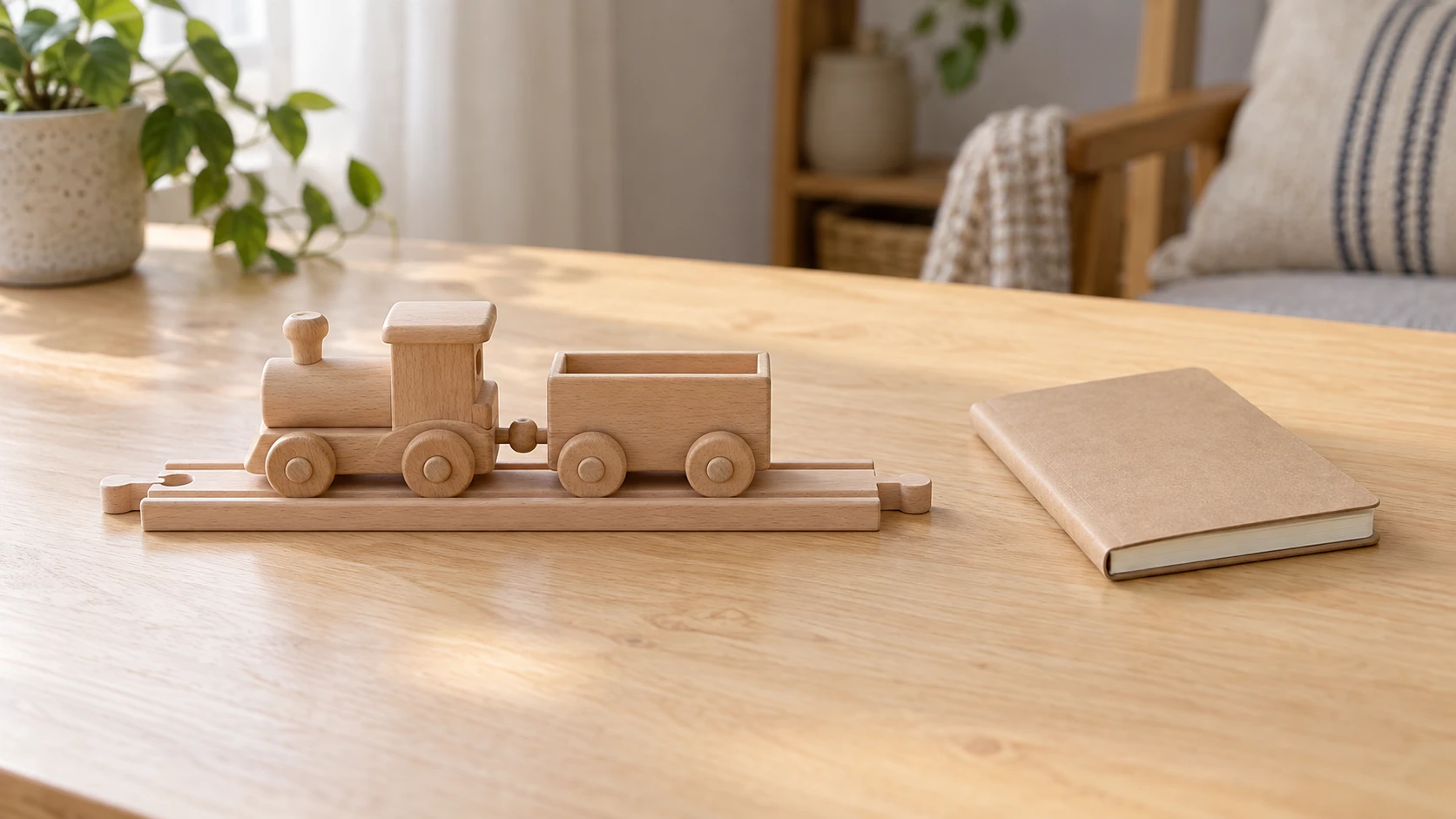
A toy train storytelling afternoon can begin with a destination and a small reason to go there. Someone is waiting for a message, a parcel has reached the wrong place or a familiar journey has an unexpected passenger. Let the railway suggest a place, then choose what makes this trip worth telling.
Keep the story small if that suits the afternoon. One journey and one change may be enough for an enjoyable afternoon, alone or with a willing companion. The choices here concern an original fictional narrative. Physical track assembly, equipment operation and the suitability of a particular set for its users remain with the actual product instructions.
Give the journey a reason beyond reaching the end
Think about what makes someone want the train to arrive. A delivery becomes a story when its contents matter to a character. A passenger trip becomes more particular when the passenger has a reason for choosing this destination. Choose the human or imagined-animal interest before inventing an entire transport network.
Try one original fictional premise: a station keeper at River Station has been waiting for a note from an old friend. The note travels in the wrong delivery bag and reaches a farm instead. Someone at the farm recognises the station's name and decides to send it onward. The story concerns the note finding its reader, without needing a dramatic accident or a villain.
These places, people, bags and messages belong to the invented story. They are not a claim about the parts supplied in either railway set discussed below. You can tell the premise aloud or keep it as a note while considering which available objects, if any, you want to use as prompts.
Change the premise if another detail interests you more. Perhaps the intended reader is now travelling and the note must meet them at a different destination. Perhaps the farm's owner adds a reply. Choose the possibility you would enjoy exploring instead of treating the example as a script that must be completed.
Imagining a railway destination gives the scene a focus
For imagining a railway destination, decide what a character notices on arriving. River Station might be quiet, with its keeper looking along an empty platform. A farm might be busy, so the note is discovered only after another task. Those choices affect the tone of the story without requiring a physically elaborate scene.
Give each important place one recognisable feature in your narrative. The station could have a familiar bench; the farm could be known for the person who remembers everyone's name. Such details help a listener recognise where the story has moved. They need not become a list of objects to buy.
Leave unnamed places in the background when they do not matter yet. A journey can pass through an imagined landscape without stopping to describe every field. If the listener needs to understand a change of destination, make that change clear. Otherwise, allow the route to remain as simple as the story needs.
You can borrow a feeling from a place you know without claiming the fictional railway reproduces it. The quiet of a familiar waiting room or the pleasure of seeing a friend can inform a scene. Keep the invented location distinct from a factual account of real services, railway history or a particular person's experience.
Choose the moment when the situation changes
In the note example, arriving at the farm is a change of place. Recognising the wrong address is a change in what a character understands. Deciding to help gives the journey a new direction. You can linger over the change that interests you most and pass quickly over the rest.
Imagine how the discovery becomes visible in the telling. Someone might read the destination aloud, remember the station keeper or notice that the bag belongs elsewhere. The story needs enough information for the listener to follow that discovery. It does not need a lengthy explanation of every earlier delivery.
If you prefer a gentler story, let the difficulty be ordinary and easily understood. A forgotten note or an unfamiliar station name can create a reason for conversation. You can also choose a funny misunderstanding, provided the next event follows from it rather than arriving as an unrelated surprise.
Keep the ending connected to the opening interest. If the keeper was waiting to hear from a friend, the note's arrival can answer that expectation. A final scene might concern reading the message or choosing a reply. It need not prove that every loose question about the imaginary railway has been resolved.
The BRIO farm set can suggest a place for a story
The BRIO 63371900 farm railway set is described as a 20-piece set and is also identified as the 33719 farm railway set. The native inventory names an engine and cargo car, a tractor and trailer, a double-height barn with a magnetic crane, a track crossing, a cow, hay and fencing.
A farm destination is one possible narrative association with those listed contents. It is a prompt for your own fiction, rather than a prescribed story or an instruction to operate the crane. An imagined note arriving at a farm does not mean a miniature note or delivery bag is included in the package.
Keep both 63371900 and 33719 with SKU 51498394 and UPC 698887847339 when identifying the actual offer. Those references concern the same selected native account. The description's Standard size label supplies no assembled layout dimensions or measured fit on your available surface.
The account states that the wooden tracks are compatible with other BRIO railway toys. That statement concerns its named range. It does not establish a tested match with the Melissa & Doug offer below or with an unidentified piece already in your collection. Choose a story independently of any unresolved physical connection.
Let an available object suggest a role without fixing the plot
An engine can become the means of carrying the note, while a listed cargo car can suggest that something is being delivered. You can also keep the train as background and focus on the characters at the destination. The toy's familiar form can prompt the story without determining every event in it.
A single object can hold different meanings in different tellings. In one version, the arrival matters because the keeper has waited a long time. In another, the sender is surprised by an immediate reply. Decide which relationship you want to explore before adding a larger cast.
If you do not have an object representing a character or place, you can describe it in words. The narrative does not require an exact physical model of everything mentioned. Avoid turning an interesting premise into a shopping list simply because part of its imagined setting is absent from the available toys.
The wordless-comic drawing session explores a short invented event through visible changes between pictures. Its attention to a recognisable action can inform your storytelling. The graphite-pencil supplies and panel revisions in that guide supply no railway assembly method or instructions for these sets.
The Melissa & Doug set offers a different listed inventory
The Melissa & Doug 701 Deluxe Wooden Railway Train Set is described as containing more than 130 pieces. Its account names 100 wooden track sections and supports, plus more than 30 accessories. Keep that combined track-and-support wording intact instead of treating each word as a separate additional hundred pieces.
The named vehicles include a six-piece freight train with cargo, a four-piece passenger train and a three-piece flatbed truck with cargo. Those are inventory descriptions within the set. They are not a required number of story scenes, characters or journeys. A larger assortment does not oblige you to use every piece in one afternoon.
The account says instructions for four track configurations are supplied. Follow the actual instructions for physical setup; this narrative discussion does not reconstruct those configurations. Its listed size is 6 by 28.5 by 17.5 inches, without establishing that this is the assembled footprint of every possible layout.
Keep SKU 19505426 and UPC 000772007016 with model 701. The description uses broad compatibility wording about popular wooden railway sets. It does not identify a verified pairing with the selected BRIO model here. A joint story does not require combining physical systems whose connection remains unconfirmed.
Sharing a miniature journey leaves room for another voice
For sharing a miniature journey, invite the other person to choose a part that interests them. They might imagine the message, the person who finds it or the station keeper's response. Agree on the starting premise, then allow their contribution to change the story in a way you both want to follow.
Ask a specific creative question rather than requiring a complete plot. What made the farmer recognise the station name? What did the keeper hope the note would say? A short answer can suggest the next scene. The person can also pass or choose to listen without taking a role.
Different versions can coexist. One person may prefer a funny note while another imagines a quiet reunion. You can tell both possibilities or choose one for this telling. There is no need to decide that one contribution failed because it led away from your first idea.
If you are working alone, keep a few lines about the moment you want to return to. A destination name and the unresolved choice can be enough to restart the story later. Preserve the version that interests you rather than trying to document every passing idea.
Decide whether the story ends with arrival or a reply
Read or tell the imagined sequence once from its beginning. Can the listener understand why the note mattered and how its journey changed? Add a missing connection where it helps. Leave out a stop that repeats what another scene already accomplished.
The postcard-writing afternoon guide begins with one person and an ordinary detail worth sharing. That attention to a particular reader can help you imagine what the note means to your fictional keeper. The postcard's personal-message activity and printable-stock discussion remain separate from the invented railway.
In the fictional River Station version, the note might read, “I will be passing through tomorrow. Is the old bench still beside your door?” The keeper's response then has something particular to answer. Perhaps the bench has moved, or perhaps the keeper decides to be waiting beside it. These are original imagined lines, without a quotation from a book or a claim about supplied printed material.
Choose whether that response needs another scene. You might end with the keeper writing a reply, or leave the anticipated meeting for another telling. The choice concerns the feeling you want to keep after the journey ends. A quiet expectation can be enough.
Keep the story separate from a supply purchase
An afternoon of railway storytelling can begin with suitable materials already available, while a proposed train-set order through republeq remains a separate decision. If you prefer crypto such as USDT, identify the exact package you are considering and resolve the contents or setup questions that matter before choosing payment. The BRIO offer names its farm setting and vehicles. The Melissa & Doug offer names a larger railway inventory and supplied configuration instructions. Neither description requires that every item appear in your story, and neither establishes the cross-brand connection of the selected pair. Retain supplier clarification with the model or product reference it actually identifies. Inspect the payment methods offered for the resulting basket at checkout. Cryptocurrency appears among accepted categories in the captured native records, without specifying the complete choice of assets, networks or payment arrangements for every later order. A preference for USDT does not complete missing instructions. Obtain clarification before authorizing a transfer if the presented details leave a necessary question unanswered. No wallet address, network selection or transfer procedure is supplied here. Review the current delivery and return information for the selected package. A planned afternoon gives no guaranteed arrival date, and a payment confirmation establishes no layout fit or user suitability. Keep the order confirmation together with the confirmation furnished by the chosen payment route. Save any answer about included pieces with that order reference. You can leave a purchase undecided while obtaining the product information needed for your actual setting. The fictional journey can continue in words while those physical and purchasing questions remain open.
Let the journey finish where the story's opening interest finds an answer. Keep the destination, the change and any reply you would like to explore next. The afternoon can leave you with one small imagined trip worth telling again.