Games & Puzzles
Toy Advent calendar clutter: plan the daily pieces before choosing
Choose a 24-door toy calendar whose daily pieces the recipient can keep together and enjoy.
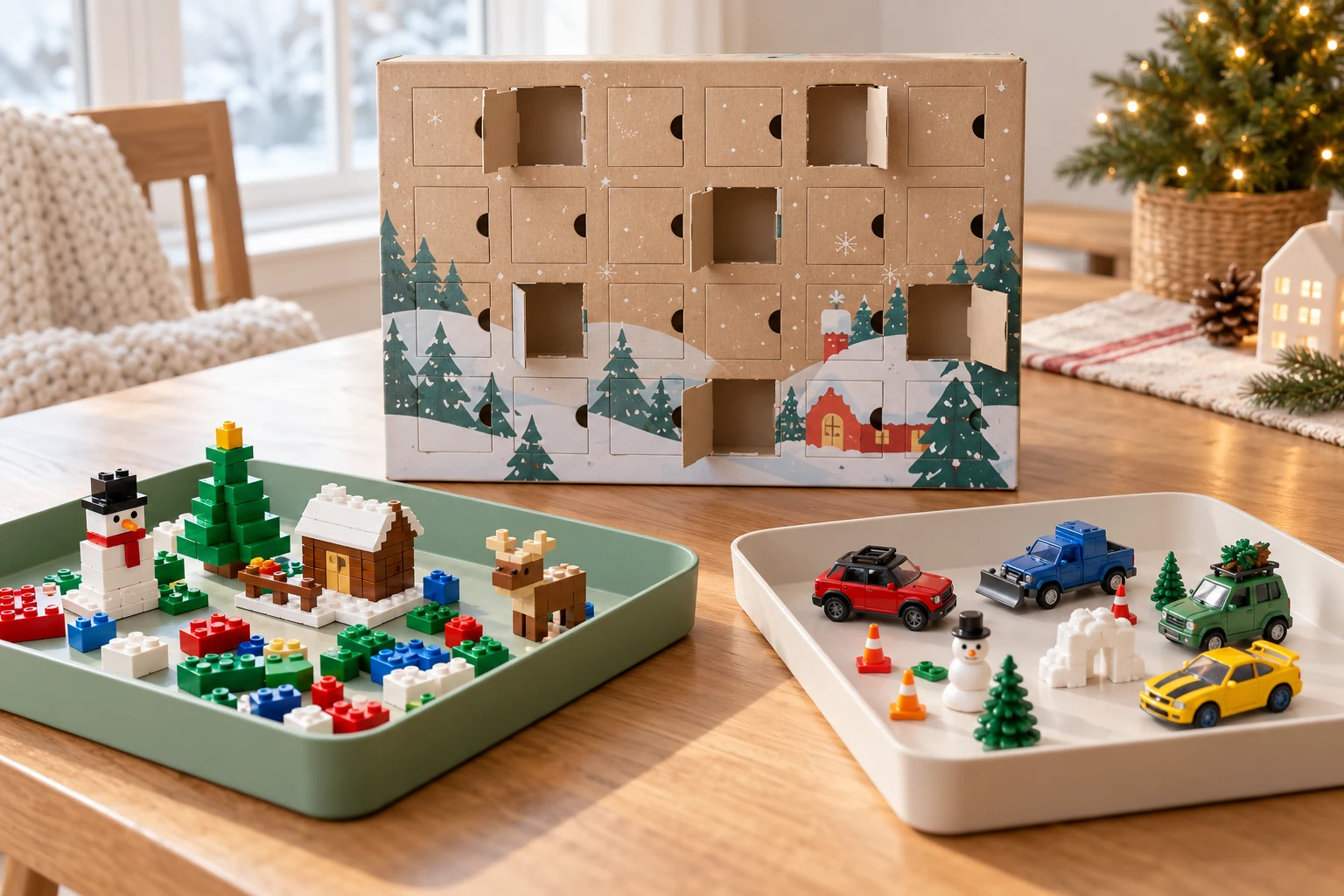
A countdown can be fun on day one and hard to manage by the second week if every opened door adds another loose toy. Before buying, decide where those pieces will go after the first play session. A Toy Advent calendar clutter plan starts with the recipient, the calendar’s actual contents, and a place to leave or collect each day’s surprise. Two listed examples make the choice concrete: the LEGO Minecraft 2025 Advent Calendar, model 21280, and the Hot Wheels 2023 Advent Calendar, model HKL74. They are different older-season editions currently listed on Republeq. Check the exact offer again when ordering; the model year is part of their identity, not a promise of a current-year release.
Name the loose-parts problem before buying
Think about how the recipient actually plays. Some children like to add one small build to a scene each day. Others would rather roll a car across a track or make up a short story with a vehicle. Either approach can create pieces that need a home. Count the available floor or tabletop area before choosing a calendar simply because its front image looks exciting. An open playmat needs room to stay flat, and an item left on the dining table may have to be cleared before every meal.
Decide whether the countdown will be opened in one spot or carried around the home. For a fixed spot, a tray or shallow container beside the calendar can hold the day’s loose parts until playtime. For a mobile routine, a small box with a lid may be easier to move. These are household planning options, not accessories claimed to be included in either listed set. If you already have a suitable container, use it before buying another one. Keep the reset simple enough to repeat on a busy evening.
Ask who will help reset the play area. A younger recipient may need an adult to collect pieces after opening. An older child may be happy to sort a few parts into a familiar box. Avoid turning the countdown into a chore; a simple “open, play, put the pieces here” routine is enough. If that routine is unlikely to happen, a format with fewer tiny build components may be the more manageable choice.
Check the age label and the exact edition
The LEGO Minecraft listing describes model 21280 as intended for ages seven and up. The Hot Wheels listing describes model HKL74 as intended for ages three and up. These are manufacturer or listing age statements for the exact products, not a substitute for knowing the child or supervising play. Read the current package and offer information before purchase, especially if the gift will be shared by children of different ages. The recipient’s ability to follow the build or keep track of pieces matters as much as a number on the box.
The years in these product names are easy to miss. One listing is a 2025 Minecraft edition; the other is a 2023 Hot Wheels edition. Their current product pages show them as in stock and new, but that observation can change. If the recipient expects a specific character, model, or current-season calendar, confirm the exact box and included contents before buying. A general “LEGO calendar” or “Hot Wheels calendar” search result is not enough to establish which edition will arrive.
Check the calendar itself as well as the toy. The 24 doors organize the opening schedule; they do not automatically organize everything after it has been removed. If the household opens more than one calendar, assign a separate place to each one. That prevents parts from different sets from being mixed and makes it easier to identify what came from a particular day.
Count what each day adds to the play area
The LEGO Minecraft product description says the 24 daily gifts include eight minifigures, a 300-piece total, and a fold-out playmat. The listing suggests combining the gifts into a winter village. That can suit a child who enjoys returning to a growing scene. It also means the opened pieces need somewhere to wait between sessions. The 300-piece figure is a set total, not a claim that every door contains the same number of pieces. Look at the actual recipient’s building habits before deciding whether a multi-day build will stay enjoyable.
The Hot Wheels HKL74 description says its 24 doors contain eight 1:64 cars and sixteen winter-themed accessories, with a playmat. This is a different pattern: some days add a car, while others add a small accessory. A child who wants a new vehicle every day would not get that from the stated contents. If the appeal is car play with a scene that grows, the eight-car count may be perfectly fine. Use the exact contents to set expectations before the first door is opened.
Neither product page says that all of the loose items fit back into their doors after opening. Do not assume the calendar box doubles as long-term storage. A playmat is a surface for the scene, and its presence alone does not solve missing parts. If a child tends to leave toys where they last played, put the collection container next to the mat rather than across the room. Try the place you have in mind with an ordinary toy first. If that test fails, change the setup before the countdown starts.
For a gift, consider the household receiving it. A family with a clear play table may welcome a scene that builds for weeks. A smaller shared space may call for a shorter daily reset. Ask about available space and the child’s interests without turning the gift into a complicated questionnaire. The choice should fit their routine, not just your picture of how the countdown ought to work.
Choose a daily collection routine
A workable routine has three steps: open one door, play for a while, and collect the new parts before moving on. Keep the calendar and collection spot together so each day has the same ending. A parent can take a quick look at the play surface before cleaning it or moving the calendar. That small check helps avoid sweeping a piece away by accident. If a part is missing, look where the set was last used before opening another door and adding more pieces to the search.
With the Minecraft calendar, decide whether the winter village can remain assembled on the playmat or whether it needs to be taken apart after every session. Leaving it up can make the daily story easier to continue, provided the space is available and the parts can remain undisturbed. If the mat has to be cleared each day, a tray that can be moved as one unit may help. Do not claim the tray is included; it is a way to use what the home already has.
With the Hot Wheels calendar, decide where the eight cars and small accessories will wait. A divided box is optional. A single container can also work if the child does not mind sorting before play. Keep the playmat flat and dry if it will be reused. If the recipient already has Hot Wheels cars, a separate temporary spot can make it easier to tell which vehicles came from this exact calendar. That distinction matters if a door seems empty or an accessory has gone missing.
Do not turn the routine into a promise that no piece will ever be lost. Busy homes still have interruptions. The goal is to choose a format and a play place that make the ordinary reset plausible. If pieces tend to travel between rooms, establish a stop point before bedtime. If the child prefers to keep a build on display, choose a shelf or other stable place that does not obstruct everyday use. These decisions are easier before a calendar arrives than after a week of open doors.
Try the planned play area with toys already in the home. Put a small group of parts on the proposed table, let the child play as usual, and see what happens when that surface needs to be cleared. Does the collection spot stay close enough to use? Can the child carry the tray without tipping it? Is there a safe place for the box between sessions? You do not need to buy anything for this trial. It exposes friction that a product photograph cannot show. If the play area disappears whenever the household uses the table, plan a movable setup or choose a gift that needs less continuing space.
Also think about the difference between keeping a scene intact and keeping an inventory. A Minecraft build might be most enjoyable when yesterday’s work remains on the mat, while a car set can often be played with again after its vehicles have been collected in one container. A child may play differently, so ask what they would want to revisit the next day. If a child likes to combine all their toys, decide whether the calendar’s pieces need their own temporary home until the countdown is over. Marking a container with the exact set name can help the family identify it later without requiring every loose item to be sorted every night.
Before wrapping the calendar as a gift, decide who will keep the opened surprises at the end of each day. If the child visits more than one home during the countdown, a portable collection box may be more useful than a permanent display. If the calendar stays in one place, leaving the playmat and container together may make the next opening easier. The exact plan can be simple, but it should belong to the real household rather than an imagined perfect setup.
Make the final exact-listing check
Look again at the exact product pages when you are ready to buy. Confirm model 21280 or HKL74, the recipient’s age fit, the stated 24-day contents, and the current offer condition. Compare the daily play style: a 300-piece buildable Minecraft scene with eight minifigures, or eight Hot Wheels cars plus sixteen accessories. Neither is automatically the better gift. Choose the play pattern the recipient enjoys and the household can keep together through the countdown.
If the plan involves filling a reusable calendar with your own objects, that is a different decision. The refillable Advent calendar drawer plan covers measuring objects against the drawers and assigning them to dates. If you are still deciding who should receive a holiday gift at all, the Christmas stocking gift occasion and recipient guide addresses that earlier choice. For a prefilled toy countdown, finish with a simple answer: where will today’s opened pieces be at the end of the day?
Plan where each day’s parts will go before opening the next door.