Crypto Commerce
Tineco T1 cordless stick vacuum vs Makita LXT compact vacuums: cleaning time, batteries, and storage
Compare Tineco T1 cordless stick vacuum by stated run time, battery kit, floor handling, filter care, and conflicting Tineco motor figures.
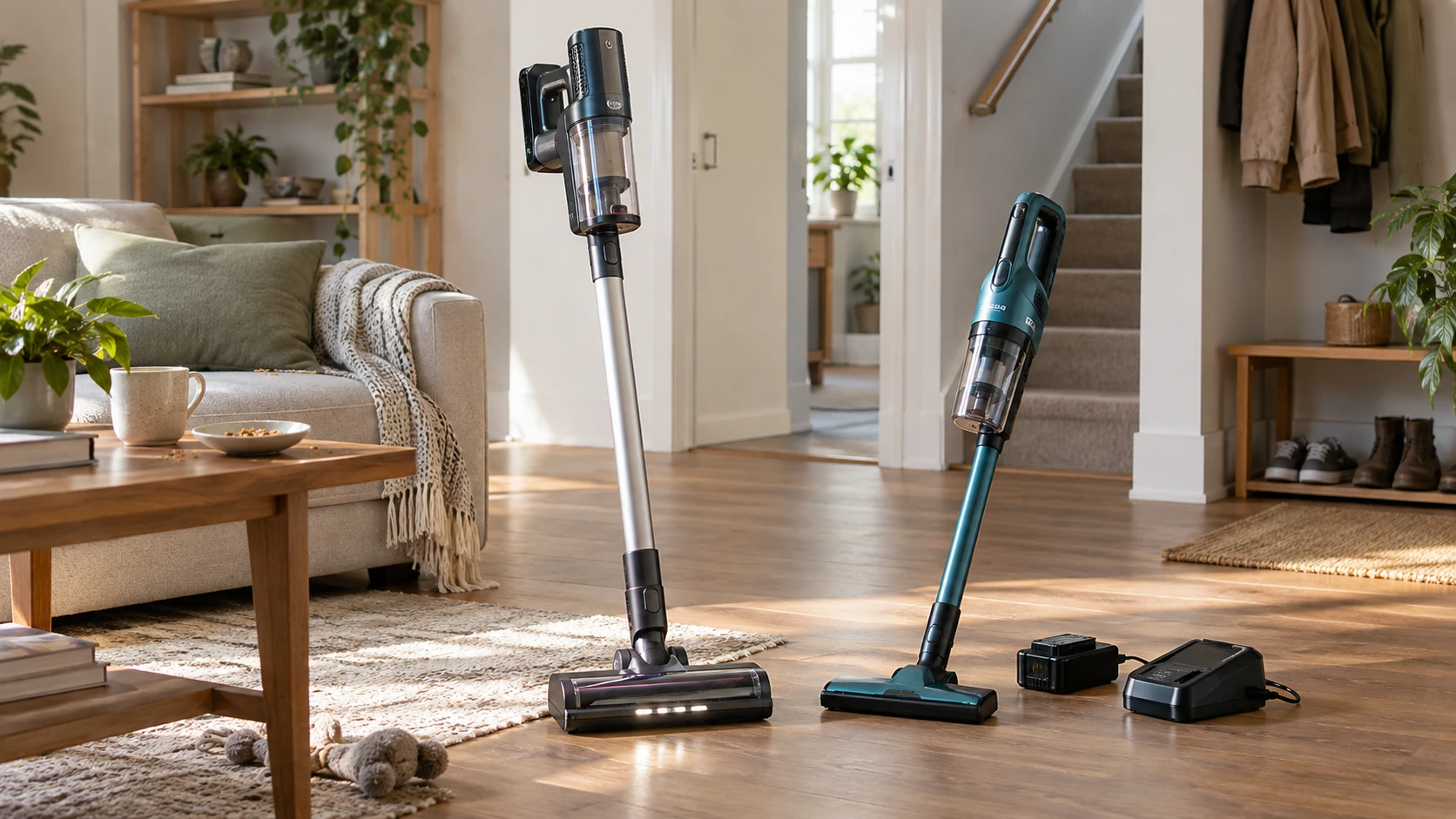
A cordless vacuum feels convenient until a half-cleaned room and an empty battery force a pause. The Tineco T1 and Makita 18-volt LXT compact kit suggest different ways to manage that problem. The Tineco T1 cordless stick vacuum lists a headlight, HEPA filter, and a rechargeable lithium-ion battery. The related guide to cordless vacuum handling is useful for planning how a machine will be carried, emptied, and stored; it does not test either model here. The Makita 18V LXT compact vacuum kit lists an included 2.0Ah battery and rapid charger, a bagless two-stage cloth filter, and a short stated run time. The right choice depends on the size and rhythm of the cleaning job, not a single motor figure.
Work out the cleaning session before comparing specifications — Makita 18V LXT compact vacuum kit
Write down what the vacuum will clean in one session. A few crumbs after dinner, a staircase, a car footwell, and several rooms of flooring put different demands on reach and battery life. Makita's saved description says up to 15 minutes of continuous use on its included fully charged 18-volt compact 2.0Ah battery. It also says the rapid charger can reach a full charge in 25 minutes or less. Those are claims in Republeq's catalog without a shared test against Tineco. Fifteen minutes may be plenty for a workbench or small spill and inconvenient for a whole-house pass. Check whether the stated figure uses the supplied floor nozzle, a particular power setting, and a clean filter.
The Tineco listing names a 2,000mAh battery, model A10-03, at 21.6 volts and 44.4Wh. It gives no run time in the saved excerpt. Battery capacity does not convert into a reliable cleaning-duration estimate without knowing the machine's real power draw at the setting used. The row describes quick pickups and larger cleanings, but that is a suggested use rather than proof of a full-house cycle. Ask for a current manual's run-time ranges and the conditions for each. If the household has a regular thirty-minute cleaning route, measure that route first and see whether either battery plan fits it.
Charging affects the routine too. Makita includes the named battery and rapid charger in the kit. Tineco's row establishes that its battery is rechargeable but does not list charging time, a spare battery, or exact charger contents. Confirm the box contents before comparing prices. A faster recharge can help when cleaning happens in several short bursts; a longer continuous run matters more when the user does not want to stop between rooms. The catalog gives only one side of that comparison, so avoid assuming the Tineco charges slowly or the Makita always finishes first.
Treat the motor figures with care — Makita 18V LXT compact vacuum kit
The Tineco row contains a conspicuous conflict. It describes a 300W motor and also says 3000W. Both figures appear in the same saved product description. They cannot responsibly be used together as a single verified motor specification. Check Republeq catalog details or contact the manufacturer for the exact VA103500CA model sheet and input rating. Even a correct wattage is an electrical input figure, not a direct measure of how well a floor nozzle collects cereal, hair, or fine dust. The condition of a filter, brush design, seal, and surface also affect what is picked up.
Makita's saved row says it has strong suction and efficient cleaning, but it gives no comparable suction measurement or test conditions. Do not turn the Tineco wattage conflict into a ranking by guessing which number was intended. If pickup performance decides the purchase, seek demonstrations on the actual floor types or a return window that lets the buyer test the machine. A vacuum that clears the kitchen tile may behave differently on rugs or in a narrow car seat seam. Use the surfaces in the home as the test plan rather than comparing unlike marketing terms.
Both product rows omit several common comparison figures, including measured air watts, standardized debris-pickup results, and noise under the same conditions. That absence matters when a household has pet hair or thick carpet. Ask whether the supplied head is intended for those tasks. The Tineco entry says it cleans multiple surfaces, but it does not define each surface or specify a carpet depth. Makita's row emphasizes its floor nozzle's maneuverability and debris collection. Neither description independently proves a result on a particular rug.
Match the head and handle to where dirt collects — guide to cordless vacuum handling
Tineco lists an LED headlight. That could be helpful under a couch or along a dark baseboard because it illuminates the area in front of the cleaning head. A light cannot remove debris by itself; the useful test is whether the head reaches the space and the vacuum picks up what the light reveals. The saved listing does not provide the head's height, width, swivel range, or included tool inventory. Check those dimensions against furniture clearance and the narrow gaps that are hardest to clean at home.
Makita lists a floor nozzle designed for maneuverability and debris collection, plus a compact, ergonomic body with a soft-grip handle. The description gives the body length as 18.75 inches and product dimensions as 8.2 by 23.2 by 5.8 inches. It also lists 7.3 pounds. Those measurements need checking against the exact kit configuration because the row does not explain whether the weight includes a battery, floor attachment, or packaging. Try carrying the fully assembled unit up stairs and using it at shoulder height if those tasks are common. Handling can matter more than a small price difference.
The saved Tineco row calls its T1 lightweight but gives no weight. Do not assume it is lighter than the Makita because the description uses that adjective. Ask for an assembled weight with the battery and intended floor head. A vacuum can feel heavy when its weight sits at the hand even when the total is modest. Consider where the user's wrist bends, whether a trigger must be held continuously, and how easily the machine turns around chairs. These details are hard to infer from catalog prose and easy to notice during a short trial.
For car cleaning, examine tool reach separately from floor cleaning. A large floor head may be awkward around seat rails, and the saved rows do not list a complete set of crevice tools or hose accessories for both models. Confirm what attaches to each unit and how it reaches the gap between a seat and center console. If the vacuum is mainly for vehicle use, take measurements of those gaps before selecting on the basis of household-floor claims.
Filters, emptying, and the cost of maintenance — Makita 18V LXT compact vacuum kit
Tineco lists a HEPA filter. The saved description does not specify an independent filtration test, whether the entire machine is sealed, or the exact filter-replacement interval. Those details matter to someone trying to keep fine dust from returning to the room. A HEPA-labeled component is useful evidence of a filter type, but leakage around a housing can change what the whole vacuum emits. Check the current manual for washing, drying, and replacement instructions before relying on any filtration claim.
Makita describes a bagless two-stage cloth filtration system. It does not call the filter HEPA in the saved row. A cloth filter may be easy to handle for ordinary debris, but the excerpt does not provide fine-particle performance or maintenance frequency. Ask how the filter is emptied and cleaned, whether replacement cloth filters are available, and how much dust is released while opening the bin. A person who cleans pet litter or fine workshop dust should check the manufacturer's permitted materials and filtration guidance for the exact model.
Bin size is missing from both saved excerpts. A small bin can turn a quick session into several trips to a trash can, especially after a messy meal or a pet-shedding day. Ask for the usable capacity and inspect how the lid opens. Try emptying with the hands that will actually do the chore. A filter that must be fully dry before reassembly also requires storage and downtime; confirm the instructions rather than guessing. The routine after cleaning is part of the purchase decision because it happens every time the unit is used.
Batteries and the rest of the kit — Makita 18V LXT compact vacuum kit
Makita's kit explicitly includes an 18-volt LXT compact lithium-ion 2.0Ah battery and a rapid charger. The saved row says to use genuine Makita batteries and chargers. If a household already owns compatible LXT tools, check the exact approved battery list for this vacuum before treating that ecosystem as a benefit. Compatibility should come from Makita's current instructions, not from the shared LXT name alone. The listed battery, charger, and warranty terms are part of the kit being compared here; a tool-only listing would have a different value calculation.
The Tineco row names its battery model and electrical capacity, and says the rechargeable pack meets UN 38.3 transport and use safety standards. It also describes protections against overcharging, short circuits, overheating, and pressure buildup. Those are product-description statements; they do not tell the buyer the pack's replacement price or whether a second pack can be swapped during a session. Check the manufacturer instructions for replacement and charging, especially if a longer route requires more than one pack. Store and charge either battery according to its manual and inspect damaged packs rather than continuing to use them.
Makita's excerpt lists a three-year manufacturer warranty. The saved Tineco row does not state a warranty length. Confirm both current policies, covered components, and the party handling claims for the exact Republeq's catalog before paying. Battery coverage may differ from motor or housing coverage, and a catalog headline rarely gives those terms in full. Keep the order's model number and accessory list so a later support request identifies the actual unit and kit.
Compare the saved prices with the missing information — Makita 18V LXT compact vacuum kit
The September 30 catalog snapshot lists Tineco at $312.49 and Makita at $362.49 in USD, a $50 difference. Those are minimum listed prices in a saved snapshot, not a promise about today's checkout, shipping, or taxes. The Makita price includes a stated battery and charger. Tineco's excerpt does not state every included charging accessory. Request a current box-content list and final price for both before calling one kit cheaper for the same equipment.
Do not pay for a feature the household will not use. A headlight and HEPA-labeled filter may be useful in dim corners or where dust handling matters; their value depends on the actual machine and cleaning route. Makita's short stated continuous run and quick recharge may suit frequent small jobs, particularly where the included charger has a practical place to live. If the goal is one uninterrupted pass through several rooms, the missing Tineco run-time claim and Makita's stated 15-minute limit need investigation before either is chosen.
The next step is concrete: time a normal cleaning session, name the surfaces, and list the tools needed for corners or a car. Verify Tineco's conflicting 300W and 3000W statements, and get the current run-time and box-content details for the exact VA103500CA. Confirm Makita's 15-minute claim under the intended attachment and the battery configuration, then check filter care and total assembled weight for both. With those answers, the choice becomes a matter of how the vacuum fits the household's work rather than which listing has the louder specification.