Problem-Solving Articles
Table skirt clips keep falling off: fit and fabric tension
Check the stated clip offer and confirm the intended package before changing supplies.
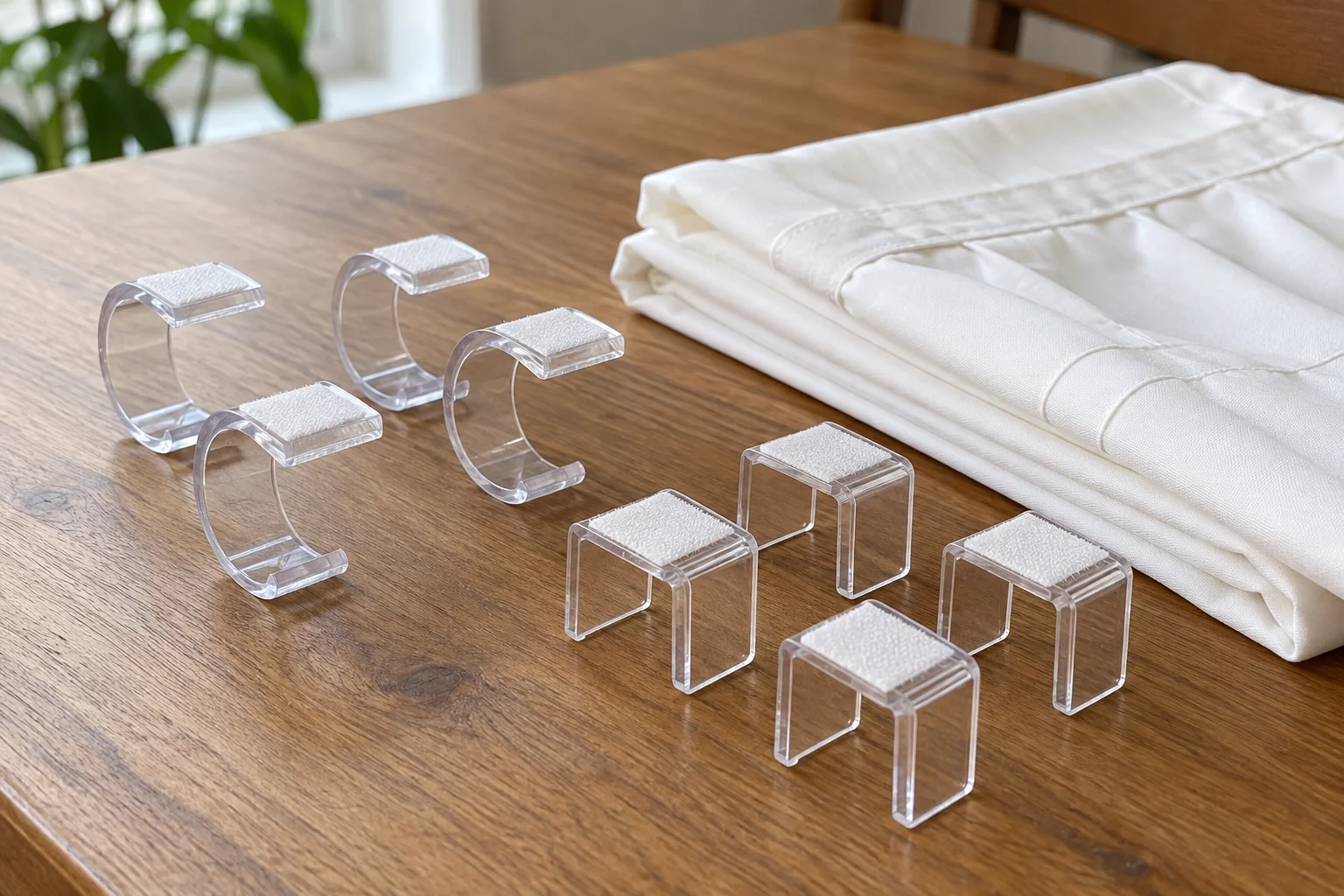
When table skirt clips keep falling off, look at the place where the setup is coming apart. LA Linen's installation guidance names incorrect clip size, excessive fabric tension and an uneven table edge as common causes. It advises reducing the pull, adding appropriate clips and checking the attachment points before loading the table. A bigger bag of the same clips will leave the cause unanswered if the first ones never suited the edge.
Table skirt clip fit starts with the actual edge
For table skirt clip fit, FASTENation's FAQ recommends measuring table thickness and choosing the corresponding listed clip size. It distinguishes a skirting clip, whose outward-facing hooks receive the skirt's loop strip, from a tablecloth clip that holds the cloth directly. Identify which item you have before comparing dimensions. A cloth blowing loose and a skirt separating from its fastening can require different supplies.
Use a specific description when asking the supplier for help. “The front skirt comes down” leaves several possibilities open. Say whether the clip came away with the fabric or remained attached to the table. If nobody saw what happened, leave that detail unanswered. You can describe the result you found without claiming to have watched the failure occur.
Read the FASTENation offer before transferring a size claim
The FASTENation SMC table skirt clip offer identifies clear plastic clips and a pack of 100. Its title includes a one-inch length description. The supplied photograph shows a curved clear clip with a white fastening patch on the outside. A photograph supplies no measurement of your table or a holding result for your skirt. Retain the exact offer reference when asking which edge profiles the supplied item accommodates.
FASTENation's own SMC product page describes a one-inch-wide clip for profiles up to two inches thick, with VELCRO Brand hooks. That manufacturer page sells a pack of 250. Confirm the relationship between the manufacturer's SMC description and the retail pack of 100 before relying on those dimensions. The manufacturer uses a width description where the retail title uses a length abbreviation. Ask which dimension the seller means, rather than treating that number as the maximum table thickness.
The SMC manufacturer also promotes the resin's clarity and durability. Those are maker claims, without a holding-force result for the selected retail package here. If your enquiry concerns repeated use, ask about the identified clip and its applicable care requirements. The page's promotional description does not provide an observed service history for the clips you would receive.
The LA Linen offer needs its own fit confirmation
The LA Linen 100Pc-LargeClips offer names a pack of 100 and includes an up-to-3.5-inch table-fit statement in its offer title. Its short description repeats the model wording. The photograph illustrates clear curved clips with white fastening patches, including clips positioned at a table edge. It does not show a measured retention test. Check the identified package and applicable instructions with the seller if the actual edge shape is uncertain.
LA Linen's separate table-accessories page describes clips intended for its table skirts, with the hook side of a hook-and-loop fastening. It gives a thickness range of one to 3.5 inches and offers package choices. Keep that manufacturer's range with the identified clip family while confirming the selected retail model. A broad maximum alone leaves the lower end and the actual edge profile to check. Neither selected offer has been fitted to your table in this article.
Hook and loop table skirting has a separate fastening face
For hook and loop table skirting, FASTENation explains that the firmer hook surface engages the softer loop surface. Its FAQ describes placing the tabletop cloth first, then fitting the hooked clips over the edge and attaching the skirt's corresponding loop pieces. Match the fastening surfaces in the actual skirt and clip arrangement. Two parts described as hook-and-loop items do not by that description identify which side each supplies.
An enquiry can identify the table and skirt separately. Include the selected clip reference with the table question, and describe the attachment strip with the skirt question. A response confirming the table thickness may leave the skirt fastening unanswered. Ask the remaining question explicitly before calling the complete setup suitable. This keeps a narrow answer useful without giving it a larger meaning than the supplier intended.
Relieve fabric pull and check the arrangement before service
LA Linen's installation article advises fitting the base cloth before the skirt and keeping cloth from bunching beneath the clips. It warns against pulling the skirt tight, including around corners. When attachment points are too far apart, the upper edge can bow or pull away. Its guidance recommends checking the finished arrangement and correcting the setup before guests arrive. Use the applicable instructions for the actual skirt and clips when deciding spacing and placement.
Give a useful account of any adjustment. If one section was rearranged, say which section changed and what was observed afterwards. A neat front view does not answer whether someone checked the far corner. If a different person finishes the setup, pass on the remaining question instead of allowing “looks ready” to stand for an inspection nobody made.
Deal with debris using the fastening manufacturer's advice
VELCRO Brand's FAQ describes removing debris from hooks with a stiff brush or another piece of hook material. It recommends keeping the hook surface covered to avoid collecting unwanted material and engaging hook and loop before washing. Follow the applicable care instructions for the actual skirt and fastening. This general advice is not a direction to wash a complete plastic clip or use a cleaner on an unidentified table finish.
The same FAQ distinguishes sew-on fasteners for fabric from adhesive-backed products, which it does not generally recommend for fabric. A replacement adhesive strip therefore needs its own applicable instructions. Ask about the intended materials before adding it to an existing skirt. This article supplies no adhesive conversion method, cure time or promise that a new strip will restore a worn assembly.
Check the actual fastener when supplier descriptions differ
Premier Table Linens gives a different fastening description in its own table-skirting guide: its skirts have hooks, with the opposite surface on its clips. Keep that account with its own products. It does not change LA Linen's stated hook-sided clips. If you are joining pieces from different suppliers, identify the actual mating surfaces before buying another package. A positive answer about table thickness leaves that material question to resolve. The two supplier descriptions show why the general phrase “skirt clip” cannot identify every part of an existing arrangement.
Premier also describes an alternative arrangement with a topper outside the skirt when the customer wants the clear clip tops concealed. That is a presentation option within its own system. Use the identified skirt and clip maker's instructions for your actual setup instead of switching the order solely to hide hardware. Its guide also distinguishes coverage around three sides from coverage around all four. Establish which arrangement you intend before deciding that a gap must be corrected by stretching the fabric. A changed display preference is a reason to review the required supplies with the supplier.
Choose a suitable backing before attempting a fabric repair
Sailrite's Adhesive Backed Nylon Loop White page describes a fuzzy loop surface with an acrylic pressure-sensitive adhesive behind it. It warns against using that adhesive-backed material on fabric and says sewing through the adhesive can gum up a sewing-machine needle. That warning is relevant if your proposed response to a detached fastening is to buy a roll of sticky-backed tape. A roll intended for solid surfaces needs its own application requirements checked before it becomes a fabric repair. This article supplies no instruction to stitch through that adhesive or glue a selected clip.
The Sailrite offer supplies the loop side alone. A roll's presence in a shopping basket therefore does not establish that it supplies both sides of a fastening. Its advertised opening-and-closing durability also belongs to that offered material, without establishing how the patch on either selected clip was attached. Ask the clip maker about a separated factory patch before treating another supplier's tape as a replacement part. Preserve the difference between an actual clip instruction and a general material description when deciding what work you can reasonably undertake.
Separate cloth dimensions from the attachment decision
The holiday tablecloth drop planning guide uses hypothetical rectangles to distinguish centred overhang from an offset cloth. It can help you explain the coverage you intend. Its geometry does not choose a skirting clip or establish that the fastening will hold.
The curtain ring and rod compatibility guide keeps the rod opening separate from the curtain attachment. That is another household example of naming the connection you are asking about. Its curtain measurements do not provide fit limits for these table clips.
Keep a crypto purchase tied to the chosen supplies
If you would like to purchase the clips discussed here at republeq.com with cryptocurrency, bring that preference to the checkout for the goods you have actually chosen. USDT may be your preferred token; this paragraph has not verified its availability for an individual order. Give the product decision enough attention before considering payment. Event supplies are often discussed while several arrangements are still changing. You can decide that you want a particular item without deciding to authorise its purchase immediately. A host who is borrowing equipment, for example, may want to settle what is already available before requesting anything new. That is a choice for the people arranging the occasion, not an outcome supplied by a preferred payment asset. Once a purchase is being considered, read the transaction information presented by the merchant and make sure you understand what you would be agreeing to. Ask for clarification of unfamiliar terms while your decision remains open. Mentioning crypto here provides no instruction to move funds, no receiving address and no recommendation for a network. It also offers no prediction about exchange values or any financial benefit from choosing USDT. Consider the buying terms for the goods alongside the payment decision. If the proposed order does not suit your needs, you can stop considering it without having to find a different reason to spend. If a transaction is completed, keep the merchant's confirmation accessible so you can identify what you requested when the parcel arrives. Compare the delivered contents with the actual order information before treating the supply purchase as complete. Payment and the event setup still answer different questions. The method selected for a transaction does not demonstrate a successful installation, and this discussion promises neither a delivery date nor a particular return or refund result. Choose a payment route only after the current checkout and its terms give you an answer you understand; leave any unconfirmed option open instead of assuming that a reference to cryptocurrency has settled it.