Furniture & Home Organization
storage bin lid won’t close: check the rim, contents and lid match
A gentle sequence for a clear storage bin lid that will not sit flat or snap after loading, using two different native lid designs as examples.
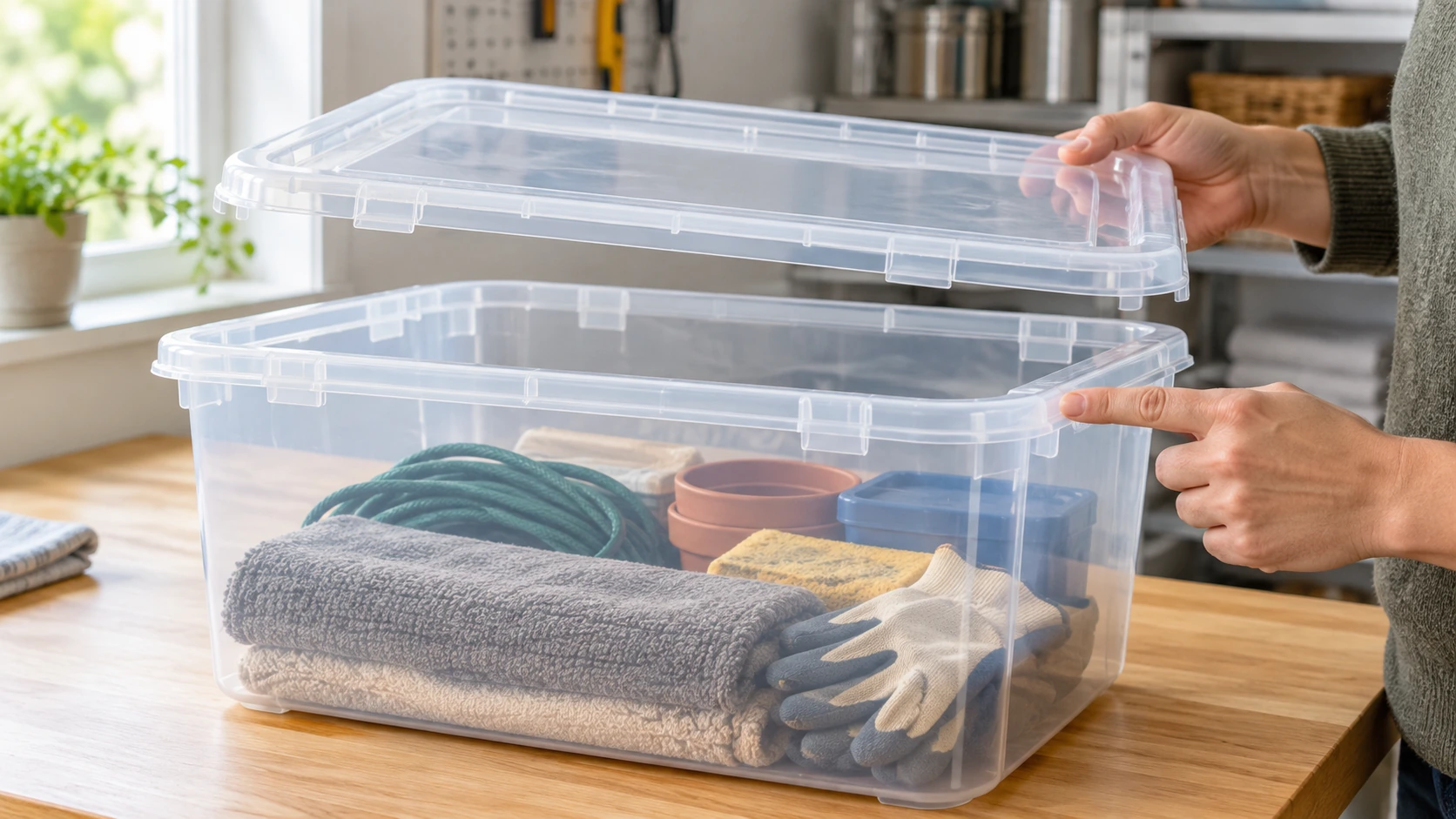
When a storage bin lid won’t close, stop at the first edge that resists. Pushing harder can hide the useful clue: the lid may belong to another bin, an item may be resting across the rim, or one corner may be starting crooked. A simple check with the bin empty usually separates those possibilities. It also keeps a normal packing problem from turning into a cracked lid or damaged closure.
This guide uses two current clear-bin offers to make the checks concrete. The clear 27-gallon bin with a red lid describes a two-point snap closure and shows a taller bin with a broad red lid. The two-pack of shallow 28-quart bins with white lids describes snap-on lids and recessed tops intended for stacking matching bins. The products differ in size and lid design. Neither listing says its lid fits the other product, and the photographs do not establish a universal storage-bin lid size.
A lid that does not sit flat is a symptom, not a diagnosis of a defective product. The following sequence starts with low-force observations that a reader can make without taking a closure apart. If the lid, rim, or snap feature is visibly cracked or distorted, stop the fit test and use the seller’s current instructions or return process. This article cannot test a particular lid in your hands or determine a manufacturer’s warranty outcome.
Confirm that the lid belongs to this bin
Set the lid beside the empty bin and compare its outline with the entire rim. A lid from another size in the same storage room can look close enough to cover the opening yet miss the corners or snap points. Match any molded model number, size label, or original package information you still have. If several bins were bought together, put each supplied lid with its own container before pressing anything down. A successful fit should start evenly around the intended edge.
The two example offers are a useful warning against using capacity alone as a match. One is described as 27 gallons, with exterior dimensions of 30.6 by 20.6 by 14.3 inches and a two-point red snap lid. The other is a shallow 28-quart design, with exterior dimensions of 23 by 16 5/8 by 5 7/8 inches and white snap-on lids. Gallons and quarts describe listed capacity, not the geometry of the rim. Even two lids with similar outer measurements may have different lips, tabs, or latch positions.
If you cannot identify which lid came with which bin, do an unloaded alignment test only. Place the lid lightly on top and look for even contact at the corners. Do not stretch a lid over a rim, wedge a tab into the wrong notch, or assume a lid is interchangeable because both products are sold as “storage containers.” The meal-prep container lid inventory guide treats lids as separate pieces to count before buying. The same organizational habit helps here, although food-prep container use and this household bin fit problem have different requirements.
Keep the product photograph in its proper role. The 27-gallon gallery includes views with a red lid on a clear bin and a view of the empty clear interior. A separate image shows two bins stacked, which illustrates an arrangement; the native Product description is singular and does not establish that the offer supplies two bins. The shallow-bin gallery shows the clear base and white lid from several angles, a pair of bins in a room, and a dimension diagram. Those images help identify the shapes. They do not certify that a loose lid from another package is compatible.
Clear the rim before testing the snap
Take the items out of the bin or move them below the rim. Clothing, a folded blanket, or a stiff package can look low enough from the side but still touch the lid where its underside must seat. Remove loose labels, tape, and anything draped over the edge. On a clear bin, look through the side as you lower the lid. If the lid rests on the contents before it reaches the rim, the problem is the fill level or shape of that load. Rearrange the items or use another container instead of pressing the lid down onto them.
Check the full rim with the lid off. Look for a small object caught in a corner, a folded liner, residue, or a section that appears bent. A soft cloth can clear ordinary loose debris; follow the product’s care directions for cleaning materials. Avoid scraping a snap surface with a tool. A damaged edge may prevent even seating, and force will not tell you whether the lid or bin was originally the wrong match. Photograph any visible damage before contacting the seller, especially if the offer was recently delivered.
Try the empty bin on a level surface. A container sitting across an uneven pile or with one corner suspended can twist enough to make alignment harder to judge. Lower the matching lid without pressing the tabs. Compare the gap along all four sides. If one side meets the rim while the other floats, lift the lid and start again squarely. An even unloaded fit is useful evidence that the obstruction was in the load or setup. If the lid still cannot rest evenly on an empty bin, stop before applying more pressure.
The clear 27-gallon listing calls its lid a two-point snap closure. Find the two intended engagement areas on the actual product before asking whether they are seated. The shallow 28-quart listing calls its lids snap-on and shows a different, lower profile. Do not carry a closing motion from one design to the other. A photograph can show where a molded feature appears, but the actual seller instructions and the plastic in your hands control the fit. There is no published force measurement in these pages for how hard a snap should require.
Read the gap before deciding what to change
A gap that moves when you remove a tall object points back to the contents. A gap at the same corner on an empty bin points toward lid alignment, a mismatched piece, or a changed rim. A gap along the entire side can mean the lid is shifted relative to the bin, but that observation alone does not distinguish a wrong lid from a warped one. Keep the test simple: empty bin, level surface, lid placed squarely, then one gentle attempt using the intended snap points. Stop if the plastic flexes unusually or makes a cracking sound.
Look at the underside of the lid as well as the top. Some lids have a channel or lip intended to meet the rim. A small object caught there can create the same raised corner as an overfilled bin. Compare opposite corners. If the lid has a molded tab, inspect whether it is intact and faces the matching feature on the bin. Do not cut a tab, heat the plastic, or bend a latch to “make it fit.” Those changes can remove evidence needed for a return and may make later use less reliable.
After the empty test, add back a modest portion of the contents and check again. Keep the load away from the snap areas. If the lid closes with less inside but lifts with the original load, divide that load between bins or choose a container that suits its shape. The shallow two-pack is described for lightweight clothing, towels, or linens under a bed. Its seller text warns against overloading and stacking bins too high, with heavier bins at the bottom. That instruction is more relevant than trying to solve an overfull shallow bin by pressing harder on the lid.
If you have several clear bins, label the matching lid and bin after you identify a sound pair. A removable label on the side or an existing model mark can save another round of trial and error. Avoid covering a closure point or the product information you may need later. The labeling step addresses mix-ups; it cannot repair a warped rim. It also does not prove that two containers with the same nominal capacity use the same lid.
For an underbed bin, make the empty lid test before sliding the container under furniture. If the lid sits flat in the open room and shifts only after the bin is pushed under the bed, look for contact with the bed frame, a hanging fabric edge, or items resting on top. Measure the available height with the lid in place. Moving the bin to a clear location can separate a closure problem from a clearance problem. The shallow-bin listing describes underbed use, but it cannot establish the space beneath a particular bed or the way a full bin moves across a floor.
Know when to stop the test
Stop when a corner is visibly cracked, a snap feature has broken, or the lid remains uneven on the empty matching bin. Keep the lid and container together, take clear photographs of the rim and closure, and compare what was delivered with the current product page and order record. Ask the seller about the correct replacement part or return route. A new lid purchased by approximate size may repeat the mismatch if the molded profile differs.
Neither example page establishes a watertight seal, a safe loaded stacking height, or performance after a closure has been forced. The 27-gallon page mentions preformed holes for a zip tie or lock, but it does not establish that a tie or lock is included or that adding one will make an ill-fitting lid seal. The shallow-bin page describes recessed lids for stacking matching bins. Those descriptions should guide what to inspect, not serve as a substitute for a lid that actually seats on the rim.
For a purchase decision after a failed fit, first identify the missing piece. A wrong lid calls for the right lid or matching bin. An overfilled bin calls for a different packing arrangement or more suitable capacity. A damaged closure calls for seller guidance about replacement or return. The storage bin cost planning guide compares pack counts and handling routes before buying more containers. It is a separate decision from diagnosing why the current lid will not seat.
Finish with one unloaded check that you can describe precisely: the bin identity, the lid identity, whether the rim was clear, where the gap appeared, and what happened with a gentle alignment attempt. That record makes a seller conversation more useful than “the lid does not work.” If the lid closes after clearing an obstruction, keep the bins and lids paired and avoid loading across the rim next time. If it still resists on an empty, level bin, leave it unforced until the exact part or return path is confirmed.