Troubleshooting & Repairs
Spinning reel line loops: check fill, loading and line lay
Separate loose coils, uneven line lay and mechanical symptoms on a spinning reel, then choose a bounded loading check or an exact-model service enquiry.
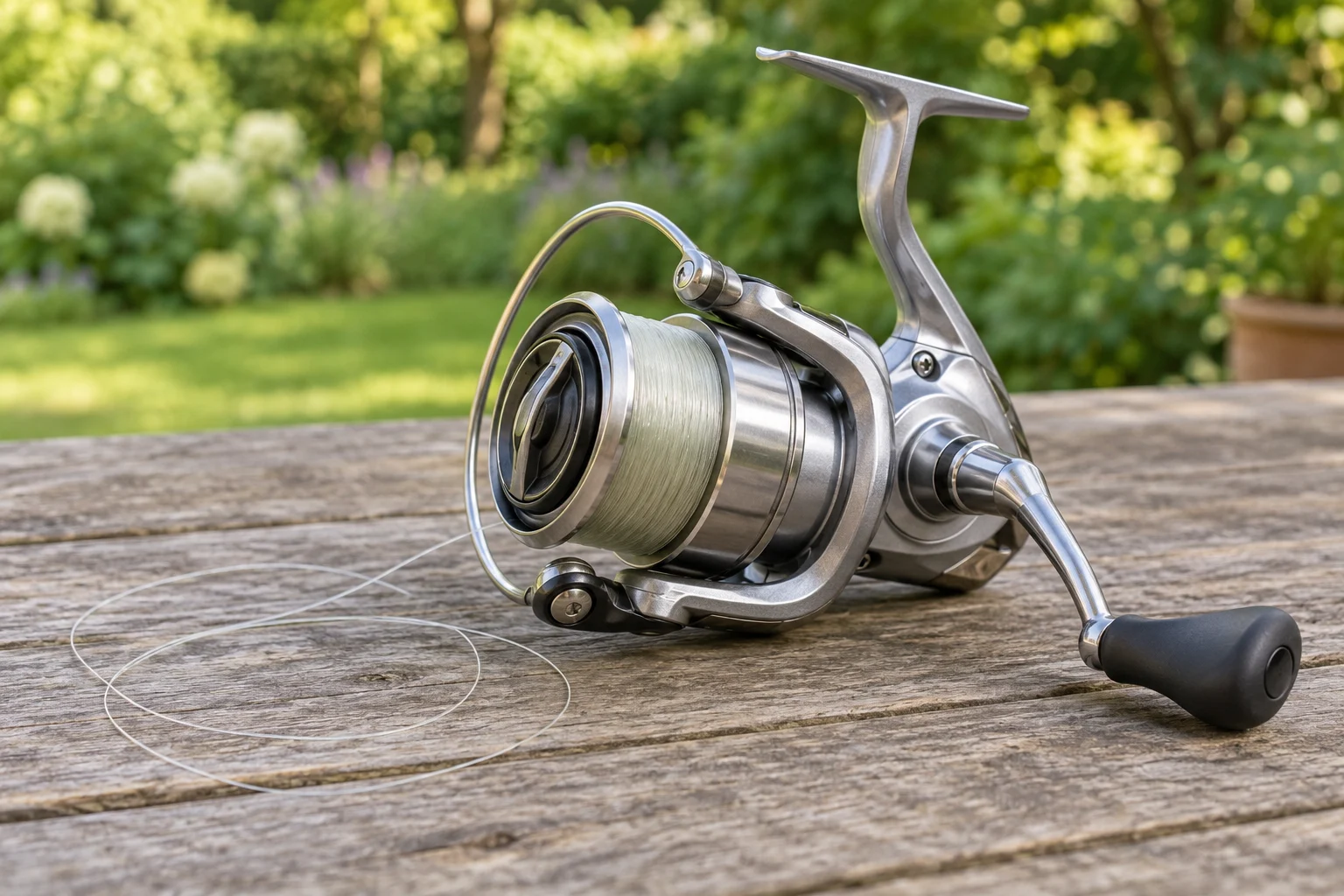
Spinning reel line loops need a description before they need a replacement reel. Note when the loose line appeared: immediately after fresh loading, during a retrieve, or when the bail opened before a cast. Those are different observations. A loop alone does not identify a broken component or prove that the line itself is unsuitable.
Keep the reel aside while you examine the problem. Write down the exact line you loaded and what you remember about loading it. Keep a photograph with the note if it helps locate the loose line. The first check should leave you with a clear question to investigate.
Identify the two selected spinning reels
The Daiwa Regal LT 2500D-XH-CP-B offer identifies a complete spinning reel in the Fishing category. Its description names a ZAION V frame, Air Rotor, Digigear and ATD drag. Those feature names describe the selected offer; they do not certify that an actual reel has been loaded correctly or that a particular loop has a mechanical cause.
Daiwa’s Regal manufacturer page lists a related RGLT2500D-XH-B variant. The selected offer retains CP in its reference, and the packaging meaning of that suffix is not established here. Keep the full model reference when asking about instructions, supplied components or service. Do not turn a family resemblance into an inventory of parts in the delivered box.
When the Daiwa reference is copied into a message, check the final suffix against the original offer. A response that names only Regal LT leaves open which variant the writer means. Keep that question explicit if the answer concerns a supplied item. For Shimano, retain SE1000FJ in the subject or the first line of the enquiry. An answer about an unnamed Sedona reel still needs its model scope clarified before you apply it.
The Shimano Fishing SEDONA 1000 FJ offer carries the exact SE1000FJ reference. Its product description names HAGANE Gear, SilentDrive, Propulsion Line Management System and G-Free Body. Shimano’s own shop separately lists SE1000FJ, alongside other Sedona sizes and a distinct clam-pack reference. Use the actual row when seeking model information.
The two selected items are spinning reels, with different model identities. Neither product description supplies an explanation for every line problem. A named line-management feature does not remove the need to inspect how line was loaded. This guide assigns no numerical line capacity or package contents from a different variant to either selected offer.
Separate loose coils from spinning reel line lay
Daiwa’s beginner reel guide distinguishes the spool, bail, rotor and line roller in a spinning arrangement. Read those component names before interpreting a picture of the problem. The spool holds the line; the rotor turns around the spool, and the roller guides the returning line. Calling the whole front assembly a spool can make an otherwise useful service enquiry ambiguous. Daiwa’s beginner loading sequence opens the bail for attaching the line, then closes it before winding. Compare that sequence with the applicable instructions and the actual route through the roller before continuing a loading task.
View spinning reel line lay from the side. Describe which end appears higher and whether loose turns sit above the pack. Keep the spool end identifiable in your picture.
Shimano’s FAQ lists incorrect loading, a binding line roller and a bottom-heavy spool profile among its diagnostic leads. Check which observation applies to your equipment.
Review loading and fill before changing parts
Daiwa’s line-loading article by Robert Thornton says to wind line under tension and avoid filling the reel so far that line can spring off in loops. It describes keeping the line below the spool lip. Use that relationship as a visual check alongside the instructions for the actual reel and line. This article supplies no universal millimetre gap.
Ask how the current line pack was made. A remembered length from the packet is different from an observed fill level on the reel. Record whether the loading tension was maintained and whether loose turns were already visible. If reloading is indicated, use the applicable loading instructions rather than adding more line to an already uncertain pack.
Thornton discusses braid, monofilament and fluorocarbon separately. Identify your line before adopting another setup, and resolve the relevant loading details against the actual reel-and-line combination.
Daiwa’s beginner instructions also describe the bail’s position during loading. Follow the spinning-reel sequence that applies to the unit in hand. The same beginner page contains a separate baitcasting discussion; its thumbing and backlash-clearing actions are not spinning-reel instructions. Keep the equipment type visible when choosing a diagram or asking someone to demonstrate loading.
Notice a loose turn before calling it line failure
In Daiwa’s article about angling habits, Andrew Blyth recounts an angler allowing loose loops into the spool despite being satisfied with the braid itself. The useful point is the observation about line management. It is not evidence that every loop has the same cause, or that a particular line brand can never be at fault.
Keep the sequence in your note: what the line looked like before retrieval, what happened next, and when you first saw the loose turn. A description such as “a loose loop was visible before the next cast” is more useful than replacing it with a diagnosis that has not been checked. Keep the original observation if a later explanation changes.
Daiwa’s beginner FAQ identifies damaged or strongly twisted line as a reason to replace it. That makes line condition a separate question from the reel’s age or appearance. Describe the damage you can actually see and retain the line identification. This guide does not assign a fixed replacement lifespan or promise that new line will resolve a mechanical problem.
The same FAQ’s entanglement advice concerns a boat propeller. That is a different situation from loose coils on a spinning spool at home. Do not import that procedure into this check. If the line condition or an entanglement cannot be assessed within the applicable instructions, ask for appropriate assistance with the actual circumstances rather than improvising from the shared word tangled.
Recognize the service boundary for spinning reel line twist
Shimano directs a stopped line roller toward service inspection, and a visibly deformed bail associated with vibration toward repair. Stop the loading check when the observation concerns one of those components.
For spinning reel line twist, ask the maker about model-specific service.
The outdoor binocular accessory-fit guide makes a related parts enquiry concrete: a lanyard, lens cover and storage bag need information about the particular item they must fit. That guide distinguishes actual model references and partial supplier answers. When asking about a reel part, use the same precise enquiry habit; the binocular examples establish no reel-part compatibility.
Check the first wraps after a lure cast
Daiwa’s line-management lesson with Justin Duggan looks at a different source of loose wraps: slack left after a lure lands. In that situation, the reel may have been loaded satisfactorily at home, yet the line returning onto it begins loose. Ask whether the trouble first appeared during loading or after retrieving a cast with a belly of slack line.
Duggan demonstrates controlling the line near the end of a lure cast so it straightens before retrieval begins. The point is to avoid bringing that belly back as loose initial wraps. Follow an appropriate casting lesson for your tackle and surroundings; this article does not require a test cast merely to diagnose the equipment on your table.
On an outing, pay attention to the first returning wraps instead of waiting until a later tangle hides the sequence. The lesson gives a line-management cause worth checking. It does not establish that all knots come from slack, or promise that one change eliminates every line problem.
Review a nylon loading demonstration within its scope
Alex Bellissimo’s Daiwa spooling demonstration uses nylon and a Daiwa BG reel. Watch what he checks as line accumulates: the winding remains under tension, and he looks closely at how the line sits below the spool lip. Those are useful observations when reviewing a loose pack. The demonstrated reel is neither of the two selected offers.
Use the instructions for your actual reel and line to decide how the loading setup should be arranged. Bellissimo’s arm position, numerical fill gap, amount of line and particular knot belong to his demonstration. They do not set those details for a Regal or Sedona. This guide also gives no water-submersion or cutting procedure.
If you reload after identifying a loading problem, inspect the growing pack during the task. Do not wait until the whole packet is wound on before considering its condition. Stop at the applicable fill guidance for that combination, with the line lying under the prescribed tension.
Follow the line path and inspect distribution
In his 2026 explanation of reel types, Robert Thornton says line on a spinning reel must feed through the line roller before it reaches the spool. Look at the actual route during the loading check. A spool can contain line while the route into it remains the part that needs attention. Keep that route question distinct from the amount loaded.
Thornton also calls for periodic checks that the roller spins freely and that line is distributed evenly. Those observations help distinguish a route or component concern from a loose turn laid above an otherwise orderly pack. Use the applicable model instructions for the check; a stopped or damaged component belongs with the service boundary described earlier.
Keep the spinning section separate from the same article’s other reel types. Baitcaster controls, overhead-reel practices and boat-towing advice do not become Regal or Sedona instructions. Here the useful checks concern the line’s route, the roller and the distribution you can actually observe.
Keep a real outdoor equipment care record
The backyard birdwatching feeder-care guide treats outdoor equipment care as actual work. It discusses reaching the feeder, keeping applicable cleaning instructions available, recording completed care and leaving an overdue task open. Its household handover distinguishes watching birds from maintaining the feeding area. Those are concrete feeder responsibilities, with their own wildlife and product guidance.
Keep separate care records for different outdoor equipment. Put the reel’s unresolved loading or service question in its own entry before the next outing. The feeder’s cleaning interval, method and placement instructions belong with the feeder.
Keep your reel entry brief enough to use: exact model, line identity, when the symptom appeared, what was actually observed and which question remains unanswered. If a repairer gives a model-specific direction, retain that answer with its scope. A shopping description, a general FAQ and an inspection of your own equipment are different kinds of information.
Return to the original symptom after the check. Record what changed and what still needs attention. A clear account of spinning reel line loops should distinguish loading, line profile and mechanical symptoms before the next decision.