Troubleshooting & Repairs
Spinning reel drag not holding: check the mode before repair
Identify the actual reel and observed movement before treating loose drag as a failed component.
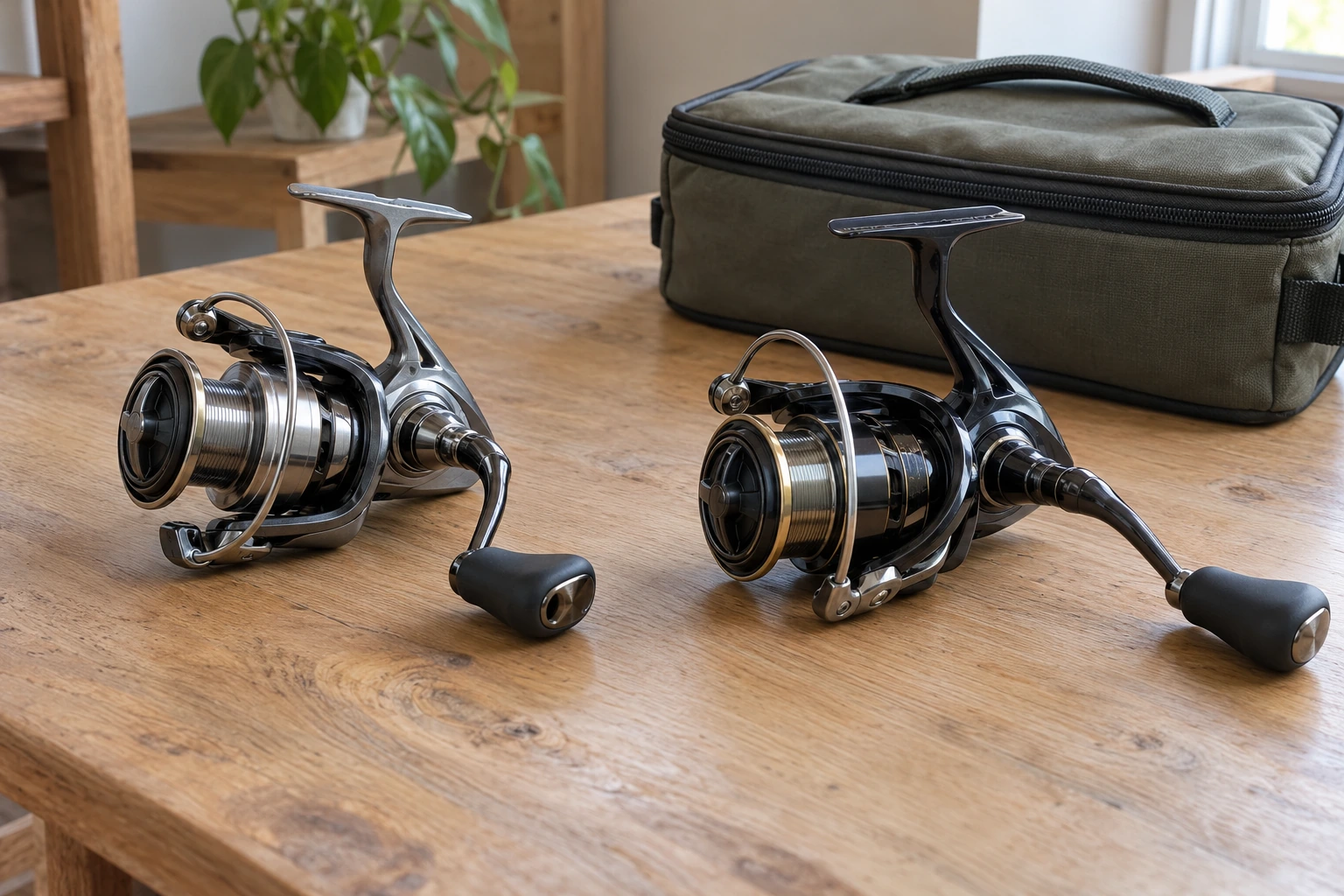
A report of spinning reel drag not holding should describe what happened before naming a failed part. Was line leaving the spool while bait was waiting, or did the problem appear when retrieval began? Keep the reel and the circumstances together. A clear account helps you choose the relevant instructions and gives a repairer something more useful than a request to replace everything.
Begin with the equipment already at hand. Preserve the original symptom and any useful photograph before changing the setup. If another person noticed the problem, ask them to describe what they saw. An accurate observation can remain useful even when the first explanation turns out to be wrong.
Identify the Sharky offer and its spare spool
The Sharky Baitfeeder III 3000 offer with a spare spool names KastKing in its title, while its structured brand field says NOPROB. Its description repeats the title. Preserve that discrepancy when asking the retailer to identify the selected item. The title expressly includes a spare spool; it does not include the rod shown in one marketing photograph.
Several gallery pictures show a 4000 size, and some imagery concerns the wider Sharky III range. A Baitfeeder III box photograph shows the extra spool, while other pictures show rear controls. Those photographs do not authenticate the delivered 3000 variant or assign the pictured 4000 specifications to it. Seek an answer about the selected offer before relying on a model detail that the gallery leaves uncertain.
Keep the ITX 2500H identity separate
The Okuma ITX 2500H Carbon Spinning Reel is a different complete reel. Its description names a multi-disc carbon-fiber drag system with a Hydro Block gasket, C-40X rotor and TCA construction. It also lists a 6.0:1 gear ratio and 33.5-inch line retrieve. Those are product-description figures, without an inspection of your equipment.
The first and third product photographs show the ITX 2500H marking. Another gallery photograph shows an ITX 4000H. Keep that alternate image separate from the selected model. The description supplies no baitfeeder operating sequence or separate-spool inventory. Its carbon-fiber drag wording cannot establish why an actual unit releases line, and a different size photograph cannot answer a question about the 2500H.
Recognize the baitfeeder drag mode
KastKing’s explanation of reel types describes front drag as resistance controlled at the top of a spinning reel’s spool. It identifies the Sharky Baitfeeder III as having front and rear settings with a lever for switching between them. The lighter rear setting and the stronger front setting serve different purposes. Identify which setting the actual instructions concern before comparing their behavior.
A report that names the baitfeeder drag mode is more precise than calling every control a drag knob. Keep the lever and the two resistance settings distinct in a service enquiry. This maker explanation supplies no numbered setting, required number of turns or model-specific lever direction here. Obtain those operating details for the actual unit rather than turning a general description into an adjustment recipe.
The same explanation calls a spinning reel’s spool fixed in its casting arrangement: line can leave the front when the bail is open. Keep that open-bail situation separate from the drag settings discussed here. A description that leaves out the bail position can send the enquiry toward the wrong function.
Read the named system as a whole
The manufacturer’s Baitfeeder III product page separately describes its front and rear drag functions. It also names a braid-ready spool and says a spare spool is included. These details help identify the system being discussed. They do not establish that an arbitrary replacement spool fits, or that the selected retailer’s package has been independently inspected.
Keep a question about the spare spool attached to the actual Baitfeeder III and its size. The maker’s range page contains several sizes, so a feature description is different from a specific capacity figure. If someone proposes replacing the spool as a cure, ask which actual component is being proposed and how it relates to the observed problem. Merely having a spare does not identify the cause.
Understand why line payout may be intentional
In KastKing’s catfishing article, Chris McVey explains that the Baitfeeder option allows resistance to be adjusted for line leaving the reel when a fish takes bait. His examples include current and lively bait. The useful distinction is that this system provides an intended line-payout function. A description of low resistance needs the operating context before it becomes a fault report.
McVey’s fishing experiences do not diagnose another person’s reel. Nor do they supply a measured setting for your line, rod or circumstances. Use the named function to identify the instruction you need. A persistent concern after following the applicable instructions still deserves an assessment of the actual equipment; the existence of a baitfeeding feature is no promise that a particular reel is working correctly.
Separate braid slipping on the spool from drag
Okuma’s FAQ identifies another explanation for an apparent absence of drag with braid: the braid may be slipping around a smooth spool when it lacks an appropriate anchor or backing. Keep braid slipping on the spool distinct from line leaving while the spool itself turns. Describe which movement you actually observed. The FAQ’s common explanation does not establish that every loose-drag complaint has this cause.
The same FAQ explains why trying to trip a spinning bail through the handle can feel stiff when there is insufficient momentum. Okuma describes closing the bail by hand as the proper method and warns that slamming it shut through the handle can damage the mechanism. Do not force a stiff handle to make the bail close. Ask for the actual model’s instructions if the behavior remains unclear.
Keep the FAQ’s arbor-anchoring advice with the Okuma enquiry. Establish which loading instructions apply to your actual reel and line before changing that arrangement.
Close the bail under the applicable instructions
KastKing’s casting lesson also recommends manually closing the bail after a cast, before starting retrieval. It explains the habit in relation to avoiding additional line twist. That is a specific operating instruction from the maker. It is different from identifying the cause of a drag complaint, and it does not require a new cast merely to prepare a description of a problem.
The lesson uses its own rod, reel, line and lure arrangement. Its line strengths, casting distance and lure position do not set those details for the selected 3000 or 2500H. If someone offers to demonstrate a correction, first establish that the instruction concerns the actual reel and task. Keep the demonstration’s equipment identifiable instead of copying an entire setup because one bail-closing habit is relevant.
The distinction matters when describing the sequence to support: say whether the bail was still open, manually closed or being tripped through the handle. Retain the sequence that occurred instead of replacing it with the sequence someone now recommends.
Keep unresolved mechanical trouble within the service boundary
KastKing’s warranty policy asks for original purchase evidence and clear photographs or video of the issue. Its stated coverage depends on genuine products from authorized channels and the maker’s assessment. That is especially relevant while the retailer’s title and brand field remain inconsistent. This article cannot confirm that the selected offer meets those conditions.
The policy identifies forcing the handle, incorrect disassembly and unauthorized repair among matters that can affect coverage. A parts schematic is not a dismantling lesson. Keep the equipment assembled while obtaining the applicable service direction, and retain any estimate and its conditions. The maker’s process distinguishes an initial assessment from a completed repair; submitting a description does not establish the eventual diagnosis, charge or outcome.
Keep the order number, purchase date and purchase channel available with the original receipt. The policy asks for verifiable purchase and product information. Before agreeing to paid work, read the actual estimate and the steps the support team gives for that request.
Use the loading guide for an actual loading symptom
The spinning reel line-loops and loading guide addresses loose wraps, fill and line distribution, using identified Regal and Sedona offers. Follow that separate enquiry when those are the observations you have. Its loading discussion supplies no baitfeeder setting for either reel here.
Identify the component in a replacement enquiry
The binocular accessory-fit guide distinguishes a lanyard’s length from its attachment information and keeps covers and bags as separate enquiries. The useful habit is asking about the particular part and item together. Its accessory dimensions establish no reel-part compatibility.
A fictional handover that keeps the observation intact
Imagine that Mara is collecting information for a shared fishing trip. Eli sends her a message saying, “The reel is broken.” She is responsible for arranging the equipment, but she was not present when the problem occurred. Buying a replacement immediately would commit the group to Eli’s conclusion without clarifying what he saw. She asks him to describe the event in his own words.
In this invented situation, Eli has a photograph from the outing and the original order reference. Mara keeps both with his account. She does not ask him to repeat the outing to produce a more convincing story. His original description remains in the conversation, so a later clarification can be understood as new information rather than a silently altered recollection.
A second volunteer offers to order a part that resembles the one in the photograph. Mara leaves that proposal undecided. She sends the exact equipment reference and the observation to the appropriate support contact, along with the photo. Her question asks what the contact needs to assess the concern. She has not promised the volunteer that a particular component is at fault or that replacing it will resolve the problem.
Suppose the first reply only acknowledges receipt. Mara can report that the enquiry has arrived, while the equipment decision remains open. If a later reply requests another identifying photograph, she records the request and who will supply it. Neither message becomes a repair result. She tells the person arranging the trip which information is still needed and when the group expects to decide what equipment it can use.
If an applicable service direction eventually arrives, Mara retains its full subject and conditions. A reply for another model would leave her original enquiry unresolved. If the group instead chooses different equipment for the trip, she keeps the service question open under its own reference. Changing the outing plan does not answer what happened to the first reel. These fictional events illustrate a handover; they report no actual support exchange or repair.
Return to the original observation when deciding what to do next. A useful account identifies the equipment, the circumstances and what remains uncertain. Keep any applicable instruction or service answer beside that account so the next person can act on the same information.