Crypto Commerce
Sony ZV-1 II video resolution checks for a 4K brief
If your recording brief requires original 4K video at a specified frame rate, the two camera descriptions leave different questions open. The Sony listing states 4K recording without pairing it with a frame rate. The Canon listing pairs Full HD 1080p with 60 fps. Neither description, by itself, establishes the complete 4K requirement at the rate your brief names.
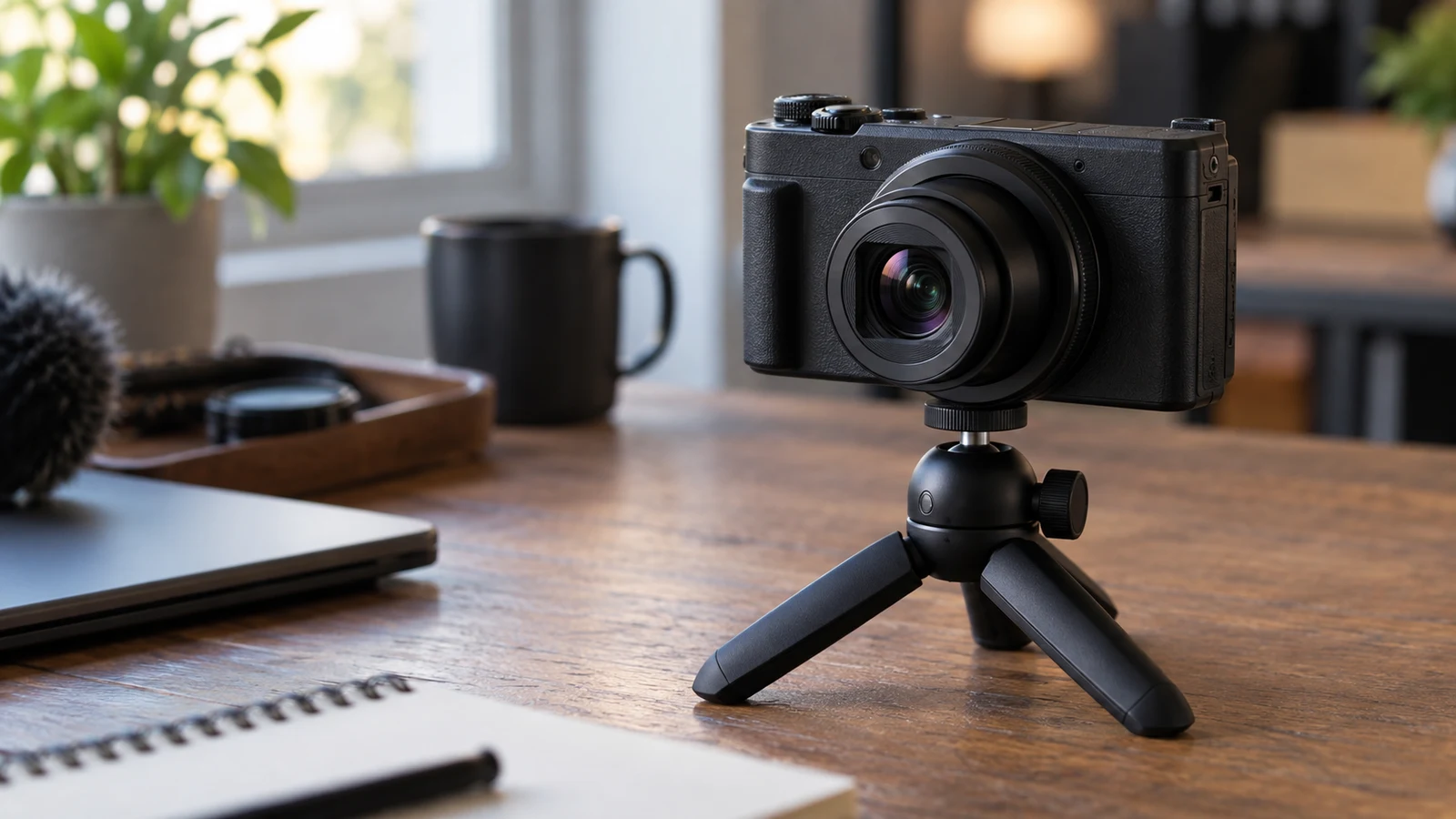
If your recording brief requires original 4K video at a specified frame rate, the two camera descriptions leave different questions open. The Sony listing states 4K recording without pairing it with a frame rate. The Canon listing pairs Full HD 1080p with 60 fps. Neither description, by itself, establishes the complete 4K requirement at the rate your brief names.
Start your Sony ZV-1 II video resolution comparison with that combined requirement written out. A resolution claim and a frame-rate claim must describe the same recording mode to answer the brief. Finding each term somewhere in a product description is insufficient if the description never connects them. This distinction keeps an incomplete specification from becoming an unsupported purchase recommendation.
The question here concerns the original video the camera records. Keep the wording of the brief attached to that output throughout your comparison. If the person requesting the recording has specified both 4K and a frame rate, preserve both requirements. If the brief names only 4K, leave the rate unresolved and ask that person to clarify it before deciding whether a particular mode qualifies.
You can make the requirement easy to reuse in a product inquiry: “I need an original 4K recording at the frame rate stated in my brief. Which documented recording mode on this exact camera meets both requirements?” Insert the actual rate from your brief when you send the question. There is no need to choose a different rate merely because a listing happens to mention one.
Read the Sony and Canon statements side by side before interpreting either. Sony ZV1M2/W is described as recording 4K video and taking 20.1MP stills. The Canon 1066C001_EDII0_4 international-version bundle describes Full HD 1080p video at 60 fps, also written as 1080p60. These statements contain different amounts of recording information, so they should not receive identical notes in your comparison.
For Sony, your note can say that the description supports a 4K recording claim, with the associated frame rate unspecified. For Canon, it can say that the description identifies a 1080p recording mode at 60 fps. Leave the complete 4K-at-the-required-rate question unanswered for both on this evidence. That records what each description contributes without giving either statement a broader meaning.
The approved product page for Sony ZV-1 II video resolution identifies the white ZV1M2/W bundle. Use that identity when seeking a recording-mode reference. A response about a similarly named camera would still need to establish that its information applies to this model. Keep the model designation in the inquiry so the answer can be matched to the listing you are considering.
The missing detail for Sony ZV-1 II video resolution is the connection between the stated 4K recording capability and your required frame rate. The supplied description does not list that pairing. Do not fill the blank with a rate from another camera, a separate still-photo specification, or an assumption about what the product name implies. Ask for the relevant recording-mode entry.
The Sony description's 20.1MP still-photo figure belongs to its still-photo claim. It does not supply the missing video frame rate. Keeping that figure outside the recording comparison avoids a misleading chain of reasoning in which one product specification appears to complete another. Your inquiry can remain narrowly focused on the video mode without evaluating the camera's photographic features or bundle accessories.
Canon G7 X Mark II Video Resolution Beside The 4K Requirement
The Canon G7 X Mark II video resolution listing provides an explicit resolution-and-rate pair: Full HD 1080p at 60 fps. Preserve those terms together when comparing it with your brief. The alternative notation, 1080p60, expresses the same listed claim here; it is not a second specification that adds a different resolution to the description.
That pairing answers a narrower question than your existing 4K brief. It identifies the stated rate for the listed 1080p mode. It does not establish a 4K mode at that rate or at the rate your brief requires. Even if the frame-rate number happens to match your requirement, the listed resolution would still leave the combined 4K requirement unestablished.
For example, if your brief already names 60 fps, the Canon description supplies a matching rate attached to 1080p. Your comparison should retain the resolution mismatch alongside that matching number. If your brief names a different rate, keep that requirement unchanged as well. In either case, the description must be read as a statement about the specific pair it actually names.
The Canon description also lists continuous still shooting up to 8 fps. That figure belongs to a separate still-shooting specification and should stay out of the video-mode comparison. The presence of “fps” in both passages does not make them interchangeable. Use the video statement when recording what the listing establishes about video, and leave still-photo performance outside this decision.
There is also a limit to what an omission tells you. The supplied Canon description does not establish the required 4K mode, but its silence alone is not a complete account of every available recording mode. Avoid turning “this description does not show it” into a claim about the camera's maximum resolution. A complete exact-model recording reference is needed for that broader conclusion.
Use precise language if you share the comparison with someone approving the purchase. “The listed 1080p60 mode does not demonstrate compliance with our 4K brief” identifies the actual problem. Saying that the description proves every unlisted mode unavailable would go beyond the evidence. This wording lets the approver see why the listing is insufficient without presenting an unsupported capability judgment.
Canon G7 X Mark II Video Resolution And The Missing Mode Evidence
To close the comparison, look for exact-model documentation that shows resolution and frame rate together in a supported recording mode. A recording-mode table or a corresponding manual entry would be useful if it applies to the camera being considered. Read any conditions attached to that entry before treating it as an answer. No particular condition is established by these supplied descriptions.
For the Sony inquiry, ask which documented 4K mode supports the rate in your brief. For the Canon inquiry, ask whether the complete recording-mode documentation establishes the requested 4K-and-rate combination at all. The questions differ because the starting descriptions differ. Asking only “Does it record video?” or “Does it have 60 fps?” would leave the relevant gap unresolved.
Keep the Canon bundle designation, 1066C001_EDII0_4, and its international-version description with the inquiry. If the documentation uses the camera name without that bundle code, establish that it applies to the camera included in this listing. You do not need a recording specification for each accessory; you need an applicable reference for the camera that would make the original recording.
Check how a document connects its values. If a table lists several resolutions and several rates, follow the row labels and any notes that explain which combinations are supported. Do not assume every rate belongs to every resolution simply because they appear in the same table. The useful evidence is an explicit pairing that can be compared directly with the brief.
A response can sound relevant while still leaving that pairing missing. An answer confirming “4K video” would repeat the existing Sony claim without resolving its frame rate. An answer confirming “60 fps” without naming the associated resolution would also be incomplete for a 4K brief. Follow up on the missing part instead of treating either isolated term as acceptance of the whole requirement.
If the documentation labels the mode differently from the brief, keep the difference visible. Ask the person responsible for the brief whether the documented wording meets their requirement, or seek an explanation in the applicable documentation. Do not silently substitute one label for another. The same approach applies when the brief itself uses a broad term without explaining exactly what output is expected.
Your comparison can then end in a specific conclusion. An applicable entry explicitly showing the required pair, with its conditions understood, would address this recording-mode question. An entry showing a different pair would not establish the requested mode. An ambiguous entry leaves a question open. These outcomes concern the stated capture requirement; they do not certify every other aspect of either camera or purchase.
Buying Electronics With Crypto After Resolving The Recording Brief
Once the mode question has a documented answer, carry that answer into your purchase evaluation with the exact product identity. Keep the requirement, the applicable recording entry, and any remaining uncertainty together. If you are still deciding whether a camera meets the brief, retain that unresolved status. Choosing a payment method supplies no additional information about the camera's recording capability.
The related guide to buying electronics with crypto covers broader product and checkout checks. Use it for those purchase questions after this focused comparison, including how to carry an exact-listing requirement forward. Any cryptocurrency checkout discussion remains conditional on the options offered for the purchase. Nothing in the camera recording descriptions establishes a payment option or its terms.
If someone else will place the order, give them the same model reference you used for the recording inquiry. Explain whether the required pair has been established and include the applicable documentation reference if you have one. A short handoff that says only “4K camera” would drop the frame-rate requirement that prompted the comparison and could leave the buyer evaluating an incomplete request.
Before treating either listing as suitable for this brief, return to the original question about Sony ZV-1 II video resolution: does one documented original recording mode satisfy both 4K and the specified frame rate? Use the Sony listing to pursue its missing rate pairing and the Canon listing to investigate beyond its stated 1080p60 mode. If the documentation leaves either part unanswered, keep that exact question open before choosing.