Crypto Commerce
Sony WF-C710N wireless earbuds or Amiron 300 for a phone and a laptop?
Compare Sony WF-C710N wireless earbuds by device switching, ambient controls, fit, calls, charging, and saved price without assuming identical connection…
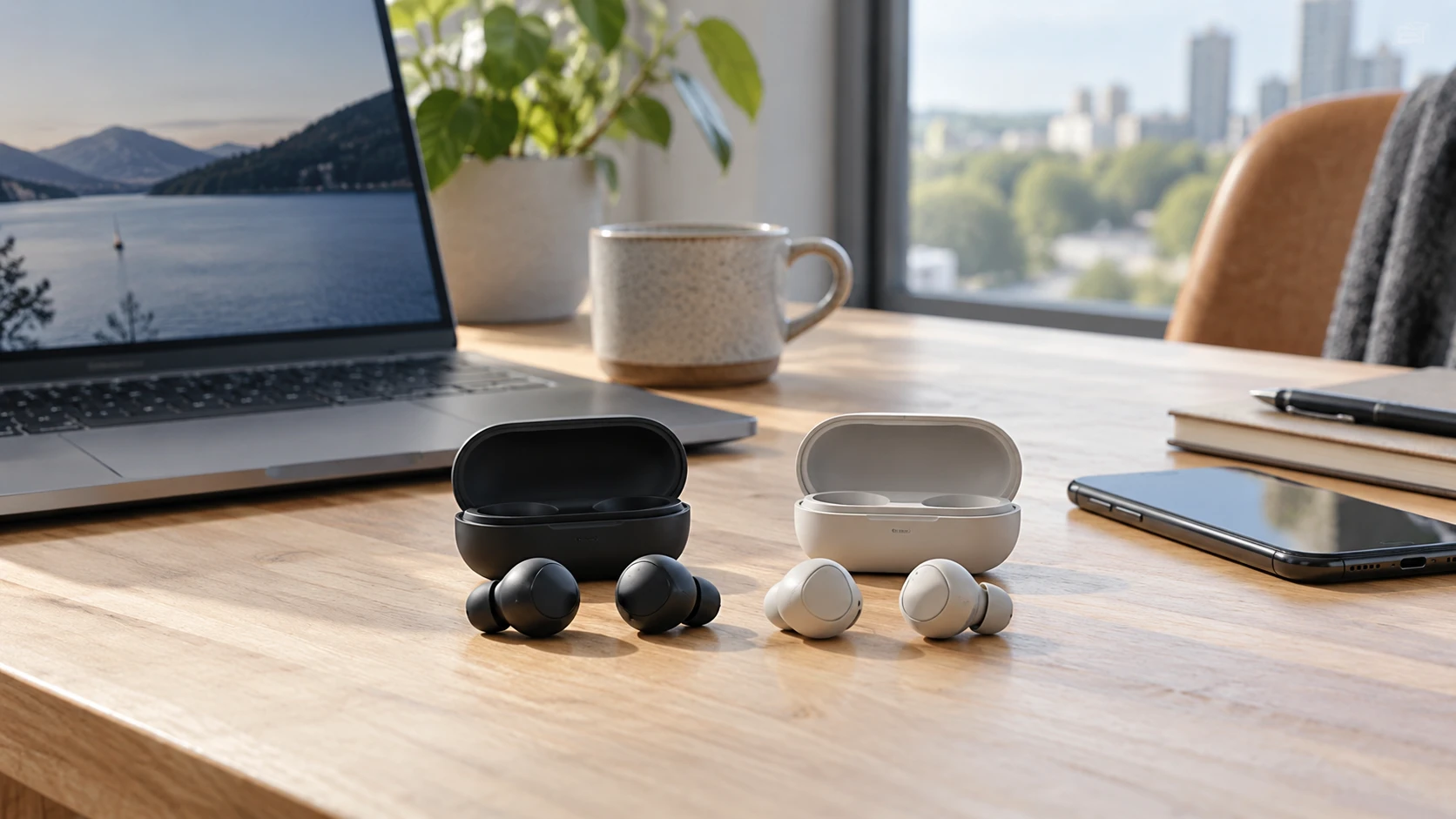
The Sony WF-C710N wireless earbuds list a multipoint connection that pairs two compatible Bluetooth devices and switches between them automatically. A related guide to earbuds across multiple devices discusses a different Technics model and its three-device routine. That count should not be transferred to either pair here. The beyerdynamic Amiron 300 wireless earbuds also advertise multipoint Bluetooth 5.3, along with five ear-tip sizes and a Qi-compatible charging case. For a phone and laptop, the useful comparison is how each pair fits a day of calls, music, ambient listening, and charging.
The saved catalog puts Sony at $359 and Amiron 300 at $349.99, a $9.01 difference. These are snapshot prices, not a promise about the live offer. Both exact product pages and the related guide were reachable when checked. Neither listing includes a matched listening test, a call recording from the same noisy room, or an identical battery test. Compare the stated controls and accessories, then check current price, return terms, and device compatibility for the pair you might wear all day.
Set a realistic multipoint expectation — guide to earbuds across multiple devices
Sony's listing is specific about the connection count: its multipoint feature pairs two compatible Bluetooth devices and switches between them automatically. That can suit a work laptop and personal phone. Before relying on it for calls, check the operating systems, Bluetooth support, and app settings for both devices. “Automatic” does not tell you exactly what happens when both devices play audio or receive alerts at once. Try the handoff with the calling and music apps you use, preferably while returns are still possible.
The Amiron 300 description says multipoint Bluetooth 5.3 supports simultaneous connections to multiple devices. It does not give an exact device count in the saved excerpt. Two-device use is the practical scenario to verify, but the word “multiple” alone should not be read as proof of three active connections. The Technics guide concerns its own hardware. Ask beyerdynamic for the exact number of simultaneously connected devices and how an incoming call interrupts audio from the other source if that behavior matters to your work.
Pairing is only the first step. Consider where playback normally starts, which device should answer a call, and whether a video meeting can reclaim the earbuds after a phone notification. Make a short test: play music on a laptop, place a call to the phone, then return to the laptop. Repeat with a meeting app if you use one. The catalog does not report the delay or reliability of that sequence for either model, so a specification line cannot settle it.
Also test what happens when one device leaves Bluetooth range. A person may walk away from a laptop with the phone still connected, then return to the desk an hour later. The product rows do not describe reconnection time or source priority after that interruption. Try the routine without opening the pairing menu, and note whether a call on the phone can still reach the earbuds. That everyday handoff can matter more than the Bluetooth version number.
Compare the quiet and aware modes — beyerdynamic Amiron 300 wireless earbuds
Sony describes noise canceling with dual noise sensors and microphones. Its Ambient Sound Mode has 20 settings, plus a Focus on Voice option in the Sony Sound Connect app. This may appeal to someone who wants finer control over how much surrounding sound is admitted at a desk or on a commute. The listing does not explain what each of the 20 steps sounds like or prove that more steps produce better awareness. Try the amount needed to hear a colleague or an announcement without raising volume excessively.
Amiron 300 lists active noise cancellation and a transparency mode for ambient listening. Its excerpt does not give a count of transparency levels or an equal-condition cancellation measurement. Do not infer a missing control solely because the short catalog row does not mention it; consult the exact manual or app listing. The important question is whether the available mode lets you hear the surroundings you need to hear while maintaining comfortable audio. Neither product description is a safety certification for use around traffic or machinery.
Seal and fit influence how these modes feel. An ear tip that leaks sound can make a noise-canceling feature less useful, regardless of the electronics. Beyerdynamic includes five named sizes, from XS through XL, giving a buyer several supplied options to try. The Sony row does not enumerate included ear-tip sizes. Check the current Sony box contents rather than assuming an absence or an equal set of sizes. If your left and right ears need different tips, test them separately and see whether each earbud stays comfortable after an hour.
Work through call controls and voice pickup — beyerdynamic Amiron 300 wireless earbuds
Sony says Voice Pickup improves call capture in noisy surroundings. The listing also names tap gestures for playback. It does not give microphone count or a controlled sample against Amiron 300. A person who takes calls outside or in a shared office should ask a regular caller to compare a short recording from the actual locations used. Check whether the tap pattern is easy to trigger without pushing the earbud deeper into the ear. A missed command during a call may matter more than a small difference in music tuning.
Beyerdynamic describes six microphones with noise-canceling technology for voice transmission. It also names automatic play and pause when the earbuds are inserted or removed. Six microphones is a hardware description, not a measured promise that a caller will hear you more clearly than with Sony. In-ear detection can be convenient when someone repeatedly stops to speak to a colleague, but confirm how it behaves with one earbud removed and with different media apps. The saved excerpt does not give a gesture map or call-control details for Amiron 300.
Make a call test in three places: a quiet room, a typical work area, and the noisiest place where a call would realistically occur. Listen to the recording or ask the other person whether words remain clear. Test mute, answer, and switching back to music on both paired devices. The saved Republeq's product descriptions do not supply those results, and choosing from microphone count alone would be guesswork.
Put the battery figures on the same footing — beyerdynamic Amiron 300 wireless earbuds
Sony lists up to 8.5 hours from the earbuds, another 21.5 hours from the case, and up to 30 hours total. The excerpt does not state the test conditions for those figures or specify the noise-canceling state behind each one. Its figures provide a starting point for planning a long day, but an actual day of calls and ambient mode may differ. If the earbuds must last through a shift away from an outlet, verify the runtime for the settings you expect to use.
Amiron 300 lists up to 10 hours per charge and 38 hours total, with 26 hours total when ANC is on. The listing does not state whether the 10-hour single-charge number uses ANC. Comparing Sony's 30-hour total directly with Amiron's 38-hour total as if both used the same settings would be misleading. The 26-hour Amiron figure demonstrates that the mode can change the estimate substantially. Look for the corresponding Sony ANC test condition before ranking them by runtime.
Beyerdynamic's case is described as Qi-compatible for wireless charging and has a quick-charge function for top-ups. The Sony saved excerpt gives case capacity but does not say whether its case supports wireless charging. If placing a case on an existing Qi pad is part of your routine, confirm the Amiron case and pad work together and check the exact Sony case capability. A person who charges by cable each evening may care more about single-charge time and fit than case charging style.
Judge the listening setup you can control — beyerdynamic Amiron 300 wireless earbuds
Sony names a 5 mm driver and DSEE processing. Its Sound Connect app provides EQ presets and custom settings, so the user can adjust the tonal balance. These are listed capabilities, not evidence that it will sound better with every recording. If you commonly move between speech-heavy podcasts and music, test the EQ and see whether a setting remains useful across both. Check whether the app is supported on the phone used to configure the earbuds and how settings behave when audio comes from a laptop.
Beyerdynamic calls out its sound tuning but gives no driver size or EQ controls in the saved excerpt. Those omissions do not establish that such controls are absent. Ask for the current manual if app adjustment matters. A comfortable seal, sensible volume, and a stable connection can change a listening experience more than a single specification. Compare familiar music and speech at similar volume levels, using the same fit checks and the same source device when possible.
The $9.01 saved price gap is small enough that a return policy and a fit test may be more useful than a theoretical value ranking. Sony states a two-device multipoint count and gives detailed ambient and app controls. Amiron 300 lists five ear-tip sizes, an ANC-on case total, and Qi-compatible charging. Verify the exact simultaneous-device limit on Amiron and the real switching behavior of both pairs before choosing one for a phone-and-laptop day. The Technics three-device guide remains context for another model, not a promise about these two.