Product Compatibility & Accessories
Soldering tip compatibility: identify the handpiece
Identify the station, actual handpiece and accessory series before ordering replacement parts, keeping supplied contents and optional tools distinct.
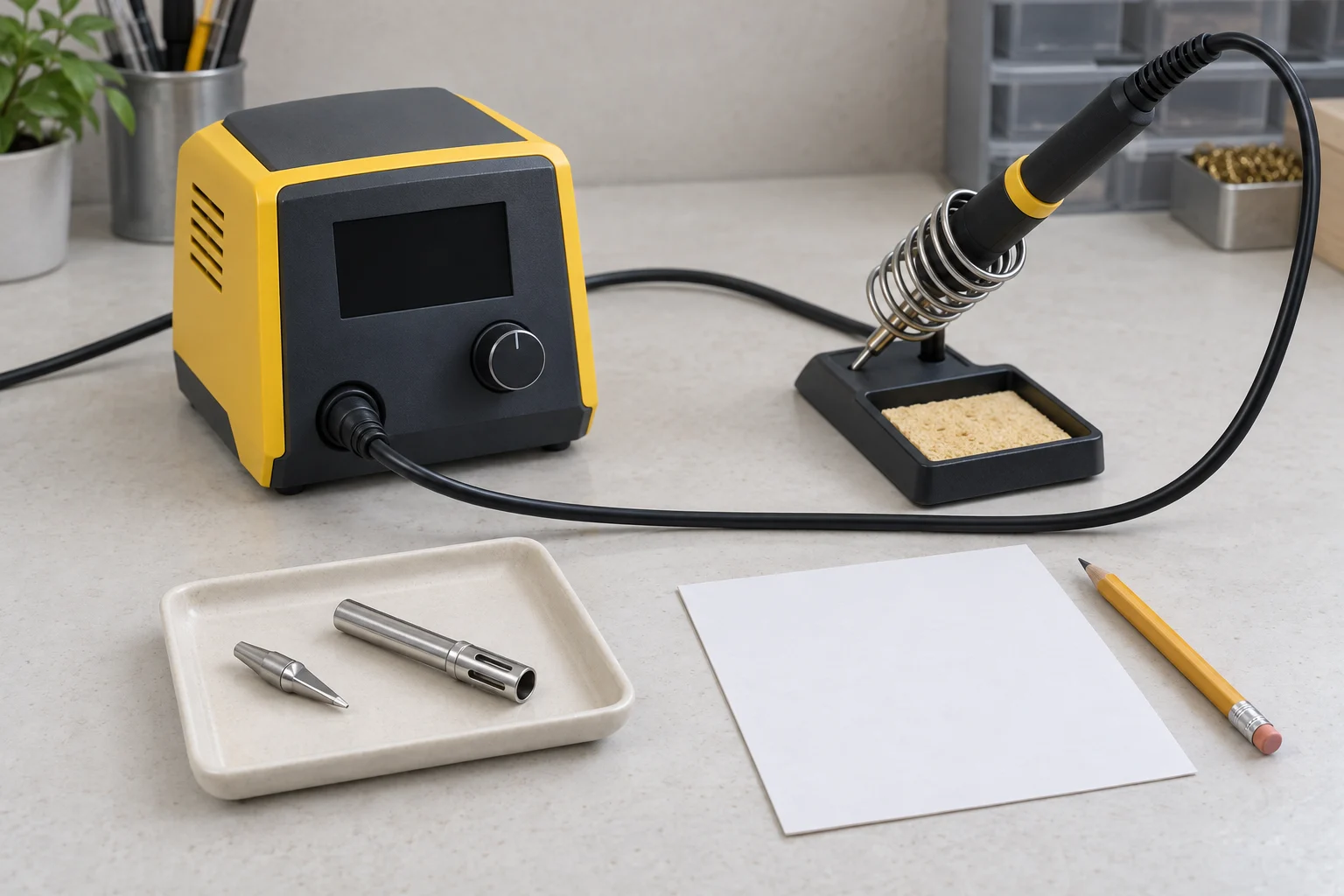
A small metal accessory can look plausible beside a soldering station while belonging to a different tool system. Establish soldering tip compatibility through the actual handpiece and accessory series before comparing shapes or dimensions. The Hakko station and desoldering nozzle selected here illustrate why that order matters. Their shared manufacturer does not document them as a matched pair. A purchase decision needs a relationship between the part you intend to buy and the equipment that will receive it, rather than a collection of familiar names.
Start with the station, then identify the attached handpiece
The FX888DX-010BY station offer lists American Hakko Products as its brand. Hakko's current station page lists FX8801-02 and T18-D16 in its supplied contents, and identifies the included iron's tip series as T18. The actual English manual's set contents also identify FX-8801. Those statements provide a specific included-tool reference. They do not establish the identity of every handpiece someone may already have attached to a station with the same general family name.
If you are buying for equipment you own, record the station marking and the actual handpiece marking separately. An original purchase description can help, but it should not silently override a later change to the assembly. If the handpiece cannot be identified, retain that missing information in the enquiry. A supplier can answer more precisely when the question names both parts of the arrangement. There is no need to remove components or open equipment merely to fill out a buying note; obtain the applicable identification guidance when a marking is inaccessible or unclear.
If you are choosing a new station and its future supplies together, ask which configuration the offered package contains. Keep that answer with the exact offer. A manufacturer's page may describe the product family, optional tools and supplied contents in different places. Read the heading over each statement so that an optional item does not quietly become an included item. Likewise, an illustration showing several tools does not establish that the package contains all of them. The contents statement is the relevant starting point for the tool you expect to receive.
Keep soldering tip series attached to the actual handpiece
For soldering tip series, the receiver is important. The current station page also presents an optional FX-8806 handpiece with T32 tips. Its presence means the included iron's series should not be expanded into a universal statement that every possible handpiece used with the station takes the same tips. Confirm the actual arrangement before choosing a replacement. An answer about an optional handpiece remains an answer about that handpiece until its relationship to your intended package is established.
Write the replacement question in a complete form: the accessory code, the identified handpiece and the station involved. A reply can then identify which relationship it confirms. For example, confirmation that a handpiece belongs with a station does not itself identify every accessory that belongs with that handpiece. Conversely, an accessory page naming a receiver still leaves you to establish whether that receiver is the one you have. Keep both relationships available to the person answering instead of reducing the question to a brand alone.
A desoldering nozzle identity is a different purchasing reference
For desoldering nozzle identity, the N3-16 desoldering nozzle offer names N3, a 1.6 by 3.0 mm size and FM-2024 use. Hakko's nozzle page lists FM-2024 and FM-205 and a replacement relationship to N1-16, also mapped in its March 2008 bulletin. These are documented nozzle references; they do not turn it into the station package's listed soldering tip or establish a connection to every tool sold by the same company.
Separate the job from the connection question. A search for an accessory can return items described for applying solder, removing solder or maintaining equipment. Those descriptions are reasons to inspect the exact product, rather than interchangeable names for a single part. State which existing tool needs the replacement and what the replacement is supposed to be. A seller's answer about a desoldering system can be useful without resolving a request for a soldering iron's replacement tip. Keep the answer attached to its actual receiver.
A cross-reference between an older and a newer part number also has a defined scope. Preserve the complete codes and the manufacturer's actual mapping. Similar prefixes or a familiar ending do not supply an equivalent mapping for another item. If an order would depend on a different discontinued code, obtain the corresponding documentation instead of extending the example by analogy. A legacy number can remain helpful evidence when the question identifies exactly which replacement relationship needs confirmation.
Use dimensions to choose within an established relationship
The selected nozzle's size wording is not a complete drawing of a mounting interface. Do not treat a matching numeral elsewhere in a tip description as proof that the pieces are interchangeable. A dimension can describe a working end while leaving the connection question unanswered. First establish the applicable accessory family for the receiver. Then use the documented shape and dimensions to decide which item within that family suits the intended requirement. Keep the source's labels attached to the measurements so another person can see what each number describes.
If a required dimension is absent, ask which drawing or specification covers the exact code. A close-up photograph can show a shape while leaving a hidden connection or an unlabeled dimension unresolved. It also does not establish the tolerances for an unseen receiving part. Avoid turning a casual comparison with a ruler into the manufacturer's compatibility approval. A useful response identifies the actual item and explains the relationship you asked about; a general assurance that it looks similar leaves that relationship open.
Do not alter an accessory to imitate a superficially similar part while investigating a purchase. The actual station manual cautions against incompatible handpieces and modification. Keep operating and installation questions with the applicable instructions for the equipment involved. This guide supplies no heating, tip-changing, calibration or internal repair sequence. An unconfirmed purchase relationship should be resolved through documentation or support before it becomes a physical experiment with electrical equipment.
Distinguish cleaning items from replacement working parts
The station offer's short description includes the run-on wording “A1561 Tip.” Hakko's actual contents table identifies A1561 as tip cleaning wire. Keep that identity with the code rather than treating the shortened wording as a replacement soldering tip. A listed cleaning item and a listed working part answer different inventory questions. When a short offer description leaves the role unclear, ask for the complete supplied-item description instead of completing an ambiguous label from memory.
For a shared workbench, keep replacement supplies identifiable in their packaging or a clearly labeled storage arrangement. Record the receiver that the purchase was confirmed for, together with the accessory code. A loose metal piece separated from its label makes a later enquiry harder, even when the original purchase was suitable. If an item can no longer be identified confidently, keep it separate from confirmed stock while obtaining an answer. A guess based on appearance should not become the next person's undocumented stock reference.
Use other fit guides for the distinction they actually establish
The published oscillating-tool blade-fit guide keeps mount descriptions and actual tool models together. Its blade and tool facts provide no soldering-equipment approval. The useful parallel is to keep the receiver's requirements beside the accessory being considered, rather than allowing one attractive feature to stand in for the whole relationship. A statement about shape remains a shape statement until the relevant equipment documentation establishes more.
The bicycle pump valve-compatibility guide similarly separates an offered configuration from an unidentified piece of equipment. Its named heads and valves are specific to that discussion. Here, a package answer, an accessory-series answer and an answer about equipment already in use should remain distinguishable when you pass them to another buyer. Neither guide supplies a connector conversion or an installation procedure for the two products selected here.
Keep the confirmed part relationship with the order
Read shopping-page lists according to their headings. A supplied-contents list answers what a package includes. A replacement-parts list, an optional-accessory list and a set of recommended products can describe different relationships. An item appearing near another item on a page does not identify which relationship applies. Look for the explicit receiver or compatibility statement rather than treating the whole page as one interchangeable collection. If a recommendation is the only connection you can find, ask for the missing applicability information before relying on it.
Keep document versions visible as well. A manual can identify a supplied configuration while a current product page discusses additional choices. That difference calls for a model-specific answer when the intended purchase involves an option beyond the manual's stated contents. It does not establish that the manual is wrong, that the page describes your existing assembly or that every listed part can be combined. Give support the document revision and the proposed item together. Preserve any qualified answer so a later reader can see which configuration it actually covers.
Before placing an accessory order, review the full code and the offered quantity on the live listing. Confirm that any supplier response refers to that item and the receiver you identified. If the seller proposes a substitute, have the proposed code's applicability checked rather than carrying the earlier answer across automatically. A different shape within a family and a different accessory family are different changes. Keep the actual proposed item visible while the remaining question is resolved.
If someone else will place the order, share the specific offer and the confirmation together. Include any package qualification, such as an answer that depends on a separately supplied handpiece. This prevents a helpful reply from losing its condition as it passes between purchasing and the workbench. Do not present a partly answered enquiry as a complete kit recommendation. The person receiving the equipment should be able to see which items were confirmed together and which question still needs attention.
An order email that abbreviates a part name can still be useful if the complete manufacturer code and offered quantity remain clear. If the abbreviated line is all you have, request the full description before forwarding it as the workbench's new stock reference. Keep that answer with the item instead of relying on the shortened name alone.
Keep later substitutions and replacements in the same record. An invoice can identify what was ordered, while the manufacturer's or supplier's applicability answer identifies why it was selected for that receiver. Those records have different roles. If a delivered code differs from the confirmed order, resolve that difference before treating it as equivalent stock. The buying result should identify the actual station, the actual handpiece and the documented accessory relationship, with any unconfirmed alternative left clearly separate.