Seasonal & Holiday Content
Snow sled holiday gift: delivery, space and first-use planning
A winter equipment gift needs an agreed item, practical receiving arrangements and time for the responsible adult to prepare for a later outing.
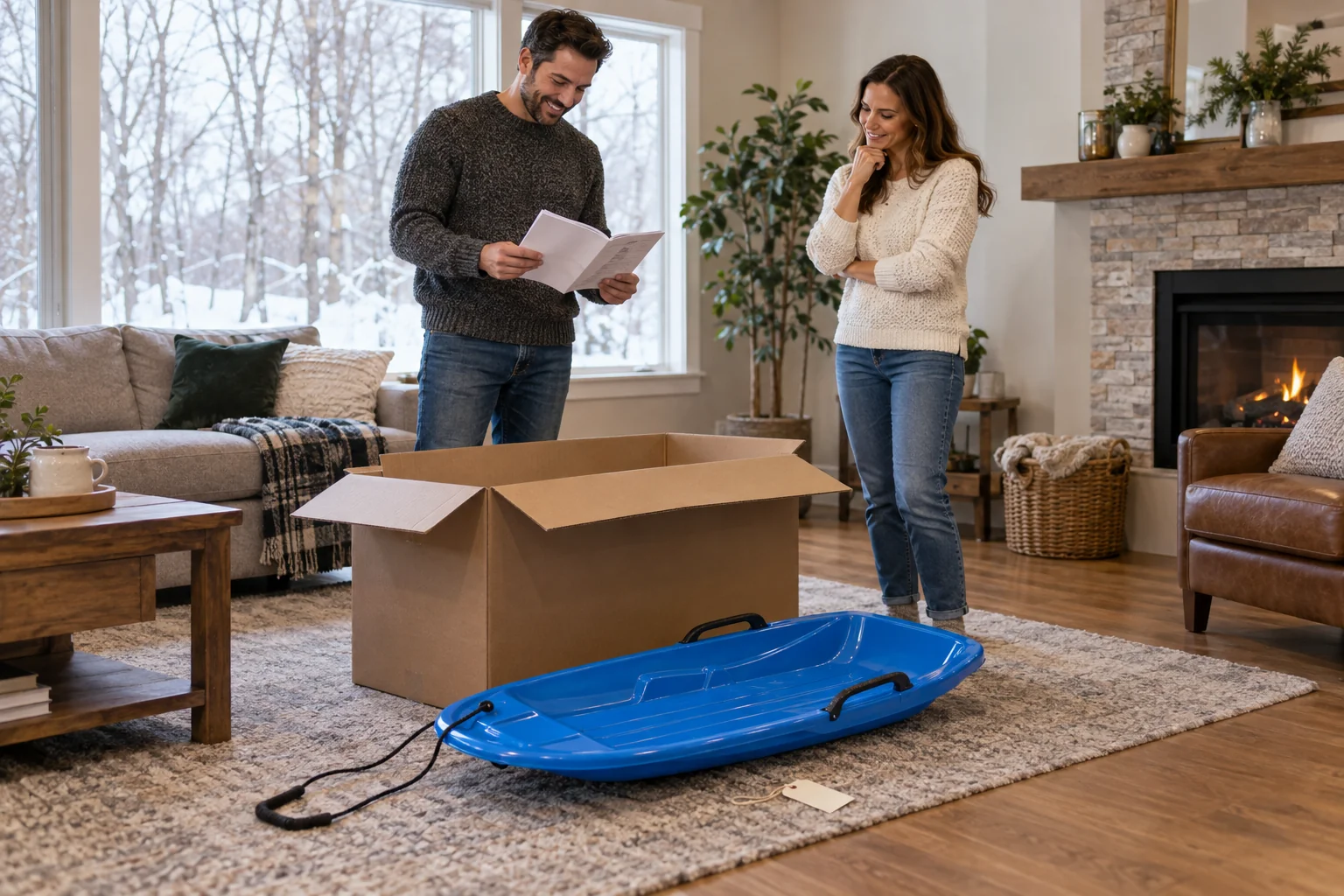
A Snow sled holiday gift needs a plan for the equipment that arrives, the household receiving it and the first occasion when it might be used. A holiday date answers only when you hope to give the present. It does not establish that a particular sled is suitable for its intended rider, that it fits the household's available space, or that outdoor conditions will support an immediate outing.
For a winter sled gift, start with the responsible adult's agreement before making a child's equipment gift a surprise purchase. Ask whether a sled is wanted, whether the proposed item has been considered and where it would be kept. You can preserve a surprise about the presentation while involving the adult in the equipment decision. If that discussion changes the choice, choose the gift that fits the household's actual plans rather than treating the original idea as a commitment.
A winter sled gift starts with the exact equipment
The Gizmo Riders GRSTR-P Monster Pink sled offer names Stratos in its title but calls the product Nimbus in its descriptive features. Its account describes a steering wheel, braking arrangement and retractable tow rope. Those are equipment features requiring the actual model's instructions, rather than evidence of a particular child's readiness. Ask the seller to identify the supplied model before purchasing it as a requested Stratos.
Plastkon's 2023 Gizmo Riders catalogue presents Nimbus and Stratos as separate model families. Its product overview shows different colour ranges, while its logistics table identifies Stratos Monster Pink separately from the listed Nimbus variants. That supports treating the retailer's mixed names as an unresolved identity question. It does not establish which item the selected order supplies. The catalogue is also a dated manufacturer document; its measurements, packaging variants and marketing claims cannot silently become current specifications for that ambiguous offer.
Make the equipment question concrete for the receiving adult: are they considering the actual confirmed model, or only a familiar product name? A familiar feature or colour does not make two offers interchangeable. Obtain the instructions belonging to the supplied equipment and let that adult review them before accepting a substitute. The useful outcome is an identified item they are willing to consider, rather than a promise that either product will deliver the same experience.
Read the wooden sled's dimensions as a physical receiving question
The Slippery Racer wooden foldable snow sled description gives dimensions of 35 inches long, 15 inches wide and 10.25 inches high, and states a maximum capacity of 175 pounds. It says the sled folds flat, without supplying folded dimensions. The listed capacity does not establish an individual rider's eligibility or permit a particular number of riders. Obtain the exact product's instructions for those decisions.
For gift logistics, obtain folded measurements if a cupboard or vehicle space determines whether the household can receive the item. Descriptions of compact storage and carrying do not demonstrate fit in that space. Check before ordering, without choosing a folding sequence or support arrangement from a photograph.
A practical space check has a defined purpose. Decide whether you are checking the place where an unopened gift will wait, the route by which it reaches the recipient, or its longer-term storage. These can be different places. Describe the space that actually limits the choice and obtain the relevant information for it. A parcel that can be received at the door may still need a different arrangement once the gift is handed over.
Give the responsible adult time to review the first-use requirements
The American Academy of Pediatrics' winter guidance says children under twelve should always be supervised while sledding and suggests considering a helmet. It also advises keeping sledders away from motor vehicles and trees. Those are general planning considerations, not approval of either retail model or a complete set of instructions for it. The adult receiving a child's equipment gift needs room to consider supervision and the applicable equipment guidance before any first outing is promised.
That changes what a complete gift commitment looks like. Agree who will receive the equipment and take responsibility for reviewing its actual instructions. If another person plans to accompany the child later, establish that arrangement with them rather than volunteering their time. The gift can be welcomed before a first-use date has been chosen. A child should not have to discover at the moment of unwrapping that every adult assumed somebody else had agreed to take them outside.
Pictures of riders can help illustrate a product, but do not treat worn helmets or goggles as a confirmed accessory package. Establish what the actual order contains. Any additional equipment choice needs its own suitability decision; a photograph does not settle fit or the appropriate specification. If the responsible adult has already chosen relevant gear, check that before adding another purchase. Avoid building a surprise bundle from assumptions about what appears in promotional scenes.
Check winter readiness separately from the sled purchase
The AAP advises several thin clothing layers, insulated boots, mittens or gloves, a hat, changing wet clothing promptly and regular indoor warm-up breaks. Its general guidance says outdoor play in temperatures or wind chills below minus fifteen degrees Fahrenheit should be avoided. A new sled does not replace that preparation. Leave the responsible adult to assess the child, current conditions and the actual activity, with appropriate professional advice where needed.
There is a useful distinction between giving the equipment and supplying an entire winter outing. Ask which part you are offering. You might be giving only the sled, while the household makes its own clothing and supervision arrangements. You might separately offer your time for a future occasion, subject to agreement. Make that distinction before the holiday so the receiving household can decide whether the proposed gift adds a welcome possibility or an unexpected obligation.
The National Weather Service explains that wind chill concerns heat loss from exposed skin, and says its wind-chill tests used adult subjects. It recommends extra caution with children rather than treating the chart as a precise child-specific limit. It also explains that wind chill applies to people and animals, not as a lower temperature for an inanimate object. A temperature figure associated with equipment therefore cannot answer whether a child should be outdoors using it.
Let the first outing remain dependent on the conditions and the responsible adult's judgement. If the holiday arrives without an appropriate opportunity, the gift need not be tested immediately to count as a successful present. You can give it with an honest explanation that its use comes later. Avoid attaching a fixed ride to the occasion when the people who will supervise have not yet assessed what that ride would require.
Read shipping information against the handover you actually intend
For US online purchases, the Federal Trade Commission's Online Shopping guidance says sellers must ship as promised. If no time is promised, it describes a thirty-day shipping requirement after the seller receives the necessary customer and payment information or charge authorisation. That is a shipping rule, not a guarantee of arrival for your holiday. Read the actual offer's shipping and delivery information before deciding whether to rely on the order for a particular handover.
Choose the receiving address deliberately. If the gift will go to your home, decide how it will reach the recipient afterward. If it will go directly to their household, agree who can receive it and whether the delivery itself would reveal the surprise. Check the details entered in the order before placing it. A plan that depends on moving a large item between households deserves the same attention as choosing the item. If nobody has agreed to keep a bulky surprise until the occasion, resolve that practical job before sending the order there.
The FTC also advises checking who pays return shipping, the number of days allowed for a return and any restocking fees. It notes that sale items can have different return policies. Check the actual seller's terms for the order; this guide establishes no particular merchant return right or deadline. Decide who would contact the seller if the delivered gift differs from the agreed item, and make the relevant order information available to that person.
Order early enough for the receiving arrangements you have actually confirmed, while recognising that early ordering alone does not guarantee a holiday arrival. Consider what you would give if the equipment has not arrived by the occasion. A personal message about an agreed future gift can be more truthful than presenting an estimated delivery date as a commitment. If timing is essential to the choice, settle that uncertainty before making an alternative promise.
Keep the gift handover distinct from organising a snow day
The snow-day sled outing guide deals with an invitation, transport and an agreed return plan for a particular outing. That becomes a separate project if the recipient household decides to organise one. Its sled offers and social arrangements do not identify the equipment supplied by these two listings or create a commitment to use a holiday gift immediately.
For the handover itself, decide whether the equipment will be physically present or whether you are giving a clearly described future gift. If the item has arrived, keep the relevant product instructions and order information available to the responsible adult. Do not let wrapping hide the information they need to assess what has been supplied. A private conversation before the presentation can leave the child a surprise without leaving the adult an unanswered equipment problem.
The Christmas stocking gifts guide considers recipient agreements, the occasion and preferences about opening personal gifts. It can help with that social arrangement. Its stocking dimensions, package counts and family recollections do not establish a sled's suitability, a required style of presentation or the number of children who should receive equipment.
Make the gift complete without promising an immediate ride
Before ordering, bring the decisions together: the actual identified equipment, the adult's agreement to consider it, the physical receiving arrangement and the purchase terms relevant to your timing. Leave a first outing with the people who will organise and supervise it. If one of those decisions changes, reconsider the part of the gift it affects instead of replacing the whole plan with a different item without agreement.
A Snow sled holiday gift can be thoughtful while its first use remains in the future. Confirm the supplied model, establish how the household will receive and keep it, and give the responsible adult time to review what a later outing requires. The holiday presentation should communicate what you are actually giving: an agreed piece of equipment and a possibility to enjoy later, without an invented promise about fit, conditions or performance.