Lifestyle & Inspiration
Snap Circuits afternoon: one project with room to talk
Plan a shared Snap Circuits afternoon around one applicable project, a prediction and a conversation, with room for a guest to observe.
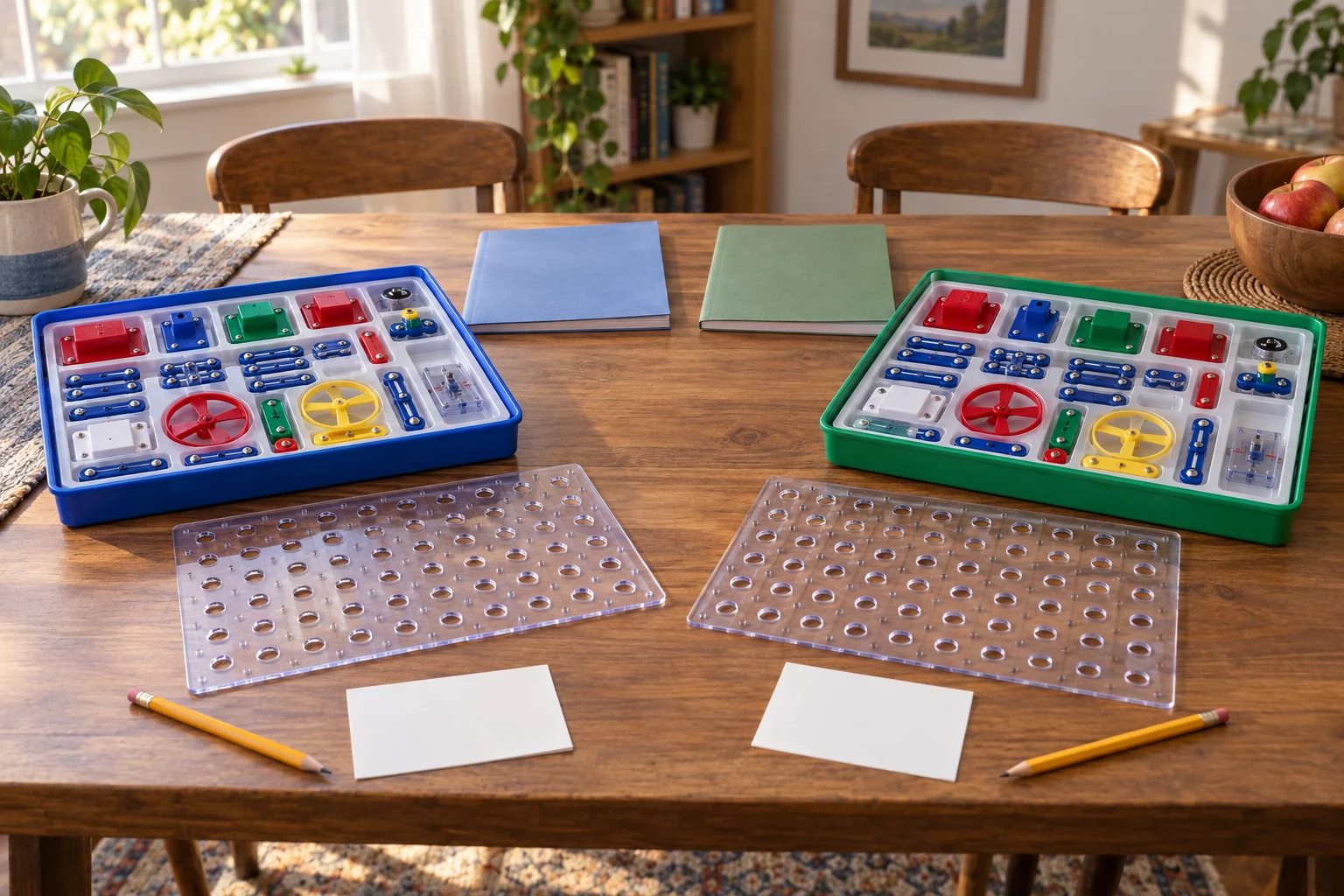
A Snap Circuits afternoon can centre on one project that gives two people something to notice and discuss. Choose an applicable illustrated project from the actual kit's instructions, say what you expect to observe, and compare that expectation with what happens. One suitable project can provide enough to observe and discuss during the visit.
This is an idea for sharing an interest, with the equipment's complete instructions governing its actual use. It supplies no circuit diagram, battery arrangement, component substitution or fault-finding method. The person responsible for the activity should read the full applicable instructions and decide whether the project and participants are suitable before inviting anyone to build.
Invite someone to share a particular curiosity
Begin with what the other person enjoys. One guest may like seeing how a result is produced; another may prefer listening to the person who already knows the kit. Ask whether they would enjoy looking at a familiar project together. Leave room for observing, helping under the applicable guidance, or choosing another activity.
For a fictional visit, imagine Priya inviting her nephew Owen to explore a kit they already have. Priya has checked the actual instructions and chosen a suitable project. Owen is interested in what he might notice at its end. This invented scene illustrates a conversation, without establishing a particular child's readiness or demonstrating a real circuit.
Priya can describe the proposed afternoon plainly: they will look at the project together, make a prediction, and talk afterward. She does not promise that Owen will understand every component or complete a long series. Priya and Owen can decide together how much time they want to spend on this project.
Choosing a circuit kit project for the afternoon
For choosing a circuit kit project, start with the actual manual and the contents of the identified set. Select a project whose instructions and intended result the responsible adult can follow. A missing part or unclear instruction remains a question for the appropriate support information. This article does not fill that gap with a substitute component.
Choose a result someone can describe in ordinary words after reading the project's own account. That gives the conversation a focus. Avoid asking a guest to predict an internal process that neither person can explain from applicable information. An observation can be interesting without becoming a test of somebody's technical vocabulary.
The Snap Circuits Pro SC500 offer states 75 parts and more than 500 projects. It describes a plastic grid, numbered and colour-coded pieces, an illustrated instruction book, and an age recommendation of eight and over. Batteries are required. Those are the selected offer's statements, without a promise about a particular participant's ability or the result of this afternoon.
Ask which available project interests the person who will be joining you. You can choose one applicable project and leave the rest for another occasion. Keep the actual chosen instructions available throughout the activity. The description's quantity does not create an obligation to finish several projects or replace the adult's decision about the intended participants.
Make a prediction someone can explain
Before following the chosen project, ask each person what they expect to observe from its stated account. They can say their answer aloud or write a short sentence on a separate card. Keep the prediction about the actual project's described outcome. Do not introduce an unlisted electrical connection merely to create a surprise.
In the fictional visit, Owen might explain which result he is waiting to notice, while Priya says why she expects it. Their answers need not use the same words. Hearing the difference can make the later conversation more specific: one person may focus on when something happens, while the other is curious about the effect described in the instructions.
A prediction can also include an honest question. Someone may understand the expected result but remain unsure how a named component relates to it. Keep that question available for the explanation that belongs to the chosen project. There is no need to pretend certainty before the activity begins.
Let each person speak before the more confident participant supplies a full explanation. Otherwise the quieter guest may simply repeat the explanation they have just heard. Ask what made them expect their answer, then listen. This makes their own interest part of the occasion without turning the invitation into a quiz with a score.
Taking turns with a circuit kit can include observing
For taking turns with a circuit kit, agree which forms of participation fit the actual instructions and participants. One person may prefer reading the relevant project account while another follows its permitted construction under the required supervision. A guest may choose only to observe. None of those choices changes the equipment's requirements.
Keep the instructions visible to the people who need them. If one person cannot see a diagram clearly, resolve that reading problem before continuing the applicable activity. The social plan should accommodate understanding the actual page. It should not require someone to copy a remembered arrangement because another guest has taken the booklet away.
A willing observer can listen for the stated outcome and join the discussion afterward. They do not need to handle a component to have something worth saying. Ask what held their attention or which part of the explanation remained unclear. Someone else's question may reveal an aspect the experienced participant had stopped noticing.
Where a change of roles is appropriate under the actual guidance, agree it before the next applicable activity. Avoid making a handover into a demand that someone act immediately. A person who was happy watching may want to continue watching. The afternoon can still be shared when the practical roles remain different.
Keep the SC750 offer and its project count distinct
The Snap Circuits Extreme SC750 offer states 80 parts and over 750 experiments, with an age recommendation of eight and over. It names several included component types and describes software with a PC interface cable. This guide has not established current computer compatibility and does not require that software for its proposed social activity.
The two offers use different project or experiment counts. Neither count tells you how many evenings your household will enjoy, how long a particular project takes, or which set will suit a guest better. Choose according to the actual projects and requirements that interest the intended participants, after checking the exact contents and instructions.
If you already own one set, keep its instructions and parts associated with that actual set. This article supplies no interchangeability finding between the SC500 and SC750, and no method for combining their power arrangements. An invitation to spend time together does not require changing the equipment you have.
If you are buying for someone else, ask about the set they already use and the kind of activity they enjoy. That answer can narrow the purchasing question before a headline count takes over the decision. Retain the exact model when asking the supplier about contents, separately required items or applicable instructions.
Talk about the result that actually appeared
After the applicable activity, compare the actual observation with the earlier prediction. Ask which part matched and which part prompted another question. Keep the result described as narrowly as you saw it. An enjoyable demonstration does not establish that every included component, project or advertised feature has been examined.
If the expected result does not appear, pause the social activity and follow the actual instructions and appropriate support guidance. This guide supplies no improvised repair or alternate wiring. The participants can still discuss what they expected and what they actually observed without assigning an unverified fault to a part.
Priya might ask Owen which sentence on his prediction card he would now change. He can revise his description or leave a question unanswered. The card preserves Owen's starting idea so they can discuss how his expectation changed. A changed expectation can give their conversation a clear starting point.
Someone may have noticed a different part of the same event. Give that account room before deciding everyone shared one impression. Ask each person what they saw or heard and which moment they mean, then give their different observations room in the discussion.
Give a returning guest a fresh question
If someone has already seen the chosen project, ask what they would like to understand better this time. Familiarity can give them a more specific question about the explanation in the actual manual. They do not need a new experiment simply to justify another visit. Keep any practical activity within the same applicable guidance.
A guest joining later can begin with the project account and the earlier prediction, after the responsible person has arranged an appropriate pause. Explain what has already happened and which part remains a question. That lets the newcomer join the conversation without pretending they witnessed the beginning or asking for an immediate repeat.
Someone who enjoys drawing could sketch the observable result afterward in their own way. Keep that drawing as their impression, with no claim that it is a circuit diagram or a set of construction instructions. Another person may prefer explaining the result aloud. These different responses can share a place in the afternoon without everyone producing the same kind of answer.
Choose whether to keep a prediction card or drawing together as a memory of the visit. A short note naming the actual project can help you recall which discussion it belongs to next time. The keepsake remains optional; the conversation does not need a finished worksheet to count as time enjoyed together.
Borrow an observation habit from other interests
The yo-yo demonstration guide invites a spectator to notice shape and then rhythm while an experienced adult performs a familiar sequence. Its YoYoFactory and Zeekio product information concerns those yo-yos. The social connection is giving an observer a specific feature to notice and a chance to explain their own impression afterward.
The electric pencil sharpener specification guide keeps battery-use counts, cutter-life claims and order quantities separate. Those Deli and BOSTITCH figures do not describe circuit kits. The useful reading habit is asking what a number counts before treating it as a promise about an afternoon's experience.
Finish the visit by asking whether another project sounds enjoyable for a later occasion. The answer can be a particular curiosity, a wish to watch again, or a preference for a different shared activity. There is no need to choose the next project while the current one is still being put away under its applicable instructions.
A Snap Circuits afternoon can leave both people with one remembered observation and a question they want to discuss again. Keep the actual kit and its guidance central to the activity, and let the conversation follow what the participants noticed. Ask which question or project, if any, they would enjoy returning to together.
Conceptual Snap Circuits afternoon cover with separate generic inactive learning-kit trays and empty grids; no exact models, assembled circuit or tested result is shown.