Personal Care & Grooming
A small bathroom care tray for an electric toothbrush
A small care tray keeps the brush and its charging pieces from crowding the sink. Choose the location around the actual charger or wall mount, then leave room for the rest of the daily routine.
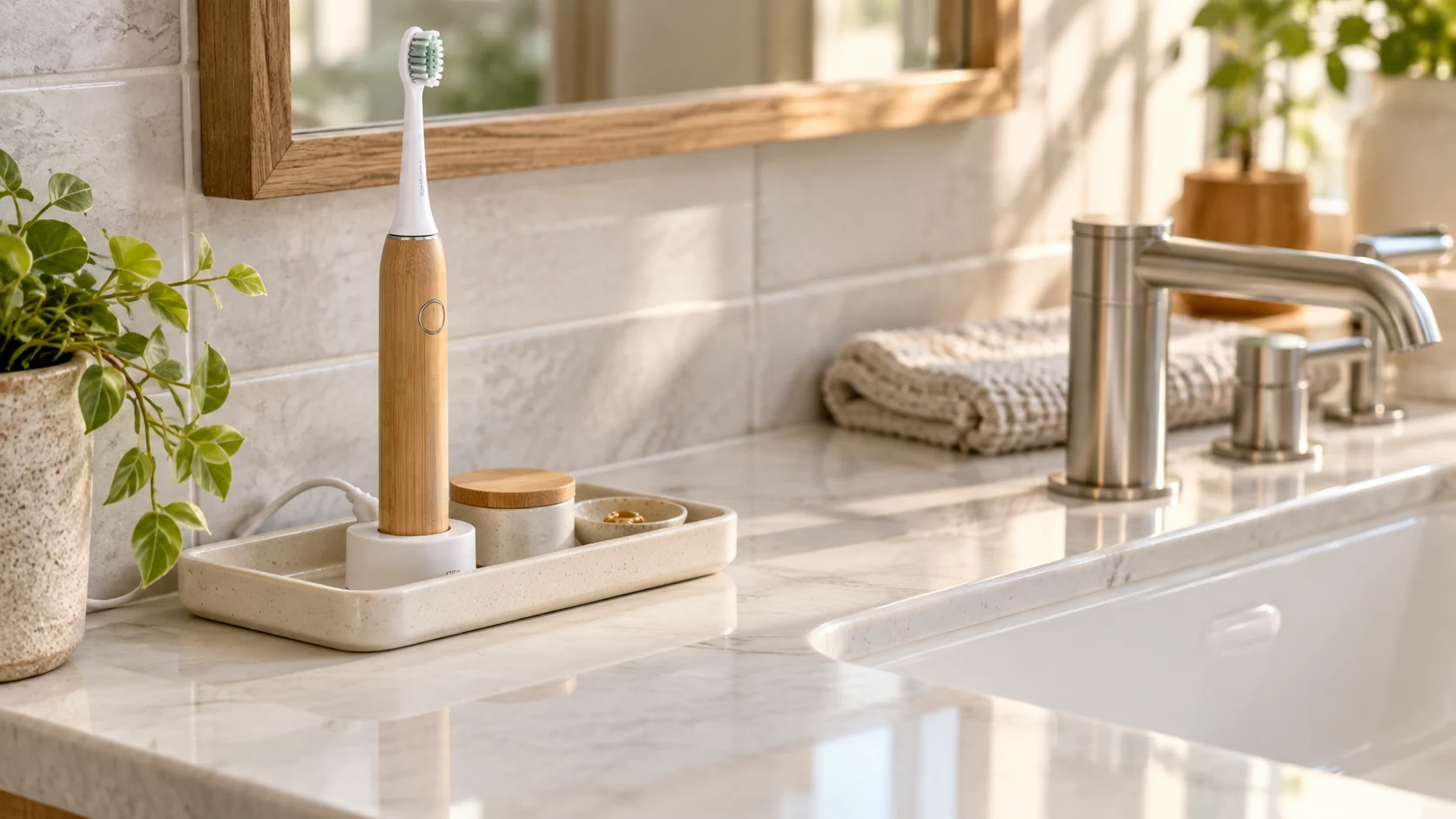
The sink is often the busiest surface in a small bathroom. A toothbrush lands beside a soap bottle, a charger trails behind a mirror, and the next person using the room moves everything again. A care tray can give an electric toothbrush a predictable place without asking the whole room to become a display. The useful starting question is simple: what must stay beside the sink each day, and what can wait in a drawer?
Make this a small arrangement experiment. Choose a place for the brush, check the charging route against the product instructions, and leave enough open counter to use the basin. The two toothbrushes discussed here have different supplied parts and controls. Their listings can help you plan where those parts would live. They cannot tell you how your own bathroom is wired or what dental device is appropriate for your needs.
Start with the tray, not the shopping list
Place an empty tray on the counter where it would actually be used. Pick a size that leaves room to turn the tap and set down a cup. If the tray fills the only dry area, try a smaller one or use a shelf instead. The point is to collect a few daily things in one place, not to occupy every free inch. Check whether the tray can be moved easily when you clean the counter.
Put only the objects used in your usual morning and evening routine on it for a day. The toothbrush belongs there if you can reach it and return it without shifting other items. A charger might belong on or beside the tray, depending on the device and the manufacturer's placement instructions. Extra heads, manuals, and travel accessories usually do not need the same daily position. Give them a specific drawer or container so you know where to find them.
If several people share the sink, give each person's essentials a clear boundary. A shallow tray can mark one person's space, but a shelf or drawer may work better where counter room is scarce. Test the arrangement while someone else uses the bathroom. Can they wash their hands and use the mirror without moving the brush? The answer matters more than how neat the setup looks when no one is in the room.
Check the supplied charging pieces
The Oclean X Pro electric toothbrush listing says the package contains a rechargeable handle, brush head, wall mount, Type-C charging cable, and manual. A wall mount may change how you use a tray: the handle can have a mounted place while the tray holds nearby daily essentials. Before planning around that idea, check the actual mounting and charging directions supplied with the device and whether your wall and outlet position suit them. The listing does not establish that every bathroom wall or outlet layout is appropriate.
The Briut Essentials bamboo sonic toothbrush listing identifies a bamboo handled electric brush with five named modes and three compatible replacement heads. It lists USB among the included items. That suggests a different storage conversation: the brush, the cable, and spare heads need places that can be remembered after the first week. Confirm the exact charging arrangement in the current listing and included instructions rather than assuming that every USB-equipped brush uses the same stand or cable setup.
Try drawing both arrangements on a piece of paper. In one, mark the Oclean wall-mount position, a route for its Type-C cable, and a small tray for items you use at the sink. In the other, give the Briut brush and its USB charging pieces a safe place and put spare heads away from the daily surface. This is not a comparison of dental performance. It is a way to see whether the supporting pieces fit your bathroom without creating a tangle of objects around the tap.
Keep the daily surface quiet
A care tray works when it makes the return movement obvious. After using the sink, place the brush where its instructions call for it to rest or charge. Leave the remaining space clear enough that the next person can use the counter. If bottles migrate onto the tray, move them back to the place where they are actually used. The tray should help you see what belongs in this small area; it should not become a catchall for everything that has no other home.
Be realistic about what you will do on a busy evening. A setup requiring several steps before the brush can be put away will probably be ignored. Test the reach with the bathroom lights as you normally use them, open the drawer or cabinet that holds accessories, and see whether any door hits the charger or tray. A modest change to the placement may save more frustration than buying another organizer.
Keep water and power considerations grounded in the instructions for the specific device. A product page may describe a brush as rechargeable or list a charging cable, but it does not approve an outlet position, a shelf location, or a particular extension arrangement in your home. Follow the supplied safety directions and use the bathroom's actual layout as the constraint. A tidy photograph is no reason to put a charger where it should not go.
Use features if they fit the routine
The Oclean listing describes colored eight-zone feedback and an optional app connection with brushing history and plans. Those are features to examine if you want that kind of feedback. The listing also contains statements about plaque and gum care that this bathroom layout guide does not verify. You can plan a good place for the brush without adopting a seller's clinical claims or making a phone part of every brushing session.
The Briut listing names Daily Clean, Whitening, Gum Care, Sensitive, and Intense modes. Their names describe controls on the product page; they do not show which setting is right for a person or what result it will produce. If you are interested in the controls, consider whether you can use them comfortably in your normal routine and consult appropriate dental guidance for personal care questions. The practical tray decision stays the same: where will the brush rest, how will it charge, and where will the spare heads go?
Some people enjoy a visible reminder; others prefer a nearly empty counter. Neither preference requires a complex gadget routine. If you like the wall-mount idea, check whether you would actually return the handle there after each use. If you prefer a tray, check whether it has room for the brush without collecting an assortment of unrelated objects. Choose a layout that fits your habit rather than imagining the habit will change because the layout is attractive.
Keep nearby purchases separate
Once you clear a bathroom surface, other worn or crowded items become more noticeable. A hairbrush may be nearby, and towels may be stacked in a place you would rather use for daily supplies. Resist turning the toothbrush setup into an automatic replacement plan for the whole room. The hairbrush care and replacement guide asks readers to consider the actual condition and care of a brush before buying another. That is a useful boundary here: decide what the toothbrush station needs, then make separate decisions about the rest.
Shared towels can raise a different question about spending and storage. The bath towel replacement budget guide focuses on selective, staged purchases rather than treating a cupboard refresh as one big purchase. A care tray can be set up without replacing towels. If the towel storage really blocks the place you want to use, discuss that as its own decision with the people sharing the room.
Separate decisions make the project easier to judge. A moved bottle might be enough to free the counter. A drawer divider may help keep spare brush heads together. A new toothbrush could still be a considered choice if the physical package suits the way you use the room. Each change has a specific reason. When several unrelated purchases are bundled together, it becomes difficult to tell which one solved the original problem.
Give travel and spare parts a home
Travel accessories are easy to lose when they live in an anonymous bathroom drawer. Check the actual package contents of the brush you choose and keep those parts together. The Oclean listing names a wall mount, cable, and manual; the Briut listing names compatible replacement heads and USB equipment. The product pages do not replace the instructions that arrive with the specific item. Use those instructions when packing, charging, cleaning, or storing it.
A small labeled container can hold the spare heads without leaving them beside the sink. It can also make it clear which heads belong to which handle if more than one person uses electric brushes. Do not assume that a head described for one model fits another. Keep the packaging or model information until you can identify replacements reliably. That is more useful than leaving every spare piece in sight as a visual reminder.
Before a trip, find the cable, case if one is supplied, and any other part you normally bring. Check the charging method and power available where you will stay. When you return, put the brush back into the home arrangement and restore the travel pieces to their container. This simple return step prevents the care tray from slowly collecting duplicate cables and forgotten packaging.
Live with the arrangement for a week
After arranging the tray and charging place, use the bathroom normally for several days. Notice where the brush really ends up. Does the handle return to the mount or tray? Is the cable where it gets in the way? Are spare heads staying in their container? These observations tell you more than a first-day inspection. If the brush keeps landing somewhere else, consider whether that other place is more practical, subject to the device's instructions and the room's power and moisture conditions.
Ask the other people using the bathroom whether the arrangement leaves them room. A tray that gives one person a neat station may still crowd someone else's routine. The fix may be moving the tray a few inches, using a shelf, or reducing the number of daily objects on it. You do not need to replace the brush to solve a placement problem. Keep the changes small enough that you can tell what improved the space.
At the end of the week, the most useful setup is the one you can repeat without thinking about it. The Oclean and Briut listings provide different physical packages and optional features, but the room decides where those pieces can live. Check current product details and instructions before buying, and seek qualified advice for dental questions. Then give the electric toothbrush a dependable place to return, with enough counter left for the ordinary work of using the sink.