Crypto Commerce
SMAD DSX-60B2U-3 compact refrigerator vs DSP-60BY1 for a vehicle or small room
Compare SMAD DSX-60B2U-3 compact refrigerator by power claims, cabinet size, door access, shelves, weight, and vehicle fit.
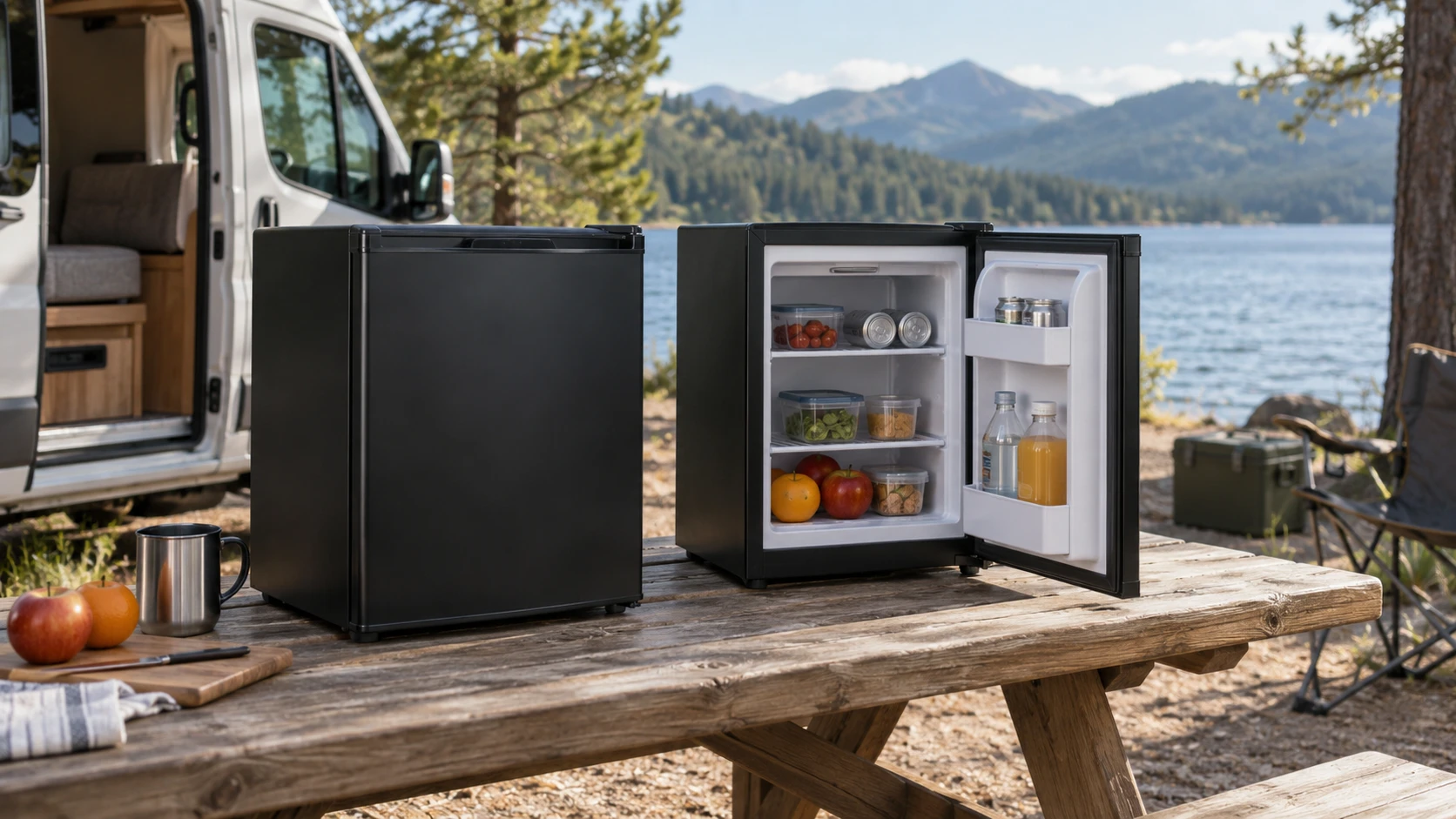
Two compact refrigerators can advertise the same capacity while asking for very different installation plans. The SMAD DSX-60B2U-3 and DSP-60BY1 are both listed at 2.1 cubic feet. The DSX product title mentions 110V and 12V use in an RV or truck, while the DSP title points to 12V and 24V DC operation for vehicle travel. Their saved specifications are shorter than their titles, so the first purchase question is whether the exact unit can run from the power source you already have.
The SMAD DSX-60B2U-3 compact refrigerator is a black, freestanding model with a lock, reversible door and a listed frost-free defrost system. Its saved row gives a 110-volt specification, while the title also says 12V. That difference needs a current manual or label check before a buyer plans to use a vehicle socket. The row does not describe which power adapters or cords are included. A title mentioning two voltages cannot, by itself, certify the contents of the box.
The DSP-60BY1 is described as a black compressor refrigerator for vehicle and travel use. Its title names 12V and 24V DC, while the saved specification field says 12 volts DC. It has a reversible door, two wire shelves and a frost-free defrost claim. Confirm the operating-voltage range and connector for the exact unit before connecting it to a 24V vehicle or a 12V source. The title and specification field should tell the same story before you rely on either one.
Similar volume, different cabinet shape — SMAD DSP-60BY1 vehicle refrigerator
Both listings say 2.1 cubic feet, and the DSP row also expresses that as 60 liters. That is a broad measure of internal space. It does not tell you whether a tall bottle, a shallow food tray or a particular container will fit between shelves. DSX has no shelf count in the saved row. DSP lists two wire shelves, which may help separate small items but may also limit the height of a container if they cannot be repositioned. Ask for interior measurements and a shelf diagram when a particular item must fit.
The DSX exterior is listed as 17.7 by 15.7 by 26.4 inches and weighs 58.9 pounds. The DSP exterior is listed as 18 by 20.5 by 20.9 inches and weighs 50.9 pounds. Those figures suggest different proportions: DSX is taller in the listed dimensions, while DSP has a larger second dimension. The source does not label every dimension as width, depth or height in a way that should be assumed from the order alone. Use the current manufacturer's diagram to orient them correctly before measuring a cabinet or vehicle compartment.
A volume figure cannot substitute for door access. Measure the intended spot with the door fully open, including any handle, shelves that need to slide out and room for hands to load food. Both rows say the door is reversible, but neither states the clearance required to switch hinge side or operate the door after the switch. If the refrigerator sits against a wall or in an RV alcove, confirm the hinge procedure and ventilation clearance in the model instructions. A snug exterior fit can still leave the door or airflow blocked.
The weight difference matters for moving the appliance. At the saved figures, DSX is eight pounds heavier than DSP. Neither listing says the unit is suitable for carrying while full or riding unsecured in a vehicle. Plan a stable location and follow the maker's installation instructions. For a vehicle installation, check how the appliance is restrained and where its cord can run without being pinched. Those physical details are more reliable than the general “travel” wording in a product title.
Sort out power before comparing features — vehicle and home fridge power guide
For a room with a standard household outlet, the DSX row's 110-volt specification is the clearest starting point. Its title also names 12V, but the saved row does not specify the connector, included adapter or operating conditions for that mode. The DSP is framed around DC vehicle power. Its title says 12/24V and its specification field says 12V DC. If the buyer needs 24V compatibility, get model-specific confirmation in writing or from the manual rather than inferring it from the title.
Voltage is only one part of a power match. Check connector shape, required current, fuse rating and whether the source can supply the load during startup and operation. The saved rows do not give all of those numbers. A plug that fits is not proof the circuit is suitable. If an RV has both household and vehicle circuits, write down which outlet will power the fridge while parked and while traveling, then match each outlet to the unit's documented input. Do not plan an automatic switchover without the manufacturer's instructions.
Power availability changes with the trip. A 12V source may depend on a battery when an engine is off. A household outlet in an RV may depend on shore power or an inverter. Neither product row supplies a battery-runtime estimate, and the DSP's “batteries neither included nor required” field is a retail specification, not a promise that a vehicle battery will never be involved in powering a DC appliance. Work from the real electrical system and the appliance's current rating, not a generic battery line in a catalog.
The published vehicle and home fridge power guide covers related questions for a different refrigerator. Its value here is the checklist: identify each source, confirm the adapter and plan what happens when power changes. It cannot establish the SMAD models' voltage ranges or included plugs. Use the guide to frame questions, then settle compatibility with the exact DSX or DSP manual and product label.
Cooling claims need conditions — SMAD DSP-60BY1 vehicle refrigerator
DSX's title uses “No Noise,” and DSP's description calls it silent. The DSP description also calls it a compressor refrigerator. Those words do not provide a measured sound level for either model. Sound near a bed or desk depends on the installation, background noise and operating cycle. If quiet operation is central to the purchase, look for a model-specific decibel measurement or a trial in the intended room. Do not turn the title into a guarantee that the unit makes no audible sound.
Both saved rows say frost-free defrost. That is useful to check, but the rows do not describe the method, maintenance schedule or operating conditions behind the claim. Read the manuals for cleaning and defrost instructions. If the fridge will spend time in a vehicle with changing temperatures, ask how that affects operation. Neither listing supplies a measured temperature range, recovery time after a door opening or an energy-consumption figure. A buyer storing temperature-sensitive items needs evidence from the actual installation, such as an appropriate thermometer, and should follow the applicable storage guidance.
DSX has a lock. That could be useful in a shared room or a vehicle where the door should remain closed, provided the lock design suits the intended use. The saved row does not describe its key, latch or security rating. Treat it as a listed access feature, not protection against theft or a substitute for securing the appliance itself. DSP's saved row does not mention a lock; check the current listing if that feature would decide the purchase.
DSP's two wire shelves are a more specific organization detail. Wire shelving can allow visibility through a shelf, but the listing does not give load limits, adjustability or cleaning instructions. DSX may have interior shelves, yet its saved row gives no count. Ask for photos or a diagram of both interiors. It is easier to spot a mismatch with your normal containers before a heavy appliance is installed than after the return period begins.
Compare the complete installation cost — SMAD DSP-60BY1 vehicle refrigerator
The saved catalog price for DSX is $466.25, while DSP is $623.75, a $157.50 difference. Those are snapshot figures and may not match today's offer. The power setup can also change the effective cost. If one unit needs an adapter, a different outlet or secure mounting hardware, those items belong in the comparison. The saved descriptions do not certify which accessories are included, so confirm the current packing list before calculating a total.
Make two short checklists. The first covers the location: measured opening, door swing, ventilation, surface and route for the power cord. The second covers the electrical setup: voltage range from the model label, connector, available outlet, circuit capacity and what happens when external power stops. A retailer title can help you find a candidate, but these checks determine whether it can be installed and used where you intend.
For a buyer with a household-power location and an interest in a lock, DSX is the logical model to investigate first. Verify the title's 12V claim if vehicle use is also required. Its taller listed dimensions and heavier weight make physical placement especially important. For a buyer whose installation is centered on DC power and who values the two listed shelves, the SMAD DSP-60BY1 vehicle refrigerator deserves the closer look. Resolve the 12V versus 12/24V wording before connecting it to a vehicle system.
The common 2.1-cubic-foot number cannot decide the purchase. Confirm the exact operating power, interior fit and installation requirements, then compare current prices and return terms. Those checks are small compared with the inconvenience of a refrigerator that cannot safely connect to the available outlet or fit through its own door swing.