Home Decor & Table Settings
A side table display for one evening
A fictional host puts away reunion mementos without turning a temporary display into a permanent room plan.
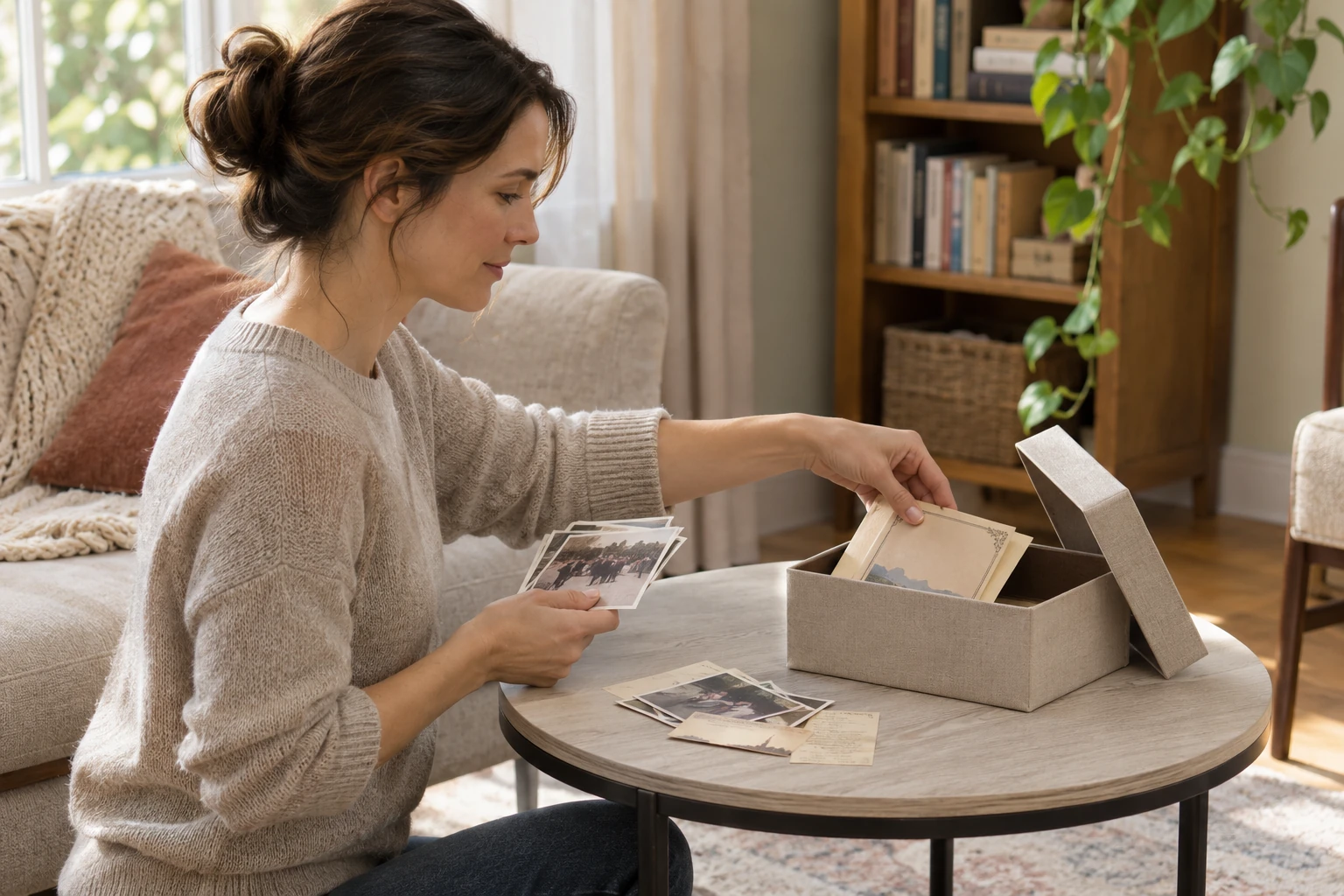
A side table display can belong to one evening. In this original fictional story, Ada wakes the morning after a reunion with people from a small theatre group she once joined. A few paper mementos are still on a table in her living room. The visit has ended; she has not yet decided whether the display has ended with it. Ada, her room, the group and their evening are invented.
The morning begins after everyone has gone
Ada lives alone. On the morning after the visit, she comes into the room carrying the list she had made for the visit, finds a pencil and crosses out the one errand she no longer needs to do. The table is beside the chair where she usually leaves her reading. This morning it holds a programme, a small photograph and two scraps of paper she had brought out for her friends to recognise.
She had enjoyed choosing them. The programme belonged to an invented production they had put on when none of them quite knew what they were doing. One scrap was a line of dialogue someone had copied incorrectly. Ada had kept it because the mistake still made her laugh. The photograph was an unremarkable picture of an empty rehearsal room, with a coat left over the back of a chair.
Last night, these things had a particular reason to be visible. Ada had wanted them there for this visit, without turning her whole room into an exhibition. Now she reads the programme’s cover and tries to decide what leaving it out would mean today. The friends have gone back to their own mornings. The papers have not acquired an instruction about how long they must remain on her furniture.
A temporary reunion display has done something specific
Ada brings the plain box in which the papers had been kept. She sets it near the table, then goes to answer her phone before putting anything away. Her sister asks how the evening went. Ada tells her about the friend who had arrived with news she had not expected, and another who had finally explained a joke Ada had remembered differently for years.
Her sister asks whether the little display was a success. Ada pauses over the word. She had not asked anyone to assess it. Some people had looked at the papers; some had been more interested in catching up with one another. She says she was glad she brought them out. That is the answer she actually has, in this invented conversation. She does not turn it into an account of what every guest felt.
After the call, the box is still open. Ada remembers how long she had spent looking for the photograph. Having found it, she feels a brief reluctance to return it to the place it came from. The effort was part of preparing for the visit. It need not become a new plan to keep this particular arrangement in view throughout the next month.
Let the paper return to being a memento
She takes the programme first. It is the object with the clearest connection to the reunion, and it is also the one she is most tempted to leave standing where it is. She can imagine a visitor asking about it next week. She can imagine enjoying that conversation. Neither imagined visit has been arranged, and neither supplies a reason she has already chosen.
Ada puts the programme with the other papers in the box. The action is small enough that she almost misses the decision inside it. She is putting away the temporary reunion display she made for last night. She is not rewriting the evening or deciding that the programme was uninteresting. The story gives her that particular intention; it makes no claim about how someone else should feel when putting their own things away.
The photograph takes longer. Ada had forgotten the coat in the picture until she looked closely yesterday. She now remembers whose coat it was, or thinks she does. She leaves that uncertainty alone instead of supplying a confident account. There is no label to finish and no group history to publish. The photograph can remain a picture she may want to discuss another time.
The table does not need a replacement scene
With two of the papers put away, Ada begins looking around the room for something else to put in their place. There is a bowl she likes on a shelf. There is a card tucked beside a book. She starts to reach for the bowl, then stops because she has not actually decided she wants it on this table. She was filling the place the programme had occupied before she had considered another arrangement.
For now, she leaves the bowl on its shelf. Another display would be another choice, and she has other things she would like to do this morning. The table remains ordinary furniture in her fictional room. This scene gives no dimensions, placement trial or instructions for using either retail table described below. Ada’s generic object is part of an invented home, rather than a claim about a delivered product.
She finds the pencil she had been using and notices that she has crossed out the errand twice. The second line is unnecessary, but she leaves it on her own list. The small mistake brings the morning back into view. There is a letter she wants to read before going out, and a friend from last night has already sent a message about meeting again.
Keep the actual table accounts separate
The Round Side Table offer shows two pale round surfaces with gold-colored uprights in its single gallery frame. The HOMESTOCK offer shows one pale round top and a black crossed support frame in its sole image. These complete tables have different pictured structures. No stone or metal authenticity, dimensions, load, stability, assembly, care or delivered-unit result is authenticated by those images. Neither offer supplies Ada’s fictional table.
A message can continue without keeping the display
Ada answers the friend’s message before she closes the box. She says she enjoyed seeing everyone and mentions the mistaken line of dialogue. The friend replies with another version of the line. Ada laughs, then asks whether he remembers it that way or has just improved the joke. She does not need the scrap of paper standing on the table for this new exchange to take place.
She leaves the two versions in the conversation. This is a private fictional exchange, with no claim that either one records the production accurately. The papers she chose yesterday have given her something she wants to mention today. They have not become the only possible subject between these friends, nor does the story require her to arrange the same reunion display for every later visit.
Before closing the box, she looks once more at the copied dialogue. She had thought the wrong word was the whole reason she kept it. Now she remembers the afternoon on which someone handed her the paper, still laughing at their own mistake. That is a new detail in Ada’s invented recollection. It is not a finding about how real people remember events or a benefit promised by displaying mementos.
The morning after the visit has its own room
The box returns to the place Ada had chosen for her papers. The story provides no archival packing method or advice about protecting real photographs. It leaves Ada with her particular decision about the temporary display. When she next comes into the room, she sees the table without the programme and does not immediately assign it another theme. She reads the letter she had been meaning to open.
A line in the letter reminds her of something she wants to tell her sister. Ada finds her pencil and writes a few words for herself. The room has moved on to another part of her day. The reunion remains an evening she enjoyed, without making the furniture responsible for repeating it every time she passes. That is how this fictional morning unfolds; another person could choose a different arrangement for their own reasons.
Leave neighboring stories with their own decisions
The ordinary-day empty-vase story follows a preference for the form of a vessel already unfilled, with no celebration or earlier arrangement. The dinner-table centerpiece story follows decoration through arrivals, conversation and serving a meal. Ada’s scene begins after a reunion and concerns whether its paper display becomes permanent. It supplies neither a vase preference nor a meal-placement method, and borrows no guest-arrival or serving sequence.
If a later purchase offers cryptocurrency
If you later decide to buy furniture through republeq.com and prefer cryptocurrency such as USDT, check the methods actually presented for that exact order before authorizing payment. Mentioning USDT here does not establish that it is available for either table or any particular checkout. Keep an unavailable option unresolved while you obtain current transaction information. Identify the exact item and selected variant you intend to consider. If someone else is buying for you, give them that selection and ask them to bring a proposed substitute back for consideration. A payment preference does not authorize a different table or resolve an unanswered product question. Review the applicable delivery and return information for the order you are considering. This paragraph promises no delivery date, fee, exchange rate, refund outcome or continuing availability of a checkout method. Obtain missing order or payment details through the responsible merchant interface or provider. No wallet address, network choice, transfer procedure or provider instruction is supplied here. Use the current transaction’s instructions for a method that is actually available. Retain any real order confirmation and payment record so that the authorized purchase can be identified later. Those records document the transaction; they do not independently establish the delivered item’s identity, contents, materials or suitability for a proposed use. You can finish reading and leave the purchasing decision open. If you return later, check the exact selected item and current conditions again before proceeding. An earlier photograph or remembered payment option does not settle the details of a later order. No order, transfer, delivery inspection, furniture test or merchant commitment is recorded by this fictional story or its conditional purchasing discussion.
Keep the occasion without extending its display
When Ada goes out, the papers are put away and the pencil is beside her letter. She has not prepared the table for an unknown visitor or promised herself a permanent memorial to last night. She has brought one display to its chosen end. The next gathering can have its own place in her home, with different details if she wants them.
Her side table display belonged to an evening that has happened. In this story, putting its papers away leaves that evening complete. Ada takes her keys, remembers something she still wants to ask her friend, and closes the door behind her. The table stays in the room, available to the ordinary day she will return to.
Conceptual fictional scene; no exact retail table or actual event is shown.