Cost & Savings Articles
Shipping tube budget: quote the packed parcel
Keep mailing-tube purchase counts, inside dimensions and the actual packed-parcel quote separate before deciding what a shipment will cost.
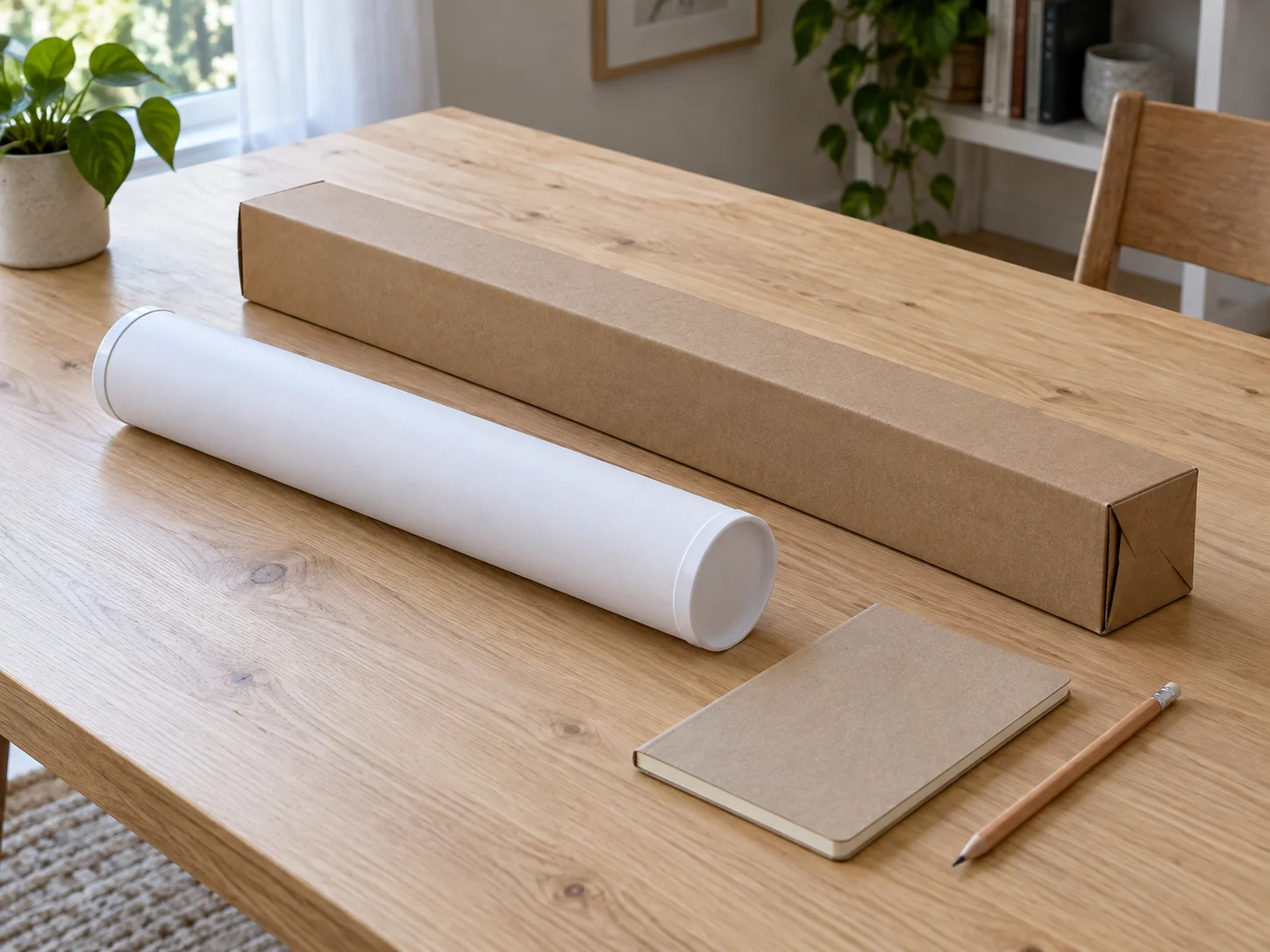
A shipping tube budget needs an amount for buying the container and an amount for sending the finished parcel. A catalogue can help identify the first purchase while leaving the second amount open. The dimensions printed beside a tube do not always describe its outside, and a carton of unused tubes is a different purchase from postage for one parcel.
The two offers here make that distinction visible. One explicitly describes inside dimensions and supplies thirty-four tubes. The other names a longer square format and supplies twenty-five, without stating whether its quoted dimensions are inside or outside. Neither description supplies a transport quotation for your particular contents and destination.
Inside and outside dimensions answer different questions
The Partners Brand P2518W white mailing tubes are described as two and a half by eighteen inches, with all dimensions expressly identified as inside dimensions. The offer states thirty-four per carton and included white end caps. Keep that qualification beside the size whenever you record the offer.
An inside measurement can inform a question about the space available to the contents. It does not establish the finished parcel's exterior. This article has not measured a sample, fitted rolled paper into it or weighed a closed tube. The eighteen-inch figure therefore cannot become a measured outside length merely because the budget needs a length field.
The M5537K square mailing-tube offer states five by five by thirty-seven inches in its title and twenty-five per bundle in its description. Its actual brand field is B O X Partners, despite the title's Partners Brand wording. The description calls these one-piece kraft corrugated tubes that ship flat.
The square offer does not specify the measurement basis for its title dimensions. Record them as stated catalogue dimensions with that question unresolved. Replacing the missing basis with an assumption would make an apparently complete comparison depend on information the description never supplied. Ask about the actual model if the answer is necessary before ordering.
Put inside and outside dimensions in separate fields in your purchasing notes. Leave a field unanswered when its basis is unknown. A note such as “catalogue inside measurement” is more useful than an unqualified size copied into every form. It lets another person see which measurement still needs establishing.
Establish the packed parcel cost from the actual parcel
USPS's domestic package guidance bases postage on the applicable service, destination, package size and weight. Measure the packed outside, including packaging, and include the packaging in the weight. Dimensional or nonstandard charges may apply; obtain a current quote for the actual service and shape through its price calculator or a postal counter. A retail mailing tube does not automatically qualify as USPS Flat Rate packaging.
Those principles explain why the catalogue entries leave the packed parcel cost open. This article supplies no postage amount, fee threshold or purchased label. A quote needs the actual inputs for the proposed journey. Write down which parcel the quote describes so that a later packaging change does not leave an old figure attached to a different package.
You can research the container purchase before holding a packed example, but label the budget accordingly. A seller's answer about nominal dimensions is a purchase clarification. A measurement of your finished parcel is evidence about that parcel. Keep both when they matter, with enough description to distinguish the two objects.
For an initial order, consider how the unresolved transport amount affects the decision to buy a large pack. If the budget only works below a particular total outlay, an unquoted journey remains a real unanswered question. Calling its cost zero would conceal the question. Record an allowance as an allowance until an applicable quote replaces it.
Consider an invented studio planning one ordinary paper shipment, with no actual order or tested parcel. A second person checking its provisional notes might find eighteen entered in the outside-length field, copied from the white tube's title. They should return to the description and flag that entry as unsupported. The correction does not establish a new length or a lower charge. It restores the unanswered measurement question before anyone relies on the proposed figure.
Once a finished example exists, the studio can retain its own recorded outside measurements beside the product reference. That record belongs to the example actually measured. If the contents or packaging later change, review whether the retained entry still describes the parcel being quoted. A familiar model number alone cannot show that two finished parcels are identical.
Keep a carton purchase separate from a parcel journey
Thirty-four tubes in a carton do not mean thirty-four paid journeys. Twenty-five in a bundle do not mean twenty-five parcels are ready to send. These counts describe supplies offered for purchase. The number used depends on the actual work, while each transport arrangement concerns the parcel being sent.
In this fictional exercise, the studio has not yet established which container suits its contents. Its notes show two possible supply purchases and a transport amount still waiting for the final parcel information. The person authorising the supply order can see that unresolved amount before committing money. This keeps a provisional budget distinguishable from a completed price comparison.
If it eventually buys the thirty-four-count offer and uses one tube, the inventory record would show thirty-three unused tubes from that carton. Buying the twenty-five-count offer and using one leaves twenty-four. Those figures assume the advertised quantities arrive and only one is used. They are not inspected delivery counts or predictions that every remaining tube will serve a later job.
The buyer still pays the actual order total for the whole carton or bundle. Dividing that amount by the stated count can describe an average acquisition amount per supplied tube in a private record. It does not reduce the amount needed to buy the pack, and it does not include a transport charge for sending your contents afterward.
Suppose the studio records the supply-order outlay as S and a later quoted journey as Q. S plus Q describes the proposed combined spending only when the scope of each is clear. If S already includes delivery of the purchased supplies, keep that delivery there. Q concerns sending the studio's own finished parcel, a separate event.
After one shipment, retaining unused tubes does not refund part of S. The remaining stock may be useful, but its value to the studio depends on future suitable work. A forecast that assigns every spare tube a job should show the actual expected demand behind it. Otherwise a low average amount can obscure a purchase much larger than the immediate need.
Use the same decision date for both offers
A shipping tube budget changes once supplies have already been bought. Before ordering, compare the additional money required for each suitable option from that moment. After buying a pack, record the payment as spending already incurred. A later decision about one shipment should not charge the same supply order to the household again.
The Leatherman warranty-cost guide separates an earlier tool purchase from later transport and a conditional service decision. Its warranty terms concern different goods. The timing of a payment matters here: an amount already paid remains in the record without becoming a second future expense.
For the fictional studio, the first decision is whether to buy supplies for the proposed task. A later decision might concern using stock already on hand. These are different comparisons even when the same tube appears in both. State the decision date and the supplies already owned before comparing what each available option would still require.
Keep an unaccepted quote separate from a payment. If the studio obtains a new quote after changing the parcel, replace the proposed transport entry and retain enough context to explain the change. The earlier quote has not become money saved or money spent. A payment receipt would establish an actual outgoing amount.
A larger pack needs a plausible use for its surplus
The interoffice-envelope spending guide counts fresh envelope issues separately from document movements and available returns. Its internal circulation arrangement differs from a posted parcel. Here, count new tubes taken from stock and tubes still available, rather than equating every potential future mailing with a supply already consumed.
A studio expecting several different paper sizes should assess those real tasks before giving all surplus tubes the same planned use. A container suitable for one item has not been shown suitable for every later item. The stated inside dimensions of P2518W and the unresolved dimension basis of M5537K remain relevant to each selection.
Storage also belongs in the decision without an invented monetary penalty. The square offer states that it ships flat. That tells you about the supplied format; it does not measure your shelf or establish how many packs your room can accommodate. Check the space you actually intend to use before making storage convenience part of the purchase rationale.
If several people buy supplies, nominate a record they can all consult. A pack ordered by one person should not remain invisible to another person ordering for the same work. Record the actual model and quantity received before treating stock as available. A duplicate order is a distinct purchase even if both buyers expected to use the same future mailing.
Retain the measurement basis with the quotation
When asking the seller a size question, identify the product and the exact missing detail. For P2518W, the description already establishes that its listed dimensions are inside. For M5537K, ask which basis applies to the title's five-by-five-by-thirty-seven figure. A reply about a different tube does not settle that model's dimensions.
Read the current order contents and complete order total before buying either pack. The thirty-four-count offer includes white end caps. The square offer describes one-piece tubes supplied flat. Those are different product descriptions, and this comparison has not tested either closure or established a packing method for valuable paper. Choose packaging appropriate to the actual contents before relying on a transport budget.
Keep any later packed parcel cost quote with the description and measurements used to obtain it. If someone substitutes a different container, the record should make the change visible. The catalogue note about inside and outside dimensions then has a practical purpose: it prevents an inside or unspecified title measurement from quietly becoming the outside measurement in a different transaction.
For the studio's proposed shipment, the remaining work is concrete. Establish suitable packaging for the actual contents, settle the supply purchase on its current terms, and obtain the transport figure for the finished parcel. The saved record should show the pack bought, the stock used and the charge paid for that particular journey.