Lifestyle & Inspiration
Shared clay handoff: keep one feature for the next maker
Try an adult shared clay handoff: name one feature for the next maker to retain, then let a temporary form change through mutually agreed turns.
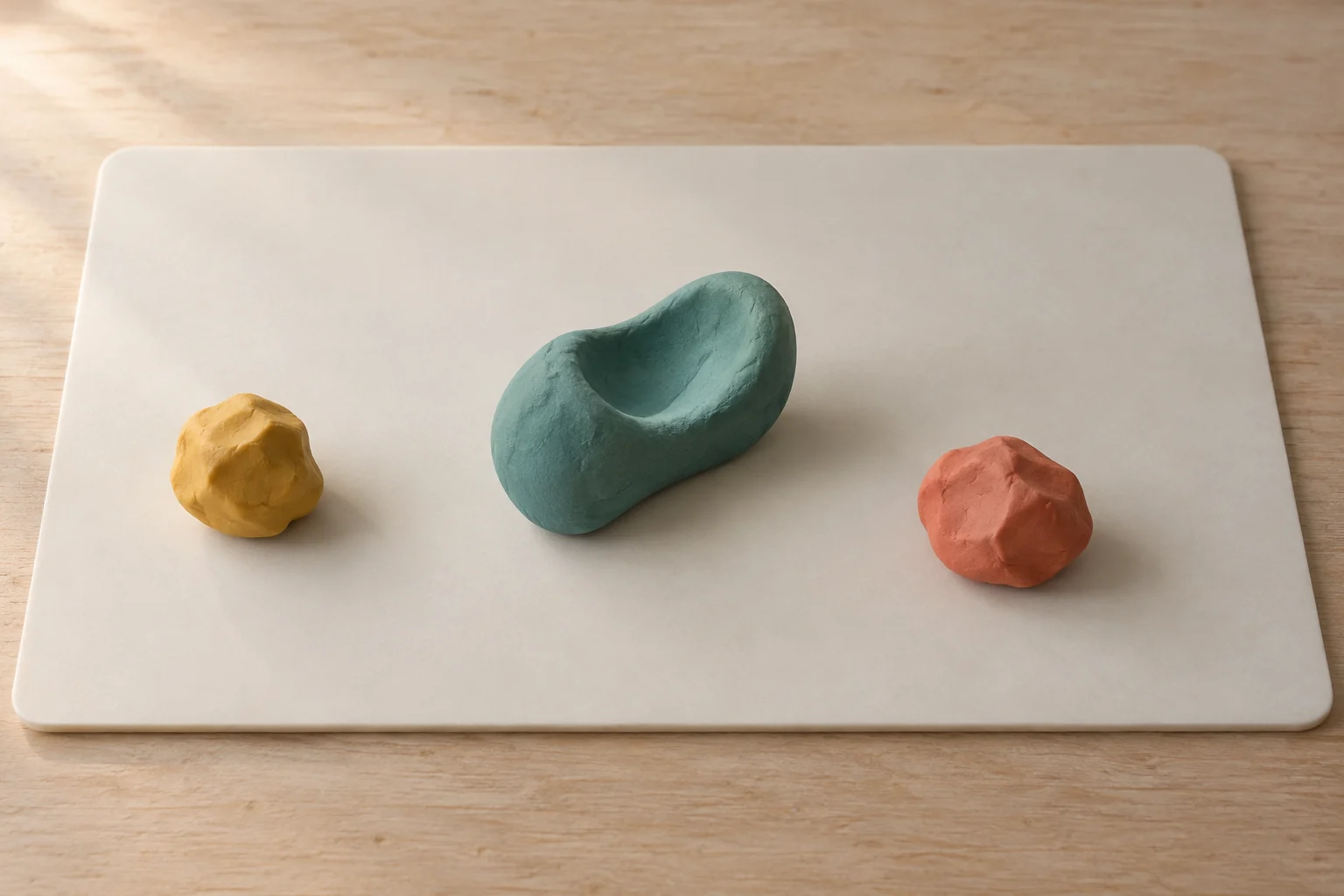
A shared clay handoff gives two adults an excuse to make something neither could plan alone. One person starts a temporary form and names a feature they want to send forward. The next person keeps that feature while changing the rest. Agree on the exchange before anyone begins work on a shape they expect to keep.
The pleasure can come from seeing an idea leave your hands and return unfamiliar. You might enjoy an unexpected silhouette, or find yourself oddly attached to a small indentation. Both responses give you something particular to discuss with the person beside you. This proposed leisure activity has no score or required finished object.
Decide what you are willing to hand over
Choose material that can be worked again, and follow its own handling and storage instructions. Give each person time to decide whether the invitation sounds enjoyable. This invitation supplies a way to share creative decisions; it does not provide a material preparation, joining or finishing method.
Start by asking whether you both want to change the same object. A person who would prefer to keep their own creation can make something separately. An invitation to spend an evening together need not require surrendering a piece they care about. Find that out while the proposal is still only a conversation.
If both people want the exchange, agree that the named feature is the only part reserved for the next turn. Everything else can change. The reservation lasts for that turn alone. A later maker can choose a different feature to carry forward, so the object does not accumulate an ever larger list of untouchable parts.
You can also agree to stop and ask when a proposed change would remove the reserved feature. That brief interruption belongs to the activity. It lets the first maker clarify what they meant and gives the next maker a chance to suggest an alternative without quietly abandoning the agreement.
Keeping one feature makes the first exchange specific
For keeping one feature, choose something you can point to on the form. “Keep this hollow” gives the next person more room than “keep the whole thing looking the same.” The feature might be a broad curve, a visible gap or a particular patch of color. Choose one that interests you.
Imagine two fictional adults, Ada and Nico, beginning with a low, uneven shape. Ada names a shallow hollow on its upper face. She likes its off-center position. Nico asks whether the position or the outline matters more. Ada chooses the outline, leaving him free to move the surrounding shape in another direction.
In this invented exchange, Nico imagines a taller form with the hollow still visible near its top. Ada has offered a feature, while Nico has chosen a new overall shape. The example describes their creative intentions, without specifying a building method or reporting that a particular clay held the proposed structure.
Keep the request small enough that the next maker has an actual choice. If Ada also reserves the height, every edge and the original color arrangement, Nico is left with little to contribute. They can revise the request before continuing. Nobody has to pretend a heavily restricted turn feels open.
Choose the second feature from what is there now
When Nico passes the form back, he names a broad curve along one side. Ada's earlier hollow has completed its reserved turn. She can keep it because she likes it, change it as part of her next idea or discuss it if she wants Nico's opinion. Its history does not make it permanently protected.
This is where the exchange can become interesting. Ada might have expected her first feature to remain important throughout the evening. Nico's new choice draws her attention elsewhere. She can look at the curve as the starting condition of her own turn, rather than trying to return the object to her original outline.
Let the next proposal come from the present form. A planned sequence of transformations can leave you waiting for the object to suit an idea you decided on earlier. You can keep that idea for another occasion and respond to the feature your companion actually handed you.
A short comment can help the other person understand your interest: “I like where this curve changes direction.” You are explaining a preference. The next maker can use the named feature without having to produce the same reaction or invent a story explaining why it matters.
Keep the package quantities attached to their offers
The Craft Smart T2796-MIK-A clay offer describes assorted colors, non-hardening reusable material and six packs of 144 pieces, or 864 total pieces. Its size is given as 6.1 pounds, also described as a 6.1-pound package. That account does not make 6.1 pounds a per-pack quantity.
The EZ Shape T459-MIK clay offer describes reusable, non-hardening material, twelve packs with twenty-four colors per pack and 288 total colors. It gives a one-pound size and also prints 459 grams. Keep those stated quantities together when asking what the selected package supplies.
Both are substantial supply proposals for an evening involving only two adults. Begin with suitable material already available if you have it. The exchange needs an agreed way to share a form; neither package count sets the number of turns, the amount each person must use or the length of the evening.
If a color matters to your idea, confirm its presence before making the purchase depend on it. “Assorted” does not identify the particular shade Ada might picture. Her first feature could concern an outline instead, leaving the proposed activity independent of an unresolved color choice.
Let a hesitation change the agreement
Suppose Ada pauses when she sees what Nico intends to change. She liked that part more than she expected. They can stop before continuing and decide whether to keep the shared arrangement. A leisure rule remains something the participants chose; discovering a preference is a reason to talk.
One option is to let that form leave the exchange and begin another temporary piece. Another is to keep going after Ada confirms that she wants to see Nico's change. Let her answer settle the immediate question. Do not turn the hesitation into a test of how generous or creative she is.
Nico can also find a request too difficult to interpret. He may understand which feature Ada means while having no idea what he wants to do with the rest. Passing a turn, asking a question or ending the exchange are available choices. The evening does not need a steady output of transformations.
A pause can simply be a pause. You can look at the object together, talk about something unrelated and decide later whether another turn sounds enjoyable. Avoid appointing one person to keep the activity moving while the other feels obliged to supply a new idea.
Changing a shared form leaves room for different tastes
For changing a shared form, describe what draws your attention before giving the whole object a verdict. “I notice the narrow end first” leaves your companion room to explain their choice. “You ruined my shape” makes the change sound like a breach even when it followed the agreed rule.
You can dislike a result and still understand how it happened. Ada may prefer the earlier low shape; Nico may enjoy the later upright proposal. Neither preference needs to become the group's official judgment. They can discuss the difference while deciding whether they want another exchange.
The wordless-comic session explores reading an event across pictures. Here, each maker chooses a physical feature for someone else to retain during their next turn.
The Crayola water-limits guide redesigns a proposed decorative gift around material limits. Its Crayola guidance does not supply instructions for these selected products.
Give the last turn an ending both people want
Ask whether you want another exchange before beginning it. One person might have a final change in mind while the other has had enough. They can agree to watch that last turn, leave the current form alone for the moment or end immediately. The object does not need an especially impressive final version.
If you want to remember the evening, a private note about a surprising choice can be enough. Ada might write that she began by protecting a hollow and ended up interested in Nico's curve. That note belongs to their imagined exchange. It does not require a photograph, a public post or a permanent display.
Decide together what happens to the temporary form afterward, following the material's applicable instructions. Neither person should assume the other's contribution makes it theirs to keep. You can finish with an agreement about the object and a particular feature you would enjoy starting from another time.
Resolve a clay order before choosing how to pay
A shared clay handoff can begin with suitable supplies already at hand, while an order from republeq.com remains a separate choice. If crypto such as USDT interests you for payment, first settle which package you mean to buy. Read the package description with the proposed activity in mind. A large assortment can remain a purchase you leave undecided when a suitable amount of material is already available for the exchange you both want. Keep a clarification about contents attached to the actual model and package it identifies. Confirm any particular color your purchase depends on instead of relying on a general assorted-color label. Then inspect the payment choices presented for your resulting order. The captured product pages name cryptocurrency among accepted payment categories. That category alone does not establish that USDT is available for every basket, identify its applicable network or supply an address for a transfer. Follow the actual checkout information and obtain an answer before authorizing payment when a necessary detail is unclear. This article provides no transfer steps or wallet details. Payment preference also leaves the material's handling and storage questions with its own instructions. Review the current delivery and return terms for the package you selected, and keep the order confirmation with the information supplied by the chosen payment route. A proposed evening supplies no guaranteed arrival date. If the order remains undecided, Ada and Nico can postpone their clay exchange or choose another activity they both want. They do not need to resolve the purchase by committing funds before they understand the package and the payment option actually offered.
End the shared clay handoff when you both want to leave the object alone. Keep the feature you enjoyed noticing in mind, whether or not its shape survives. The next exchange can begin with a new form and a new agreement about what someone else may change. Ada could start by naming a curve this time, while Nico might decide to protect a different detail entirely. Their earlier choices remain something to remember, with room for another beginning.