Problem-Solving Articles
Crayola Air-Dry Clay water limits: change the project
Follow one invented adult gift redesign, from an unsuitable fresh-flower-vase idea to a dry indoor decorative pair, using the selected Crayola material limits.
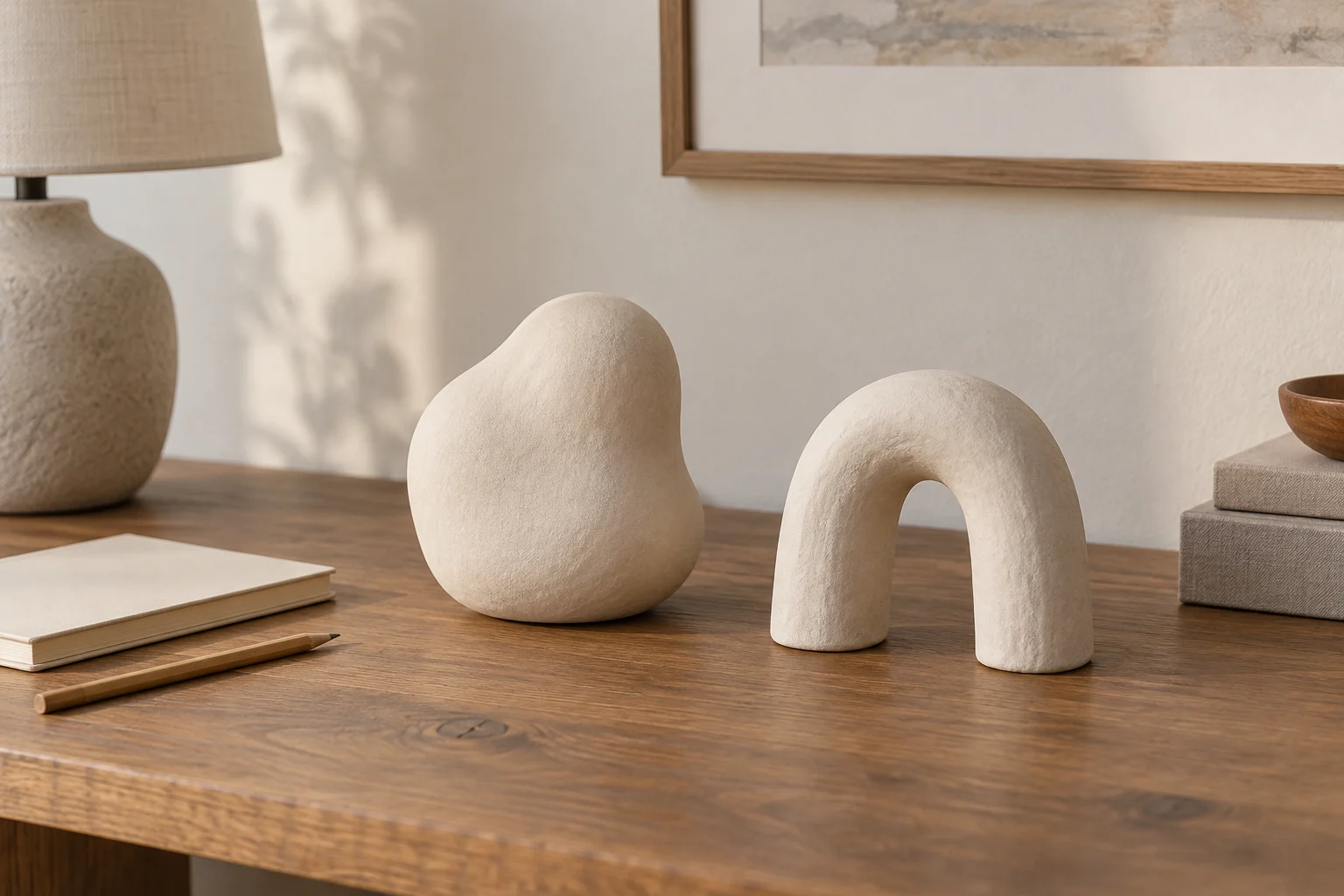
Crayola Air-Dry Clay can interest you for the shape of a project before you have settled what the object must do. A small vase is one example: its outline may be appealing, while its intended job requires water inside. Resolve that use before buying material or choosing decoration.
Crayola's official FAQs say that sealing its Air-Dry Clay or Model Magic will not make either waterproof. Both recommend indoor display because water and outdoor exposure negatively affect the material. This is guidance for those Crayola families. The worked design decision below uses that limit to change a proposed gift, without claiming that a treatment makes it suitable for its original job.
Sealed clay water resistance changes the first plan
Imagine an adult named Mara planning a gift for her friend Jo's new home office. Mara's first drawing shows a squat vase with an uneven opening and a few fresh flowers. The curves remind her of a riverside walk they enjoyed together. This is an invented project and conversation, not a report of an object made or tested.
The question of sealed clay water resistance matters because Mara's drawing combines two wishes. She likes the rounded form, and she expects the recipient to put fresh flowers in it. The second wish adds a water-holding requirement. After reading the material guidance, she pauses the supply purchase and asks Jo which part of the gift would actually interest her.
Jo says that she does not want another flower vase. She would enjoy a small indoor decorative piece connected to their walk. That answer changes the brief: the project can retain the remembered shapes while dropping the water-holding role. Mara writes “indoor decorative keepsake” beside the drawing and crosses out the proposed fresh flowers. The change is now visible to both people.
A different answer would have led somewhere else. If Jo had specifically wanted a container for fresh flowers, Mara would need a separately documented material and making method for that purpose. The gift idea would remain open while she investigated it. In this example, Jo's preference supplies a real reason to redesign the object; Mara is not silently giving a nonfunctional version of the gift Jo requested.
Develop three different sketches from the same memory
Mara makes three paper sketches with drawing materials she already has. The first keeps the original vase outline but removes the flowers. The second shows a flat hanging plaque with a simple curved line. The third shows two freestanding abstract forms: one rounded mass and one arch.
The first sketch still looks like a flower container. Mara can explain its decorative role, but the opening makes that explanation do extra work. She decides to drop that version. The decision concerns the message the shape would give this recipient. It does not require a new coating experiment or an attempt to preserve the original vase function.
The plaque changes the form more clearly, yet Jo prefers something she can look at on the existing office shelf rather than a new hanging piece. Mara therefore sets that sketch aside too. Nothing has been made or mounted. Comparing the drawings lets them change the display idea while the choices are still easy to revise.
They choose the two-form sketch. The rounded mass recalls the low hill beside the river, while the arch suggests the bridge further along their walk. Those associations belong to the fictional friends and their imagined memory. The sculpture does not need to reproduce a particular landmark accurately or pretend to be a map of the route.
Give the chosen pair a clear visual relationship
In the first drawing of the pair, Mara makes both forms the same height and places them close together. Jo reads them as two similar objects, missing the difference between hill and bridge. Mara redraws the rounded form as the larger visual mass and leaves more open space inside the arch. The new drawing gives each shape a distinct role.
She then compares two arrangements on the page. With the arch in front, its opening becomes the first feature she notices. With the rounded form slightly forward, the broad outline leads into the smaller opening beside it. Jo prefers the second composition.
The space between the forms also becomes part of the idea. Mara draws one version almost touching and another with a visible gap. The gap lets Jo read the shapes separately while still seeing them as a pair. They choose that relationship for the design. It leaves the finished placement adjustable, rather than making a permanent connection part of the concept.
Jo suggests making the rounded outline slightly uneven so it feels less like a perfect ball. Mara changes the drawing and retains the earlier version beside it. They can now point to the preferred curve instead of trying to explain it from memory. A chosen drawing gives the making stage a subject, while the actual material instructions still govern how to work with it.
They also consider whether to put words on the sculpture. Mara first sketches the walk's date beneath the rounded form. Jo prefers the shapes without lettering, so Mara removes that detail and keeps the story for the separate gift note. The result is an abstract pair whose personal meaning can remain with the recipient, while the object itself does not need to spell out the occasion.
Jo expects to see the shelf from her desk as well as from the doorway. Mara draws a second view of the proposed arrangement from the side. In that sketch, one form hides much of the other, so she adjusts the proposed positions on paper and asks which view Jo prefers. They keep both drawings as references. The exercise clarifies the display they are imagining before a finished piece is available to arrange.
Choose supplies around the revised white-clay plan
The Crayola White Air-Dry Clay 2.5-pound bucket describes white material in a resealable container. Its account says it dries without an oven or kiln and can be painted once dry. SKU 1479169937 and UPC 619419920634 identify the captured offer. Those are the product details relevant to Mara's supply enquiry.
For the fictional design, Mara and Jo choose one color for both forms so the outlines carry the idea. White interests them because the gap and arch opening remain visible in their monochrome drawing. This is a preference for the project.
Mara keeps the intended purchase beside the selected drawing, rather than ordering from an old list that still calls for a vase. The material quantity is a shopping detail, with no verified yield for her particular shapes. She will need the applicable making instructions before turning the drawing into a material plan. The article supplies no sculpting, drying, baking or finishing sequence.
Jo imagines the pair beside books with brightly colored spines. Mara adds rough rectangles behind the forms in her drawing. The white outlines look clearer to them against the drawn color than against another white shape they considered. They retain that background in the sketch without choosing a paint or coating. The room context gives their color preference a specific place in the imagined office.
Compare a Model Magic indoor display with the chosen idea
The Crayola CR466469 Model Magic offer gives an eight-ounce size and a pack of twelve. Its description says White, while the actual color field says Multicolor. SKU 1922742808 and UPC 758218655085 distinguish this offer. Ask what the selected package supplies before assuming a completely white assortment or calculating an aggregate weight.
A Model Magic indoor display could be a separate proposal once that package question is answered. Mara does not need to buy both materials merely because both appeared during her search. For this fictional plan, she keeps the clearly described white-clay offer as the candidate and leaves the Model Magic order undecided.
If a confirmed assortment later gives Jo a color she prefers, that would be a reason to revisit the drawing and supply choice together. It would change the visual plan. It would not restore the fresh-flower-vase requirement they already removed. The project keeps a clear purpose while leaving its color preference open to an informed revision.
Make the recipient's expectations part of the gift
Before making the piece, Mara shows Jo the revised drawing without the original vase sketch beside it. Jo describes two decorative forms for her office shelf. That response tells Mara that they are now discussing the same proposed gift. They have moved from a water container with flowers to a pair of abstract shapes connected to a shared memory.
Mara also drafts a short note for the gift: “These shapes reminded me of our riverside walk: the hill and the bridge.” If the project is completed, she can add the actual material used and retain its applicable care information. Jo can keep the note with the object or elsewhere; it does not have to become part of the sculpture's visible surface. The note should describe what was actually made. A design decision alone is not evidence that a finished object exists.
The note can call it an indoor decorative keepsake and keep the material's water limitation clear. Mara avoids the old word “vase,” which would invite the earlier purpose back into the description. The recipient gets both the personal association and an honest account of the intended role, without having to infer use from the silhouette.
If Jo later decides that she wants fresh flowers on that shelf as well, the friends can discuss a separate suitable container. The decorative pair can remain its own object. There is no need to turn one gift into every item the room might eventually need, or reinterpret the original material decision as proof of a new function.
Keep the new project separate from treatment of an old object
The charcoal-smudging response guide addresses visible changes in an existing work and the need to understand its condition before treatment. Mara's example concerns choosing a new project's purpose. Changing a drawing of a gift does not provide a repair method for an already damaged clay piece or identify an undocumented material.
The Thanksgiving menu-display guide similarly starts with what the finished display should describe. Its actual meal wording can change before the keepsake is finished. Here, the friends settle the gift's intended role before buying supplies. The menu's frame offers and lettering choices remain separate from the clay project.
For Crayola Air-Dry Clay, the useful change in this example is the revised brief: a dry indoor decorative pair instead of a fresh-flower container. Jo's preference, the compared sketches and the selected outline each move that decision forward. The making stage still needs its own applicable instructions, while the gift's purpose is clear before the purchase.