Crypto Commerce
Sfbhwg FTC30RE mini fridge vs OUTGOODS 3.2 Cu Ft Mini Fridges
Compare Sfbhwg FTC30RE mini fridge by freezer allocation, door access, shelf layout, temperature claims, dimensions, defrosting, and room fit.
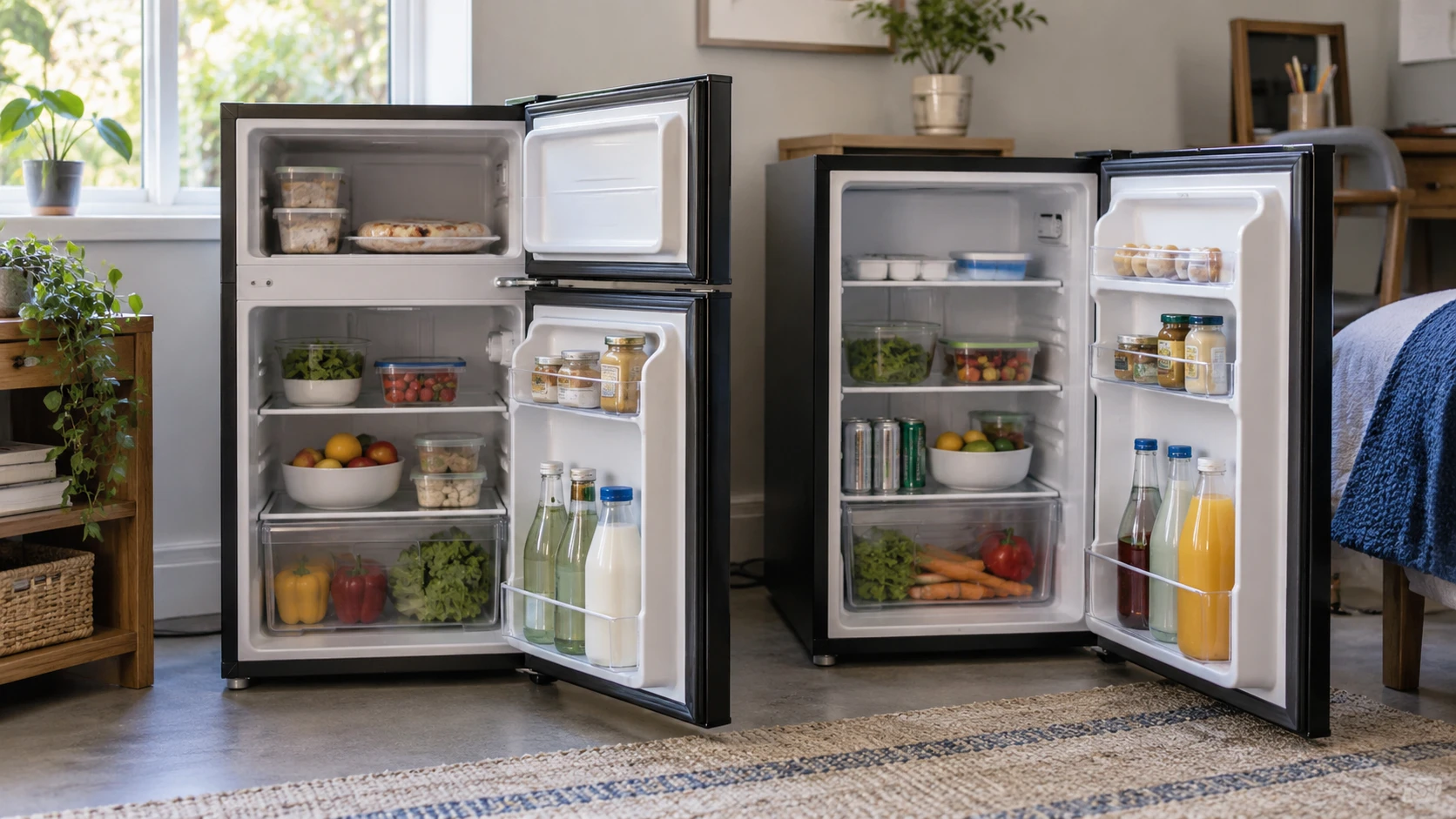
The Sfbhwg FTC30RE mini fridge and OUTGOODS both advertise 3.2 cubic feet. Their interior splits are different. Sfbhwg lists a 1-cubic-foot freezer and 2.2 cubic feet of refrigerator space behind two doors. OUTGOODS lists 0.3 cubic feet of freezer and 2.9 cubic feet of fresh-food space behind one door. Decide first whether frozen meals, ice trays, and frozen ingredients need a dedicated compartment, or whether most of the space should hold drinks and chilled food. The identical total capacity conceals that tradeoff.
The published guide on refrigerator compartment capacity beyond total suggests checking the actual shelf and door arrangement. List the largest container used in a normal week, along with tall bottles and frozen items. The freezer volume does not say how wide a frozen pizza box can lie or whether a bin can be removed. Ask for interior dimensions and a photograph with the shelves fitted. A useful plan assigns every item to a location in the unit rather than assuming cubic feet can be freely exchanged between cold and frozen storage.
The OUTGOODS 3.2 cubic foot mini fridge description gives a 2.9-cubic-foot fresh-food area, a 0.3-cubic-foot upper freezer, two adjustable glass shelves, a vegetable drawer, a can rack, and door storage for drinks and sauces. Sfbhwg gives an adjustable glass shelf and crisper drawer, but fewer dimensions for those pieces. A person who prepares several meals ahead may prefer more refrigerator room; a person who regularly stores frozen food may value the separate one-cubic-foot section. Measure the food itself before treating either layout as sufficient.
Test the freezer allocation — refrigerator compartment capacity beyond total
Sfbhwg's freezer receives nearly a third of the stated total volume. Its separate upper door lets someone reach frozen items without opening the refrigerator below. The pinned excerpt does not give freezer shelf dimensions, storage temperature, or a defrost method. Ask whether a frozen meal, ice tray, or bag of vegetables fits in the space with the door shut. A nominal cubic-foot number includes corners and shelf structure that may not accept a rigid box. Check whether the freezer door can open fully where the appliance will stand.
OUTGOODS gives only 0.3 cubic feet to the upper freezer. The source calls that space suitable for quick freezing. It does not state how long frozen foods should be stored there or how the small compartment is insulated from the refrigerator. Ask for the freezer's own temperature range and the manual's storage guidance before relying on it for frozen groceries. An ice tray may fit where a food container will not. If most purchases are refrigerated rather than frozen, the larger 2.9-cubic-foot fresh-food area may be the more useful use of the same overall cabinet size.
The single OUTGOODS door also changes access. Opening it to retrieve a frozen item exposes the main refrigerator area, while the two Sfbhwg doors separate those actions. The pinned excerpts do not measure how quickly either compartment returns to its setting after repeated openings. If a fridge will sit in an office where many people take drinks throughout the day, check the temperature in several positions with a separate thermometer. If it will be opened only for breakfast and dinner, shelf organization may matter more than door count.
Read temperature settings with care — OUTGOODS 3.2 cubic foot mini fridge
Sfbhwg lists seven settings and a refrigerator range from 33.8 to 46.4 degrees Fahrenheit. It describes an R600a compressor. Those numbers do not tell which dial position holds a specific bottle of milk at a safe temperature in a particular room. Use an independent thermometer after the unit has stabilized, and adjust according to the manual and the food's storage instructions. Ask whether the freezer has its own control or follows the refrigerator setting. The pinned description does not resolve that point.
OUTGOODS also lists seven temperature settings, with a stated range of 21 to 46.4 degrees Fahrenheit. The excerpt does not clearly assign that range to the fresh-food area, freezer, or a measured operating condition. It recommends level four for home or office use, but a recommended number is only a starting point. Ask for a control diagram and place separate thermometers in the refrigerator and freezer. If the fresh-food compartment can reach 21 degrees, a low setting could freeze food that should remain refrigerated; the manual must clarify which temperature is being described.
Do not compare the bottom ends of the two advertised ranges as though they were results from the same compartment test. The Sfbhwg number starts at 33.8 degrees; the OUTGOODS number starts at 21 degrees, but its location is uncertain. The room's ambient temperature, load, and door-opening pattern can change actual contents temperature. Verify both compartments during ordinary use and follow food-safety guidance for the items stored. A mini fridge in a warm room or a tight cabinet needs its required ventilation clearance, which neither pinned excerpt spells out.
Fit the doors and shelves into the room — OUTGOODS 3.2 cubic foot mini fridge
Sfbhwg measures 17.8 inches wide, 20.5 inches deep, and 33.5 inches high according to its listing. OUTGOODS gives 17.52 by 19.29 by 32.72 inches without labeling the order in the pinned excerpt. Confirm width, depth, and height for that exact model. Add space for the power cord, ventilation, and opening doors before choosing a corner. A cabinet that accepts the outside body may block a crisper drawer or adjustable shelf from sliding out. Check the delivery path and measure any closet door if the unit will be stored out of sight.
Both listings describe reversible doors and adjustable feet. Sfbhwg's two doors may each need a hinge change; ask whether the manual permits reversing both and whether any parts are required. OUTGOODS has one reversible door, which could help it open away from a wall. Draw the planned hinge side on a room sketch. A door that can open only halfway may prevent a wide container from being lifted off the shelf. Level the appliance by its manual so doors close as intended and the compressor does not sit on an unstable floor.
Sfbhwg lists one adjustable glass shelf and a crisper drawer. OUTGOODS lists two tempered-glass shelves, a vegetable drawer, a can rack, and door shelves. A glass shelf may be easy to wipe but can be awkward to remove in a narrow alcove. Ask for weight limits and the space between shelf positions. Try a tall carton and the widest leftovers container in a display unit if possible. More shelves can help sort short items, while fewer shelves can leave room for one large vessel. The right layout depends on what goes in weekly.
Consider noise, power, and defrosting — OUTGOODS 3.2 cubic foot mini fridge
Sfbhwg's page claims operation below 37 decibels and daily energy use of 0.69 kilowatt-hours, with an estimated cost of eight cents. OUTGOODS states 38 decibels and 0.73 per day, but gives no unit for the latter number in its saved description. These are figures in Republeq's catalog without matching test conditions, so they do not establish a meaningful noise or utility-cost winner. If the fridge will stand beside a bed or desk, listen to an operating unit if possible. Ask for comparable energy-label information tied to each exact model and local electricity rates.
OUTGOODS mentions a switch that starts defrosting. Read the manual to learn what it does and where the resulting water goes before the freezer contains food. Sfbhwg's excerpt does not give a defrost procedure. A small freezer can become harder to use when frost reduces its already limited clearance. Ask how to protect food during maintenance, where to collect water, and how to clean the interior without damaging the surfaces. Never use a sharp tool on frozen components unless the manufacturer specifically allows it.
Sfbhwg's URL calls the appliance Frestec, while the pinned product row names Sfbhwg FTC30RE. OUTGOODS lists its model as None, although it has a SKU and UPC. Those identity gaps should be resolved before ordering replacement shelves or seeking service. Check each Republeq catalog entry for a photograph of the rating plate and the manual's model identifier. Match that information to the actual unit on delivery. Neither pinned excerpt gives a warranty term, cord length, or full installation clearance, so those documents are needed to plan its long-term placement.
Choose around the weekly inventory — OUTGOODS 3.2 cubic foot mini fridge
Sfbhwg FTC30RE is the listing to inspect if a separate one-cubic-foot freezer is a priority and the two-door layout fits the room. OUTGOODS is the listing to inspect if most items belong in the larger 2.9-cubic-foot fresh-food compartment and a small upper freezer is enough. Their total 3.2-cubic-foot labels do not settle those needs. Confirm the exact model identities, interior dimensions, door swing, and compartment temperatures before relying on either for perishables.
Draw a one-week inventory on paper, assigning each bottle, container, and frozen package to a measured shelf or compartment. Leave space to see and reach the back row. After installation, use thermometers to confirm conditions with the fridge stocked as it will be used. That trial can reveal whether a shelf needs moving or a temperature setting needs adjustment. A mini fridge succeeds when its actual compartment split and controls support the routine without forcing the user to rearrange every meal.