Crypto Commerce
Roomba 2020 DustCompactor Combo vs 105 Vac: where should the dirt go?
Compare Roomba 2020 DustCompactor Combo: on-board dust compaction and a self-empty dock, plus mopping, LiDAR controls, maintenance, and floor-plan fit.
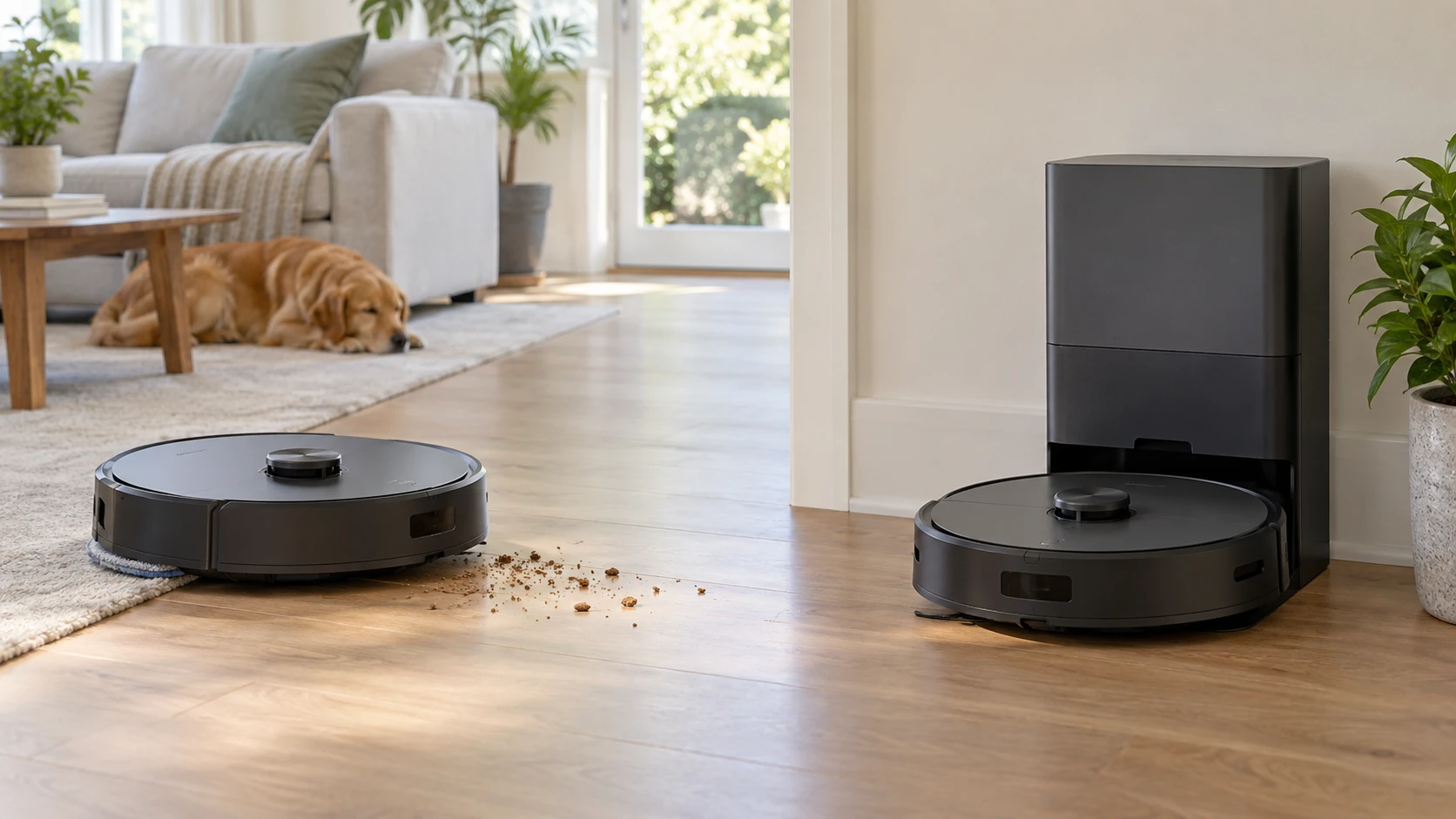
The Roomba 2020 DustCompactor Combo combines vacuuming and mopping with a mechanism that compresses debris inside the robot. This guide to robot vacuum mapping provides a related way to test room targeting before relying on an automated schedule. The Roomba 105 Vac with AutoEmpty dock is listed as a vacuum that transfers dirt into a bag in its base. The guide covers a separate decision; the model-specific claims here come from the two exact listings.
These robots promise less frequent manual emptying through different arrangements. The 2020 Combo compacts debris on board and is described as needing no separate emptying station. The 105 Vac sends debris to an AutoEmpty dock, where a bag holds it until replacement. The first arrangement saves floor space around a base; the second moves dirt out of the robot after runs. Their 60- and 75-day claims are estimates in Republeq's catalog without a specified household dirt load. Neither number is a service interval that every home can expect.
Choose the cleaning job before comparing the bins — Roomba 105 Vac with AutoEmpty dock
The 2020 DustCompactor entry lists vacuum-only, mop-only, and combined vacuum-and-mop modes. It describes a multi-surface rubber brush, an edge-sweeping brush, and a microfiber mop pad. Its mopping system includes a small pump that controls water flow to the pad. The Republeq's catalog also names a SmartScrub setting and claims stronger scrubbing than its standard mop mode under a stated coffee test. That is not a measured comparison with the 105 Vac, which does not have a mopping function in its product description.
The 105 Vac is presented as a vacuum with a multi-surface brush, edge-sweeping brush, spot cleaning, and AutoEmpty dock. Its title includes the phrase “avoids mopping carpets,” although the model is named Vac and the body contains no mop system or water tank. Treat the title phrase as a catalog inconsistency. Confirm with Republeq the exact model and box contents if there is any doubt; do not expect a mop pad or carpet-avoidance behavior for mopping from the 105 Vac listing.
If hard-floor mopping is part of your weekly routine, the 2020 Combo offers a listed function the 105 Vac does not. It still needs water or a compatible solution, a clean pad, and an appropriate floor surface. If your floors are mostly carpet or you already mop separately, a vacuum-only robot may be simpler to maintain. No product excerpt establishes how well either model removes a particular stain, pet hair from a specific rug, or grit along your own baseboards. Match the feature to the floor task, then look for a meaningful test.
Both Republeq product records claim “70X more power-lifting suction” relative to a Roomba 600-series comparison. That shared baseline does not make one of these two robots 70 times stronger than the other, nor does it show that their actual floor pickup is equal. The 2020 description calls its process four-stage; the 105 calls its process three-stage. The stage labels name components of a cleaning path rather than a common performance score. Evaluate results on the surfaces you own instead of ranking a stage count or marketing multiplier.
Decide whether the home has room for a dock — Roomba 105 Vac with AutoEmpty dock
The 2020 Republeq's product description describes its onboard compacting mechanism as a way to avoid a separate debris station. A basic charging location is still needed, and the saved excerpt does not give the charger dimensions or wall clearance. The absence of an emptying tower may help in a narrow hallway or small apartment, but the robot itself needs a clear route back to its charger. Check the current manual for how compressed dirt is removed and how often its internal compartment should be inspected.
The 105 Vac has an AutoEmpty base with a bag. The listing says the bag traps 99% of allergens as small as 0.7 microns, a claim in Republeq's catalog that depends on the exact bag and test conditions. It also says a used bag can be dropped into the trash and replaced. That reduces contact with loose dust during routine emptying, but it introduces a consumable. Ask for current bag price and availability. The dock also needs floor area, outlet access, and enough clear space for the robot to approach and discharge its contents; those dimensions are absent from the saved text.
The 2020's “up to 60 days” and the 105's “up to 75 days” describe different debris pathways. A home with pets, shedding rugs, or frequent kitchen crumbs may fill either system sooner. A lightly used room may go longer. The claims do not describe the size of a household, number of runs, or how the Republeq's catalog entries measured the limit. Plan to check the bin or bag regularly at first. Set a replacement or emptying routine from actual use rather than waiting for a calendar date inferred from the headline.
The 105 Vac's base is part of its value if someone wants to handle sealed bags rather than a robot bin. The 2020's compacting is useful if a dock will not fit where the robot charges. Neither listing settles the noise or dust released during the emptying action. If that detail matters for a bedroom or home office, look for a test of the exact configuration under normal use.
Map rooms before trusting a schedule — guide to robot vacuum mapping
Both product descriptions name ClearView LiDAR mapping, neat-row cleaning, room targeting, and keep-out zones through the Roomba Home app. The 2020 text says it can avoid obstacles and navigate in the dark. The 105 text makes a similar claim and lists up to 180 minutes of cleaning time. That is a stated upper runtime, not a promise that every suction setting or floor plan will last three hours. The 2020 excerpt does not give a comparable runtime, so it cannot be ranked against the 105 on battery endurance from these entries.
Begin with a map of a normal, lived-in room rather than a perfectly cleared demonstration. Note which chairs or low furniture the robot struggles to pass, then place keep-out zones where needed. The saved descriptions do not specify threshold height, minimum furniture clearance, stair behavior, or how often a map must be updated after moving furniture. Those are model-specific questions for the manual and a first supervised run. A LiDAR label alone does not guarantee that every cable, toy, or rug fringe will be recognized.
The app control on both listings includes schedules and room-level targeting. The 2020 adds settings for vacuum passes, suction level, and mop-solution amount. The 105 lists number of passes and suction level, plus a five-minute spot-cleaning option for a concentrated mess. Its description also says the robot can recharge and resume an unfinished task. The 2020 excerpt does not state whether it has the same resume behavior. Confirm that feature in its current documentation if large-floor coverage depends on it.
The 105 listing is specific about network setup: it uses a 2.4 GHz Wi-Fi network, while a phone may return to 5 GHz after setup. The 2020 excerpt does not give a Wi-Fi band. If the home network separates bands or uses a combined SSID, read the current instructions before assuming setup will be identical. App availability, supported phone versions, and account requirements can change over time. Those details matter if room controls are central to your plan.
Consider the recurring work after each run — Roomba 105 Vac with AutoEmpty dock
The 2020 Combo adds mop maintenance to the usual robot-vacuum work. The pad must be checked and cleaned according to the manual, and the water or compatible solution supply needs attention before a mopping run. Republeq's catalog says the robot detects and avoids carpets while mopping. Verify that behavior with the actual map and rug edges during a supervised test before leaving a valuable rug unattended. The description does not say whether a pad is lifted at a threshold or how the robot handles a rug it has not mapped.
For the 105 Vac, the recurring tasks center on the dock bag, brushes, and filter. The listing's app mentions filter-life checks. It does not specify brush-cleaning intervals, bag count in the box, or filter replacement cost. Ask for those maintenance items before calculating running cost. The onboard compacting system on the 2020 may likewise have a mechanism that needs cleaning, but the saved excerpt does not give service steps. A feature that postpones emptying does not eliminate upkeep.
Both robots can encounter cords, narrow chair legs, or an unexpected pile of debris. The listings use broad language about obstacle avoidance but do not enumerate every object type. A first supervised run can reveal places to tidy, move furniture, or add a keep-out zone. Then test a schedule with the room in its ordinary state. If the robot regularly stops short of a messy area, adjust the environment or schedule rather than assuming an app badge means the floor was cleaned.
Read the saved prices in context — Roomba 105 Vac with AutoEmpty dock
The snapshot minimum price is $374.99 for the 2020 Combo and $561.25 for the 105 Vac with dock. That ordering may be surprising given the extra mopping mode on the lower-priced snapshot item. Current offers, stock, bundles, and accessories can change the comparison, so check the exact model and package before buying. The 105's dock and future bags carry a different cost profile from the 2020's mop pads or cleaning solution. The saved listings do not provide enough prices for a reliable long-term total.
Choose the 2020 Combo for its listed mop modes and onboard dirt compaction if those functions fit your floors and charging space. Choose the 105 Vac's dock approach if vacuuming is the job and a bagged emptying station has a good place to stand. Confirm the 105 title's stray mopping phrase, check current maintenance parts and app requirements, and test the first room map with a supervised run. Those checks are more useful than comparing the 60- and 75-day estimates as if they measured the same household.