Cleaning & Vacuums
rodent droppings cleanup: put the broom aside
Recognize when suspected rodent waste changes an ordinary floor task, then use the applicable public health cleanup route and its limits.
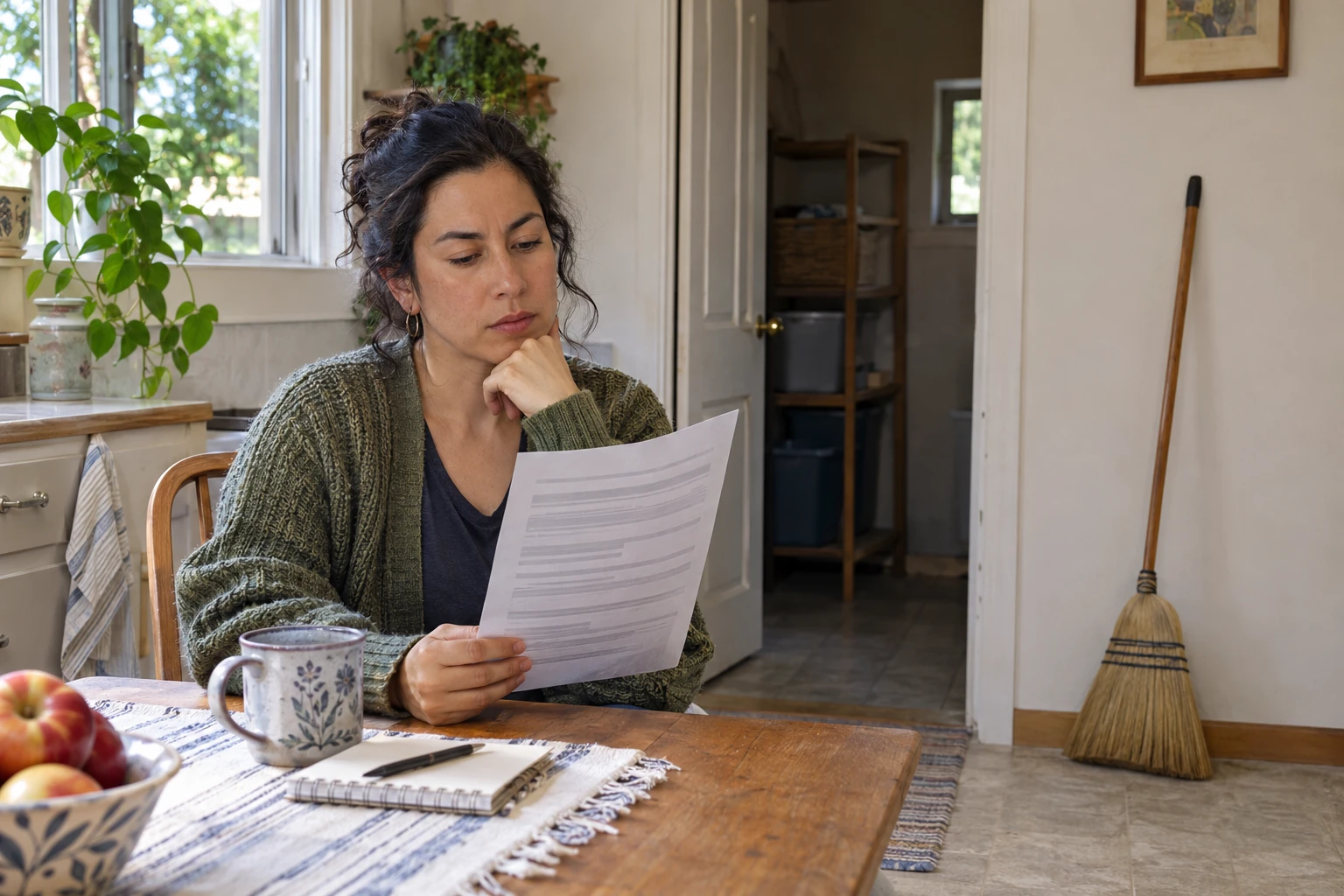
For rodent droppings cleanup, put the broom aside and consult the applicable public health instructions. The CDC warns against sweeping or vacuuming rodent urine, droppings and nesting material because disturbing it can put contaminated particles into the air. A different broom head does not answer that cleanup question. The warning is a starting boundary, not a complete method for handling every affected room or material.
Stop dry sweeping before choosing another tool
Health Canada also says to stop dry sweeping or vacuuming dry droppings, explaining that the raised dust can cause illness. Its Canadian guidance includes precautions for cleanup and separate pest-control information. That does not establish which respiratory protection is appropriate for an individual US cleanup. Keep its jurisdiction and the limits of this comparison visible; no protection rating, species identification or chemical recipe is supplied here.
Consider an original fictional household example. Nia has agreed to sweep familiar crumbs beside a kitchen table. Before starting, she notices unfamiliar material behind a stored box and wonders whether it could be rodent waste. Her partner, Len, suggests fetching a smaller broom. Neither has identified the material or obtained advice about the situation. The story pauses the ordinary floor task at that point; it does not report a contaminated home or a completed cleanup.
Nia tells Len exactly what has changed in their imagined conversation: the material is no longer something she is willing to describe as familiar meal crumbs. She does not claim to know its origin. Len can withdraw his suggestion of a smaller head without needing to prove that the first broom was defective. Their next question concerns the applicable guidance for the material, rather than the geometry of a tool.
Read the complete CDC route before attempting cleanup
The CDC household sequence includes rubber or plastic gloves, thoroughly wetting the waste with an appropriate disinfectant, and waiting five minutes or the disinfectant label’s specified time. It then describes wiping with paper towels, disposal, further surface disinfection and washing gloved and bare hands. Its page has separate instructions for different materials and spaces, plus additional precautions for heavy infestations. Read that complete guidance, including the relevant section, before proceeding. Ask the local health department about a specific situation; a retail broom listing supplies none of those answers.
Keep public health guidance attached to the actual pest
Public health guidance cannot be selected by lifting a convenient sentence out of a different pest discussion. EPA’s housing-manager resource describes HEPA vacuuming in an insect-control paragraph, including cockroaches. The next paragraph explicitly says not to sweep or vacuum mouse and rat nests or droppings and directs readers to CDC cleanup guidance. The insect instruction therefore supplies no rodent-cleanup permission. EPA also describes cooperation among residents, managers, maintenance staff and pest professionals. In a managed building, reporting a suspected issue can connect it to that existing arrangement rather than silently turning it into a resident’s ordinary sweeping task.
In the fictional conversation, Len remembers reading that a filtered vacuum can help with some pest problems. Nia asks him to identify which pest the passage addresses before he applies it to her question. He finds that the remembered instruction was about insects. They leave it with that subject. No vacuum is used in the example, and neither person claims that a filter settles the unknown material’s cleanup requirements.
Record a concern without diagnosing an infestation
Cornell’s rodent-management account emphasizes inspection and warns that droppings can be misinterpreted. A sudden large number alone does not prove a full infestation. Its cleanup discussion directs readers to CDC recommendations, while explaining that new droppings after cleanup can indicate continuing activity. Those points distinguish observing a concern from declaring its cause solved. They do not let a photograph, a count or a broom purchase establish the animal species, the presence of a pathogen or the severity of a particular household problem.
Keep the management question visible alongside the cleanup question. Cornell treats sanitation, exclusion and monitoring as parts of an integrated approach, rather than treating the removal of visible waste as proof that rodents have stopped entering. Its account supplies no result for Nia’s fictional room or either retail tool here. A later concern needs its own assessment; it cannot be dismissed merely because a previous floor task was marked finished.
Nia drafts a short fictional message for the person responsible for her building. She describes the location and says why she stopped the ordinary task. She leaves out a guessed species and does not write that the room has been disinfected. Len reads the message and can tell which action has actually occurred: a request for guidance. The message makes no claim about work that has not happened.
Keep a local protocol local
San Diego County’s rodent page repeats the warning against sweeping or vacuuming droppings, urine and nests. Its wet-cleaning section gives a fifteen-to-twenty-minute waiting interval, whereas the CDC sequence above says five minutes or the disinfectant label’s instructions. Do not average those accounts or substitute one fragment into another procedure. Consult the applicable authority and product label when determining which instructions govern the actual situation.
The county also describes an educational inspection service for its residents, with explicit limits: it is not a pest-control company and does not trap, bait or remove rodents during that service. That is a local program, not a nationwide cleanup service or a promise of remediation. Ask what assistance is actually available where you live, and what it includes, rather than assuming an inspection and a completed cleanup are the same deliverable.
Treat both broom listings as ordinary retail tools
The Angle Broom offer is titled a six-pack. Its description identifies a PVC split-tip angle broom, and its three gallery images show blue, yellow and red versions corresponding to the listed color choices. A single pictured broom does not verify the delivered pack count. The Genuine Joe Solutions offer identifies the yellow GJO09570 angle broom. Its own description combines one-each wording with a ten-each bundle, and the selected variant states ten. Its single image shows the head and part of a handle. Neither gallery establishes a supplied dustpan, protective equipment or disinfectant.
Neither offer establishes pathogen containment or suitability for handling rodent waste. A fine-sweeping claim is not public health approval. These products provide retail context for the ordinary tool being set aside, not a shopping solution to contamination.
Use the other guides for their own questions
The mouse-trap troubleshooting guide concerns maker-specific controls, bait and wall placement. It is not a rodent-waste cleanup protocol. The after-meal sweeping routine concerns agreed household work with familiar dry crumbs and explicitly excludes unidentified material. Neither answers whether the suspected deposit in this example can be treated as ordinary floor debris.
Len asks whether buying a new broom would at least move their plan forward. Nia leaves that purchase undecided. Within the story, no one has established a need for another ordinary sweeping tool. A new order would create a separate shopping decision while leaving their original question open. They can wait for the relevant answer without filling that pause with an unrelated purchase.
They also reconsider their shared reminder for the kitchen task. Nia does not cross the whole job off as completed. Len does not take the unfinished reminder as an instruction to sweep the unfamiliar material later. They agree to discuss what remains after they receive appropriate guidance. This invented exchange illustrates a communication choice, not a substitute cleanup procedure or a finding that the area is safe.
Suppose the reply asks Nia to contact another responsible person. She can pass along the original question and the reply without adding a claimed inspection result. Len can help keep the correspondence understandable. Their fictional record distinguishes an observation, a request, an answer and an action actually completed. None of those stages becomes another merely because the household would like the issue resolved quickly.
The example ends before anyone identifies or handles the material. That leaves a real decision visible: ordinary sweeping has stopped, and the household is seeking the relevant route for its concern. A tidy ending would require evidence the story has not supplied. Nia and Len can communicate that unfinished state plainly without reporting a successful cleanup, an eradicated pest problem or a tested product.
Before sending the message, Nia asks Len whether its subject line describes an unfinished concern or announces a solution. He has written that the kitchen issue is handled because someone has agreed to reply. They change that wording. A promised response is useful to their conversation, but the example has not established what the response will say. Nia wants the next person reading it to understand that the ordinary task is still paused.
Len keeps a separate note about the shopping suggestion he made. He does not forward it as the answer to the cleanup enquiry. If they later return to choosing household equipment, they can explain what prompted the idea without representing it as a recommendation from a health authority. The distinction prevents their own tentative suggestion from acquiring authority merely by being repeated in another message. No product has been bought, inspected on delivery or used in this invented exchange.
Keep a later retail purchase separate from cleanup
If you later decide that an ordinary broom purchase is needed through republeq.com, identify the exact tool and pack before choosing a payment method. Someone considering crypto, including USDT, still needs to review the current checkout for that basket. A reference to cryptocurrency does not establish that a particular asset or network is available for the order. Read the offered methods and the instructions attached to the one you intend to use. Check the amount, any displayed fees, receiving details and applicable time limit. This paragraph supplies no wallet address, network choice or transfer sequence. Ask the transaction’s support route if a necessary payment instruction remains unclear. Keep any seller clarification about the supplied tools with the exact product reference. If the basket changes, review its contents and payment instructions again before proceeding. Read the cancellation and refund terms for the method selected, and retain the terms you accept. After an authorized purchase, keep the order confirmation and payment reference together. If a payment status is uncertain, reconcile the actual transaction before considering another payment. These records concern a retail purchase only. They do not show that a broom is appropriate for rodent waste, that a room has been disinfected or that a pest problem has been resolved. A later ordinary cleaning purchase can remain pending while the separate public health question is answered. Do not use checkout completion as a reason to restart an unresolved cleanup task. If the delivered item or quantity differs from the order, raise that retail discrepancy with the corresponding transaction details. The product enquiry, payment record and cleanup advice each retain their own purpose; none is proof of a result supplied by another.
Conceptual cleanup planning; no contaminated material is touched and no completed sanitation result is shown.