Headphones & Earbuds
Revisit a music album you once set aside
Return to an album you once set aside with one question about your current response, without requiring a new opinion or a complete listen.
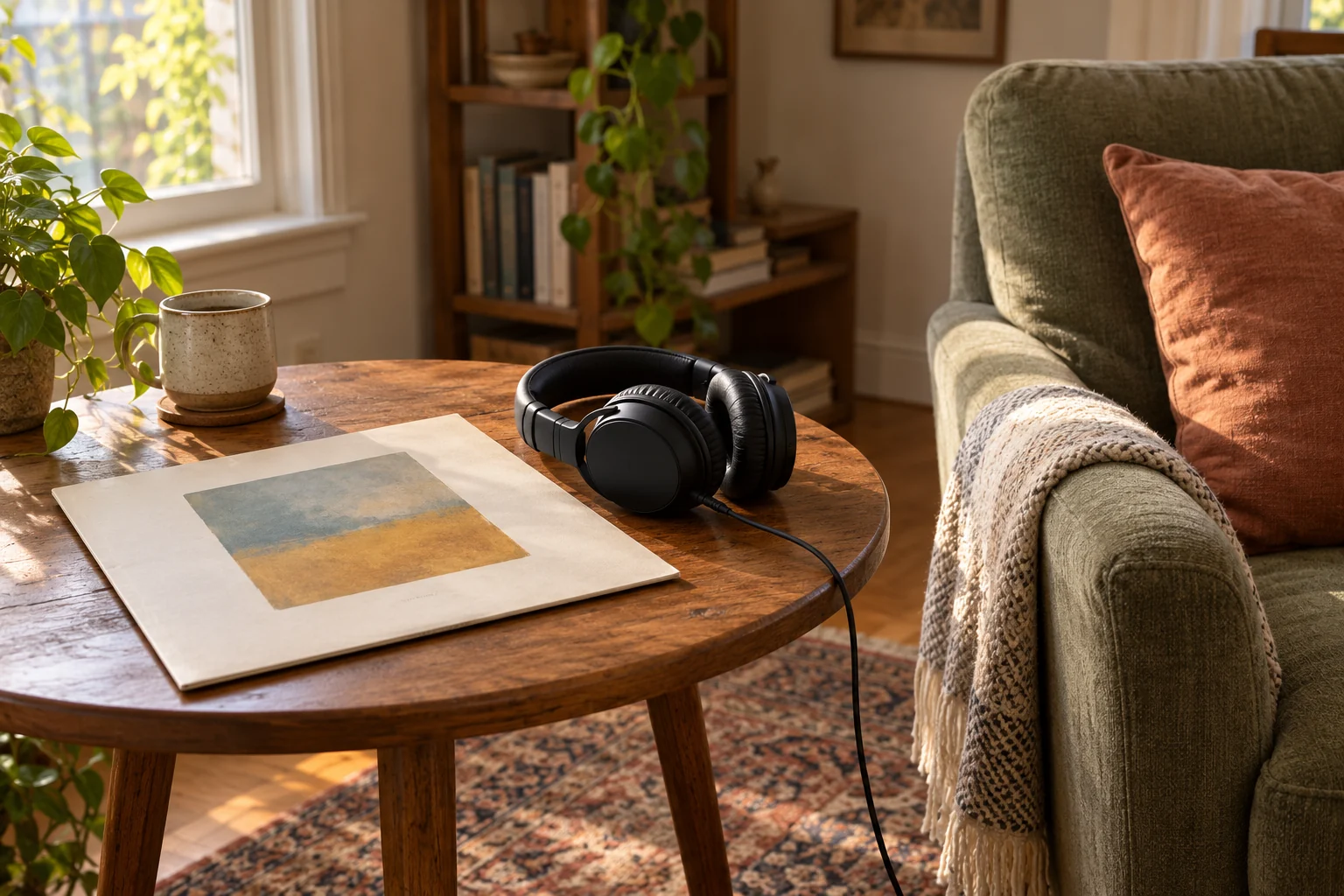
Return with a question you actually have
Revisit a music album because something about it still interests you, even if your first response was to put it aside. Perhaps a friend mentions a track, a cover catches your eye again or you remember liking one moment while wanting to leave the rest. Choose that particular reason for returning. You do not need to begin by promising the album a better verdict.
Use music you already have access to through an existing, ready listening arrangement. This is a private activity about your present response. It offers no equipment connection, playback or hearing-health procedure. A new pair of headphones is optional; neither a purchase nor a longer session establishes that your opinion has changed.
Try phrasing the question in ordinary language. “Does that opening still leave me impatient?” gives you something specific to consider. “Will I finally appreciate this properly?” asks you to reach an approved destination before hearing anything. You can remain curious about a piece of music while allowing yourself to enjoy only part of it.
Remember the earlier reaction without making it a rule
Say what you remember about the first encounter. You might recall that the songs seemed too alike, that an opening felt drawn out or that one voice interested you while the rest did not. Keep the account recognizably yours. A remembered response does not establish the artist’s intention or another listener’s experience.
You may remember very little. “I played it once and moved on” can be a sufficient starting point. Avoid filling the gap with an elaborate explanation you cannot recover. There is still a possible question: what, if anything, do you want to hear now? If the answer is nothing in particular, you can choose another album or leave the idea for another day.
An earlier note can be useful if you happen to have one. Read what you actually wrote before deciding whether it describes your present interest. There is no need to reconstruct an entire listening history, produce a rating or prove that your taste has developed. The earlier response gives the return a starting place; it does not prescribe what must happen next.
Choose a small extent you are willing to hear
You might begin with the opening, a track you remember or a section that someone’s comment made you curious about. Choose something accessible in the arrangement you already use, following its applicable instructions. This article does not supply track-navigation controls or ask you to change an unfamiliar setup. An unresolved equipment question can remain a separate task.
Keep the planned extent modest enough that you want to begin. You can choose one track without committing to the whole album. You can also choose a longer stretch when the sequence itself is what interests you. The useful boundary is your actual intention today, not an imagined standard for how a serious listener should behave.
Leave yourself an ordinary stopping point. That might be the end of the chosen track or the point when you no longer want to continue. If another task interrupts, the session can remain unfinished. Returning to an album does not create a debt that you must repay by completing every track in one sitting.
Notice something you can describe in your own words
During the chosen listen, attend to whatever genuinely catches you. You may notice an entrance that feels abrupt, a sound you want to hear again or a stretch that still fails to hold your interest. Describe your response as plainly as you can. A word such as “restless” may be more faithful to your experience than a technical term you would not normally use.
You need not identify every sound to say that a moment caught your attention. If you want to know a performer’s role or a recording detail, that becomes a separate factual question needing its own appropriate source. Keep uncertainty in the description. “The sound near the end” can identify your point of interest without inventing an instrument or a production explanation.
Let the music remain the activity. A note is optional and can wait until the passage ends. If writing continually makes the session feel like work, leave the page alone. You may finish with one remembered moment, a wish to hear a particular part again or the same lack of interest you brought to the album.
A fictional return can have an uneven outcome
Imagine Rowan returning to an invented album called “Evening Windows.” The album, its music and Rowan’s account below are fictional. Rowan remembers abandoning it because the opening felt slow. A recent conversation has made them curious about the ending of the first track, so that is the part they choose to hear in an already ready arrangement.
This time, Rowan still finds the opening longer than they want. Near the track’s end, however, a repeated sound catches their attention. They cannot name its source and do not need to identify it to enjoy that particular moment. Their current response contains both observations. Finding one interesting passage does not require rewriting the earlier impatience as a mistake.
Rowan decides to hear the next track because they are curious whether that interest will continue. It does not. They stop there and keep a short personal reminder: return to the ending of the first track if they feel like it. The reminder is a possible future choice, without a claim about the quality of the whole invented album.
On another day, Rowan could finish the same first track and decide they want no further listening. That would also answer the question they brought. They heard the part that interested them and found their present response unchanged. The exercise would not become unsuccessful merely because it produced no new favorite.
The fictional example leaves room for an uneven response. You can like one passage, remain unconvinced by another and stop before reaching an overall judgment. These are choices for your own listening. They supply no prediction about a real album, no account of how another person should respond and no promise that repetition will improve enjoyment.
Keep equipment descriptions at their own scope
The Panasonic RPHT225 wired-headphone offer describes black over-ear headphones with a 6.5-foot cord, a 3.5-millimetre connection and an in-line volume dial. Its gallery shows a black Panasonic-marked headphone assembly, ear cushions and cable sections. The native description’s bass, treble, lightweight and extended-wear wording supplies no independent acoustic result or comfort assessment for you. Its catalog audience label does not establish a restriction on who may consider the offer.
The Philips SHP9600 wired-headphone offer describes an over-ear, open-back design, 50-millimetre drivers and a detachable audio-jack arrangement. The gallery shows the headphone assembly, grille, cushions and an attached cable section. Its headband, airflow, fit and frequency descriptions are offer claims, without an independent measurement or an observed result from your listening arrangement. This article supplies no cable-replacement procedure or confirmed connection to your source.
Neither captured gallery establishes a separate case or adapter as supplied stock. Earcups, cushions, headband and the depicted cable belong to the headphone assembly. The descriptions do not establish which pair you would find comfortable, which would work with an unexamined source or whether either would make you enjoy a previously disliked album.
If your existing arrangement already serves the activity, start there. If you have a genuine equipment need, describe it separately and obtain the applicable product and connection information. You can choose a possible album to revisit while leaving a purchase undecided. The listening question and the equipment question can each receive an answer in their own time.
Decide what you want to hear next
After the chosen passage, ask whether you want more of this album now. You might continue in sequence, return to the moment that interested you through your established playback arrangement or finish. Choose the action you actually want, rather than the one that would make the session sound more impressive when described later.
A changed response can be quite small. Perhaps the opening still feels slow but no longer makes you stop immediately. Perhaps one voice now interests you while other passages remain unappealing. Say exactly that if you choose to describe it. A modest change need not become a declaration that the album has transformed your taste.
An unchanged response also deserves an accurate description. “I was curious, I listened and it still did not interest me” is complete enough. You can admire a friend’s enthusiasm without borrowing it as your own. Their reason for enjoying the album may have prompted your return while leaving you free to hear it differently.
Keep other music projects available without adding them today
The album-side listening-evening guide invites friends to choose record sides, introduce them and make room for different responses. That is a shared visit with its own ready playback arrangement. This private return does not need a host, a queue of selections or an explanation offered to other listeners.
The personal vinyl collection-catalog guide uses an album’s printed identity, artwork, credits and location to make a useful notebook entry. Listening is optional in that project. Here, your present response can remain the whole activity; it need not produce an inventory entry or a researched account of the recording.
You may later want to invite someone to hear the passage that caught you. Ask whether that would interest them and leave their response open. They can notice something different or prefer another choice. A private return can suggest a conversation without making that conversation a required final step.
If you keep a personal reminder, use wording that will help you recognize your own interest later. The album reference and a brief description of the moment may be enough. You do not need to score each track or preserve every reaction. A reminder can remain provisional when you would rather decide afresh on another day.
If you tell the friend who suggested the return, report the part you actually heard and the response you had. You can thank them for the suggestion while saying that only one moment caught you. That gives them a real conversation to answer. You need not turn the exchange into a debate about which person understood the album correctly.
Leave a future return optional
Put the decision back at the scale where it began: one album and a particular curiosity. You may now have a passage you want to hear again. You may prefer to leave the album aside. Either outcome can fit an honest attempt to find out what you want from it today.
Another return is available if a new reason appears. It might come from a conversation, a remembered sound or simply wanting to hear the same part again. There is no need to schedule repeated sessions to prove persistence. Let a later invitation arise from actual interest, with room for the possibility that it never does.
Keep any optional order separate from the listening result
If this private listening idea prompts an equipment purchase on republeq.com, keep the proposed order separate from the response you hope to have to the music. A preference for cryptocurrency cannot establish headphone comfort, source compatibility or renewed interest in an album. Someone who prefers USDT needs to check whether the actual checkout for the selected order offers a usable payment route. Read the current instructions supplied by the responsible service and clarify any essential detail that remains missing or contradictory. This paragraph supplies no wallet address, network selection, transfer amount or assurance that a particular payment option will be available. Keep the final headphone reference and stated contents attached to the proposed transaction, especially if another person is helping you choose or pay. An answer about an earlier candidate does not automatically describe a replacement offer. Review the actual delivery information and applicable return conditions before relying on an arrival date or a possible remedy. A planned listening afternoon does not establish a delivery commitment. If you proceed, retain the order acknowledgment and the payment record produced by the chosen route so a later question can identify the same transaction. Distinguish a pending step from a completed one. If an order or payment status remains uncertain, obtain the responsible service’s reconciliation before considering another payment; an unchanged page does not establish failure. You can leave the order undecided while an equipment question is answered, or decide that the arrangement you already use is sufficient. A completed purchase concerns that transaction. It supplies no evidence that your earlier response to the album was wrong or that a later listen will feel different.