Crypto Commerce
Resenkos 22lb twin-tub washer vs Canddidliike for wash and spin loads
Compare Resenkos 22lb twin-tub washer by separate wash and spin capacity, timers, drain pumps, water handling, footprint, and cleanup.
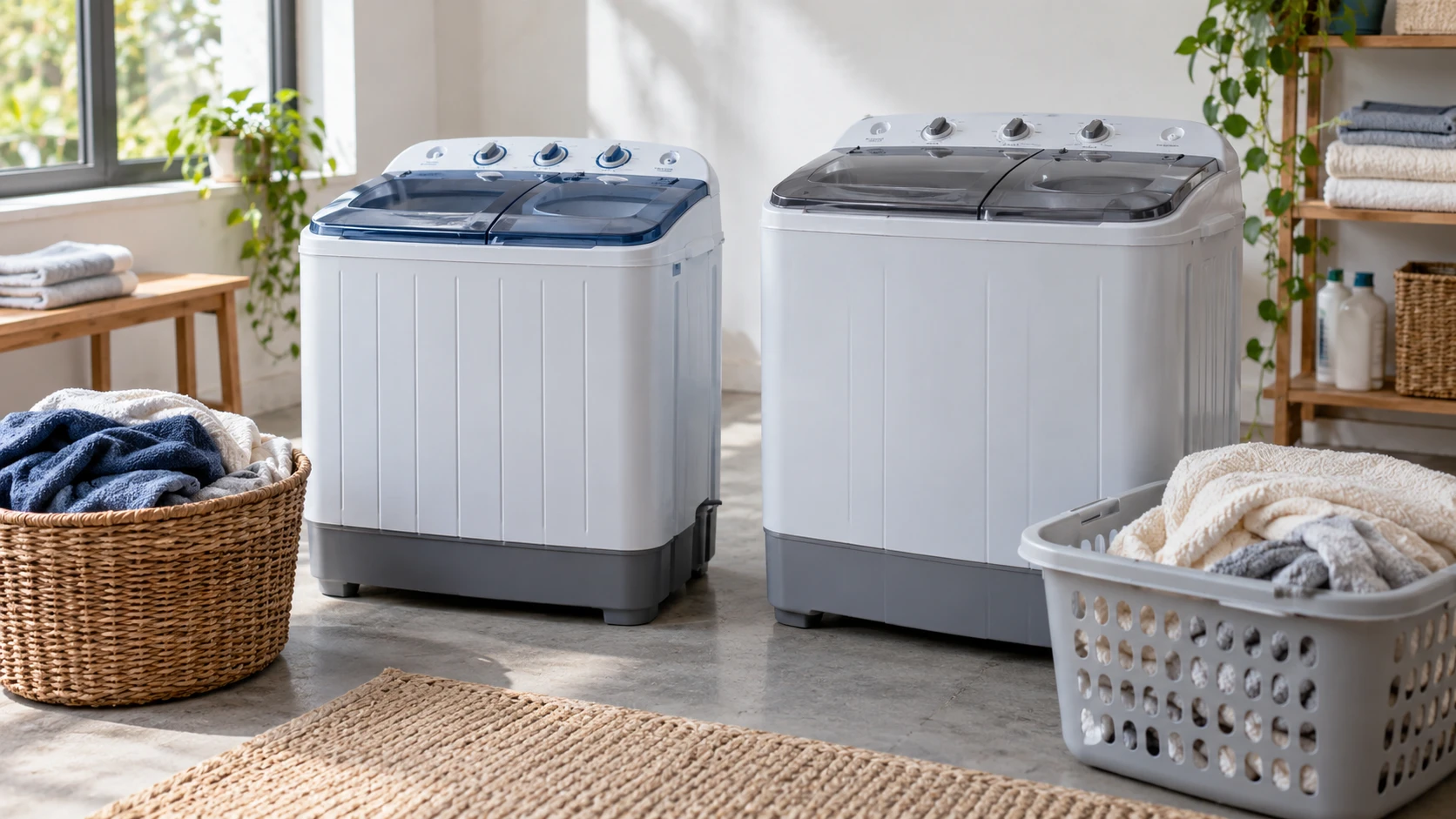
The Resenkos 22lb twin-tub washer separates its advertised total into 13.2 pounds for washing and 8.8 pounds for spinning. Canddidliike advertises a 26-pound semi-automatic twin-tub washer, but its saved description does not divide that figure between tubs. Compare the amount that fits in each step, not only the larger number on the title. If a washed load exceeds the spin tub, it will need to be transferred in batches. A single load of towels can reveal more about the routine than the combined capacity claim.
The published guide on washing machine pause checks is relevant when a washer uses manual timers and separate steps. A twin-tub machine asks someone to add water, select a wash time, drain, move clothing to the spin side, and handle the next load. Learn what happens when a cycle is paused or a lid is opened before relying on it in a busy household. The product excerpts do not give a complete safety sequence for either model. Read the manuals and test the controls with a small load before putting delicate or bulky clothing in the tubs.
The Canddidliike 26lb portable washer lists 280 watts for washing, 140 watts for spinning, three control switches, and a built-in drain pump. Resenkos lists separate wash and spin timers, a 54-inch drain hose, and soft, standard, and drain modes, but no comparable motor wattages in the pinned excerpt. A bigger power number cannot establish cleaner laundry without a matched load and cycle test. The main question is whether the machine can complete the garments you wash most often and empty into the drain available in your room.
Translate total capacity into two tubs — Canddidliike 26lb portable washer
Resenkos's 22-pound headline adds 13.2 pounds of wash capacity to 8.8 pounds of spin capacity. That does not mean 22 pounds of clothing can wash in one tub. Ask whether those ratings describe dry clothing and whether a bulky blanket is permitted even when its scale weight is below the limit. A full wash tub could produce more wet laundry than the spin tub can take at once. Plan for two spin batches after one heavy wash, including somewhere clean to hold the second batch while the first spins.
Canddidliike's 26-pound title could describe combined capacity or another method, because its saved body names a twin-tub design without stating a wash/spin split. Request the rated capacity of each tub and the recommended maximum for towels or bedding. Do not treat 26 as the weight that can go into either side. The two machines may be closer in actual wash load than their headlines suggest. A Republeq's catalog photograph with a known-size towel in each tub and an exact manual table would help resolve the comparison.
Both listings say washing and spinning can happen at the same time. That means two different batches can occupy the two tubs, provided the manual allows the chosen controls together. It does not remove the transfer step for a single batch. Start with a small set of clothes, wash it, drain as directed, move it to the spin tub, and note how much water remains when the spin stops. A spin tub reduces moisture before line drying; neither description says it makes clothes dry enough to store immediately.
The amount of water and detergent also matters to usable capacity. The pinned excerpts do not state minimum or maximum water-fill lines, rinse procedures, or recommended detergent dose. Those instructions can differ between a small mixed load and a full towel load. Follow the exact manual rather than measuring detergent from a full-size automatic washer routine. If the household needs frequent short washes, test a small load to see whether enough water circulates without overfilling the tub.
Control wash and spin time separately — washing machine pause checks
Resenkos states a wash timer up to 15 minutes and a spin timer up to five minutes. It names soft, standard, and drain modes. The listing does not map those labels to water movement, fabric types, or a full rinse sequence. Ask for a control-panel photo and the manual's example for a normal load. Set a short cycle first and inspect the result. A timer maximum is an available setting, not a recommendation to run every garment for the full period.
Canddidliike says three switches control wash time, washing mode, and dehydration time. Its pinned description does not give maximum minutes or name the wash modes. The word "dehydration" describes the spin step in this context, but the source does not say how dry a load becomes afterward. Compare the required attention: can you change a wash setting while the spin side operates, and do you need to pause before opening a lid? Ask those questions of both Republeq product records and use the manual's safety instructions during any test.
Resenkos calls its motor powerful and low noise without a measured decibel figure. Canddidliike gives wash and spin wattages but no matched noise figure. A compact machine on a hard bathroom floor may sound different from one on a level laundry surface. Listen during both wash and spin with the type of load you intend to use. Check for walking or vibration, especially when the spin load is small or uneven. Do not use an unsupported claim of "quiet" as a substitute for an actual placement trial.
The Resenkos cover is described as transparent, and Canddidliike lists a translucent tub window. These let you watch the process, though neither excerpt says a window can establish water level or safe operation. Keep hands away from moving parts and use the controls as the manual directs. If a shirt wraps around another item, stop the machine by its specified procedure before adjusting the load. A visible problem is useful only if the machine has a safe, understandable pause and restart path.
Make a drain plan before filling — Canddidliike 26lb portable washer
Resenkos lists a built-in pump and a 54-inch drain hose. Canddidliike also lists a built-in pump and a longer drain pipe, but gives no length in the pinned text. Measure the route from the intended washer position to the sink, tub, or other approved drain. Account for bends and the height the hose must reach. A hose that reaches across the floor may still be too short or unsuitable to lift water over a high rim. Ask each maker for its maximum drain height and securement instructions before the first fill.
Resenkos says its filter helps keep debris from blocking the drain outlet. Canddidliike describes a removable filter on the side of the wash barrel. Check how each filter is removed, rinsed, and reinstalled without letting lint enter the pump. A household washing pet bedding or heavily soiled work clothes may clean that filter more often than one washing light garments. The saved sources do not state filter-mesh size or replacement-part availability. Ask whether a spare filter or hose can be bought for the exact model.
The product descriptions make filling sound simple, but neither saved excerpt identifies an included inlet hose, faucet adapter, or automatic fill function. A portable twin-tub setup may require carrying or directing water to the wash side. Confirm that before planning a space away from a sink. Check water supply, drain position, and an appropriate electrical outlet together. Cords and hoses should be routed according to the manual so water cannot reach electrical connections and people do not trip while moving a wet load.
A pump does not make every drain location acceptable. Find out whether your building or campsite allows the chosen discharge and whether the hose can be held in place during a full drain. Test first with a small amount of clean water. Watch for leaks at connections and overflow at the receiving drain. Emptying the machine is part of every load; a quick spin will not save time if the drain must be monitored or repositioned each cycle.
Fit the washer and clean it afterward — Canddidliike 26lb portable washer
Resenkos lists dimensions of 25 by 14.5 by 27.5 inches and a PP shell. Canddidliike says its ABS and PP construction is compact and lightweight but supplies no dimensions or weight in the pinned description. Measure the floor area with room for opening both lids, moving a laundry basket, and accessing the filter. Ask for Canddidliike's exterior size and the footprint needed with its hose and cord attached. A machine can fit inside a closet yet be inconvenient to fill, operate, or drain there.
Both products are described for dorms, apartments, or RVs. That use language does not establish a particular building's plumbing or electrical approval, nor does it show that the washer can be run in a moving vehicle. Confirm the permitted installation, outlet, and storage conditions for your location. If the unit must be moved after each wash, try lifting or rolling the exact dry machine and consider how much water remains in the hoses. The excerpts do not provide a measured transport weight for either model.
Canddidliike's listing says its outer shell can be wiped with a damp cloth and its barrel filter can be removed for cleaning. Resenkos highlights its filter and transparent cover but does not describe a full post-wash cleaning procedure. Ask how to drain residual water, wipe the tubs, and leave lids open or closed during storage. A twin-tub washer that sits unused for days needs to be put away according to the manual. Check whether the pump and hose have a low point that retains water after a drain cycle.
Resenkos gives the clearer per-tub capacity and timer figures, plus an exact hose length. Canddidliike provides electrical power figures and three control categories, but its 26-pound headline lacks the tub split and its drain pipe lacks a dimension. Request those missing numbers before calling it the larger practical washer. Load the garments you actually wash, follow each machine's instructions for filling, washing, rinsing, transferring, spinning, and draining, then count both the work and the floor space the process takes. That routine is the comparison that matters in a small laundry area.