Crypto Commerce
Reolink TrackMix 4G LTE battery camera LTE or PoE for a remote yard
Compare Reolink TrackMix 4G LTE battery camera by coverage, power, alerts, recording, and upkeep.
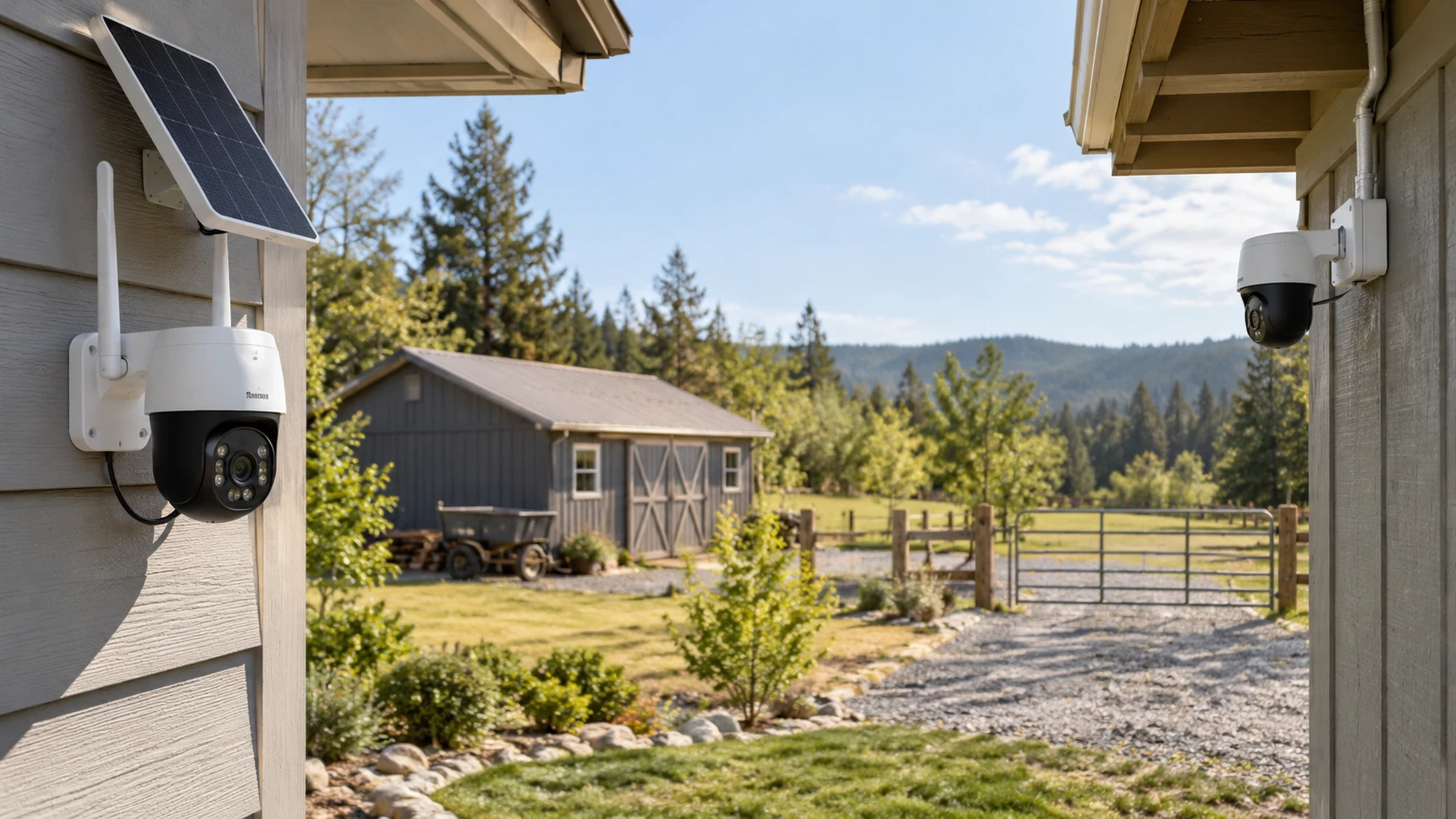
The Reolink TrackMix 4G LTE battery camera is described as an 8MP dual-lens PTZ model that uses mobile data and a battery, with optional solar support. A published guide on PTZ and fixed-camera coverage planning uses other equipment to ask which view must remain visible as a camera turns. The Reolink TrackMix PoE dual-lens camera is a wired 8MP PTZ variant with stated continuous, motion, or scheduled recording options. The shared TrackMix name does not make their power, network, and recording routines the same. Choose a site and a maintenance plan before choosing the connection type.
Draw the yard, outbuilding, gate, and likely approach paths. Mark which view needs to be recorded continuously and which can be inspected after an alert. Measure the distance to the nearest network switch and a safe cable route. Then stand at the proposed camera mount with a phone to check mobile coverage. A 4G signal at the house does not prove the same reception behind a metal shed or under a roof edge. A cable path that looks short on a map may require weatherproofing and careful routing through a finished wall.
Decide which infrastructure can be maintained — Reolink TrackMix PoE dual-lens camera
The LTE listing says the camera can operate without network cabling using 4G LTE and an internal battery. It also mentions optional solar power. Confirm which mobile networks, SIM type, and data plan the exact model accepts, what fees apply, and whether service is reliable at the mount. The saved row does not give those details or a measured data-use figure. A camera that reports alerts and streams video can consume different amounts of data depending on how often it is watched. Ask how the device behaves when the plan is exhausted or the mobile signal disappears.
Battery operation moves maintenance from a cable to a charging schedule. The listing does not give a battery capacity, runtime under normal tracking, charging time, or winter performance. Request current figures from the model manual and test with the activity level at the site. An optional solar panel may help, but its output depends on position, daylight, shade, and weather. Check whether the panel is included or sold separately, where it can be mounted, and how the cable reaches the camera. Do not treat the phrase solar support as a promise of uninterrupted operation through a cloudy week.
The PoE version depends on a compatible powered network port or injector and a protected Ethernet route. The saved row names PoE but does not state its required standard or power budget. Check the exact specification before choosing a switch. Allow enough cable for service and follow the maker's method for sealing outdoor connectors. If the switch is in an outbuilding, plan what happens during a local power cut. A wired link can be stable once installed, but it still depends on the switch, recorder, and upstream network staying available.
A remote site may make both approaches difficult. The LTE camera may avoid trenching but require data and battery upkeep; the PoE camera may involve installation work but can connect to local recording equipment. Estimate a year of maintenance, including travel to the mount, power, mobile fees, and storage. If the camera is high on a pole, every battery or card visit may require a ladder. If a cable crosses open ground, protect it using an installation method appropriate for the site. The saved product rows do not settle those local costs.
Map movement and dual-lens coverage — PTZ and fixed-camera coverage planning
Both TrackMix rows describe dual-lens 8MP viewing and automatic PTZ tracking. The LTE row advertises a dual view on one screen and six-times hybrid auto-zoom. The PoE row names a 355-degree tracking range. Those are different claims, so request sample recordings and control documentation for the exact variants. Hybrid zoom should not be assumed to equal a six-times optical lens; the LTE excerpt does not break down its optical and digital components. A dual-lens display can keep useful context while showing a closer view, but test how the app records and exports both views.
A moving lens still leaves some directions outside its close view. Mark the gate or doorway that must remain visible during an event elsewhere. Ask whether the wide view continues to record while the tracked view follows a person, and inspect the saved clip. The product descriptions do not provide a matched blind-spot test. If an entrance must be continuously documented, a fixed camera may be needed there. The PTZ can serve the broader yard or a distant point where a closer look is useful.
The PoE row says its camera sends push notifications on motion and provides customizable motion zones. Its app and desktop client support live view, configuration, and playback, with filters for finding clips by detection type. The LTE row lists person, vehicle, and pet detection, mobile alerts, live view, and smart playback. Check the current apps for each version and draw zones that exclude trees, roads, and a neighbor's property. Test walking through the selected area at different times of day. A listed detection category is not a measured accuracy guarantee for the site.
Both sources mention time-lapse features. A short time-lapse can be useful for a construction project or weather change, but it does not replace security footage at a useful frame rate. Confirm whether making a time-lapse changes ordinary motion recording or battery use on the chosen variant. The LTE row provides no detailed storage schedule, and the PoE row lists several recording modes. Do not carry a capability from one version to the other without checking the exact manual.
Compare night and weather claims carefully — Reolink TrackMix PoE dual-lens camera
The LTE description names two night-vision modes but does not give their range or the lighting needed for a color image. The PoE excerpt calls its housing rugged and waterproof without a specific rating in the saved row. Neither saved excerpt provides a matched night-distance or water-ingress test. Ask for current model specifications and view sample clips from a yard with similar light. A camera can show movement at the far fence yet fail to preserve useful detail of a face or license plate. Test the image at the distance that matters; the 4K label alone cannot establish recognition.
Mounting position changes the result. A camera too high over a gate may record the top of a person's head; one too low may be blocked by a parked vehicle. Check the movement path so a roof edge or bracket does not enter the frame when the camera turns. Follow the maker's weather-seal guidance at connectors and mounting points. A housing described as outdoor-ready can still fail if water enters an exposed cable joint. Leave enough access to clean the lens and inspect the mount after a storm.
Think about privacy before enabling tracking and audio. The LTE row lists two-way audio; the PoE saved excerpt does not specify audio capabilities. Confirm what the selected model records and whether local rules require notice or restrict microphones. Set motion zones and any available privacy masks to keep the camera focused on the intended property. A 355-degree movement claim can easily include a neighbor's window if no position limits are applied. Review the actual installed view because the drawn property line may differ from what the lens captures.
Choose and test a recording path — Reolink TrackMix PoE dual-lens camera
The PoE listing provides concrete options: microSD up to 256GB, a compatible Reolink NVR, or FTP upload. It says the card is not included. Confirm the card specification and current recorder compatibility before ordering storage. Continuous 24/7 recording may use space much faster than motion clips; retention depends on resolution, compression, frame rate, and activity. If long history matters, estimate it from a representative recorded day and the actual settings. Test an export from the Reolink app or desktop client so footage can be retrieved when needed.
The LTE row mentions smart playback but does not specify card capacity, cloud retention, or an NVR route in its saved excerpt. Ask for the supported storage methods and whether they work over a mobile connection with the chosen data plan. A battery model may handle continuous recording differently from a wired model; do not assume that the PoE camera's 24/7 mode exists on the LTE version. Confirm whether video remains available after mobile service is interrupted and how alerts are queued during an outage.
Check the whole chain after installation: power source, network, alert, recording, and playback. Walk through the yard to trigger an event, then wait for the notification and export the clip from the device that will be used later. Repeat after dark and during ordinary wind or traffic. For LTE, watch battery and data usage over the first week. For PoE, check the switch port and local recorder after a planned restart. Save the settings that work so a future firmware update or replacement card does not require starting over.
Choose the variant the site can support — Reolink TrackMix PoE dual-lens camera
The LTE TrackMix is a candidate when a cable is impractical and mobile coverage is dependable, provided battery and data upkeep are acceptable. The PoE TrackMix fits a site where a protected Ethernet run and compatible switch can be installed and where continuous or scheduled recording is needed. Confirm each exact model's power, storage, night behavior, and accessory contents before purchase. Then test the live view and a saved clip at the actual gate or yard path. A shared product name cannot stand in for that installation check.