Crypto Commerce
Reolink Duo 3 PoE camera — One panoramic view or three separate camera positions
Compare Reolink Duo 3 PoE camera by sightlines, cable runs, night recording, storage, and outdoor mounting.
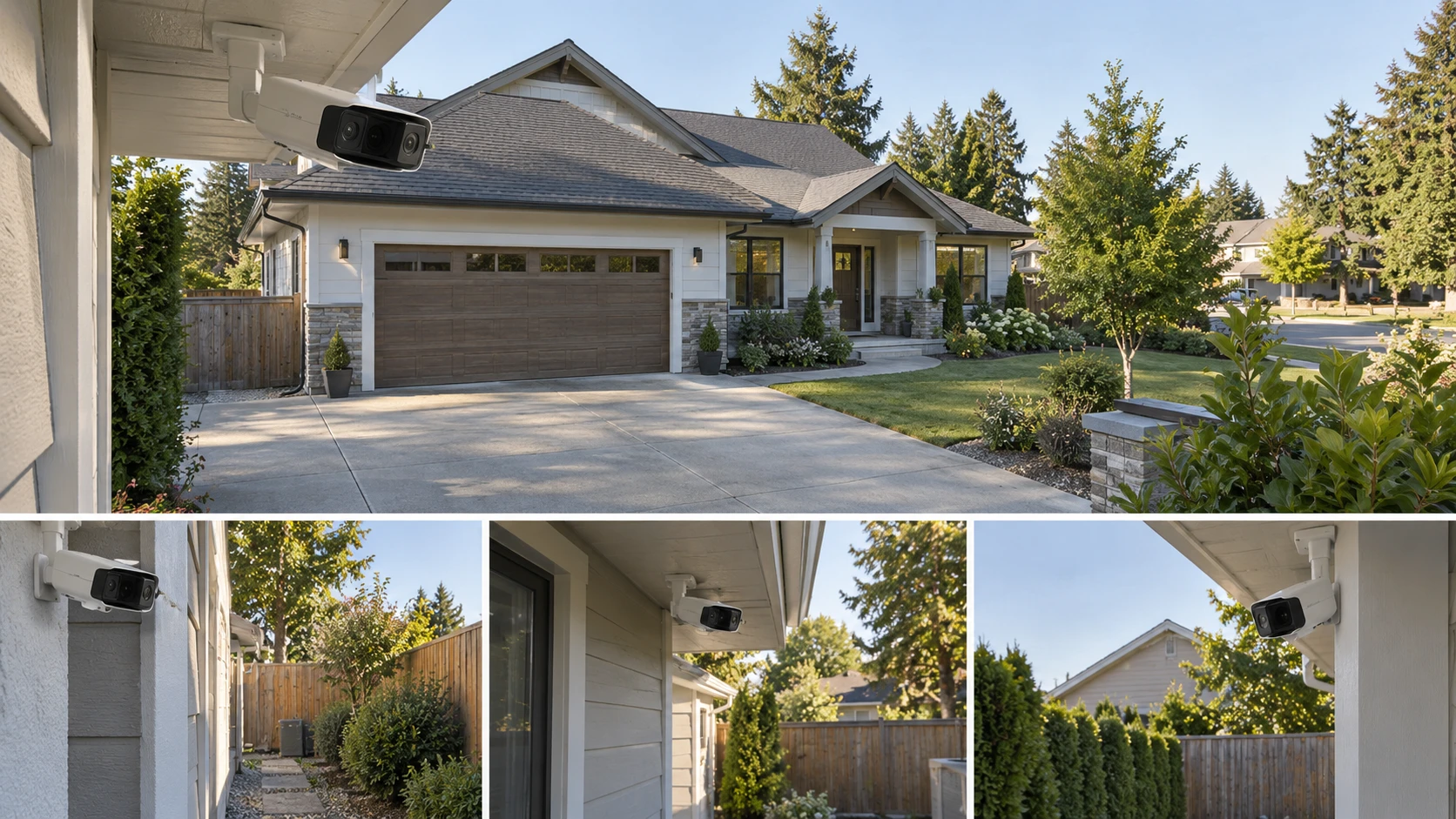
The Reolink Duo 3 PoE camera is listed as a single dual-lens unit with a 180-degree view and 16-megapixel still resolution. It is meant to record continuously and connects through Ethernet with Power over Ethernet. A broad frame from one mounting point may cover a driveway or long front elevation, but a high pixel count cannot show around a wall or a parked vehicle. Before comparing resolution, draw the areas that must be visible and mark the obstructions from each possible mounting point.
The published guide to PTZ versus multi-camera coverage planning discusses other products, yet its distinction between one moving view and several camera positions is useful here. These two Reolink offers are fixed panoramic cameras rather than PTZ choices. The relevant question is whether one wide viewpoint reaches all important approaches or several independent viewpoints are needed. Put the front door, side gate, garage, and rear path on a sketch. A 180-degree field of view is measured at the camera; it does not prove that the far edge of every route has enough detail for identification.
The Reolink Duo 2V three-pack contains three cameras, each listed with a stitched 180-degree panoramic view and an 8-megapixel sensor. Each needs its own mounting position and PoE connection. That gives the option of watching separate sides of a property at the same time. Three 8-megapixel recordings do not merge into one 24-megapixel view, and the value of the pack depends on whether the site has three useful positions and can support three cable runs.
Start with sightlines, not resolution — PTZ versus multi-camera coverage planning
Stand at the proposed Duo 3 position and check what a person could do without entering its view. A porch column, tall vehicle, fence corner, or foliage may create a blind area even if the camera sees the full width of the driveway. Repeat the exercise at night and in the season when trees have leaves. The device's stated 180-degree view gives width from its lens position; moving the camera a short distance along a wall can change what it sees behind an obstruction. Take sample frames at the height you intend to mount it before drilling permanent holes.
With the Duo 2V pack, assign a specific job to each unit. One could face the main approach while another watches a side entrance; the third is useful only if there is a separate view worth recording. Avoid placing three cameras in nearly the same position merely to use every unit. Overlap can be valuable at an important threshold because a person leaving one frame may enter the next, but compare the actual clips to see whether the transition is continuous. Separate positions also let a camera face a narrow path more directly instead of stretching a wide panorama across an irrelevant wall.
The Duo 3 row lists 16-megapixel still resolution, a 20-frame-per-second rate, and digital zoom. It also calls the video 8K, a field to confirm for the exact model before estimating recording capacity. The Duo 2V pack row describes each camera as 4K and 8 megapixels, without giving a comparable frame-rate figure in its saved excerpt. Those listing fields do not establish an apples-to-apples identification distance. Record the same person at the nearest entrance and at the farthest point that matters, then inspect the exported footage at normal size and at the zoom level an operator would use. The number of pixels on the box is only one part of that test.
Check night footage at each position — Reolink Duo 2V three-pack
Duo 3 is described as supporting color night imaging and infrared illumination, with a listed night-vision range of 100 feet. That figure is a range claim, not evidence that a face can be identified at 100 feet in every yard. Try a walk through the actual scene after dark. Compare a person close to the camera with one at the far edge, and look for areas lost to backlight from a porch lamp or reflected light from a wall. Save the recorded clip rather than relying on the live app preview, which may be viewed at a different size.
The three-pack row lists infrared LEDs, adjustable spotlights, and three night options: full-color recording, motion-triggered color recording, and black-and-white recording. Test each mode in a location where one camera faces an entrance and another faces an unlit path. The useful mode may differ by position. A spotlight can change what a visitor sees and how the camera exposes the scene, so examine the first seconds before and after it activates. Check whether a stationary person is still visible once the motion event settles. The saved product row does not specify a night-distance figure for this pack.
Both offers list IP67 weather protection, but installation details still matter. Inspect the physical seals and protect the Ethernet junction as instructed for the exact unit. Duo 3's box list includes a waterproof lid, mounting plate and template, a one-meter network cable, and screws. The three-pack row says the cameras can mount on a wall or ceiling, but its saved description does not enumerate the full contents of each box. Check the current package and mounting instructions before assuming that all cable covers or brackets needed for three outdoor runs are included.
Count ports, runs, and recording load — Reolink Duo 2V three-pack
One Duo 3 requires one Ethernet route to its position. The three-pack requires three routes, enough PoE-capable ports or injectors, and a way to bring cables indoors without leaving connectors exposed. The Duo 3 listing gives a six-watt power figure; the Duo 2V excerpt says PoE carries power and data but does not state a per-camera budget. Confirm the exact power requirements in current Reolink documentation and add the combined load to the network equipment plan. If an existing cable only reaches the garage, a three-camera plan may involve substantially more installation work than its camera count suggests.
The Duo 3 listing says it works with Reolink NVRs and the Reolink app, and mentions continuous recording. It does not give a microSD capacity in the saved excerpt. The Duo 2V row names microSD recording up to 256 GB per camera, a Reolink NVR, and FTP as destinations, with H.265 coding. Do not assume that a single card or recorder setting provides the same retention across one 16-megapixel stream and three 8-megapixel streams. Make trial recordings with the intended schedule and settings, measure the files, and check how long footage remains available before it is overwritten.
Storage is also an access question. Decide who will retrieve a clip after an incident and whether they will need footage from two viewpoints at the same moment. With three cameras, give each a location name that makes a search obvious, then verify their clocks and playback order in the app or recorder. If a person crosses from the driveway to the side gate, the handoff should be easy to follow. For the single-camera plan, look at the complete recording around an alert to see whether the subject entered from a blind area before the first useful frame.
Review alerts and privacy controls — Reolink Duo 2V three-pack
The Duo 3 row names audio and motion alerts and motion tracking, though it gives little detail about tracking behavior. Treat those fields as reasons to test the current firmware rather than promises about how well a fixed panoramic view follows a subject. Walk across the frame and inspect both the alert and recorded clip. If a vehicle or tree triggers repeated notifications, adjust the configuration available on the installed model and run the same test again. The listing alone does not establish person, vehicle, and animal classification for this Duo 3 offer.
The Duo 2V pack description explicitly lists detection of people, vehicles, and animals, with push and email alerts. It also says motion can activate spotlights and a siren, and the Reolink app supports two-way talk. Three cameras can produce three sets of alerts for one visit, especially where their views overlap. Name the cameras by location and test the notification settings while someone walks an ordinary delivery route. Review whether the first alert arrives early enough to be useful and whether later alerts add information or only repeat the same event.
Pointing a panoramic camera across a property line may include a neighbor's window or a public walkway. Check the permitted view and available privacy controls for the exact hardware and app version before recording. Mounting angle can often remove an unwanted area more reliably than assuming a mask will remain effective after a configuration change. With three devices, inspect each frame separately. The saved rows do not describe a specific privacy-masking contract for either offer, so confirm any required feature from current documentation and an installed-device test.
Make a site-specific choice — Reolink Duo 2V three-pack
Rehearse the one-camera layout first if a single broad, unobstructed view appears to cover the important route. Put a person at the farthest point where usable detail matters and review both daytime and night clips. Duo 3's higher listed resolution may help within that frame, but it cannot substitute for a second position where a wall blocks the path. Confirm the recording destination, network power, and contents of the exact unit before installation.
The three-pack makes more sense when the map reveals distinct entrances or a route that turns around the building. Test each proposed position and estimate the cable work and recording space for all three. Its per-camera panoramic view and listed detection modes may help cover a wider site, provided each camera actually sees a useful scene. A small property may need fewer than three positions. Choose the layout from the sightline map and sample recordings, then compare the full installed cost and the time needed to review footage.