Garden Care & Watering
Rain gauge exposure and the water that reaches it
A practical explanation of the collector surroundings, unwanted water and level opening behind a rainfall observation, with model-specific placement limits.
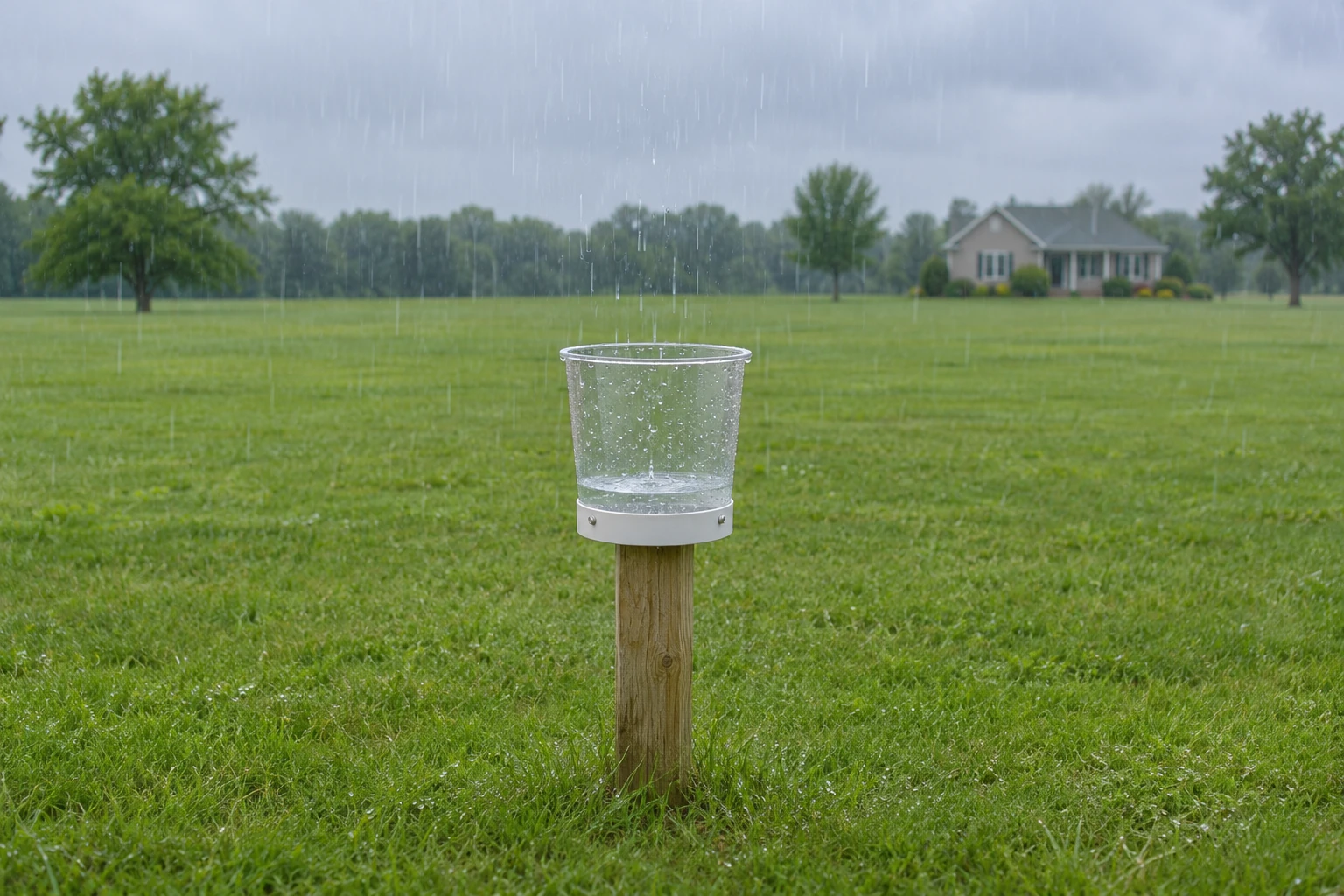
Start with the water reaching the opening
Rain gauge exposure concerns the surroundings of the collecting opening. Australia's Bureau of Meteorology warns that nearby buildings, solid fences and trees can affect observations. Wind matters as well, and a higher position can increase its influence. A convenient view from the house therefore leaves an equipment question about the actual collecting site.
The Bureau's guidance also calls for a horizontal opening, secure fastening and attention to nearby vegetation. Think about those conditions together when assessing a location through the applicable instructions. An opening can be visible from the kitchen while still sitting beside an obstruction or vegetation that has grown around it.
Keep the observing purpose with that assessment. The Bureau describes its own instruments and observation practices, without certifying a household installation from a photograph. A difference from an official rainfall record can involve location and surrounding conditions. It does not by itself establish that a domestic gauge has failed.
Understand the wind around an isolated obstruction
NRG Systems explains that an isolated tree or building can deflect precipitation through turbulent airflow. It also cautions against exposed elevated locations and describes uniform surrounding protection as useful. Those points explain why simply finding the most open-looking view is an incomplete account of exposure. The air around the collector belongs in the assessment.
A roof position, for example, cannot be judged solely by its clear view of the sky. NRG identifies elevated sites as vulnerable to wind-related problems. Its professional guidance also discusses wind shields and snow installations. Those arrangements should remain with their intended equipment and observing conditions. This explanation provides no instructions for climbing onto a roof, erecting a tower or adding a shield.
Surroundings can change after installation. NRG notes that vegetation growth and alterations to an area can turn a previously suitable exposure into an unsatisfactory one. Reconsider the actual site when those changes occur, using applicable guidance. A location's earlier assessment does not describe a new fence, taller planting or later building work. Keep the changed surroundings visible in the question you investigate.
Recognize unwanted water sources near the collector
CoCoRaHS mounting guidance identifies unwanted water sources alongside blocked precipitation. Sprinklers can introduce artificial precipitation, while nearby surfaces can splash water into a collector. The programme also discusses the relationship between a mounting post and the gauge opening. These considerations concern where water comes from before anyone reads a scale.
Look beyond whether rain can enter from above. Establish whether the proposed position is affected by watering equipment or splash from surrounding surfaces. Keep that assessment with the actual instrument and programme requirements. A pleasant garden arrangement can still leave these questions unanswered.
The CoCoRaHS page gives installation and maintenance directions for its equipment. It supplies no blanket permission to wash, freeze or install either retail example below in the same way. Obtain matching instructions before handling a different gauge, and retain any uncertainty about the proposed location.
Connect a level collector opening with site purpose
University of Florida IFAS Extension's farm-weather-station guide places site selection alongside instrument suitability and maintenance. Its aim is useful observations for the agricultural area of interest. A site selected for another environment may not represent that field. Keep the intended observing area clear before deciding which surroundings the equipment should reflect.
For a level collector opening, the guide describes a rain collector in a horizontal plane, open to the sky and above conditions where splash or accumulated snow can influence the measurement. It gives different considerations for other station sensors. Choosing one convenient position for an entire assembly does not establish that every sensor's needs have been met.
The guide's tables explicitly concern agrometeorological stations and acknowledge that recommendations may differ from other agencies. They should remain identifiable when you compare instructions. Its maintenance account also describes insects, clippings and dirt blocking a funnel. Exposure and a clear collection path both deserve attention, without inventing a cleaning, dismantling or water-test procedure for unfamiliar equipment. Resolve the actual tool's applicable maintenance instructions separately from the explanation of why its opening matters.
Keep radio reception and maintenance access in view
La Crosse Technology's rain-sensor mounting page adds equipment-specific considerations. It advises temporary placement before permanent mounting so communication with the receiving equipment can be checked. The page also explains that some sensors communicate through a temperature-and-humidity sensor while others communicate directly with a display. The intended receiving unit matters to that placement question.
Those details do not establish that an unrelated wireless product uses the same communication path. Obtain the actual system's instructions before assigning its components to locations. An attractive screen image cannot tell you which separate sensor receives a transmission or what the installed link will support.
The same La Crosse page asks readers to consider regular removal of leaves, insects and debris when choosing a site. Maintenance access therefore belongs in the equipment decision alongside exposure and reception. Its stated mounting height and open-area recommendation remain that maker's guidance. This article does not transplant them to a decorative stake or confirm that the Qwtwty kit below has the same operating requirements. Preserve the equipment reference when asking about a proposed site. Its corded-sensor note also asks for extra cable to be secured against movement in the wind.
Read published heights within their observing arrangements
The Met Office's rainfall account gives a rim height of 450 mm for its described tipping-bucket arrangement and 30 cm for its described storage-gauge arrangement. Both positions are stated above the surrounding ground. Each measurement belongs to the corresponding instrument account. Keep those equipment and ground references attached when reading the figures. The source has not supplied the overall height of either retail instrument below.
The page also places those instruments within an observing network and its changing practices. Those professional accounts provide context for understanding why installation details are documented. They do not establish an appropriate height for a household instrument whose instructions have not been identified.
When you encounter a published mounting figure, retain the instrument and observing purpose beside it. Look for the applicable reference for your own equipment rather than treating every collector as the same installation. This guide gives no universal height, spacing calculation, scale conversion or calibration procedure. A clear explanation of exposure can leave an actual installation decision pending until its requirements are understood. Keep that unresolved decision visible before making a permanent change.
Examine the two offers without assuming performance
The Evergreen solar rain-gauge stake offer describes butterfly and ladybug designs, illumination and a glass gauge. Its sole gallery shows graduated tubes marked TOLAND, ornamental holders and solar hardware. The catalog identity and pictured marking remain distinct evidence. Clarify the supplied count and design choice behind the two-assorted wording before ordering.
The Qwtwty weather-station offer has a description emphasizing its display and alarm-clock functions. Its gallery additionally shows a rain monitor, remote temperature-and-humidity sensor and a separate mains adapter with cord. That pictured kit needs its own complete instructions. The image does not expose the collector's internal mechanism. Black and white remote-sensor appearances in the gallery leave its supplied color as another point to clarify.
The visible collection arrangements differ, but neither account supplies an installed accuracy comparison. Screen figures, forecast graphics and wireless-reach statements remain advertising information. No mounting height, reception result, lighting duration or calibration is verified here. Keep every supplied component with the actual order while obtaining its applicable siting and operating directions.
Leave the neighbouring explanations in their scopes
The published rain-gauge collection-paths guide follows retained water and recorded bucket movements. It explains what happens after water enters a collector, while preserving limits on hidden retail mechanisms and instrument records. This article instead concerns the water reaching the opening and the surroundings that can influence that path. It supplies no new explanation of the internal recording sequence.
The published decorative rain-gauge observation-corner guide develops a garden-interest idea and an enjoyable reason to pause outside. It leaves dependable measurement as a separate equipment task. A decorative subject can suit a scene without establishing that the scene suits a working collector.
Keep those questions understandable when discussing a proposed position. The ornament's visual role, the collector's mechanism and its exposure concern different parts of the decision. For this explanation, return to the clear opening, surrounding air, nearby surfaces and actual site requirements. Neither an appealing garden view nor a familiar display layout completes that assessment, and the neighbouring articles supply no missing installation approval. An enquiry can name the exact equipment, describe the proposed surroundings and ask which applicable siting reference addresses that location.
Review an optional equipment order on its own terms
If an optional gauge order at republeq.com offers USDT or another cryptocurrency, review the proposed goods and transaction details before authorizing payment. Keep the exact item reference, variant and stated supplied contents in the actual basket. Ask the seller to clarify an important unresolved identity, assortment or equipment question before committing to that selection. The availability of a payment method cannot supply the information you still need about the goods. Read the current total and any separate charges shown by the services involved. Check the method, supported asset and network information presented for this particular order. This article verifies no live checkout availability, receiving address, exchange rate, fee, settlement time or transaction protection. Follow the authorized instructions for the method you choose. Never provide a wallet recovery phrase or private key in an equipment enquiry. Read the current delivery, cancellation and return terms before deciding whether the proposed order is acceptable. Retain the selected reference, any seller clarification, displayed transaction terms and resulting confirmation according to the service's instructions. If the item changes, check whether the earlier answer still covers the changed selection. An unanswered request to amend an order does not itself establish an amendment. When a payment or order status is uncertain, reconcile it through the authorized channel before considering another payment. A missing confirmation leaves a question to resolve through the actual record. Keep a later delivery discrepancy connected to the retained order details so that the seller can identify the transaction concerned. After delivery, compare the supplied identity and contents with that record and obtain the applicable equipment instructions. A completed purchase establishes a commercial event. It supplies no inspection of the delivered components or result from their eventual use. You can leave an optional order unmade while investigating its essential terms, then review the current proposal if you return to it later. If you receive a separate case reference, retain it with those records. Do not describe the goods as received, a remedy as approved or a transaction as settled while the corresponding evidence remains uncertain.