Troubleshooting & Repairs
Putty knife won't flex: check its intended blade type
Identify the listed blade type and the filling material’s application requirements before replacing supplies.
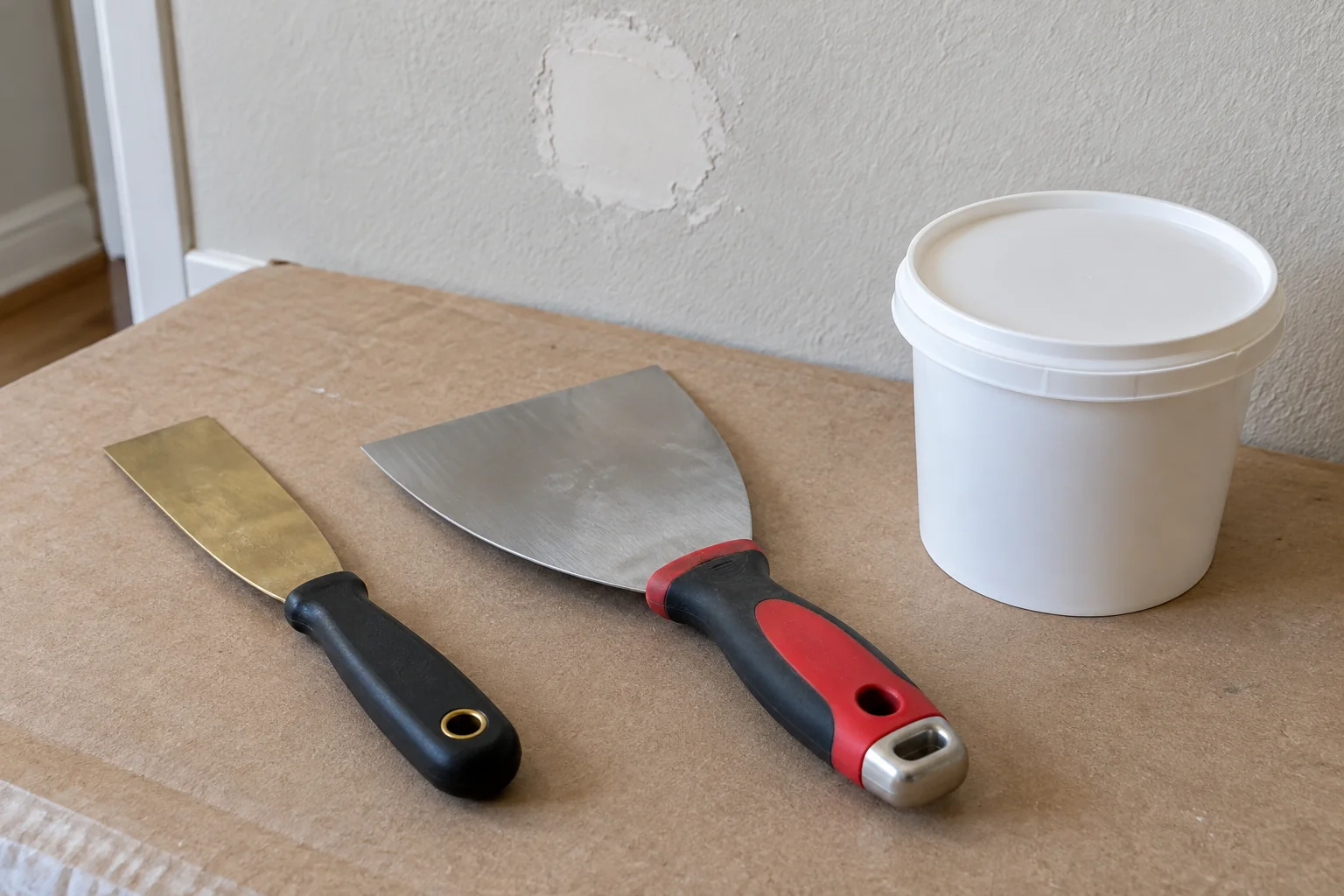
If a putty knife won't flex, start with the blade designation. The HYDE 02080 offer calls its blade stiff; Wooster's 8752 offer identifies a flexible blade. Those descriptions give you a useful first check before deciding that a tool is faulty. The comparison below concerns the listed models and the makers' application guidance, without reporting a test of a received knife.
Stiff versus flexible putty knives: read the selected model
For stiff versus flexible putty knives, the HYDE 02080 putty knife offer names a stiff blade measuring 1¼ inches. Its supplied photograph identifies brass and shows the 02080 model on the label. The pictured instructions include eye protection and a sharp-blade caution. Read those cautions before handling the actual item. The photo illustrates one knife; it is not an observation of the tool you have received or a measurement of how far its blade bends.
The Wooster 8752 three-inch putty knife offer describes six flexible stainless-steel knives. The photograph labels the blade for patching and spreading, and identifies a hammer end on the handle. Confirm the supplied pack when ordering. That photo shows one knife, while the retail description supplies the six-item quantity. None of those statements says that six different styles are included. Keep the 8752 model and three-inch size together if you ask about a replacement or the actual order contents.
What HYDE means by a stiff brass blade
HYDE's Black & Silver brass-scraper page lists 02080 as the 1¼-inch option. It describes a stiff brass blade, a nylon handle and full-tang construction. Its account associates stiffness with scraping and removal work. If your purchase was this identified model, the word stiff belongs to its intended description. A preference for a more yielding spreading blade would therefore begin a different selection question. It would not establish, from the catalogue alone, that the supplied 02080 had failed.
The manufacturer promotes brass for work on sensitive surfaces and describes the blade as non-spark. Those are its material and application claims. They provide no measured scratch result for your particular wall, finish or filler here. Select a tool using the actual material instructions and the job you intend to do. This guide gives no hazardous-environment working procedure, and the brand's material description is not a reason to improvise one. A model reference identifies the knife being discussed; it does not inspect the surface in front of you.
Use Wooster's model table to distinguish the blade roles
Wooster's two-page prep-tool sheet separates its 8751 stiff scrapers from 8752 flexible putty knives. It lists 8752 putty knives in 1½-inch and three-inch sizes, with a non-slip comfort grip. The wider four-inch and six-inch flexible tools are listed as joint knives. These are the maker's named categories and sizes. A broad description such as prep tool can include several blade forms, so use the model row when identifying the item you intended to buy.
The same sheet shows a twelve-piece counter display containing several models and sizes. That display has its own P8750 reference. It is separate from the selected retail offer for six three-inch 8752 knives. Reading the whole sheet helps prevent an image of an assortment from becoming an assumption about a single-model order. The sheet's case quantity also concerns supply packaging. It does not report how many knives one repair needs, or provide a measured comparison between the selected flexible knife and HYDE's stiff brass blade.
Separate preparatory scraping from finishing a small patch
HYDE's wall-hole repair guide assigns different tools to different stages. Its small-repair account uses a stiff putty knife to clear material around the opening and apply small amounts of spackle. For a later coat in its medium-repair example, it describes a wider flexible joint knife and a thin application extending beyond the patch. The change in tool belongs to a change in the work being described. A knife that feels wrong for your present stroke may have been selected for another stage.
The guide also cautions against pressing hard enough to enlarge the opening during preparation. It calls for drying before a further application and describes how humidity can extend that wait. Keep those directions with the identified repair material and the appropriate job. This article does not turn every surface defect into a small-hole repair or supply a structural patching procedure. If your intended work has changed, review its actual tool and material requirements before treating the earlier shopping choice as an answer to the new task.
Spackling that drags needs its own material check
For spackling that drags, DAP's Spackling 101 guide puts preparation and material consistency ahead of smoothing. It describes clearing loose debris, stirring spackling to a smooth, creamy consistency and using a clean putty knife. It distinguishes lightweight, heavyweight and hybrid products according to the repair. That gives you material questions to investigate alongside the blade description. The guide does not identify the contents of an unlabelled tub or establish that a partly dried product can always be restored.
DAP's general guide also calls for thin applications, drying between layers and feathering the edges. It identifies a colour-change cue on dry-time-indicator spackling; that cue belongs to the identified formulation and its current directions. Use the specific product's current directions for the permitted layer and drying requirements. A dragging stroke supplies no measurement of the knife's flexibility, and changing knives does not answer whether the material is ready for another pass. Establish which compound you are using before borrowing an instruction from another container. The applicable product information is needed even when two tubs are casually described by the same word, filler.
Follow a product-specific smoothing instruction as written
DAP's ALEX FLEX Flexible Spackling page recommends a flexible putty knife for its application. It also describes dipping the knife in water and lightly smoothing the spackling before drying. The object being dipped is the knife. Read that sentence with the rest of the identified product's instructions instead of expanding it into permission to dilute any filling material. A direction for smoothing one named spackle does not supply a mixing recipe for glazing putty, an adhesive or an unidentified repair compound.
That product page describes slightly overfilling a repair so it can be finished flat when dry. This is a reminder to obtain the actual material's application method, rather than choosing a universal amount from a tool's width. The page's recommendation for a flexible knife does not certify that the selected Wooster knife has been tested with the product. It gives a blade-type instruction to match with the actual equipment and intended work. Confirm any unanswered application detail with the relevant maker before treating a catalogue description as a completed repair.
Keep dried residue out of a stored compound
USG's ready-mix storage answer begins by cleaning the container's sides and lid so dried compound cannot fall into the mixture, then levelling its surface with a knife. That advice identifies another part of preparation worth checking before blaming a blade. Look at the material's own storage instructions and the condition of its container. This article has not inspected your compound or determined that contamination caused a particular mark. The storage answer supplies maintenance guidance for the ready-mix material it discusses.
USG's same FAQ compilation explains that its UltraLightweight joint compound is formulated ready to use and that typical mixing directions for other ready-mix products do not automatically apply to it. Its answer recommends mixing without water; when addition is necessary, it says to use water sparingly and test the application. Keep that distinction when reading a general suggestion about water or consistency. The name joint compound covers products with their own requirements. Its storage discussion is not a direction to add water to the selected DAP spackle or to any other unidentified tub. Resolve the material question from the actual container and its instructions before making a change.
Use the related guides for their separate project questions
Once you have completed the filler preparation specified for your repair and are planning to paint, the paint roller cover compatibility guide addresses a separate choice: matching a cover to its frame. It explains why cover length, nap and core diameter answer different questions, and keeps the actual item identities with the pairing. Use it for the painting equipment decision; a result about a putty blade supplies no missing roller specification.
The utility knife retraction troubleshooting guide deals with a blade that remains exposed, using Stanley Titan RB and OLFA LA-X examples. Its central distinction is between an observed failure, the exact tool and the action its applicable instructions permit. That retraction problem differs from finding that a putty knife has a deliberately stiff blade. Keep the actual design and intended movement in the question you take to the supplier; retraction advice for a utility knife is not an instruction to bend or modify a putty blade.
Decide whether a crypto purchase fits your proposed order
A buyer who prefers USDT can consider that preference when investigating a putty-knife order through republeq.com. This article has not checked a live basket for token availability. Treat the cryptocurrency choice as an option to investigate once you know which supplies you want, with the actual checkout providing the transaction information. You might already have an appropriate tool available, or you might decide that a different supply is needed before you can start the intended work. Neither possibility requires an immediate purchase. Take time to choose the item before committing to a payment route. If the order is for someone else's project, ask that person to identify what they are requesting and which questions remain unanswered. Paying on another person's behalf should be a decision you understand, rather than an automatic response to a product link. Decide whether you are willing to proceed after reading the merchant's terms for the proposed goods. Mentioning crypto does not provide those terms or promise how a future cancellation would be handled. There is no product price, currency conversion, suggested transfer destination or network instruction in this discussion. It claims no financial advantage for paying with USDT and predicts no processing duration. If the displayed choices do not include the method you wanted, you can reconsider the proposal instead of assuming that a general reference to cryptocurrency guarantees a particular option. For an order that is actually placed, retain the confirmation so that the requested goods remain identifiable when they arrive. Look at the delivered contents before deciding the supply requirement has been met. The way the purchase was paid for gives no result for the wall work and does not determine whether a blade is suitable for the intended material. Continue to use the actual product instructions for the job. A payment decision can be completed while the practical work is still ahead; keep each decision with the information that answers it.