Lifestyle & Inspiration
Puppet storytelling nook: give an ordinary corner a new story
Choose a character and a room atmosphere for a small home storytelling space, with scenery and seating that fit the household and a plan for putting it away.
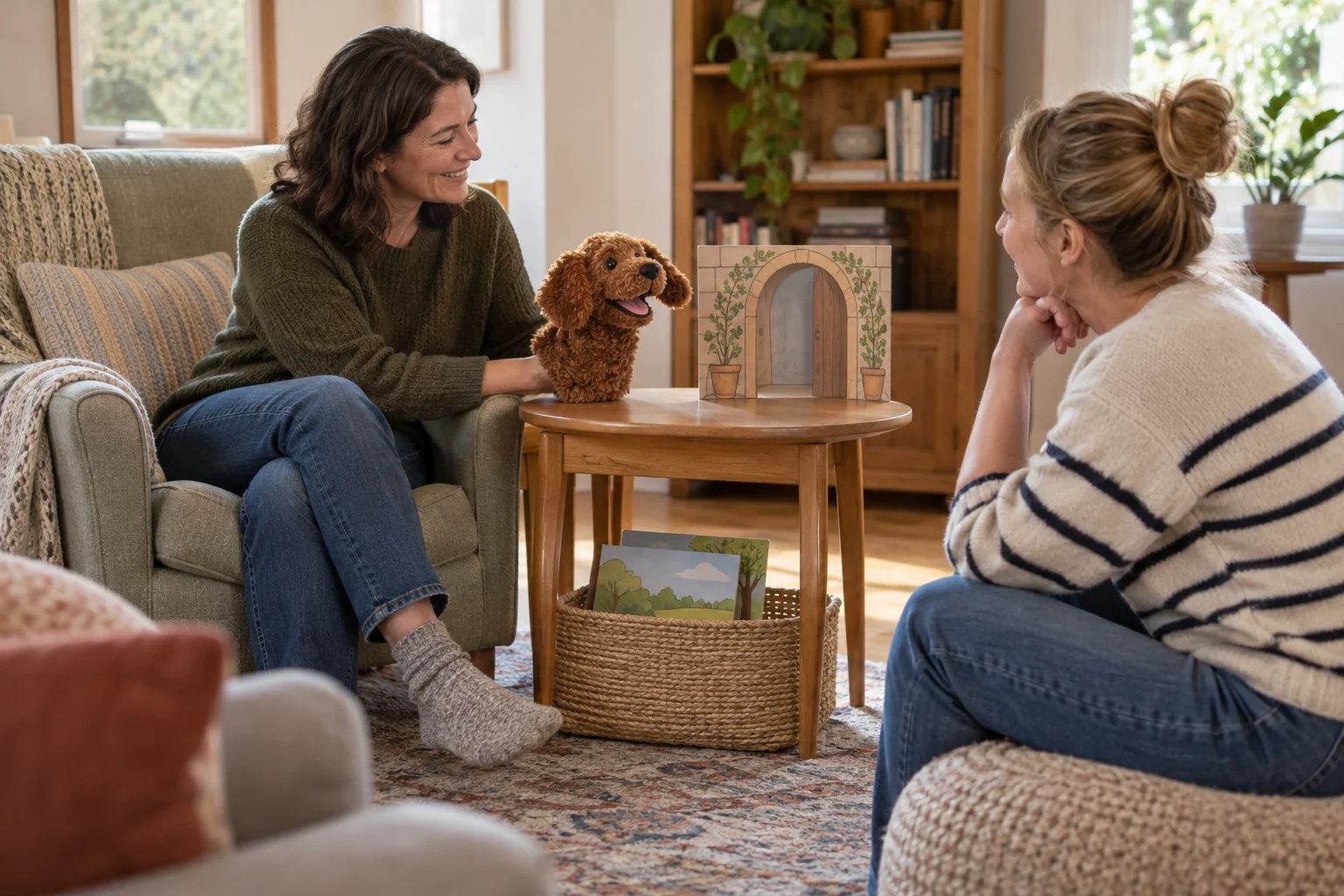
A puppet storytelling nook can belong to an ordinary room. It does not need to take over the sofa, conceal every performer or look ready for a school production. Start with one place where a character can appear, a clear view for the person watching and somewhere to put everything afterward. The interesting decision is which corner of your home you would enjoy using again.
Think of the nook as a change of scene within a familiar space. A puppy appearing beside a reading chair suggests a different story from a dragon looking over a plain tabletop. Neither needs a miniature castle to make sense. Choose an atmosphere you like, then give the character enough uncluttered space to be noticed. You can add scenery after a first evening tells you what you actually miss.
Small-space puppet theatre starts with a room you still use
For a small-space puppet theatre, choose the part of the room you can comfortably give back when the story ends. That might be the end of a table or the open space beside a chair. If preparing the area means moving everything you need for the rest of the evening, try another location. A manageable arrangement is a more useful starting point than an impressive drawing of a stage.
Look at the proposed scene from the audience's intended seat. What will sit behind the puppet? A plain background may suit the story better than a busy shelf, but you do not have to redecorate the room. Turn the performance toward a quieter part of the existing space. Keep the character, its entrance and the listening place together in your plan.
Decide whether seeing the storyteller is part of the occasion. An open arrangement lets a person introduce the character and speak directly to the listener. A more concealed presentation is another choice, with its own space demands. You do not need to commit to concealment just because an illustration of a puppet theatre shows a curtain. Choose the relationship between storyteller and audience before choosing scenery.
Walk through the room as you normally would after placing the proposed seats. If someone needs that route to reach a door or another chair, move the scene rather than treating the room as unavailable for the duration. The nook should fit the household's actual evening. A corner that looks pleasing from one angle can still be inconvenient in daily use.
Choose a character that gives the corner a mood
The Folkmanis Wyvern Dragon hand puppet is a green dragon with two wings; its retail description identifies a movable mouth and tongue. That gives a fantasy character a place in this plan without making a promise about a particular performance. A mountain, an unexpected visitor or an argument about a treasure could supply a story, depending on what you enjoy imagining.
Those story roles are suggestions. The character does not require a complicated landscape, and its presence does not commit you to an adventure with danger or villains. A dragon can be a visitor who cannot find the front door. Pick a starting situation you would be happy to tell aloud. The room then needs only enough visual detail to establish that situation.
The The Puppet Company Playful Puppies Cockapoo is a curly-furred puppy puppet. The product description identifies access under the tummy to the head and mouth. In a domestic story, the puppy could be waiting for a visitor or looking for a favourite resting place. These are imagined scenes, rather than claims about the character's abilities or a set of operating instructions.
Compare the atmosphere you want to create. A familiar animal can belong to an invented version of home; a fantastical character can make the same corner feel like somewhere else. You may prefer either, or enjoy changing between them. You do not need to buy both to justify the nook. Choose the character that makes a first story come to mind.
Make one background do a clear job
Give the background a specific purpose before adding it. It might identify a location, hide an unrelated object in the room or give the eye a quiet place behind the character. If it does none of those things, leave it out for the first run. A backdrop is another thing to set up and put away; it should earn that place in the arrangement.
For a home scene, you might suggest a doorway with a simple picture placed behind the action area. For an imagined landscape, a drawing could stand for the distant setting. These are visual ideas to adapt to your own space. They do not require attaching scenery to a puppet, modifying it or treating a photographed display as a list of accessories supplied with an offer.
Choose a colour relationship rather than a collection of decorative objects. You might prefer a quiet background behind a brightly coloured character, or a familiar domestic setting around the puppy. Look from the listening place before deciding. A detailed design viewed close up can have a different effect when the audience is seated across the room.
Keep a distinction between scenery and something the character needs to use. A pictured treasure chest can establish the subject of a story without being opened, lifted or carried. If a plot depends on a physical action, confirm that the actual arrangement can support it. You can also rewrite the plot so that the important thing is spoken about or shown in a drawing.
Puppet story prompts can come from the room
Use puppet story prompts that give the character one immediate question. Who is coming to visit? Which doorway leads home? Why is there a picture where a window should be? Choose a question with room for a short conversation. A first story can end when that question is answered, without introducing a second problem just to make the occasion feel longer.
For a hypothetical dragon scene, imagine that the character has arrived at a room it believes is a castle. The listener can decide what in the room caused that misunderstanding. A chair becomes a throne in the story, but the actual chair stays where it belongs. This lets the setting contribute to the scene without requiring a separate collection of miniature furniture.
For a hypothetical puppy scene, imagine a visitor who has heard about a very comfortable corner and wants directions to it. The listener can describe a place in the room or invent one. The puppy does not have to retrieve an object for the story to progress. A conversation about where to settle can supply the whole occasion.
Keep these examples flexible. Someone watching may offer a different answer from the one you imagined. You can accept that answer, ask a follow-up question or let the character misunderstand it once. You are choosing a style of shared storytelling, not measuring a developmental outcome. There is no need to turn every unexpected response into a lesson.
Give the listener a place in the occasion
Decide how you want to invite participation. A listener might answer the opening question, choose a name for a place or simply watch. Offer that role without making a particular response necessary for the scene to continue. If nobody wants to answer, the storyteller can supply an answer and carry on. The arrangement should suit the people who are actually there.
Consider whether the listening place lets everyone see the character's entrance. Try the planned view before adding more seats. A second person sitting farther to one side may see a very different scene. Changing the position of the action area can be more useful than adding decoration to make the corner look finished.
Keep the character's physical operation separate from decorating the room. The guide to puppet movement and character controls distinguishes the part that moves from the control used to move it, with examples of different puppet arrangements. Read that when choosing a particular action. Here, the decision concerns the room's atmosphere, audience view and return to ordinary use.
A story can be revised to suit the movement you can actually perform. If an imagined scene asks the character to carry something and that action is unconfirmed, change the action. It can notice the object, ask about it or describe where it belongs. The room does not need a more elaborate set to compensate for an unanswered operating question.
Let sound stay optional
Choose whether this evening needs recorded sound at all. A spoken introduction and the character's conversation may be enough for the atmosphere you want. If you do want music, decide who will handle it and how that person will see the action. A listening arrangement is an additional job to plan, rather than a decorative feature of the nook.
The CD music cue planning guide builds a fictional puppet scene around visible start and stop signals for a separate playback operator. It explains how to rehearse those signals when an entrance pauses or is omitted. Use that guide for the timing decisions if you add recorded music; the room plan here does not establish a playback connection or a cue sequence.
Keep your first arrangement simple enough to recognise what you like about it. If you add a new backdrop, more characters and recorded sound at the same time, you may find it hard to decide which change helped the occasion. You can try a different background on a later evening while keeping the rest of the setup familiar.
Plan the return to an ordinary room
Choose a home for the scenery before the first story begins. Keep the drawings together and give any freestanding pieces an identified storage place. Follow each puppet's applicable care and storage directions for the actual item; this room plan does not supply a cleaning method. The aim is to know where the things will go when the table or chair is needed again.
After using the nook, note what made setting up awkward. Perhaps the preferred seat blocked a route, the background was difficult to place or a prop never contributed to the story. Change that particular part for next time. You do not have to keep a decorative feature merely because you spent an evening making it.
Keep one reminder of the next story with your scenery: a question, a location or the character's reason for visiting. That gives you somewhere to begin without requiring a finished script. A puppet storytelling nook becomes your own through the choices you want to repeat: where you sit, which character arrives and what makes that corner worth returning to.