Crypto Commerce
Use CD music cue planning for a rehearsed performance
A puppet waits behind a cardboard doorway. The performer will bring it into view, stop beside a paper tree, then send a second puppet across the table. Someone else will operate the CD player. What should tell that person to start the first piece of music, stop it, and start the second? For a short home performance, write each cue around something the operator can see, then rehearse what happens if the performer waits or skips an action.
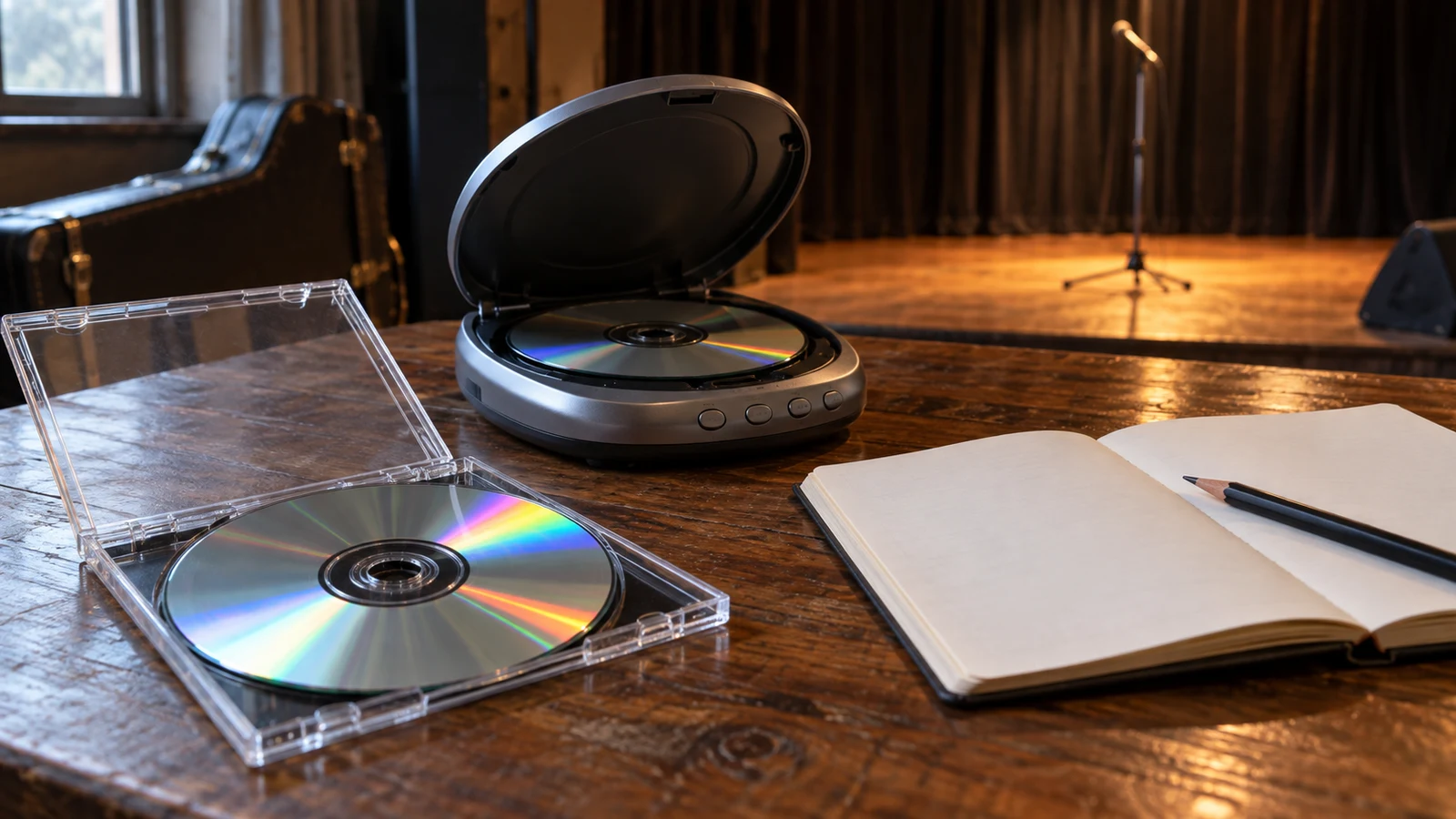
A puppet waits behind a cardboard doorway. The performer will bring it into view, stop beside a paper tree, then send a second puppet across the table. Someone else will operate the CD player. What should tell that person to start the first piece of music, stop it, and start the second? For a short home performance, write each cue around something the operator can see, then rehearse what happens if the performer waits or skips an action.
The example here is fictional. It needs only two people: one moving the puppets and one responsible for playback. Give the operator a view of the doorway, the tree, and the performer's hands. If any intended trigger is hidden from that position, change the trigger or the operator's position before writing it into the cue sheet. A beautifully worded instruction is useless when its reader cannot see the event it names.
Background Music Planning And The Operator's Job
At a gathering, music might play while people arrive and talk. A puppet scene asks for a different decision. Its music starts because the first puppet crosses the doorway, and stops because the puppet reaches the tree. Those events might come earlier or later on a second run. For an article about keeping music going through a gathering, see background music planning. Here, the operator follows performed actions rather than choosing a continuous listening sequence.
Before picking up the player, the performer and operator can agree what counts as an entrance. Does a puppet's nose appearing at the doorway count, or must its entire body cross the edge? Choose one visible boundary. In this fictional scene, the first cue begins when the whole first puppet clears the doorway. Its stop is triggered when that puppet comes to rest beside the tree. The second musical entrance begins when the other puppet first moves into the open tabletop area.
That division gives each person a manageable job. The performer decides when to move; the operator responds to the specified movement. Neither person has to guess how long a spoken line or pause will last. If the operator is also expected to move a prop, rehearse whether both actions can be done without losing sight of the trigger. Otherwise, give the prop to the performer or move the playback responsibility to someone who can watch.
For CD music cue planning, the listed Yintiny rechargeable CD player supplies a concrete playback example: it plays physical CDs and has built-in speakers. Those listing details establish a possible way to hear a disc in the room. They do not tell us how quickly this particular player responds to an operator, how its controls feel during a scene, or whether a desired selection can be reached without interrupting the performance. Leave those questions for a rehearsal with the actual setup.
The operator should know which intended selection belongs to each entrance before anyone begins. Write a title or another unambiguous label that the two participants recognize from the CD they plan to use. If they cannot reliably identify the selections in their own rehearsal, settle that uncertainty there rather than relying on a cue sheet to make it disappear. The plan identifies music already chosen by the participants; it makes no recommendation about a recording, disc format, or performance rights.
Put the disc and player where the operator can use them while still seeing the action area. Try the intended start and stop actions once before the puppets move. This is a practical observation, not a promise that playback will respond at a fixed speed. If the operator must look away from the stage to prepare the next selection, mark a safe moment to do that. A cue that demands watching the puppet and searching for music at the same instant needs revision.
Background Music Planning Does Not Set A Cue Trigger
Write each entry with three separate pieces of information: the intended selection, the visible event that authorizes action, and the action requested of the operator. Add the performer or operator's name if there is any doubt about who is responsible. A vague note such as "music during the entrance" names a scene but leaves open whether playback begins before the puppet appears, as it appears, or after it reaches the tree. The sheet should answer that question without a whispered instruction during the show.
For the first entrance, an initial draft might read: "Selection A; when the first puppet fully clears the cardboard doorway, start; when it stops beside the paper tree, stop." The two triggers are distinct, and neither depends on a clock. The second might read: "Selection B; when the second puppet begins moving across the open tabletop, start." These are choices for this made-up scene, not instructions that every performance should follow. Someone staging a different scene should choose boundaries visible from their operator's seat.
The sheet should also say what the operator does after each action, especially if the next selection requires preparation. "After stopping A, prepare B while the first puppet faces the tree" may be usable if that interval actually exists in rehearsal. If the performer sometimes moves the second puppet immediately, that preparation window is only a hope. Try the scene and either create a deliberate pause the performer can honor or simplify the musical sequence. Do not write an imagined interval as though the equipment guarantees it.
A start and a stop are separate cues. The performer may pause at the tree without ending the scene, so "stop when the puppet looks finished" is a poor instruction. If the agreed stop is the puppet settling beside the tree, the operator can watch for that physical action. The performer can make the movement clear enough to see. If a hand blocks the tree from the operator's view, shift the puppet's resting point or choose another visible mark.
Read the draft aloud from the operator's position. Each time the sheet says "it," ask which puppet or piece of music it means. Replace descriptions that could refer to either entrance with a named prop or action. Keep the notes short enough to scan, but make the trigger precise. During a live scene, the operator needs the next actionable line, not a paragraph explaining the story's mood.
CD music cue planning works best when the pair rehearses the sheet as a set of decisions rather than treating it as a script that can control the performer. One run can expose a trigger that looks obvious from the audience side but disappears behind the doorway from the operator's seat. Another can show that the operator is still preparing B when its trigger arrives. Change the cue or the blocking to match what the two people can actually do together.
Suppose the first puppet stays behind the doorway longer than expected. In this fictional arrangement, the operator waits for the whole puppet to clear it; no elapsed time substitutes for that agreed signal. If silence feels awkward during rehearsal, the pair can change the performance: perhaps the performer makes the entrance sooner, or they agree on a separate, visible signal for starting music before the puppet moves. Record the new choice explicitly. Do not quietly replace the action cue with a guess during the performance.
Now suppose the first puppet never stops at the tree and moves straight across the tabletop. The original stop trigger never occurs. The pair must decide whether the operator waits for a later agreed action, stops at a separate signal, or omits the stop and treats the next passage differently. Each option changes what the audience hears. Trying to solve it by chasing the puppet with an unplanned playback action could cause the operator to miss the second entrance as well.
A skipped entrance needs its own answer. If the second puppet never appears, should selection B be omitted entirely? For this sample scene, the performer and operator decide yes: no second entrance means no second start. They also agree that the performer can deliberately show an open palm after the first puppet leaves the tree to signal that the scene is over. That palm signal is invented for this scene; it has meaning only if both participants adopt it and the operator can see it.
During rehearsal, let the performer try the scene once at a natural pace and once with an intentional pause. Ask the operator to call out only after the run where a cue was unclear. Interrupting every uncertain moment during the run makes it harder to learn what the sheet actually communicates. Afterward, distinguish a missed sight line from a missed playback action. A new written trigger may fix the first problem; changing preparation time or simplifying the sequence may be needed for the second.
Pyle PDA69BU-2PLMR24B Audio Kit And The Listening Path
The Pyle PDA69BU-2PLMR24B audio kit is listed as a home-audio bundle with a receiver and four speakers. It is a separate listening option to consider, not an established companion for this CD player. Its product description lists audio inputs, but that does not establish a working connection between these two particular products or tell us how an operator would control the combined arrangement. Confirm the actual playback path and available controls before making it part of the performance plan.
If the participants use the Yintiny player's built-in speakers for one rehearsal and later choose a different listening arrangement, run the cues again with the arrangement they intend to use. Listen from where the performer and audience will be, while the operator watches from the operating position. The question is whether the intended starts and stops are clear in this room with this setup. Observations made with one arrangement do not establish the behavior of another.
Do not make the cue sheet depend on an assumed wireless link or a particular connector. If the chosen path cannot be confirmed, keep the example with the player's built-in speakers and leave the other option undecided. If a different setup is confirmed independently, the pair can rehearse how to prepare a selection, hear its start, and stop it with that setup. Record what they actually observe, without converting one successful run into a claim of perfect synchronization.
CD music cue planning ends with an operator-ready sheet, not a shopping decision. Here is how the fictional pair might rewrite its notes after a run in which the first puppet paused at the doorway and the second entrance came too soon for the operator to prepare B:
- Selection A, start: When the entire first puppet clears the cardboard doorway, the operator starts A. A pause behind the doorway does not trigger playback.
- Selection A, stop: When the first puppet rests beside the paper tree, the operator stops A. If the puppet passes the tree without resting, the operator waits for the performer's agreed open-palm signal before ending the scene's music.
- Prepare selection B: After A stops, the performer holds the first puppet at the tree until the operator gives an agreed readiness signal visible to the performer. They rehearse this exchange before relying on it.
- Selection B, start: When the second puppet begins moving across the open tabletop, the operator starts B. If the second puppet's entrance is omitted, the operator omits B.
- Still unresolved: If the performer moves the second puppet before seeing the readiness signal, should the operator omit B or begin it when ready? The performer and operator must choose one response and rehearse it before another run.
The revised notes leave one real decision visible instead of hiding it in the phrase "play B during the second entrance." The pair can choose an answer after trying that early movement. Until then, the operator knows where the plan stops being reliable. Take the sheet back to the table, rehearse the unresolved branch with the chosen playback arrangement, and write down the action both people can recognize.