Home Decor & Table Settings
When a pillow cover zipper sticks: isolate pressure and snags
A careful empty-cover check separates caught fabric, insert pressure, and visible fastener damage before a repair or return decision.
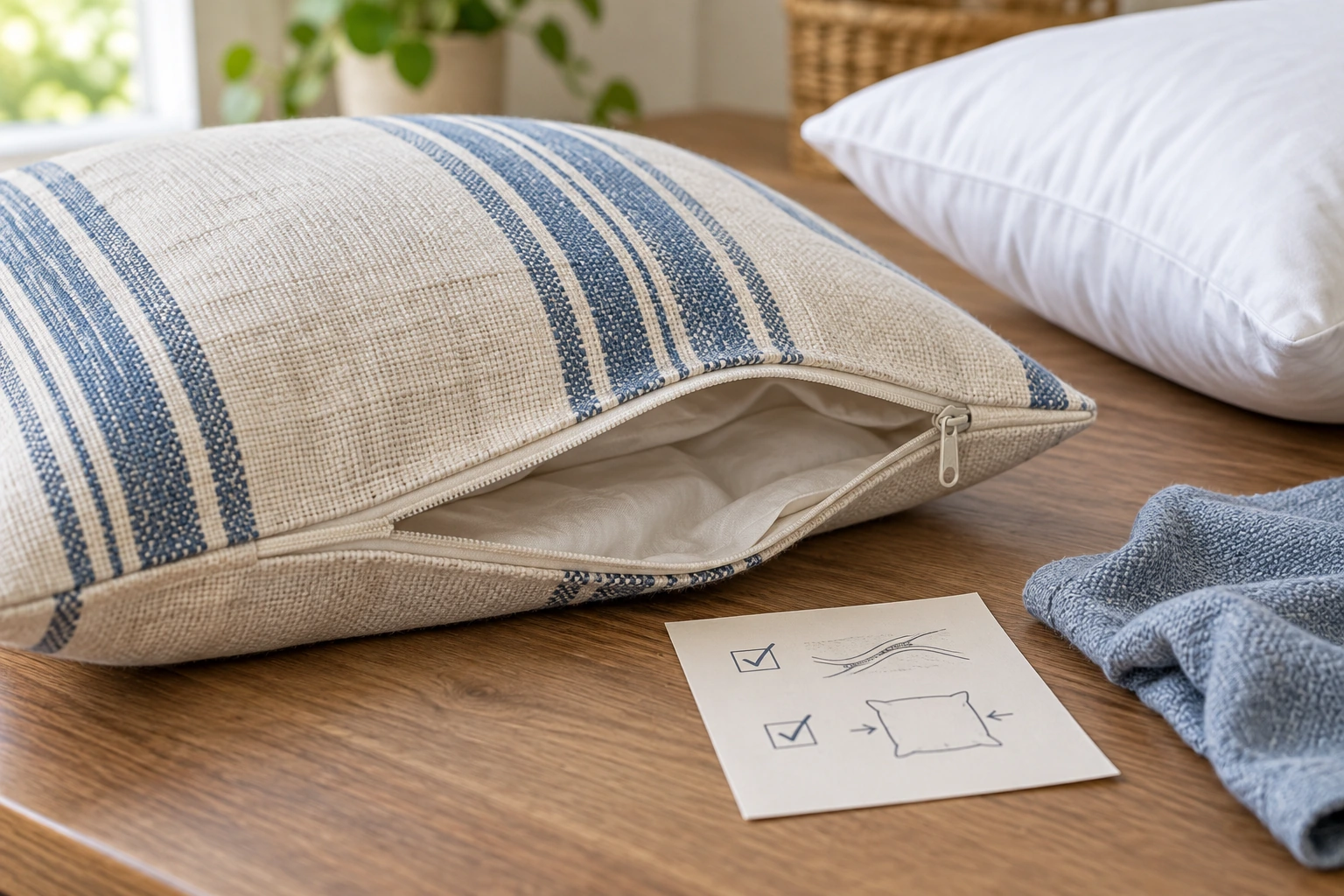
A pillow cover zipper that will not close can feel like a broken fastener, but the first question is where the resistance begins. The insert may be pressing against the opening, a fold of fabric may have caught near the slider, or the zipper teeth may actually be damaged. This troubleshooting guide uses two live decorative-cover listings as examples while keeping their seller claims separate from a diagnosis of the cover in your hands. Stop pulling when resistance appears. A gentle inspection is more useful than forcing a slider through fabric you cannot see.
Put the cover on a flat surface
Remove the pillow from the sofa and lay it on a clean table with the zipper facing up. Support the insert so its weight does not pull the two sides of the opening apart. Notice whether the slider is stuck at one precise point or whether the zipper closes until the insert fills the cover. That observation separates a possible caught-fabric issue from pressure across the whole opening. Do not try to diagnose the fastener while the pillow is wedged between cushions or held in the air.
Unzip only as far as it moves freely, then stop. If you can remove the insert without stressing the opening, take it out and set it aside. If the zipper is trapped near a corner, do not yank the insert through a gap that is too small. The cover's seam and zipper tape can be damaged by the same force that seems to release a snag. Keep the original position in mind or photograph it before moving anything, especially if you may need to contact the seller about a new item.
Look along both sides of the zipper under good light. Check for a loose thread, ruffle, lining, or fold of cover fabric touching the slider. Use your fingers to move nearby fabric away from the teeth without inserting a sharp tool. A cloth can help you hold the fabric if it is slippery. If an object is visibly caught, release only what comes away with light movement. Cutting a thread near a structural seam or prying at the slider can turn a small snag into a tear.
Compare the open and closed sections. Teeth that remain aligned on the closed side suggest a different issue from teeth that separate immediately behind the slider. A bent, missing, or pulled-away section is a stop condition. Do not keep cycling the slider to see whether it will somehow repair itself. A new cover with such damage may be a seller issue; an older cover may need a qualified repair or replacement. This article does not instruct you to rebuild a zipper or replace its hardware.
Test the closure without the insert
If the insert comes out safely, place it aside and lay the empty cover flat. Gently move the zipper through only the range that feels free. The empty-cover test asks whether the fastener itself travels without pressure from a bulky insert. If it moves smoothly now, the original resistance may have come from fabric crowding or insert size. If it still sticks in the same location, inspect that section for caught fabric or visible damage rather than putting the insert straight back in.
Keep the cover fabric flat around the opening as you test. A decorative ruffle or thick seam allowance may fold toward the teeth when the cover is bunched. Do not pull the two sides so hard that the zipper tape twists. If a light adjustment frees an ordinary fold, close and reopen a short distance once to confirm it moves normally. If the same point catches again, stop and record it. Repeated full-length tests on an uncertain fastener add wear without resolving the cause.
Look at the pull tab too. A tab that is bent or missing can make ordinary movement feel awkward, but it does not justify gripping the slider with pliers. Check the maker's care or repair instructions and the seller's return process. Lubricants or household oils may stain a decorative textile and can affect care instructions, so do not apply them as a generic fix. Keep the problem visible and reversible while you decide whether the item needs professional help.
If the empty zipper closes without resistance, measure the insert and the cover before reassembly. Compare the insert's actual size and loft with the cover's finished dimensions and opening. A nominal “18 by 18” label on both items does not prove that a full, firm insert will pass easily through a shorter hidden opening. This is a fit question rather than a fastener repair. If the insert is clearly too large or the opening too small, use an appropriate insert or cover instead of trying to make the zipper hold excessive pressure.
Read product claims with the failure in mind
The live striped ruffle pillow cover listing describes a hidden zipper about 14 inches long on an 18-by-18-inch cotton cover. Its first gallery image shows a blue patterned front and a pronounced ruffle edge, but the image does not show how the zipper travels under load. If a cover like this catches near a ruffle or seam, inspect that physical area rather than assuming the listing's “durability” language proves the fastener cannot be defective.
The live neutral velvet cover listing gives a zipper closure in its structured details and shows filled pillows in the first gallery image. Its package-count fields disagree, so the listing should not be used to infer what a delivered set contains. The staged photograph also cannot show whether a particular insert is compatible with its opening. Inspect the cover actually delivered and its label; do not transfer a zipper or fabric fact from the striped cover to this different product.
These two examples share a broad physical role: they are decorative covers that close around separate pillow inserts. They do not share a proven zipper length, pull construction, seam layout, or tolerance for a particular insert. Their photographs are useful for identifying where decorative edges and filled corners may complicate handling, but a photograph is not a mechanical test. The exact cover in hand supplies the evidence for a snag, damaged teeth, or overfilled fit.
Reinsert only after the cause is clear
When the empty zipper works normally and the insert dimensions are suitable, fold or compress the insert only as permitted by its material and the cover's opening. Guide one corner into the far corner of the cover, then the others, rather than packing all the loft against the zipper at once. Keep fingers and loose fabric away from the teeth. Bring the cover edges together gently before moving the slider. If closing requires sustained force, stop and reassess the fit.
Check the zipper halfway through. Is a lining, ruffle, or insert fabric approaching the slider? Pause to move it clear while the zipper is still easy to reopen. Finish only when both sides meet without strain. After closing, let the pillow rest on the table and inspect whether the seam is pulled taut or the zipper bows outward. An overfilled cover can look plump in a product photo while stressing the closure during normal use. The sofa arrangement should not rely on that stress.
Put the pillow back on the sofa and observe what happens when someone sits beside it or leans on it normally. If the zipper repeatedly opens, a seam gaps, or the fastener catches again, take it out of use rather than hiding the problem against the sofa back. Record whether the failure occurs empty, during insertion, or under use. Those details are more useful to a seller or repairer than the broad statement that a zipper is bad.
For a new cover, preserve the order, packaging, photos of the exact zipper area, and a brief account of the empty-cover test. Contact the seller through the ordinary return or support process if the closure appears defective. For an older cover with sentimental or matching value, a textile repairer can assess whether the zipper tape, seam, or slider can be repaired without distorting the cover. This guide does not promise that every closure can be restored or that a home repair is appropriate.
Keep the neighboring decisions distinct
The 45 cm pillow cover fit guide owns the pre-purchase dimensions of the finished cover, insert, and zipper opening. Use it when the empty zipper works but the insert appears to be the pressure source. This troubleshooting article starts with a specific closure that is sticking or gaping in use. It helps isolate whether the cause follows the zipper location, nearby fabric, or insert pressure before anyone assumes a particular fix.
The sofa cover texture refresh guide owns a room arrangement with one patterned and one neutral cover while preserving useful seats. Its color and texture decision does not answer whether a zipper is caught. Do not keep a damaged cover in a display because its pattern completes the room. Resolve the fastener or fit problem first, then decide whether that pillow still belongs in the arrangement.
Keep a simple cause record after the inspection: “caught loose fabric,” “resistance only with insert,” “visible tooth damage,” or “still uncertain.” The last category matters. If you cannot see the obstruction or the empty zipper will not travel smoothly, stop short of force and seek seller or repair advice with photos. A careful stop preserves the cover and makes the next decision possible. Repeated pulling erases clues and may create new damage.
A pillow cover zipper that closes normally when empty but resists around one insert calls for a fit decision. A zipper that catches at the same point without the insert calls for a closer fabric or hardware assessment. Either way, the useful first step is to remove pressure, inspect under light, and try only gentle, reversible movement. The exact cover, insert, and observed behavior determine the next action; a seller photo and a nominal size cannot settle the diagnosis on their own.
For future cover changes, keep the successful insert size and any closure observations with the cover's care label. That note can prevent a later household member from repeating a difficult insertion with a different pillow. Store the cover with its zipper fully closed only if it moves freely and the care instructions support that handling. If the closure remains uncertain, keep it aside and clearly identified for repair or return. The goal is to preserve an everyday textile and a useful record, not to make one more forced attempt merely because the pillow looks nearly finished.