Crypto Commerce
Use photo essay planning to sequence a short visual story
Suppose you have photographs of a community exhibition and want to show how its displays use the room. Which pictures belong together, and what does their order suggest? Start by writing that question above a list of the images you actually have. Give each photograph a job: establish the room, show a particular use of space, or complicate an earlier view. Then check whether the transition between two images seems to claim an event happened or one thing caused another. A sequence can make that claim even when its individual pictures cannot support it.
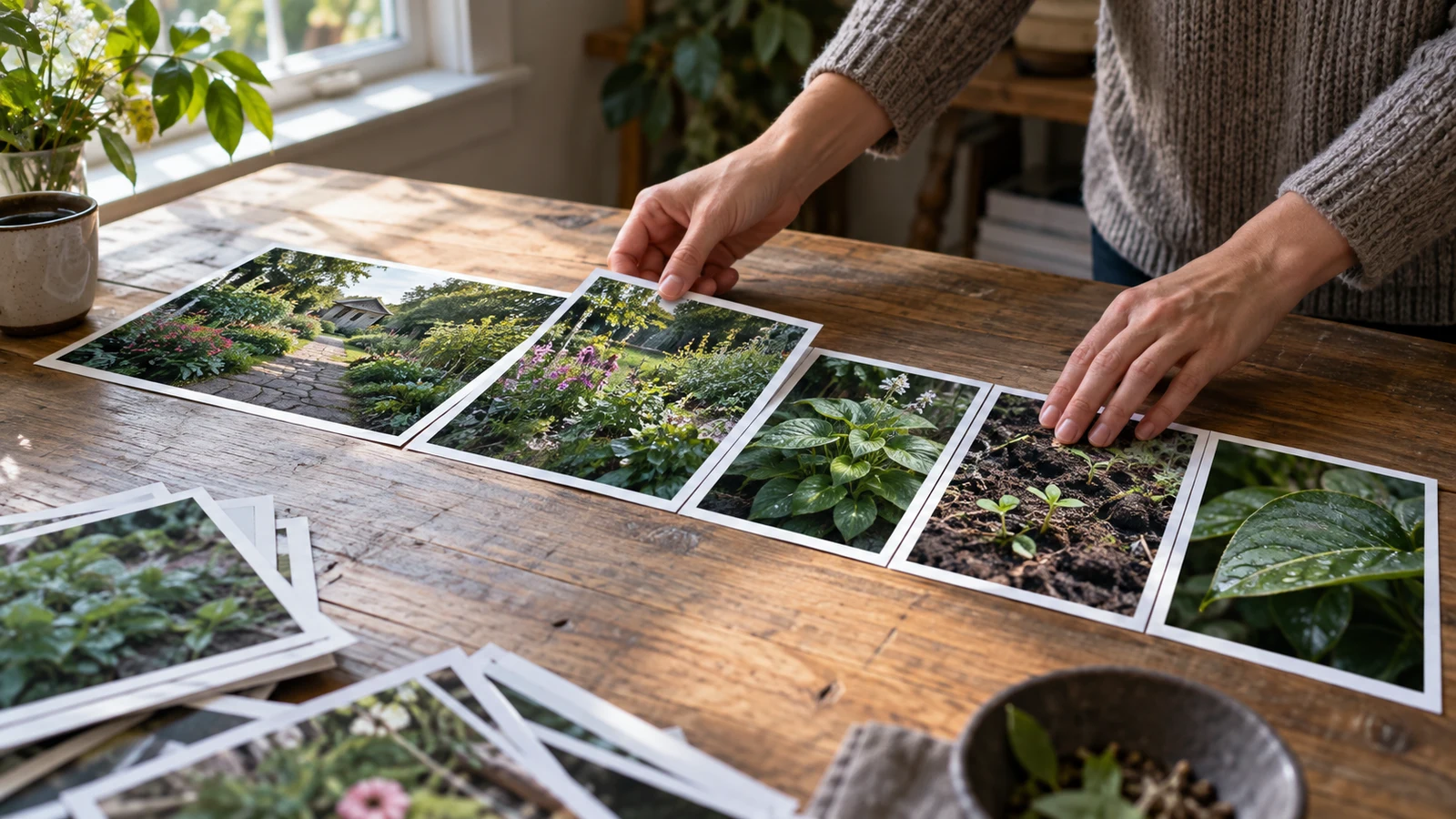
Suppose you have photographs of a community exhibition and want to show how its displays use the room. Which pictures belong together, and what does their order suggest? Start by writing that question above a list of the images you actually have. Give each photograph a job: establish the room, show a particular use of space, or complicate an earlier view. Then check whether the transition between two images seems to claim an event happened or one thing caused another. A sequence can make that claim even when its individual pictures cannot support it.
This guide uses an invented exhibition and invented image records to make those decisions visible. Nothing about the example describes a real venue, visitor or product demonstration. The useful output is a proposed order with a reason beside every image and an honest note beside any gap. You can make that list on paper; equipment comes into the discussion only if you need a place to review photographs or decide to take more.
Keep Photo Description Writing Separate From The Editorial Question
Imagine a small community exhibition with freestanding panels and a table of objects. Your question is, “How does the display use the available room?” That question is narrow enough to guide selection without requiring you to reconstruct the whole event. A view of the entrance may locate the display. A view showing the space between a panel and the table may add an answer. A close view of an object may be interesting on its own yet tell us little about the arrangement of the room. You can leave it out without judging the photograph itself.
Photo essay planning starts with what the sequence will let a viewer examine. Write a provisional answer, such as “The panels and table occupy different parts of the room,” then check whether the photographs actually show both parts and a meaningful relationship between them. If they do not, narrow the question. Perhaps you can show only how the panels occupy one side. Do not write a claim about deliberate curatorial intent unless you have a separate record that supports it. Visible placement is a different kind of evidence from an explanation of why someone chose it.
Make an inventory before you settle an order. Use neutral identifiers such as A, B and C rather than story-like names that prejudge what the picture means. For each image, record what can be seen and, in another field, what you know from an independent record. An empty time field should remain empty. A label you remember seeing in a photograph is not automatically a verified account of when or why the object was installed. Separating these fields keeps an editorial choice from quietly becoming a historical claim.
Use Photo Description Writing Only After Choosing A Picture's Job
In the fictional inventory, A shows the doorway with two display panels visible beyond it. B shows those panels and the open floor in front of them. C shows the same panels from a similar position, with less floor visible. D shows a table beside the far wall. E shows a person facing across the room; the photographed direction alone does not identify what the person is looking at. F shows a detail of an object on the table. These are teaching examples, not images claimed to exist. Give any contextual note its own source in your working record instead of smuggling it into the visible-subject field.
B and C answer nearly the same part of the question. B makes the floor relationship available to the reader, while C would repeat the panels without adding much to that particular inquiry. Keep B and set C aside for now. F may belong if the essay eventually asks how individual objects occupy the table, but it does not repair a missing view between the panels and that table. This is an editorial choice about contribution, not a rule that close views are inferior.
Writing about the contents of one chosen photograph is a separate task. The related guide to photo description writing addresses that work. Here, a short inventory entry is enough to decide whether an image advances the sequence. Polished descriptions written too early can make a weak inclusion feel indispensable simply because you have already spent time on it. Keep the order provisional until you know which pictures earn their places.
Test Two Orders Before Reviewing On A Touchscreen Laptop
A chronological order is defensible only if the records establish the time of each photograph you place in it. To test the idea, suppose the invented photographer's dated notes identify A as made at 10:00, B at 10:10 and D at 10:20 on the same day. Those times are properties of the fictional notes, not deductions from light, activity or the pictured objects. A, B, D could then be shown as an order of photographs made. Even here, the record does not prove that the installation itself changed in that order, or that the photographs capture the beginning, middle and end of the exhibition.
Now suppose E has no reliable time entry and F has only a room label. Neither belongs in a chronology presented as complete. You could include them in a separate group whose time is unspecified, or drop the chronological claim entirely. Do not insert E between B and D because the visitor seems to face the far wall. A photograph freezes one visible arrangement; a sequence assembled afterward is your editorial construction. What the person did next and what drew their attention remain unknown in this example.
A thematic alternative can use A to introduce the room, B to examine floor space near the panels, and D to bring the table into view. Label that sequence as thematic, arranged by spatial relationship rather than capture time. It can include photographs with unknown times because its claim concerns visible parts of the room, provided you do not call their placement a timeline. In the invented record, A and B offer a plausible transition from doorway to panels; D introduces another occupied area. If no image shows the relation between the panels and table, the sequence should not claim their exact distance apart.
Make Each Pair Answer A Touchscreen Laptop Review Question
Read the proposed order in pairs, temporarily covering the rest of the list. After A followed by B, what might a reader believe has changed? The camera viewpoint may have changed, but the two pictures alone do not establish that the exhibition was altered. After B followed by D, might a reader assume the table stands immediately beside the panels? Check whether either image actually shows that relationship. If neither does, describe the sequence as moving to a different part of the room rather than pretending there is a continuous walk from one picture to the next.
The risky pair is E followed by F. A person facing across the room, followed by an object detail, can read as “this object caught the visitor's attention.” Nothing in the two fictional photographs establishes that connection. Remove E if the question is purely spatial, or separate it from F if E has a distinct, supportable contribution. Reordering does not erase every implication, so review the revised neighbors as carefully as the original pair. An image can be accurate on its own while its placement invites an unsupported story.
You can lay out identifiers on paper or view images beside a written order on a computer you already use. The listed Dell Inspiron 15.6-inch FHD touchscreen laptop has 16GB RAM and a 256GB SSD according to its supplied listing; it is one optional workspace to consider for reviewing images and keeping notes. Those specifications do not establish that a particular editing application is installed, that its screen is color accurate, or that it connects to a particular camera. The paper version of the exercise works just as well for the sequence decisions.
Try reading the order once with identifiers only, then again with the pictures in view. If the written reasons sound persuasive but the visible images do not show what they promise, change the reason or remove the image. Preserve a separate list of rejected candidates, with the reason each was set aside. That lets you revisit C if a later question calls for it without forcing C into the current essay. Keep copies of your underlying records while you rearrange the sequence so that editorial experiments do not overwrite what you actually know.
Record The Gap Before Considering A Touchscreen Laptop Or Camera
Once you have tested both orders, name the missing evidence precisely. “Need more pictures” is too broad to guide a useful decision. In this fictional example, a photograph showing both the panels and table in one view might help establish their visible spatial relationship. If you cannot make or locate such an image, the thematic sequence can still work by asking a smaller question about two separate uses of the room. Do not represent a new photograph taken later as if it recorded an earlier arrangement. A later view may document the room at a different time.
Only after that gap is clear does another camera become relevant. If you decide to make additional photographs, the supplied Sony ZV-1 II white camera bundle is a possible product to examine while doing photo essay planning. Its listing describes 20.1MP stills and includes a case, memory card and grip/tripod. None of those listing details establishes that an additional image is necessary or that a camera purchase will settle a missing historical fact. First ask whether the scene you need is still available to photograph and what any new photograph would actually establish.
Photo essay planning also benefits from an explicit stopping point. If the order answers the narrowed question and each transition can be explained without invented cause or timing, you do not need to keep adding images for length. If a transition cannot be made honest, record the uncertainty beside it. A viewer can follow a thematic shift when it is named plainly; a falsely seamless passage is harder to correct once the essay is shared. The same standard applies whether you work with a few prints on a desk or a larger digital set.
Here is the annotated fictional sequence to take away: A, doorway and visible panels, introduces the exhibition room; B, panels and open floor, shows one use of space; D, table by the far wall, introduces another area. The order is thematic, not a timeline. C repeats B's subject without adding the floor relationship. E is excluded because its placement beside F could imply an unproved reaction; F is set aside because the question does not turn on the individual object. The unresolved note reads: “No selected image shows the distance or route between panels and table.”
Use that list as a test for your own photographs. Replace the invented identifiers with your image references, write what each one contributes, and mark what its neighbor might wrongly suggest. If a missing relationship matters, look for a record that establishes it or revise the question. Once the order is stable, move on to describing individual images. If you later consider either listed product, check its current details and any payment options offered at the time rather than treating an editorial plan as a statement about availability or checkout.