Crypto Commerce
petgle model 1 robot vacuum-mop vs Ikohbadg: decide how the robot should use the rooms
Compare petgle model 1 robot vacuum-mop by listed floor suitability, controls, mapping evidence, charging behavior, and practical mop setup.
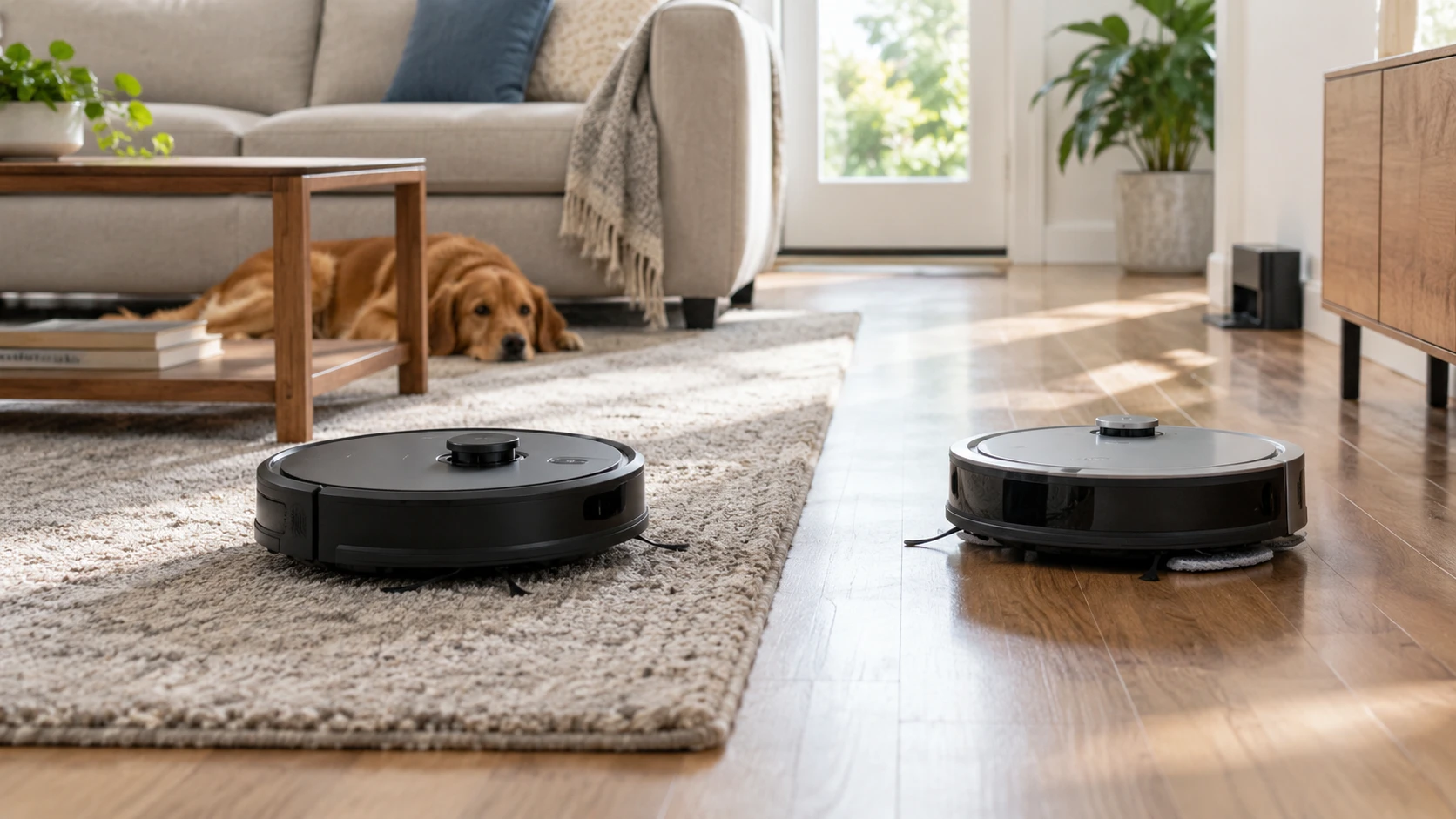
The petgle model 1 robot vacuum-mop lists a 5000-Pa suction figure and app, remote, and Alexa voice controls. This guide to robot-vacuum mapping and room controls explains why a buyer should ask what a map can actually do before treating navigation as a finished feature. The Ikohbadg robot vacuum-mop emphasizes mapping, remote control, and two broad cleaning modes. The guide discusses different products, so its setup details should not be applied to either of these models.
Both saved listings offer vacuuming and mopping, but their descriptions answer different questions. petgle states intended floor surfaces: hard floors and low-pile carpet. Ikohbadg describes precise positioning and coverage without naming a carpet type or map-editing control. Its short entry gives a runtime of more than 60 minutes; petgle's saved entry gives no comparable runtime. A choice based on one attractive number or broad phrase would leave the daily routine unresolved.
Map the floor before buying a mapping claim — guide to robot-vacuum mapping and room controls
List the rooms you want the robot to clean and the ones you need it to avoid. Include carpet edges, stairs, cords, furniture legs, pet bowls, and the route back to a charging base. The saved Ikohbadg description says advanced mapping and navigation provide positioning throughout a home. It does not say whether the user can name rooms, store several maps, draw keep-out zones, or edit a boundary after furniture moves. Ask for a current app or controller demonstration for the exact model if any of those actions is required.
petgle's short description does not explain its navigation method. It says the robot returns to its base when power is low, but does not describe how it selects a room or resumes an interrupted task. Do not infer that it lacks mapping because the excerpt omits the word, and do not infer a room picker from its app control. Check the exact model's instructions for navigation, saved maps, schedules, and no-go areas. The useful comparison is the set of controls you can verify, not the number of navigation adjectives in the listings.
Try a practical scenario. If only the kitchen floor needs cleaning after dinner, can either robot be sent there without running through bedrooms? If a rug borders the kitchen, can the mop function avoid wetting it? If chairs are moved each evening, will the robot update its route or require a new setup? The saved entries do not answer these questions for either candidate. A demonstration or detailed manual can. The published guide's questions about room controls are useful here, but its product-specific answers belong to its own models.
Ikohbadg says its compact body can maneuver under furniture and into corners. No height, width, or obstacle-clearance figure accompanies that claim in the saved excerpt. Measure the clearance under the sofa and bed, and request the robot's actual dimensions. petgle also calls its design compact, without dimensions. Neither listing proves it will pass through a specific gap or retrieve itself after driving under a low cabinet. Check the base's footprint as well; the robot needs a practical place to charge between runs.
Choose a control method the household will use — Ikohbadg robot vacuum-mop
petgle names app, included remote, and Alexa voice control for selecting cleaning modes. Ikohbadg names a remote control and says it offers control over a cleaning schedule. Its description does not identify an app or voice service. A remote could be enough for a straightforward whole-floor routine, while an app may be useful if you want to start cleaning from another room or set a schedule. Confirm what each control can actually change. The presence of an app or remote is not proof that it exposes every advertised cleaning choice.
Ask for the current control tables. Can the petgle remote change suction or mop mode, or only start and stop a run? Does its voice integration require a particular account or compatible home setup? Does the Ikohbadg remote provide timed scheduling, or does the scheduling phrase describe some other control? Neither excerpt gives those answers. A buyer who avoids phone apps should verify that the required tasks can be completed with the physical controller alone before valuing any additional smart-home feature.
The household's routine matters more than the longest menu. If several people share cleaning, choose controls they can all operate without recreating a setup each time. Think about who will empty the bin, fill and wash mop parts, and move the unit when it gets stuck. The saved descriptions do not specify how either robot communicates an error or what happens after a power interruption. These are useful questions for the manual or a live demonstration, especially when the robot will run while no one is nearby.
What the cleaning specifications establish — Ikohbadg robot vacuum-mop
petgle's entry lists 5000 Pa suction for pet hair, dust, and debris. That is a manufacturer figure, not a measured result on your rugs or tile. The saved Ikohbadg description does not supply a competing Pa number, so there is no numeric suction ranking to make from the two entries. Ask what conditions produced petgle's figure and look for comparable cleaning tests if pickup performance is decisive. A suction number alone cannot tell you how a brush handles long hair or how much debris remains at a wall edge.
petgle says it is intended for hard floors and low-pile carpets. That gives a floor-suitability claim to check against your rugs and transitions. Ikohbadg describes sweeping, vacuuming, and mopping without listing carpet pile or floor material in the saved excerpt. Verify allowed surfaces in its current instructions. If your home has a thick rug or delicate flooring, do not extend either description to that surface without an exact-model recommendation.
Ikohbadg identifies two broad modes: fine sweeping with vacuuming, and sweeping with mopping. petgle says it vacuums and mops but does not lay out the mode combinations in the short entry. Ask whether each robot can vacuum without carrying a wet mop, how the water supply is controlled, and whether a carpet will be avoided or detected while mopping. Neither saved description establishes automatic carpet avoidance in mop mode. A robot that performs both tasks may still require a person to prepare the floors and change parts between them.
Consider the real debris, not an ideal test floor. Pet hair may wrap around a brush, crumbs may gather under a table, and a sticky spill may need attention the robot cannot provide. Request the current maintenance instructions for brush, filter, dust bin, water tank, and mop cloth. Check the cost and availability of replacements for the exact model. The listings do not provide bin capacity or mop-coverage measurements, so they cannot establish how often either robot needs hands-on care.
Runtime, charging, and interruptions — Ikohbadg robot vacuum-mop
The Ikohbadg entry claims more than 60 minutes of runtime and says the unit charges itself and can continue cleaning. It does not give the test mode, battery state, floor type, or time needed to charge. The description's wording about disconnecting after completion is unclear, so confirm the actual dock-and-resume sequence in the manual. If your floor takes more than an hour to clean, ask whether a resumed run returns to the unfinished area or begins another whole-floor pass.
petgle says it returns to the base when power is low. Its saved excerpt does not state runtime, charging duration, or resume behavior. A return-to-base claim is useful for locating the dock, but it does not guarantee the floor will be completed without intervention. Measure the area to be cleaned and check each model's current battery figures under a comparable cleaning mode. A large room with several rugs can require a different amount of work from an open hard-floor room of the same size.
Place the charging base where the manual requires clearance and where a person can reach it to empty the robot. Neither short description supplies docking dimensions. If a robot must squeeze past furniture to return, test that route before relying on autonomous charging. Confirm what happens when a door closes between the robot and base. These ordinary interruptions reveal whether the advertised continuation behavior fits the home's actual pattern of use.
Make a purchase checklist from the rooms — Ikohbadg robot vacuum-mop
Put petgle on the shortlist if its stated hard-floor and low-pile-carpet use, 5000-Pa suction claim, and app, remote, and voice controls align with your routine. Verify the navigation method, mop setup, battery life, and compatible surface details in the exact model's current documentation. Put Ikohbadg on the shortlist if its mapping description, remote operation, and two listed cleaning modes address the job you want done. Verify whether its map supports the room and boundary controls you need, and what its more-than-60-minute runtime means under a relevant mode.
The exact saved identities are petgle model 1, product ID prod_02bb2e9ab1752446c79f7b69, and Ikohbadg, product ID prod_427a71f568a1dcf34d66e3cd. Use those IDs when asking for manuals, app demonstrations, and replacement-part lists. Then test the proposed route from each room back to a sensible charging location. A robot vacuum-mop is useful when its controls and maintenance routine fit the floor it will actually clean.