Lifestyle & Inspiration
Personal rereading: return to one familiar passage
Return to a familiar passage, compare your earlier and current response, and keep a brief location note with actual decorative bookmark examples.
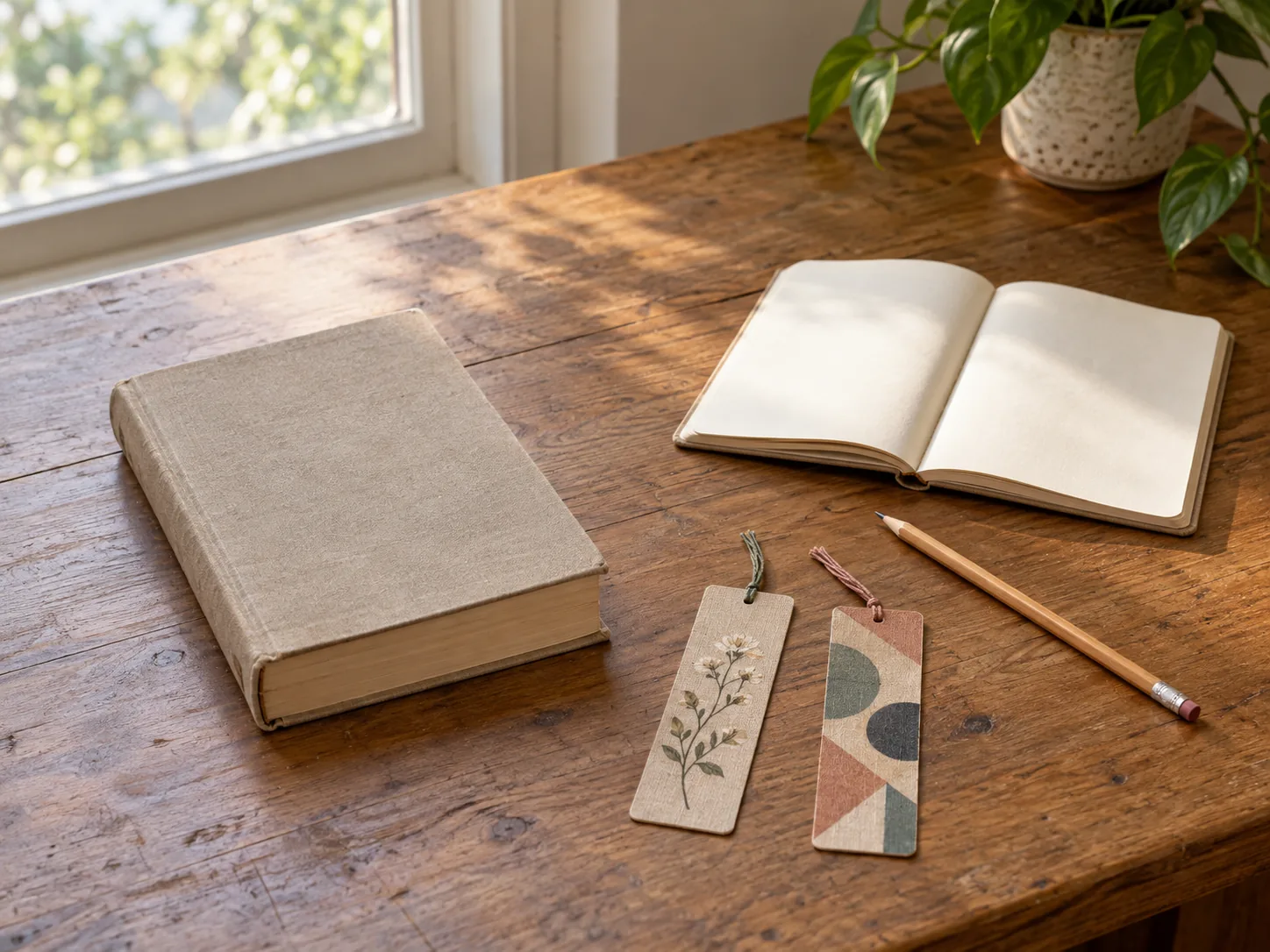
Personal rereading can begin with a passage you remember differently from the way it now appears on the page. Perhaps a character once seemed impatient and now seems frightened. Perhaps the sentence you remembered as a grand declaration is surprisingly brief. Open a book you already know and give that difference some attention. You do not need to start again at page one or produce a verdict on the entire book.
A bookmark can keep the chosen passage easy to find while a separate note holds your response. The two actual offers here provide different decorative starting points: Dispositivo's Spring Flowers folding bookmarks and a Panda Superstore set with a Beijing Opera Facial Masks pattern. You can also use an appropriate marker you already own. The activity centres on returning to the words, with the marker helping you find that particular place again.
Choosing a passage to revisit starts with your own curiosity
When choosing a passage to revisit, consider what you still remember without opening the book. It might be a conversation, a description of a place or an ending that left you uncertain. Write a short account of that memory before looking it up. Keep the account in your own words so you can distinguish the remembered impression from what the author actually wrote.
Choose a manageable section that includes enough surrounding text to make sense to you. A line remembered alone may sit inside a conversation whose other speaker you have forgotten. Read the exchange or scene that gives the passage its setting. You can decide how much context you want without turning the return into a compulsory rereading of every chapter before it.
Leave yourself free to choose an ordinary moment. A passage does not need to be famous, beautiful or suitable for a quotation collection. You may want to revisit an awkward silence or the description of someone's kitchen because it stayed with you. That reason is sufficient for this personal activity, even if someone else would choose a more dramatic part of the same book.
Give your earlier response room beside the current one
Begin with the response you remember having, then describe what catches your attention now. Avoid rewriting the earlier reaction to make it agree with the present one. You might record that you once sympathised with one person and now notice what another person was trying to say. Both responses can remain in the note without requiring you to declare one of them a mistake.
The difference can also be small. A room you pictured as bright may be described without any mention of light. A voice you remembered as certain may contain a question. Look at the words that prompted your current impression and name them accurately in the note. If you quote a short phrase, distinguish it from your own description rather than letting the two merge together.
You may find that your response has scarcely changed. Keep that observation too. The purpose of this return is to spend time with the passage you chose, rather than to manufacture a surprising new interpretation. An unchanged preference or a sentence that still makes you smile can be worth retaining for a later reading.
Try the comparison with an original miniature scene
Here is an original fictional passage for illustration: “Mara put her father's blue cup at the back of the cupboard. On Sunday she brought it out for her brother, then chose another cup for herself. After he left, she washed both and placed them side by side.” The passage belongs only to this example. You can consider what you notice without having to locate a published work.
One possible first response is that Mara wants the cup out of sight. On another reading, someone might notice that she chooses it for her brother and eventually places the two cups together. That reader could become more interested in the relationship between the siblings than in the cupboard. These are possible responses to the invented scene, rather than an account of what every reader will think.
Keep the detail that led to each response. “At the back” and “side by side” give the two observations something specific to refer to. You do not need to invent a complete family history to describe the change in your attention. With your own book, use the actual surrounding text if you want to explore the character further. This activity leaves the passage intact instead of editing it to support a preferred interpretation.
Let a marker identify the return place
The Dispositivo Spring Flowers folding bookmark set identifies model DI3137042 and describes eighteen multicolour bookmarks made from magnetic stickers. Its stated Spring Flowers design can provide a decorative cue if you enjoy a floral detail. The offer's size text contains unclear characters, so it does not supply a usable measurement here.
The Panda Superstore Beijing Opera Facial Masks bookmark offer names model PS-OFF16282131-DORIS00240 and a six-piece set. Its title supplies the pattern description. That lets you distinguish the selected offer without assigning meanings to particular mask colours or assuming that the design refers to the book you are reading.
Choose a marker you want to see when you open the book, under the information applicable to that marker and volume. The set quantities do not set a target of six or eighteen passages. One return place may be enough. For a fragile or valuable volume, obtain appropriate care guidance before choosing an attachment; neither offer establishes archival suitability or a method for such a book.
A decorative marker can stay with one book while your note stays elsewhere. That arrangement leaves room to change the passage later without treating every spare piece in a set as another obligation. If you keep more than one return place, give each an identifiable location in the note. Choose the selection from your reading rather than trying to use the whole package at once.
Keeping a rereading note can stay brief
For keeping a rereading note, record enough to find the passage again: the book title, the edition you are using and the page or chapter location that actually applies to it. Record the translator, too, when you are reading a translation. Add the date of your return and the thought you want to keep. A chapter description can help when a different edition has different page numbers. Keep the edition and location together instead of assuming one page reference covers every copy.
You might use two short entries headed earlier impression and this reading. The first can say that you remembered a character refusing an invitation. The second can name the phrase that now sounds more hesitant to you. Those headings organise the comparison without requiring an elaborate journal system. Add a question if there is something you want to look at next time.
Keep quotations distinguishable from paraphrases. A note saying “she was angry” records your description unless those exact words appear in the passage. If exact wording matters to the thought, check it against the book before recording it as a quotation. You can still enjoy your own response while preserving the difference between the author's sentence and the way you describe it.
A return visit can have a different scale
On one occasion you may want only the selected scene. On another, you may feel like reading the next chapter or starting the book again. Let the current interest decide. The bookmark and note can support either choice without imposing a schedule. If you choose the longer reading, keep the original question available so you can notice whether the surrounding story changes your response.
Sometimes another book comes to mind. Write its title as a possible next return, then decide whether you want to follow that connection now. A shared subject can be enough: two different journeys home, two uneasy reunions or two descriptions of a familiar landscape. You do not need to prove that the authors intended the connection to enjoy considering it in your own reading.
Keep the comparison specific if you follow it. Name the passage from each book and the detail you want to consider. That is more specific than a broad judgement that both books are about family or travel. Your note can remain provisional; another return may give you a different way to describe the connection.
Let the kind of book shape the question
A nonfiction return can centre on an argument you remember finding persuasive. Find the passage that presents it and describe what persuaded you at the time. On this visit, you may notice the example more than the conclusion, or want to examine a qualification you overlooked. Record the actual question that now interests you. If you want to establish whether a factual claim remains current, give that research its own attention; a changed personal response alone does not settle the claim. You can keep enjoying the essay while identifying what you would like to investigate.
A poem can invite another kind of return. Choose the whole poem or enough of it to retain the context you want, then notice which words you pause over this time. You might have remembered an image while overlooking the sentence that surrounds it. Keep that observation with the poem's title and location in your own copy. There is no requirement to turn the response into a technical analysis or reproduce the poem in a notebook. A few words about the detail that drew you back can preserve the reason for the visit.
Make the actual book easy to return to
If the chosen volume has become difficult to retrieve from a crowded row, the bookend usable-space guide helps identify which dimension or arrangement changed. Its question concerns the physical books and their support. Address that practical issue when it obstructs your reading, while keeping its product measurements separate from the meaning of the passage you selected.
A shared room may also need somewhere appropriate for the open book and your note during a reading. The reading-room coffee table placement guide begins with the seats people actually use and the surfaces they need nearby. Use that room question if it matters to your situation. A personal response to a passage can begin in an existing suitable place without a furniture purchase.
When you finish, leave a location reference and one thought you would recognise later. Put the book and note where you intend to find them again. The next return might confirm the impression, complicate it or draw your attention to another person in the scene. Keep the actual words available alongside your dated response so the next visit has somewhere concrete to begin.