Furniture & Home Organization
pegboard hook reuse plan before buying another pack
Inventory confirmed compatible hooks and test a small tool-wall layout before adding another assortment.
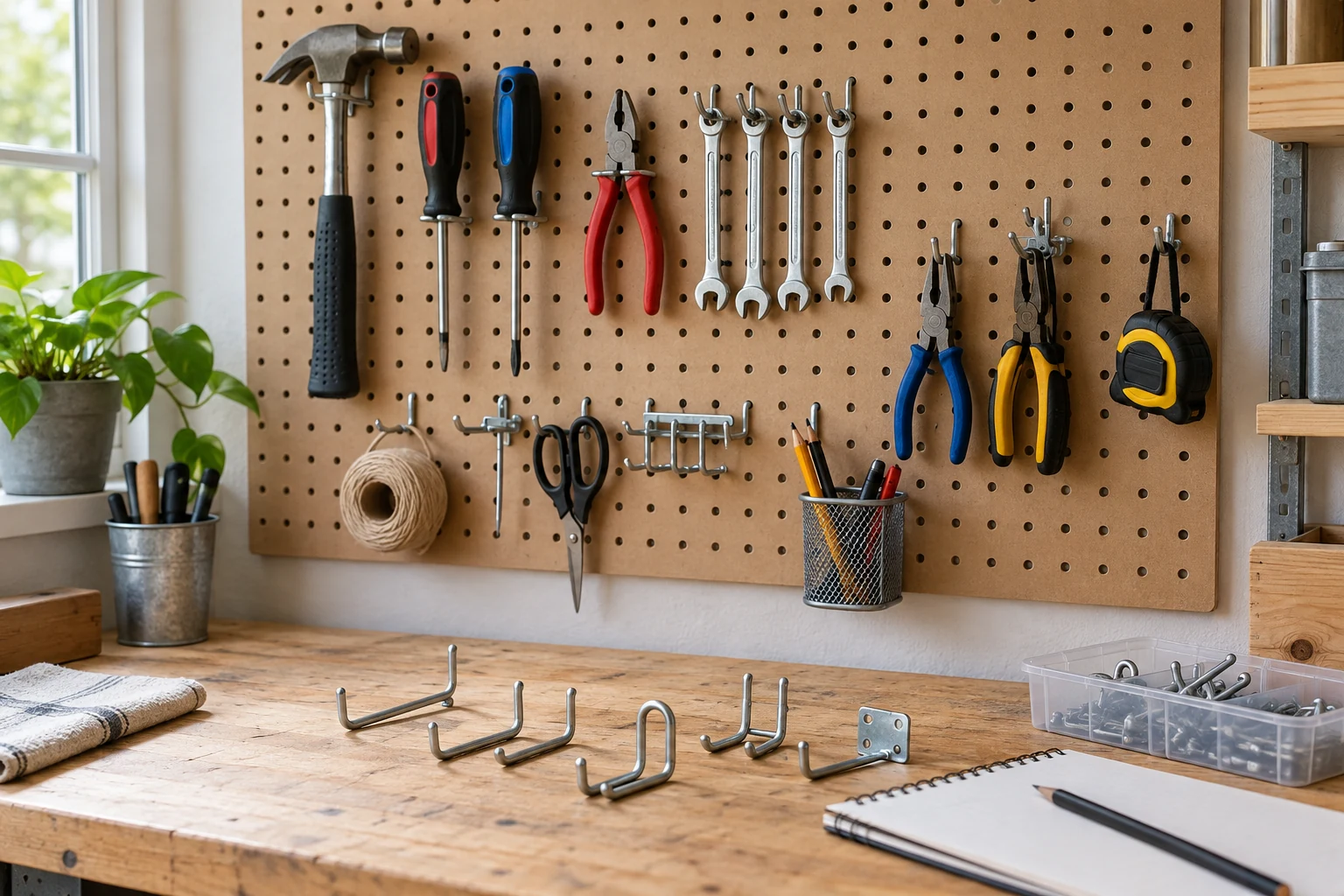
A pegboard can look short of hooks even when a small box of unused pieces sits on the workbench. Before buying another assortment, count the jobs the wall needs to do and the hardware already on hand. The goal is a usable layout, not the largest collection of metal parts. This pegboard hook reuse plan treats saved hooks as a household resource while keeping compatibility and safe loading as separate questions that need their own evidence.
Start with the tools you actually return to the board each week. A hammer, measuring tape, scissors and a few hand tools may need different resting places. Place them on the bench in the order you reach for them. Do not begin by filling every hole with a hook. Empty wall space can make a frequently used tool easier to see and retrieve. The first possible saving is discovering that you already have enough appropriate pieces for the routine.
Count the jobs before counting hooks
Make a short list of what must hang and what can live elsewhere. A tool that you use daily may deserve an easy position at hand height, while a seasonal item can go on a shelf or in a labeled container. Count each hanging position as a job. One tool does not always need one hook: its shape and the hook’s actual design determine how it rests. Do not improvise a precarious hold to make the numbers look better.
Set aside hooks already in use, loose hooks from previous layouts and pieces whose purpose is uncertain. Separate them into small groups by shape and attachment style. This is an inventory, not a claim that every piece fits the board. A familiar-looking pair of prongs can belong to a different perforated-panel system. Keep unknown pieces in a marked group until their fit can be checked against the actual board and product information.
Count usable pieces twice: once as individual hooks and once as complete storage positions. A pair intended to support one object may represent one position, not two. A hook that needs a retainer or another supplied part is incomplete when that part is missing. Do not fill gaps in the count with guesses. The distinction matters because a box can hold many metal pieces while offering fewer safe, useful places for the tools on your list.
Look for duplicates that have no current role. An extra short hook may be useful for a tool you are about to move, but it may not safely hold a larger tool just because it is available. Reuse only within the hardware’s intended role and load guidance. The fact that an object rests on a hook for a minute does not establish that the setup is secure for daily use. A cost-saving plan should not trade a stable wall for one fewer purchase.
Give every proposed position a simple reason: easy reach, clear outline, room for the tool to lift off and enough space for neighboring items. A dense wall can hide what is missing and snag tools on the way out. Sketch the layout on paper or use removable markers near the board before moving every hook. A few minutes of planning can show whether the shortage is real or just a poor arrangement of the hardware already installed.
Check the actual panel system first
Pegboard is a broad name. Hole shape, spacing, panel material and hook-retention design can differ. Do not push a loose hook into a board because its ends appear close to the openings. The saved record for a large pegboard hook assortment identifies a pack of hooks and accessories, but the exact board interface for that offer is not established by its saved evidence. Treat it as an example of why a large count alone is not a compatibility answer.
A different hook and bin assortment listing names a particular panel family. Its hooks and bins are not interchangeable by default with every wall that has holes. This article does not recommend either kit for your installation. It uses their different descriptions to make one practical point: inventory and layout are useful only after the existing hooks are confirmed for the actual board.
If you cannot identify the panel or an old hook, pause the reuse decision for that piece. Photograph the board openings, spacing and mounting arrangement without removing a loaded panel. Compare those observations with the hook and panel documentation. Do not infer compatibility from a count such as 96 pieces or from a visual resemblance in a small product image. The possible saving from using a spare hook matters only when that hook can do the job appropriately.
Keep loose bins and attachments separate from simple hooks. A bin may require a different connector or retainers, and its practical loading differs from a light hand tool on a hook. Do not treat an accessory as a free extra hanging position because it came in the same box. Count it only when its actual function and fit are clear. That discipline prevents an inventory from becoming an imaginary capacity chart.
Try one small layout change
Choose two or three tools that currently make the wall awkward. Move only their confirmed compatible hooks, following the board and hook instructions. Leave the rest of the wall as it was. Put each tool away and take it down a few times. Does the hook stay seated? Is there room to grasp the handle? Does removing one tool knock another loose? An arrangement that passes those ordinary-use questions is more valuable than a crowded photograph of a fully populated board.
If a tool has moved from another storage place, make sure the new wall position improves retrieval rather than simply clearing the bench. The garden rake winter-storage guide handles a different kind of tool and seasonal storage decision. It is a reminder that some long or dirty items belong in a separate route. A pegboard need not carry every household tool for its existing hooks to be used well.
Notice what still has no good position after the small test. Perhaps you need a hook shape you do not own. Perhaps the panel is already too crowded. Perhaps a tool belongs in a drawer because hanging it requires an unsafe reach. These outcomes are different. Do not buy a multipack until you know which gap remains. One suitable missing component and an entire assortment are not the same planning choice, even without comparing prices.
Check the panel’s wall attachment and the load guidance for its system before changing the number or weight of items on it. This article does not establish a capacity for the board, hooks or wall. If an existing installation shifts, bows or has loose fasteners, stop the layout experiment and address that condition through appropriate hardware instructions or help. Reusing hooks cannot fix an unstable panel.
Make the purchase decision from the remaining gap
After testing the layout, count the compatible hooks you used and the compatible spares left over. Write down the job that is still unfilled. A clear statement such as “one short hook for this small tool on this identified panel” is more useful than “we need more hooks.” It narrows the search to a physical role and a verified interface. Keep the unknown hooks out of the usable count until they have evidence.
Consider the whole setup rather than only the quantity in an offer. A kit may include several pieces you will never use, while another may require a separate panel or attachment. The wall clock total-setup-cost guide discusses that broader kind of decision for a different product. Here, the practical translation is to identify every needed component before assuming that a low-effort-looking pack solves the storage job.
No price calculation is needed to avoid an unnecessary purchase. If the tested wall works with confirmed existing hardware, you can defer shopping. If one essential role remains unmet, you can search for that role specifically. The outcome is based on what the wall needs, not on an invented saving percentage or a prediction about sale prices. Prices, availability and included parts can change, so keep them out of a claim that the physical inventory alone cannot support.
Keep spare compatible hooks together and label the panel system they belong to. Otherwise the next reorganization begins with the same guessing game. A small container, photo or note can preserve the information. Do not mark an uncertain hook as compatible simply to complete the box. The label should record what you verified, such as a product identifier or documented panel family, and leave unresolved pieces in a separate group.
Leave room for change without stockpiling
A workshop wall changes as projects change. One tool may move to a toolbox, another may be used more often, and seasonal items may leave the board. Revisit the layout when the routine changes instead of buying hooks for every possible future project. The compatible spares you already own can serve as a small reserve. Keeping every hole occupied can make that flexibility harder rather than easier.
When a new tool arrives, repeat the same small sequence: define its storage job, check whether a suitable compatible hook is free, then test retrieval and stability under ordinary use. If not, identify the exact missing role. Avoid transferring a hook from a heavier or more awkward tool just to make the new one fit. A transfer should improve the wall as a whole, not create a hidden problem elsewhere.
Review the unused pieces after several months. Some may belong to a retired panel and have no documented role on the current wall. Store them with the old system if it is still used, or handle them according to your normal reuse or disposal practice. Do not keep unlabeled metal pieces in the active hook inventory forever. A tidy, truthful inventory helps the next decision stay focused and prevents repeated purchases driven by uncertainty.
Take a photograph of the working layout once it has survived normal use. The image can help you restore the board after cleaning or a temporary project without turning the arrangement into a rigid rule. A small note about which hooks came from which confirmed set is even more useful. If the wall changes later, update the note so the spare box still reflects the hardware actually on the panel.
A pegboard hook reuse plan saves effort by turning “buy another pack” into a sequence of observable questions. What must hang? Which existing pieces are truly compatible? Does a small layout change work in daily use? Only the remaining gap belongs on a shopping list. The two product examples show that pack count and panel-specific language are separate facts. The wall becomes more useful when those facts stay separate from the tools you actually need to store.